
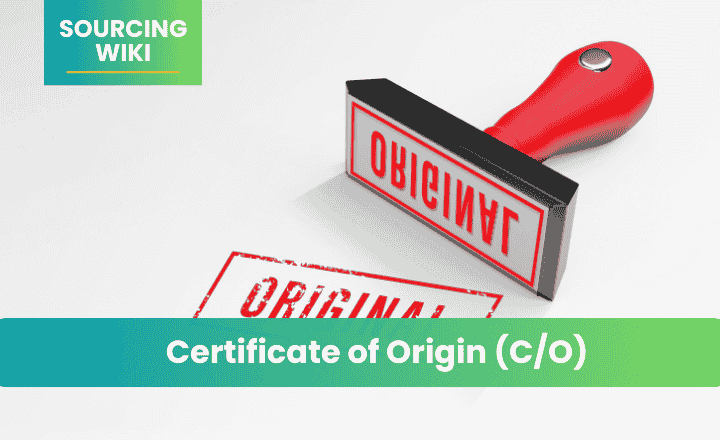
Certificate of Origin (C/O)
Concept Definition
A Certificate of Origin (C/O) is an essential international trade document certifying that the goods in a particular export shipment are wholly obtained, produced, manufactured, or processed in a particular country. It essentially serves as the "Nationality Declaration" of the product.
In the world of global logistics, the C/O is the key to unlocking Preferential Tariffs (reduced or zero duties) under Free Trade Agreements (FTAs). Without this document, customs authorities will apply the standard "Most Favored Nation" (MFN) duty rates, which are significantly higher.
Why is the Certificate of Origin Critical?
The C/O is not just a formality; it has direct financial and legal implications for the importer:
- Duty Reduction: It proves the goods qualify for lower taxes under agreements like RCEP, USMCA, or EU-Vietnam FTA.
- Trade Compliance: It ensures the goods are not originating from a country under trade sanctions or subject to anti-dumping duties.
- Trade Statistics: Governments use C/Os to monitor where their imports are coming from to manage trade balances.
- Letter of Credit (L/C) Requirement: Banks often require a C/O to ensure the cargo meets the specific geographic restrictions of the credit agreement.
Types of Certificate of Origin
There are two main categories of C/O, depending on the trade relationship between the two countries:
| Type | Description | Benefit |
|---|---|---|
| Non-Preferential C/O | The most common type. Simply states the origin of the goods. | Meets basic customs requirements; no specific duty discount. |
| Preferential C/O | Issued under a specific Free Trade Agreement (e.g., Form E for China-ASEAN). | Allows the importer to pay reduced or 0% import duty. |
| CO Self-Certification | Some modern agreements allow the exporter to "self-declare" the origin on the invoice. | Faster processing; no need for a Chamber of Commerce stamp. |
Who Issues the C/O?
A valid C/O cannot just be typed up by the supplier on their letterhead (unless it is a specifically allowed "Self-Declaration"). It must usually be "authenticated" by:
- Chambers of Commerce: The most common issuing body for non-preferential C/Os.
- Customs Authorities / Ministry of Trade: Usually required for preferential C/Os (like Form A or Form E).
- Third-Party Inspection Agencies: In some specific cases, agencies like TradeAider may provide verification support.
Essential Fields to Check
To avoid a "Customs Query," the C/O must match the Commercial Invoice and Bill of Lading perfectly:
- Exporter & Consignee: Must match the other shipping documents.
- Means of Transport & Route: Must state the vessel name and the ports of loading/discharge.
- Item Description: Must be consistent with the Invoice and include the correct HS Code.
- Origin Criterion: A technical code (like "WO" for Wholly Obtained or "PSR" for Product Specific Rules) that explains why the product qualifies as being from that country.
- Official Stamp & Signature: The physical or digital seal of the issuing authority.
Essential Considerations & Warnings
- The "Transshipment" Trap: If your goods are made in China but stop in a third country (like Singapore) for consolidation, you may need a "Certificate of Non-Manipulation" to prove the goods weren't altered, or your original C/O might become invalid.
- Timing of Application: A C/O should ideally be applied for before or at the time of shipment. While "Retrospective" C/Os can be issued later, they often trigger extra scrutiny from customs.
- The Value of "Form E" / "Form F": For Asian trade, these specific forms are "gold." Missing one could mean the difference between paying 15% duty and 0% duty.
- Back-to-Back C/O: Used when goods are exported from one FTA member to another, and then re-exported to a third member. This is common in regional distribution hubs.
Related Knowledge Base
Sourcing Practices & Insights: Certificate of Origin (C/O)
Latest Sourcing Guides


Comece hoje
Vamos transformar seus objetivos de compras em realidadeWeChat:+86 15157124615
WhatsApp:+86 15157124615
Endereço: Edifício 10 #39 Xiangyuan Road, Hangzhou, China