

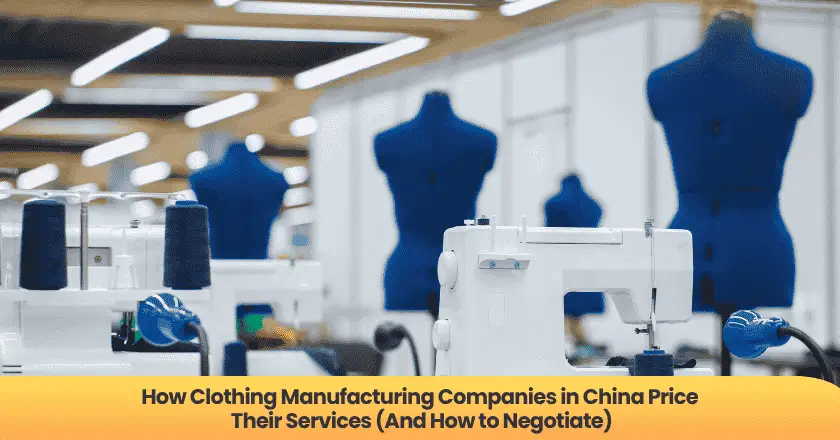
Introduction
A garment quote looks like one number, but it is really a stack of them. Fabric, trims, labor, the factory's overhead, and its margin all sit inside the price per piece, and a brand that haggles over the final figure without understanding what built it is negotiating blind. The buyer who knows the stack can see which costs are fixed, which are flexible, and which choices of their own are quietly driving the price up, and that knowledge is worth more at the table than any amount of pressure.
Clothing manufacturing companies in China price their work in a fairly logical way once you see inside it, and the same logic reveals where real negotiation is possible and where pushing only damages the relationship. The cheapest price is not always the best deal, and the strongest negotiators are not the ones who squeeze hardest but the ones who understand a factory's costs well enough to lower them genuinely, in ways that work for both sides. Price is a conversation, and it goes better when you speak the factory's language.
This guide opens up apparel pricing and negotiation. What actually goes into a garment's cost, how factories structure their pricing through models like CMT and FOB, which levers truly move the price, and how to negotiate well without poisoning a relationship you want to last. The aim is to take you from haggling over a mysterious number to negotiating a fair price you understand, which is where better deals and better partnerships both begin.
Key Takeaways
• A garment's price is a stack of costs, namely fabric, trims, labor, overhead, and margin, so understanding the components is what lets a buyer negotiate intelligently rather than haggle blindly over a single mysterious number.
• Fabric is usually the largest single cost in a garment, which means fabric choices often move the price far more than squeezing the factory's labor or margin ever could.
• Factories price through models like CMT, where you supply materials and pay for making, and FOB, where the factory sources everything, and knowing which you are using changes how a quote should be read.
• The levers that genuinely lower price are order volume, simpler construction, smarter fabric choices, fewer variations, and being a reliable long-term customer, not simply demanding a lower number.
• Negotiating well means lowering real costs and respecting a fair margin, since squeezing a factory below sustainable pricing invites cut corners, quality problems, and a relationship that does not last.
What Goes Into a Garment's Price
To negotiate a price, you first have to understand it. A per-piece quote is the sum of several costs, and knowing how they break down shows you where the price is genuinely flexible and where it is not.
The Cost Components
A garment's price is built from a handful of parts. Fabric and materials usually form the largest share, often the single biggest cost in the whole garment. Trims and accessories, namely buttons, zippers, labels, and thread, add their own line. Labor covers the cutting, sewing, and finishing, scaling with how complex the garment is to make. Then come the factory's overhead and its margin, the profit that keeps it in business. The short answer is that the final price is the sum of these, so the question in any negotiation is which of them can honestly be reduced, not simply how to shrink the total by force.
Complexity quietly drives much of the cost. A garment with intricate construction, many pieces, delicate fabric, or detailed finishing takes more skilled labor and time per unit than a simple one, which is why two garments that look similar can be priced very differently. Understanding that your own design choices feed directly into the labor cost is the first step to seeing where price is something you influence, not just something the factory dictates.
Where the Price Is Flexible
Not every cost bends equally. The factory's raw material costs and basic labor are fairly fixed by the market, while the margin, the efficiency gains from volume, and the choices you make about fabric and design are where real movement lives. Worth knowing: most of the genuine room in a garment's price comes from changing what is being made or how much, rather than from pressuring the factory to accept less for the same work, which is exactly why understanding the components matters before you negotiate.
Expert Tip: Ask a factory for a rough breakdown of a quote into fabric, trims, labor, and overhead. A transparent factory will share the general shape of it, and seeing which component dominates tells you where to focus, since trying to negotiate down a small labor line when fabric drives the cost is effort spent in the wrong place.
How Factories Price: CMT and FOB
Clothing factories quote in different ways, and the model shapes what a price includes and how you should read it. The two most common arrangements put very different amounts of the work, and the cost, on the factory's side.
CMT Versus Full Package
Under CMT, which stands for cut, make, and trim, you supply the fabric and main materials and the factory charges only for the labor of making the garment. This gives you control over materials and visibility into the making cost, but puts the work of sourcing fabric on you. Under FOB or full-package pricing, the factory sources everything, namely fabric, trims, and labor, and quotes you one finished per-piece price. This is simpler for the buyer but bundles the costs together, so you see one number rather than the parts. Real talk: neither model is automatically cheaper, since the right one depends on whether you have the ability and relationships to source fabric well yourself.
Know which model you are quoting under, because it changes everything about the comparison. A CMT price and an FOB price are not comparable on their face, since one excludes the materials the other includes. A buyer comparing a bare CMT making-charge against a full-package FOB number without accounting for fabric is comparing two different things, and that confusion is a common way to misjudge which factory is actually cheaper.
Reading a Quote Properly
A quote is only meaningful when you know what it contains. Confirm whether the price includes fabric, trims, sampling, and packaging, or whether those sit outside it, since a low headline number that excludes half the costs is not the bargain it appears. Clarify the terms too, namely the payment schedule, what the MOQ (minimum order quantity, the smallest batch a factory will run) is, and whether shipping is included. Reading a quote in full, rather than reacting to the top-line figure, is what lets you compare factories fairly and negotiate from an accurate picture.
Common Mistake: Comparing factory quotes on the headline number without checking what each includes. One may be FOB with everything bundled and another CMT with fabric excluded, making the lower number the more expensive option once materials are added. Always confirm exactly what a quote covers before treating it as cheaper, because the cheapest figure is often the least complete one.
The Levers That Actually Move Price
With the cost structure clear, real negotiation becomes possible. The levers that genuinely lower a garment's price are mostly about changing the order itself, not about pressuring the factory to work for less.
Volume, Simplicity, and Fabric
The strongest lever is usually volume. Larger orders spread fixed costs over more units and give the factory a reason to sharpen its price, which is why the same garment costs less per piece at higher quantities. Simplifying construction is another real lever, since reducing the pieces, steps, or intricate details in a garment directly lowers the labor cost. And fabric choice may be the biggest of all, because since fabric is often the largest cost, choosing a more available or standard material, or a slightly lighter weight, can move the price more than any amount of haggling over labor.
Reducing variation helps too. Fewer colors and styles keep you above per-variation minimums and simplify the factory's job, which can lower cost. These levers work because they change the real economics of the order rather than just asking the factory to absorb less, so the factory can say yes without sacrificing its margin or its quality. The buyer who negotiates by adjusting the order is negotiating with the factory, while the one who only demands a lower number is negotiating against it.
Terms, Timing, and Relationship
Beyond the order itself, several softer levers move price. Better payment terms, namely a larger deposit or faster payment, can earn a discount because they reduce the factory's risk and cash strain. Off-peak timing can help, since a factory with open capacity in a slow period may price more keenly to fill it. And the relationship itself is a lever, because a reliable, long-term customer who brings repeat business earns better pricing than a one-time buyer haggling hard. These levers reward a buyer for being easy and valuable to work with, which is pricing power that pressure can never buy.
Expert Tip: Before asking for a lower number, decide which lever you can actually offer, namely more volume, a simpler design, a stock fabric, faster payment, or a longer commitment. Walking in with something to give changes the conversation from a demand into a trade, and a factory lowers a price far more readily for a buyer offering a reason than for one simply pushing.
Negotiating Well Without Damaging the Relationship
The final skill is negotiating in a way that gets a fair price and keeps the relationship strong. The hardest squeeze is rarely the smartest one, and 2026 gives buyers better tools to negotiate from knowledge rather than pressure.
Respect a Sustainable Price
Push too hard and you lose more than you gain. A factory squeezed below a sustainable price has to recover it somewhere, namely cheaper materials, rushed labor, or cut corners you will discover in the shipment, and the discount you won becomes a quality problem you did not want. Real fairness leaves the factory a reasonable margin, because a manufacturer that profits fairly from your work stays motivated to do it well. The goal is a price that is good for you and survivable for them, since a deal that damages the factory damages your product.
Negotiate on value, not just price. Rather than simply demanding a lower number, work with the factory on the levers that genuinely reduce cost, offer the volume or commitment that justifies better pricing, and frame the conversation as finding a price that works for both sides. This collaborative approach gets you a better deal and a factory that wants to keep serving you, which over many orders is worth far more than the extra margin a hard squeeze might win once.
Negotiating in 2026
Negotiating from knowledge keeps getting easier. Through 2026, better cost data and AI-assisted tools help buyers understand what a garment should cost and benchmark quotes, digital sampling clarifies the specs that drive price, and clearer production tracking builds the trust that underpins good pricing. These let a buyer negotiate from an informed position rather than guesswork, focusing the conversation on real costs both sides can see.
The human relationship still sets the ceiling on what negotiation achieves, though. The best pricing flows from trust built over time, fair dealing, and being a customer a factory values, none of which a tool provides. The strongest apparel buyers in 2026 use the data to negotiate intelligently and the relationship to negotiate sustainably, securing prices that are genuinely good precisely because they are fair to the factory that has to deliver them.
The Negotiating Edge of NewBuyingAgent
Negotiating a fair garment price is far easier with a partner that knows what things should cost and can choose from many factories rather than one. NewBuyingAgent is a strong partner for global sourcing from China, backed by 30 years of expertise in trade, manufacturing and quality control. That breadth of factories is itself the strongest pricing lever there is: it draws on its 50,000+ cooperated partner factories—with no language, region, or time zone barriers—and its local reputation gets you full factory cooperation. And that reach turns directly into a price you can see on the invoice, since its wide factory network lets it pick low-cost, high-cooperation suppliers, and even with its margin included, it cuts your costs by 5%-10%.
Frequently Asked Questions
What makes up the price of a garment?
A stack of costs, namely fabric and materials, trims and accessories, labor for cutting and sewing, factory overhead, and the factory's margin. Fabric is usually the largest single component. Complexity drives the labor cost, so intricate garments cost more to make. Understanding this breakdown shows where price is genuinely flexible and where it is fixed, which is the foundation of any intelligent negotiation.
What is the difference between CMT and FOB pricing?
Under CMT, cut-make-trim, you supply the fabric and materials and the factory charges only for making the garment. Under FOB or full package, the factory sources everything and quotes one finished per-piece price. CMT gives you material control and cost visibility but puts fabric sourcing on you, while FOB is simpler but bundles costs. Neither is automatically cheaper, and the two quotes are not directly comparable.
What actually lowers a clothing factory's price?
Changing the order, mostly. Larger volume spreads fixed costs and earns a sharper price, simpler construction lowers labor, and smarter fabric choices move the biggest cost. Fewer colors and styles, better payment terms, off-peak timing, and being a reliable long-term customer all help too. These work because they change the real economics rather than just demanding the factory accept less for the same work.
How do I compare quotes from different factories?
Confirm what each includes before comparing. One may be FOB with fabric, trims, and packaging bundled, while another is CMT with fabric excluded, making the lower number actually more expensive once materials are added. Check whether sampling, shipping, and packaging are included, and clarify payment terms and MOQ. Comparing complete, like-for-like quotes is the only way to judge which factory is truly cheaper.
Can I negotiate too hard with a clothing factory?
Yes, and it backfires. A factory squeezed below a sustainable price recovers it through cheaper materials, rushed labor, or cut corners you find in the shipment. A fair margin keeps the factory motivated to deliver quality. Negotiate by lowering real costs through volume and design rather than pressure, and aim for a price good for you and survivable for them, since a deal that hurts the factory hurts your product.
How can I negotiate better pricing in 2026?
Through 2026, better cost data and AI-assisted tools help you understand what a garment should cost and benchmark quotes, digital sampling clarifies the specs that drive price, and production tracking builds pricing trust. Use these to negotiate from knowledge rather than guesswork. The relationship still matters most, though, since the best pricing flows from trust, fair dealing, and being a customer the factory genuinely values.
Conclusion
Clothing manufacturing companies in China price their work logically, and a buyer who understands that logic negotiates from strength rather than guesswork. A garment's price is a stack of real costs, namely fabric, trims, labor, overhead, and margin, with fabric usually the largest and complexity quietly driving the rest. The factory's pricing model, whether CMT or full-package FOB, shapes what a quote includes, and reading a quote in full is what lets you compare factories honestly. None of this is mysterious once you look inside the number, and looking inside is exactly what separates an informed negotiator from a blind haggler.
The real levers lower price by changing the order, namely more volume, simpler construction, smarter fabric, fewer variations, better terms, and a relationship worth rewarding, not by pressuring a factory to work for less than it can sustain. Negotiate on those levers, respect a fair margin, and treat price as a problem you and the factory solve together, and you win both a better deal and a partner that wants to keep delivering it. Understand the costs, pull the right levers, keep the relationship healthy, and a clothing factory's price stops being a number you fight over and becomes one you shape, fairly, in your favor.
NewBuyingAgent
Related Resources
Comece hoje
Vamos transformar seus objetivos de compras em realidadeWeChat:+86 15157124615
WhatsApp:+86 15157124615
Endereço: Edifício 10 #39 Xiangyuan Road, Hangzhou, China
