

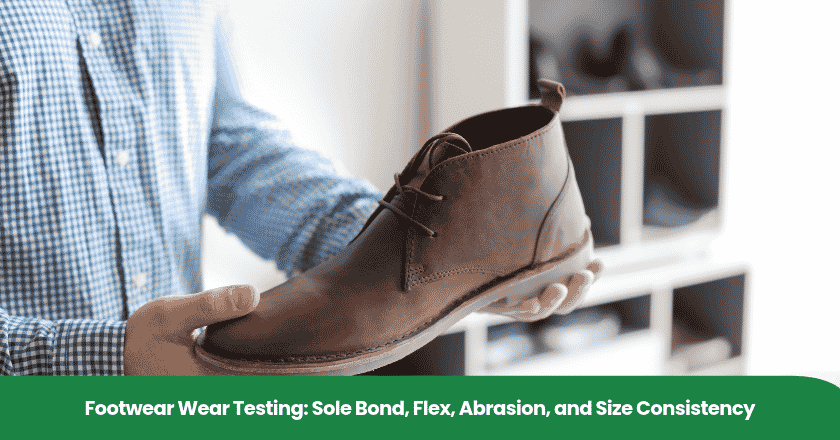
A footwear wear testing plan should tell the buyer four things before a bulk order goes ahead: whether the sole stays attached, how the shoe behaves when it bends, how the outsole material wears in the selected test, and whether the finished sizes match the approved range. Agree on a specimen, test method and acceptance rule for each. Then make sure the samples represent the materials, tooling and construction the factory will use in production.
What to Approve Before Ordering Footwear
Approve sole bond, flex, abrasion and size separately for the intended footwear build. Compare the report or measurement against the criterion agreed for that check, and record the material and construction revisions that it covers. At the pilot, use production-representative shoes and identify the sizes and lots eligible for release.
- How it works: Use the relevant sole joint, finished shoe, outsole specimen or size set to answer the specific buying question.
- Risk: A passing outsole material test leaves an assembled shoe free to fail through separation, cracking or an incorrect size.
- Decision: Hold affected pairs or builds until failed checks are resolved and the corrected evidence is signed.
Start with how the shoe will be sold and used. A paved-surface walking shoe, a dress shoe and a protective work shoe may call for different conditions and evidence. The following checks are a purchasing framework for ordinary footwear. Ask the lab to confirm what applies to the intended construction and check any separate requirements for regulated footwear or claims before finalizing the order.
Check Sole Bond on the Actual Build
Test sole bond on the actual construction and identify which joint was loaded. Name the upper, outsole, any intermediate layers and the bonding process that produced the sample. Record the location, measured result and what separated or tore, so the buyer can tell whether the finding applies to the joint and build being ordered.
ISO 17708 on upper-to-sole adhesion describes testing resistance to separation between the upper and outsole or between adjacent outsole layers, as well as tearing of the upper or sole. Its scope covers relevant closed shoes with a continuously assembled upper and describes ageing conditions that can be used for production control. Confirm that scope and whether ageing is appropriate for the intended product with the lab.
Send the lab an assembly drawing or annotated sample that distinguishes the joints. On a layered sole, a separation at the upper-to-sole edge and a separation between two sole layers can require different investigations. Record the area tested, such as the forepart or heel, when the selected method and construction permit it. Ask the lab to show where the specimen came from and how the damage appeared.
Log a separation at an interface differently from a tear through the foam or upper. A material tear shows where the specimen failed under that test, even if the target interface stayed joined. Apply the buyer's agreed rule for that result. Have the factory retain the upper, sole, bonding process and production batch identifiers for the tested pair, so a changed material or process can be traced.
Decide in advance which locations and conditions need their own results and how the buyer will treat an individual failure. An average can conceal a weak region. Keep the report and failure photos by sample and test location, then compare a representative production pair to the approved build before bulk release.
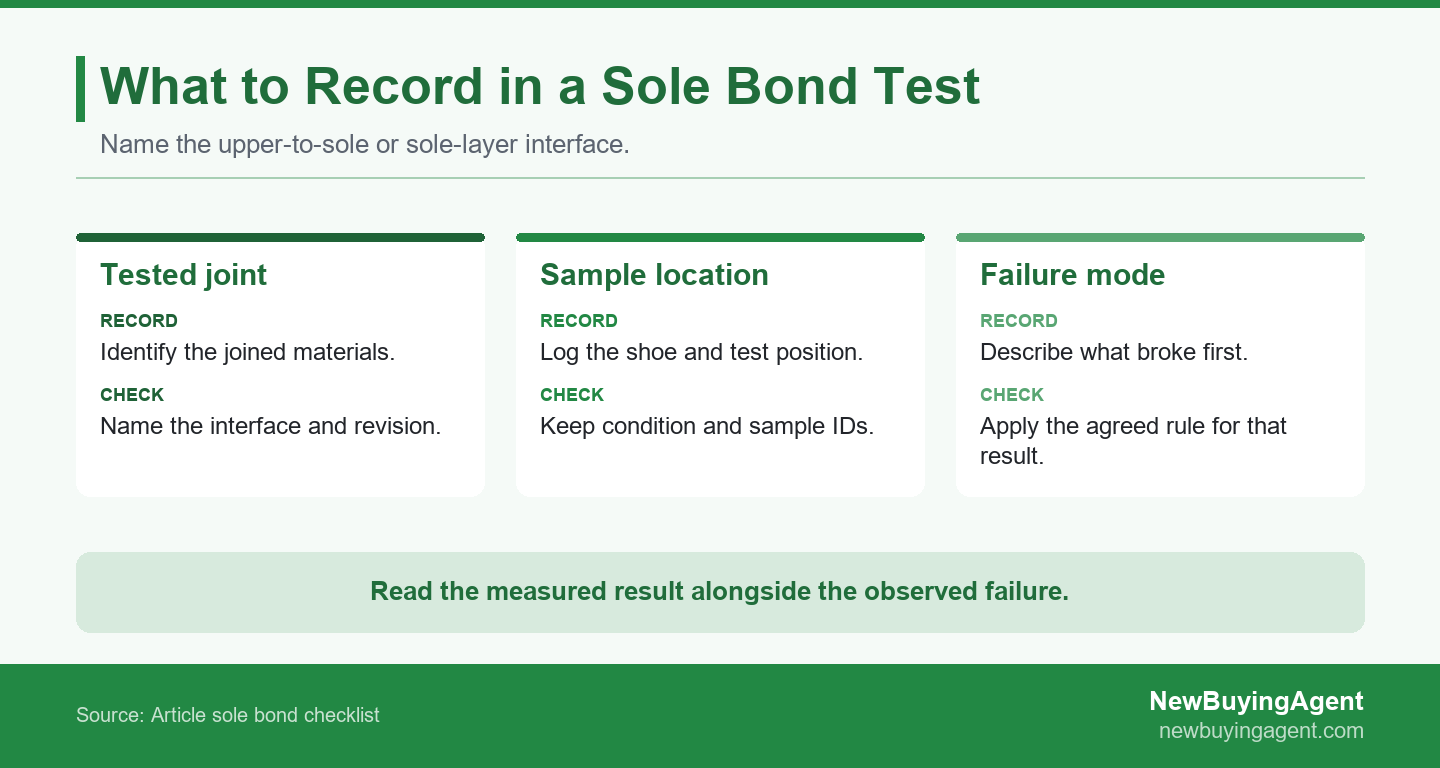
Link each bond result to the tested joint, location and observed failure
Use the Right Flex Test for the Failure
Use finished shoe flex when the question is how the assembled upper, sole and joints behave under repeated bending. Use an outsole method when the question is the sole component's resistance to the specified flex damage. Give the lab the intended use, construction and suspected failure before asking it to select specimens and test conditions.
SATRA TM92 on completed footwear flexing assesses a completed shoe under repeated bending and checks for damage at set points. Agree on the applicable method, flex conditions, inspection intervals and what counts as a failure for your order. Record the first observed damage and its position. A forepart opening, an upper crease that becomes a crack and a broken stitch point the investigation in different directions.
ISO 17707 on outsole flex resistance examines cut growth in outsoles, including the effect of material and surface pattern, and has a longitudinal rigidity limit in its scope. Ask the lab to establish whether the proposed outsole falls within that scope. Record the outsole code and pattern, and keep that result separate from any decision about the full shoe.
Specify where the product should bend and how the lab should check that the test represents the shoe. Ask about any setup implications when the model changes length, has a rigid forepart, or uses size-dependent tread geometry. Define which shoe sizes need to be included before sampling. For a meaningful comparison between constructions, keep conditioning and assessment rules aligned, or state clearly why a different method is needed.
If you run a wear trial, write down the route, duration, wearer and observation schedule, and ask for photos of observed failures. That may uncover rubbing or damage you had not anticipated. Treat those observations as prompts for follow-up checks and keep their conditions with the record. The controlled flex result answers a separate question about the test specimen.
Check the Outsole Material for Abrasion
Use outsole abrasion to compare the wear of the specified material under the selected method. Ask which compound, color if relevant, and wear zone the specimen represents. Compare the results only when specimen preparation, test settings and units match, then tie the accepted result back to the actual production outsole revision.
SATRA TM174 on rotating-drum abrasion measures material volume loss under a specified abrasion procedure and is mainly applicable to polymeric soling specimens, including suitable pieces cut from finished soles. In a multi-material sole, ask which region and material the lab can sample and which contact zones remain untested. A report for one rubber layer leaves a different exposed compound unqualified.
Tell the supplier where the first signs of wear would matter. For a walking shoe with distinct heel and forefoot materials, check whether one swatch can represent both or whether each needs its own assessment. Record whether the test used stock sheet, a coupon prepared from the intended formulation, or material cut from a production sole. A change in compound or source can invalidate a comparison even when the outsole drawing is the same.
Use the value to compare like specimens or apply the agreed material limit. Traction depends on a separate assessment under the relevant conditions if the buyer needs it, and a lab abrasion value alone cannot predict useful life on a shopper's route. If visible wear changes before the material is worn through, set a separate observation for the finished shoe, such as loss of a colored surface in a nominated area.
If the factory offers two compound options at different prices, NewBuyingAgent's footwear sourcing and supply in China can source and supply against the specified build through its cooperating factories, with quality and logistics support. State the use, outsole code and checks that apply before comparing quotes. Ask the team to show any proposed compound change against that same construction and acceptance plan.
Verify the Finished Shoes Across Sizes
Verify the ordered sizes on left and right finished shoes, then assess fit for the intended range. Define the measurement method, the target for each size, and the acceptable difference within a pair. Check that the molded or lasted shoe, the size printed on it, and the packaging label all refer to the same ordered size.
A last is the form around which a shoe is shaped. SATRA guidance on feet, lasts and footwear distinguishes foot size, last shape and the dimensions of the finished shoe as contributors to fit. Keep the last ID, width fitting and size progression with the sample. Name any changes in lining, footbed or toe construction that could affect the room available in the finished shoe.
ISO 19410-1 measures effective shoe length to accommodate the foot and excludes heel- and toe-open shoes. Use a method appropriate to the style and state how the completed shoe is prepared, including the intended insock or footbed. Keep the internal length result separate from the external sole length and from the wearer's foot length.
| Size check | Record | When to hold |
|---|---|---|
| Finished shoe dimensions | Target and tolerance by size, units, fixture and measurement state. | A shoe is outside the approved range. |
| Left and right pair | Both readings, pair difference, shoe ID and size markings. | Pair difference exceeds the agreed limit, or markings disagree. |
| Size progression and fit | Checked sizes, last and width IDs, fit notes and packed labels. | An affected size or width has no acceptable result. |
Ask for a size set with a base size, range ends and any transition in last or tooling that changes the build. Agree which other sizes the factory must measure and which need a fit assessment. Specify the sock and fastening condition for a fitting and record toe room, heel hold and pressure points. A left shoe and a right shoe can both meet the length range while exceeding a separate pair-difference limit, so apply both checks.
Hold the Affected Build and Sizes
In a hypothetical walking shoe pilot, initial sole bond and outsole abrasion results meet the agreed criteria. The forepart opens during completed-shoe flexing, and a separate finished-shoe measurement comes in short at one size. Hold the affected build and size until their own failures are resolved. Keep the two passing reports attached to the samples and configurations they describe.
For this style, suppose the approved effective length range for the labeled size is 270 to 274 mm and the permitted left-right difference is 2 mm. The left shoe measures 271 mm and the right 268 mm. The right shoe misses the range by 2 mm and the pair difference is 3 mm, so both rules fail. Check the marking, measuring state and fixture first, then trace the right shoe to the last, footbed, and production records. Those numbers are hypothetical order criteria.
For the flex failure, have the lab identify the affected interface and provide photos. Ask the factory to trace the components and assembly records of the failed pair. Look for evidence of a difference at the relevant joint, without assuming that the measured short shoe or the abrasion compound caused the opening. If the factory proposes a construction correction, identify which results the change affects and repeat the relevant tests on the corrected build.
A corrected size pair alone cannot close the flex hold. Obtain the required results for the construction and the affected sizes, sign the dispositions separately, and reconcile them against the pilot inventory. If the failed construction cannot be segregated confidently by line, lot or time window, hold the wider group until quality can account for it.
Send a Test Plan the Factory Can Use
Build the footwear test plan around the exact SKU, construction and size range the factory will supply. Agree on specimens, sample counts, method editions, conditioning, acceptance criteria and owners before the pilot. Require the factory to identify where the sample came from and the quality approver to record what can be released after each check.
| Approval item | Record before the pilot | Evidence before release |
|---|---|---|
| Sole bond | [Joint, locations, method, conditioning and individual result rules.] | Measured results and named failure modes. |
| Flex | [Whole shoe or outsole, relevant sizes, method and damage criteria.] | Damage observations and disposition by specimen. |
| Abrasion | [Compound, wear zone, specimen type, setup and limit.] | Result traceable to the production outsole. |
| Size and pair | [Last and width IDs, sizes, fixture, tolerance and pair limit.] | Finished readings, fit decision and matching labels. |
| Lot decision | [Component revisions, sample IDs, inspection owner and hold rules.] | Signed approval for identified lots and sizes. |
Keep the approved reference pair and identify it by size and build. For destructive testing, retain traceable photos and records that connect the report to production material. Decide which checks are development tests and which will be repeated on an agreed bulk sampling plan. If tooling, upper material, adhesive, outsole compound or footbed changes, review what evidence still covers the change before accepting a new lot.
NewBuyingAgent's manufacturing and quality-control background and local cooperating factory resources can support repeat orders against a fixed footwear construction. Give the buyer and supplier a shared reference for any change in tooling, components or size coverage. The resulting quote and production approval can then refer to the same intended build.
To source shoes from China, send the footwear specification to NewBuyingAgent with intended use, target price, quantities by size and width, destination and delivery timing. Include the construction drawing, component requirements and test criteria important to the order. Identify any results the supplier must submit before cutting materials or releasing production.
Frequently Asked Questions
Does a passing sole bond test cover flex damage?
Evaluate flex damage with the applicable flex test even when sole bond has passed. A bond result concerns the joint, location and conditions tested. Finished shoe flex can reveal an opening or crack after repeated movement elsewhere in the assembled product. Compare the observation against the signed criterion and trace the specimen to the production build.
Can an outsole abrasion report prove a number of months of wear?
An abrasion report gives the result under the stated test conditions. Use it to compare material specimens tested on the same basis or to check the agreed material limit. Actual wear depends on where and how the shoes are used. A lifespan claim would need relevant supporting evidence for the finished product and use it describes.
Does one approved size cover the full size run?
Verify the ordered size range and the finished shoe measurements that matter. Start with the base size, size extremes and any changes in last or tooling, then agree what else the buyer and lab must check. Include left-right agreement and confirm the marking matches the measured size. Check fit separately for the intended population.
Which shoe changes require a fresh test review?
Review any change that could affect a requirement already approved. A new adhesive or upper treatment can affect the bond, and an outsole compound change may affect flex or abrasion. A different last or footbed can change fit. Record the affected sizes, components and lots, then identify which tests or checks the change requires again.
NewBuyingAgent
Recursos relacionados

Comece hoje
Vamos transformar seus objetivos de compras em realidadeWeChat:+86 15157124615
WhatsApp:+86 15157124615
Endereço: Edifício 10 #39 Xiangyuan Road, Hangzhou, China
