

Introduction
The quote came back at $6.40 and the factory said the mould would be ready in five weeks. Eleven weeks later you have a working product, a tooling invoice you half expected, and no written answer to the one question that turns out to matter: whose mould is it.
Developing a product in China is mostly a sequence of questions asked in the right order. Ask about tooling ownership after the mould is cut and you have already lost the argument. Ask about certification after the pilot run and you may be re-engineering a part that passed every internal test. The order of the questions costs more than the answers do.
Key Takeaways
• Freeze the specification before requesting quotes, because every change after tooling starts is paid for twice.
• An ODM product is faster and cheaper to launch, while an OEM build gives you a design nobody else can sell.
• Tooling ownership, storage and transfer rights belong in writing before you pay the first mould invoice.
• Certification requirements should be confirmed at the design stage, not after a pilot run has been approved.
• A paid pilot run of a few hundred units exposes assembly problems that no prototype round will ever show.
Questions to Answer Before You Brief a Factory
Half of the delays in a development project trace back to a brief that was still an idea when it was sent out. Factories quote what they read, and an unclear brief produces prices you cannot compare.
What is fixed and what is genuinely negotiable
Sort your specification into three piles before the first email: requirements that define the product, preferences you would trade for cost, and details you have not decided. Engineers on the factory side can solve a great deal if they know which is which. Told that everything is fixed, they quote defensively and add margin for the changes they assume are coming.
Do you have a bill of materials, or a description
A BOM (bill of materials — the itemised list of every component, material and finish in the product) is what a factory prices against. Without one, quotes differ because the assumptions differ, not because the factories do. Even a rough BOM with ten lines and a few question marks gives you comparable numbers and shows the supplier you have done the thinking.
State a target cost in the brief as well. Buyers withhold it in the belief that a factory will otherwise quote exactly that number, which does happen. What happens more often is weeks spent developing toward a price the project could never reach. A target cost turns the first conversation into an engineering discussion rather than a guessing exercise.
Expert Tip: Send one deliberately open question with your brief, such as how the factory would reduce cost by ten percent without changing the visible design. The answers separate a sales desk from an engineering team within a day. A plant that replies with three specific material or process substitutions is a development partner. A plant that replies with a lower number and no explanation has simply cut its own margin.
OEM or ODM: The Question That Sets Everything Else
This single choice decides your timeline, your tooling bill and whether the product can be copied by the competitor who orders from the same plant next month.
What each arrangement actually gives you
An OEM (original equipment manufacturer — the factory builds to your design) route means your drawings, your tooling and a product nobody else can sell. An ODM (original design manufacturer — the factory sells a design it already owns) route means picking from an existing catalogue, adding your branding and shipping in weeks rather than months. The ODM version is cheaper to start and impossible to protect.
Which one suits your stage
Buyers testing a category are usually better served by a lightly modified ODM product, since the cost of being wrong is a small order rather than a mould. Buyers with proven demand and a margin worth defending should be paying for original tooling. Worth knowing: many sellers run both at once, using ODM items to fund the development of the one product they intend to own.
Common Mistake to Avoid: Assuming a modified ODM product is exclusive because the factory said so verbally. Cosmetic changes such as a colour, a logo or a different packaging insert rarely give you any exclusivity at all. Unless you paid for new tooling or signed a written exclusivity term with a volume commitment attached, the base product remains available to anyone who asks for it. Confirm in writing which elements are yours.
Tooling and Moulds: Cost, Ownership, Custody
Tooling is the largest single cheque in most development projects and the least documented. Three questions cover almost all of the risk.
What it costs and how it gets recovered
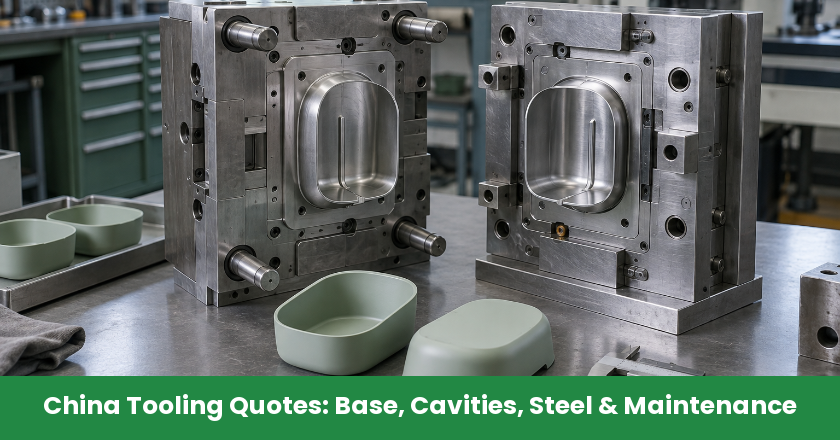
A simple injection mould commonly runs a few thousand dollars, while a multi-cavity tool for a complex housing can reach five figures. Factories often offer to amortise the cost across the first orders, which lowers the invoice and quietly makes the tooling theirs. Paying the full amount up front is usually the cheaper long-term position, because it removes any argument about custody.
Ownership, storage and the right to move it
Ownership, physical storage and transfer rights are three separate things. Get all three in the agreement: that the tool belongs to you on payment, that the factory stores and maintains it at its own cost, and that it will be released or shipped to another plant on request. Ask for photographs of the tool with its serial number after the first run.
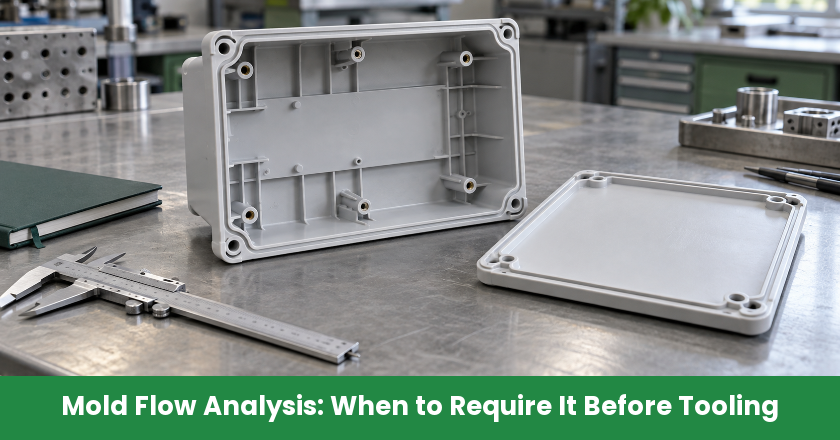
Expert Tip: Ask for the mould flow analysis or the tooling drawing before production begins, even if you never open the file. The request tells the factory you intend to be able to move the tool one day, which changes how the relationship is priced and how carefully the tool is maintained. It also gives a second factory something to work from if you ever need to transfer the job quickly.
Prototype Rounds and What to Test in Each
Prototyping fails when every round tries to check everything. Each stage should answer one class of question and be allowed to look unfinished in every other respect.
Three rounds, three purposes
The first round checks form: size, proportion, how it sits in the hand. Through 2026 most mid-size Chinese factories run in-house 3D printing, so this round often arrives within a week and costs very little. The second round checks function with real materials and real assembly. The third checks the production process itself, made with the actual tooling on the actual line.
What each round costs in time and money
Budget ten to fifteen days per round including shipping, and expect to pay for each one. A form prototype may cost under a hundred dollars. A functional unit built with production materials can run into the hundreds, and a tooling sample costs whatever the tool costs. Three rounds is normal, five is common on anything with electronics or fabric construction.
Record every change between rounds in one running document with dates against each line. Development conversations scatter across chat, email and calls, and by round three neither side remembers who approved the thinner wall section. A shared change log costs nothing and settles most of the disputes that surface during the first production run.
Expert Tip: Write down what would make you reject each round before it arrives, then test against that list rather than against your overall impression. Prototypes are seductive objects and buyers approve them emotionally, especially the first one that looks like the drawing. A written test list converts a reaction into a decision, and it gives the factory something specific to fix instead of a message saying it feels slightly off.
Certification and Testing Questions
Compliance is the stage most likely to send a finished design back to engineering, because the requirements sit in materials and construction rather than in appearance.
Confirm requirements before tooling, not after
Destination market rules determine material choices, labelling, battery specifications and sometimes the assembly method. Establish which tests apply while the design is still on screen. Four questions settle most of it, and all four are cheap to ask early.
• Which certifications does this product category require in each market you intend to sell in?
• Does the factory hold existing reports for the same material or component set?
• Which laboratory will run the testing, and does your buyer or marketplace accept that lab?
• Who pays for retesting if the first submission fails on a component the factory chose?
Who holds the report matters
A test report issued in the factory's name covers the factory. A report issued in your company name travels with you if you change supplier. The price difference is usually small and the practical difference is large, particularly for sellers who expect to move production later.
Common Mistake to Avoid: Accepting a certificate for a similar product rather than for yours. Factories hold many reports and will offer the closest match in good faith, but a report covering a different material, a different battery cell or a different plug type will not protect you in an audit or a marketplace review. Check the model number and material list on the certificate against your own specification, line by line.
From Pilot Run to First Production
The gap between a perfect sample and a consistent production run is where most new products lose their margin. A pilot run is how you find that gap while it is still cheap.
Why a few hundred units teaches more than ten samples
Samples are built slowly by skilled staff. Production is built quickly by a line. A pilot run of two to five hundred units reveals assembly steps that are hard to repeat, tolerances that drift and packaging that does not survive handling. Factories sometimes resist because short runs are inefficient, and paying a surcharge for the privilege is usually worth it. Treat the surcharge as part of the development budget rather than as an overpriced order.
Questions about price at real volume
Ask for the price at three quantities rather than one, and ask which components drive the difference. The MOQ (minimum order quantity — the smallest production run a factory will accept) attached to each price often comes from a component supplier rather than the factory itself, which means it is negotiable more often than buyers assume.
Expert Tip: Ask the factory to keep the pilot run rejects instead of discarding them, then have the defective units photographed and grouped by cause. That pile is the most honest quality document you will ever receive on a new product. It tells you which step of the process is fragile, and it gives you something concrete to fix before the volume order rather than a defect rate you can only argue about.
Development Support and Factory Choice With NewBuyingAgent
Development is the stage where the gap between a well-connected buyer and an isolated one widens fastest. NewBuyingAgent is your perfect partner for global sourcing from China, backed by 30 years of expertise in trade, manufacturing and quality control.
Which plant takes on your project largely decides how the engineering conversation goes. 100% Access to China's Factories. Use its 50,000+ cooperated partner factories—no language/region/time zone barriers. Its local reputation gets you full factory cooperation.
Engineering input and inspection sit together on this kind of work, since a design question and a quality question are frequently the same question. 20,000+ product development & QC experts ensure your products match market needs and stay high-quality. The running coordination that development demands is the part buyers underestimate. NewBuyingAgent handles all factory communication—perfect for multi-category buyers. Free up your time to focus on expanding your local market sales.
Frequently Asked Questions
How long does product development in china usually take?
Three to six months from brief to first production is a fair planning assumption for a moulded product. Simple items adapted from an existing design can move in six to eight weeks. Anything with electronics, certification or fabric construction runs longer, and buyer approval time is consistently the largest variable in that total. Building two weeks of slack into your launch date is cheaper than compressing the prototype stage.
Will the factory copy my design and sell it to someone else?
The short answer is that owning the tooling and registering your design where you sell are worth far more than a signed agreement alone. Factories that work regularly with brand clients have a commercial reason not to copy. The real exposure is usually a component supplier or a competitor ordering a similar ODM item, rather than a deliberate theft of your drawings.
Should I pay for tooling up front or let the factory amortise it?
Paying up front costs more on day one and gives you a clean ownership claim. Amortised tooling lowers the initial invoice and typically leaves the tool in the factory's hands, which becomes expensive if you ever want to move production. Buyers expecting a single supplier relationship for years can reasonably choose either, while anyone planning to compare plants later should pay up front.
How does NewBuyingAgent help on a development project?
Its role starts at the point where the right factory has to be found and persuaded to take the work. Its wide factory network lets it pick low-cost, high-cooperation suppliers. Even with its margin included, NewBuyingAgent cuts your costs by 5%-10%. For buyers developing in more than one category, the scope extends across the range, since it can supply products from China across all categories to you at better price, quality and service.
Conclusion
Order your questions and the project mostly runs itself: freeze the spec, decide OEM or ODM, settle tooling ownership in writing, prototype in stages, confirm certification early, then buy a pilot run before you buy volume. Each answer is cheap at the right moment and expensive one step later. If you would rather have that sequence handled by a partner who has run it before, NewBuyingAgent is worth a conversation.
Sources
1. CE Marking: Manufacturers – European Commission — https://single-market-economy.ec.europa.eu/single-market/goods/ce-marking/manufacturers_en
2. Basic Importing and Exporting – U.S. Customs and Border Protection — https://www.cbp.gov/trade/basic-import-export
3. We Supply Products To You | NewBuyingAgent — https://www.newbuyingagent.com/what-we-do/we-supply
4. Success Stories | NewBuyingAgent — https://www.newbuyingagent.com/cases
NewBuyingAgent
Related Resources
今日始める
あなたの調達目標を現実に変えましょうWeChat:+86 15157124615
WhatsApp:+86 15157124615
住所:中国、杭州、祥園路39号10号館
