

Commercial Invoice for International Shipping: Requirements & Examples
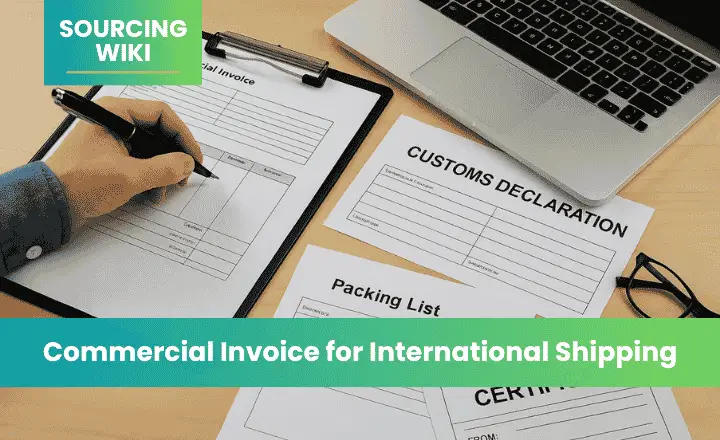
A commercial invoice is a trade document issued by the seller to the buyer that records the details of an international sale. It identifies the parties involved, describes the goods being shipped, and states the relevant quantities, prices, and transaction terms. It is also an important document used by customs authorities to review imported goods and assess applicable duties and taxes.[1][2]
For international shipments, a commercial invoice serves both a commercial and a customs-related purpose. The buyer uses it to verify the transaction and payment details, while customs authorities may use the information to assess the nature and value of the goods. For example, U.S. Customs and Border Protection (CBP) requires an adequate merchandise description, quantities, values, and other specified information in the commercial invoice or acceptable substitute documentation for applicable import entries.[3]
For buyers sourcing products from China, the commercial invoice is typically prepared as part of the shipping documentation process. Its information should reflect the actual transaction and shipment, and should be coordinated with the purchase order, packing list, and other relevant documents. However, a commercial invoice is not a substitute for every other customs document, and the required information can differ by destination country and product category.
What Information Should a Commercial Invoice Include?
There is no single commercial invoice template that is mandatory for every international shipment. The required fields depend on the destination market, the nature of the goods, and the applicable customs rules. The European Commission's Access2Markets guidance identifies common information such as exporter and importer details, invoice date and number, goods descriptions, quantities, unit values, total values, currency, payment terms, delivery terms, and transport information.[2]
The following checklist covers information commonly included in a commercial invoice:
- Invoice number: A unique reference number to identify and track the transaction.
- Invoice date: The date the invoice is issued.
- Exporter or seller: The legal name and address of the seller or invoicing party.
- Importer or buyer: The legal name and address of the buyer.
- Consignee: The receiving party, if different from the buyer.
- Product description: A clear description of each product.
- HS code: The applicable commodity classification code, where required or appropriate.
- Quantity and unit of measure: The number of units and relevant measurement unit.
- Unit price: The price per unit in the stated currency.
- Line total: The value of each product line, calculated from the quantity and unit price, subject to any applicable adjustments.
- Total invoice value: The total amount invoiced, with the currency clearly stated.
- Country of origin: Origin information where required.
- Payment terms: The agreed payment method and timing, where applicable.
- Delivery terms: The agreed Incoterms® rule and named place, where applicable.
- Freight and insurance: Separate amounts where relevant to the transaction and customs requirements.
This is a general preparation checklist rather than a universal list of mandatory fields. U.S. CBP specifies particular invoice information for U.S. imports, while EU guidance identifies information commonly used for customs clearance in the EU.[2][3] Exporters and importers should confirm the applicable requirements with their customs broker or the relevant customs authority before shipping.
How Detailed Should the Product Description Be?
Product descriptions should identify the actual goods clearly enough to support the relevant customs and commercial checks. Vague descriptions such as "accessories," "samples," or "household goods" may not provide sufficient information to distinguish the products being imported.
A more useful description identifies the product type and relevant characteristics. For example, instead of writing "kitchenware," a seller might describe the item as "stainless-steel insulated drinking tumblers, 500 ml." The description should be accurate and should not introduce characteristics that the product does not have.
The appropriate level of detail depends on the product and the destination country's requirements. The invoice should also be consistent with the actual goods, the purchase order, and any supporting technical information. Product descriptions and classification codes should not be selected merely because they appear to simplify customs processing.[1][3]
How Should the Invoice Value Be Reported?
The commercial invoice should accurately reflect the commercial transaction, including the agreed prices and any relevant adjustments. Unit prices, quantities, line totals, discounts, and the total invoice amount should be internally consistent, with the currency clearly identified.
However, the commercial invoice total and the customs value are not necessarily the same figure. Customs valuation rules may require certain costs, assists, commissions, royalties, or other adjustments to be considered, depending on the jurisdiction and transaction. For U.S. imports, CBP explains that certain amounts may need to be included in the declared value even if they are not shown as part of the invoice's basic merchandise price.[4]
Buyers should therefore avoid arbitrarily reducing invoice values to lower import duties. If freight, insurance, tooling, assists, royalties, related-party pricing, or other special circumstances affect the transaction, the importer should confirm the correct treatment with a qualified customs professional.
Commercial Invoice vs. Packing List vs. Pro Forma Invoice
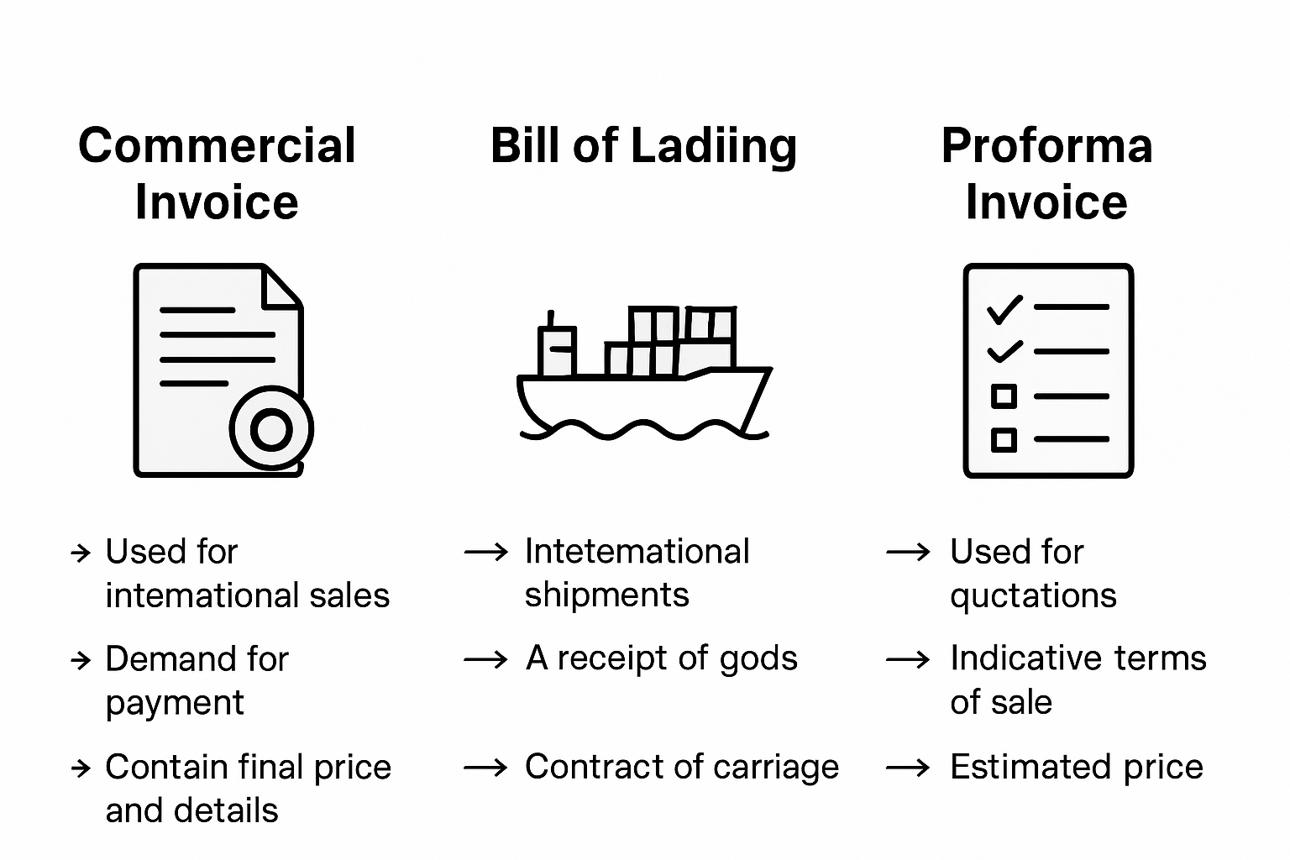
These three documents serve different purposes in international trade. They may contain overlapping product and transaction information, but they should not be treated as interchangeable.
Commercial invoice: Records the commercial sale and supports customs procedures. It typically includes seller and buyer details, product descriptions, quantities, prices, total value, and transaction terms.
Packing list: Describes how the shipment is physically packed, including carton count, package contents, weights, dimensions, and shipping marks. It helps the buyer, carrier, warehouse, and customs-related parties check package details.[2]
Pro forma invoice: Provides a preliminary quotation or statement of expected transaction details before the final commercial invoice is issued. It may help the buyer review a proposed order or arrange preliminary procedures, but it should not automatically be treated as a replacement for the commercial invoice required for a particular customs entry. The parties should confirm which document the relevant customs authority will accept for their specific shipment.[1][3]
How to Prepare a Commercial Invoice for Export
Preparing a commercial invoice is not just a matter of filling in a template. The document should reflect the transaction accurately and provide information suitable for the export and import procedures involved.
Step 1: Confirm the parties and transaction details. Verify the seller's and buyer's legal names and addresses, invoice date, invoice number, purchase order reference, and any relevant consignee information. If a trading company sells the goods while a factory manufactures them, make sure the invoicing party is correctly identified.
Step 2: Describe the products accurately. List the goods separately where their descriptions, quantities, unit prices, or classifications differ. Include relevant characteristics and the applicable commodity code where required or appropriate. If classification is uncertain, consult the customs broker rather than guessing.
Step 3: Check quantities and calculations. Confirm that the quantities and units of measure match the actual shipment and supporting records. Calculate each line total and the overall invoice total, and check that discounts, charges, and currency are presented clearly.
Step 4: Confirm the transaction and delivery terms. Record the agreed payment terms and applicable delivery terms. If an Incoterms® rule is used, identify the named place or port and the relevant version where appropriate. The invoice should reflect the agreed commercial arrangement rather than an assumed allocation of responsibilities.
Step 5: Review customs-specific requirements. Check whether the destination market requires additional information, a particular format, supporting declarations, or other documents. U.S. CBP and EU customs guidance illustrate why importers should check the requirements of the destination jurisdiction rather than relying on a generic invoice template.[2][3]
Step 6: Cross-check the final shipping documents. Compare the commercial invoice with the purchase order, packing list, and transport documents. Resolve discrepancies before submission where possible. If the actual shipment differs from the original order, the relevant records should reflect the correct facts rather than being changed simply to make the figures match.
Commercial Invoice Example
The following is a simplified illustrative example for a shipment of drinkware. It demonstrates how basic commercial information can be organized; it is not an official customs form or a complete invoice template for every country.
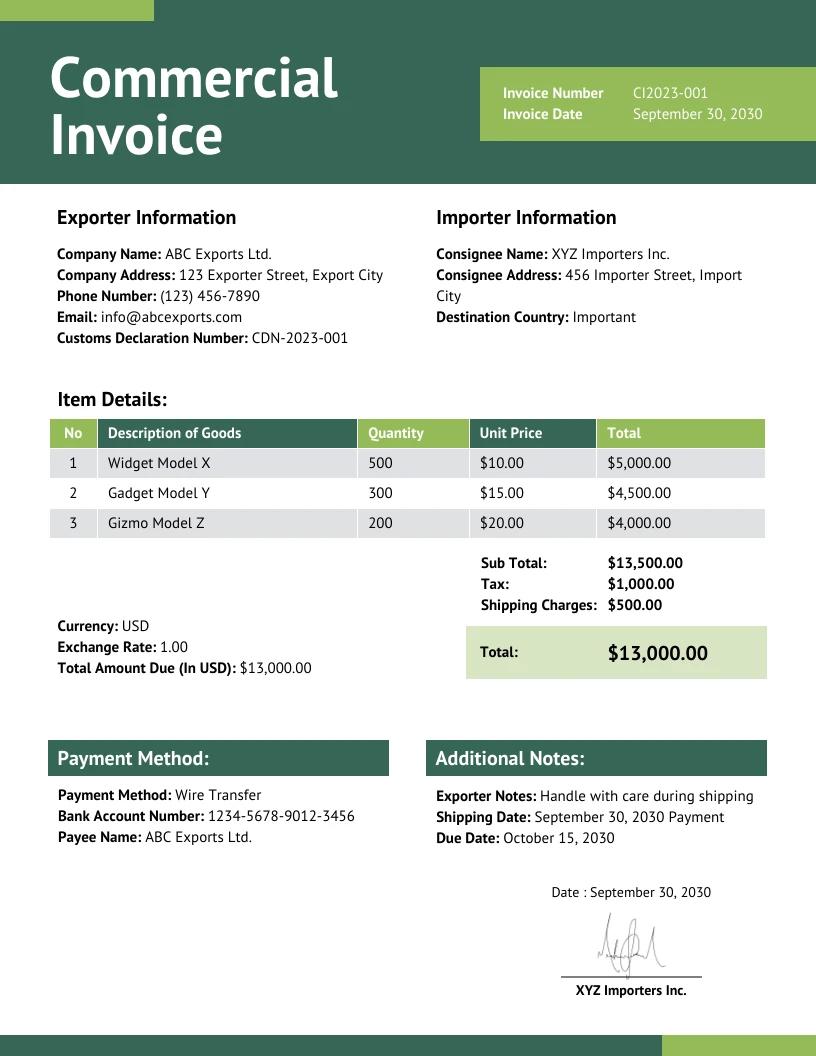
Image caption: An illustrative commercial invoice highlighting key fields, including seller and buyer details, product description, quantity, unit price, total invoice value, currency, and delivery terms.
Important: This is a simplified example for reference only. Exporters and importers should confirm the required information with their customs broker or relevant customs authority.
Before using a commercial invoice for a real shipment, the seller and buyer should verify that the parties, descriptions, quantities, values, and delivery terms are correct. The final document may require additional fields based on the destination country's regulations and the goods being imported.
Common Commercial Invoice Errors That Can Delay Shipments
Many invoice problems arise because the document is prepared separately from the purchasing and shipping records. Reviewing the invoice before shipment can help reduce avoidable queries, corrections, and delays.
Incorrect or inconsistent product descriptions. A product name on the invoice may differ from the description on the purchase order or other customs documents. The parties should use accurate descriptions that identify the actual goods and investigate any material differences before submission.
Mismatched quantities or totals. The invoice may show a different quantity from the packing list, or a line total may not equal the stated quantity multiplied by the unit price. These discrepancies should be resolved using the actual shipment and transaction records.
Unclear currency or value information. Missing currency labels, incorrect calculations, or unexplained adjustments can make the invoice difficult to interpret. The seller should clearly identify the currency and explain relevant charges or adjustments where necessary.
Incorrect party information. A seller, buyer, consignee, or invoicing party may be listed incorrectly. This is especially important when a manufacturer, trading company, export entity, and overseas buyer are different organizations.
Unsupported or incorrect commodity codes. An incorrect classification can affect duty treatment and regulatory requirements. A code should be selected based on the actual product and applicable classification rules, not copied blindly from an unrelated product or previous shipment.
Misrepresentation of the transaction value. Deliberately understating value or omitting relevant adjustments can create customs compliance risks. The invoice and customs declaration should be prepared using accurate transaction information and the applicable valuation rules.[4]
Treating a pro forma invoice as the final commercial invoice. A preliminary document may contain estimated quantities or prices that later change. Before shipment, the responsible parties should confirm which invoice is required and ensure that it reflects the final transaction details.
Frequently Asked Questions
Is a commercial invoice required for every international shipment?
Commercial invoices are commonly required for international commercial shipments and customs clearance. However, the exact documentation requirements and any exceptions depend on the destination country, shipment type, and circumstances of the import. Importers should confirm the applicable requirements with the destination customs authority or customs broker.[1][3]
Who prepares the commercial invoice: the buyer or the seller?
The seller or exporter ordinarily issues the commercial invoice to document the sale. The buyer should review the information for accuracy and communicate any corrections before shipment. A freight forwarder or customs broker may help prepare or process documentation, but that does not remove the need for the transaction details to be accurate.
Does the commercial invoice need to be signed?
Signature requirements vary by jurisdiction and transaction. Some customs procedures may accept an unsigned invoice, while particular destinations or circumstances may require additional declarations or documentation. Do not assume that a signature is universally required—or universally unnecessary—without checking the relevant rules.
Is the commercial invoice the same as the customs declaration?
No. The commercial invoice records the sale and provides information used in customs procedures. A customs declaration is the formal submission of information to customs authorities under the applicable procedures. The invoice may support the declaration, but it does not replace the declaration itself.
Should freight and insurance be included in the commercial invoice?
The answer depends on the transaction and the applicable documentation and valuation requirements. Freight and insurance may be shown separately or included in the agreed price structure, depending on the delivery terms. Their treatment for customs valuation can differ by jurisdiction and circumstances. The seller and importer should ensure that the invoice accurately reflects the transaction and that the customs value is calculated under the applicable rules.[4]
Can one commercial invoice be used for multiple products?
Yes, a commercial invoice can list multiple products when the document clearly identifies the relevant items, quantities, unit prices, and line totals. Products with different descriptions, classifications, or regulatory requirements should be listed separately as appropriate. Additional pages or supporting schedules may be used when needed, provided the invoice remains clear and consistent.
Commercial Invoices for Global Buyers
For buyers sourcing products from China, the commercial invoice is one of the key documents connecting the purchase order with international shipment and customs procedures. Clear product descriptions, accurate quantities, consistent transaction values, and correct party information can make it easier for exporters, buyers, and logistics providers to coordinate documentation.
NewBuyingAgent helps global buyers source products from China and coordinate purchasing activities around their requirements. Confirming order details and commercial terms early can help reduce discrepancies when shipping documents are prepared. Buyers should still verify destination-specific invoice requirements with their importer, customs broker, or other qualified professionals before goods are shipped.
A well-prepared commercial invoice does not guarantee customs release, but it provides a more reliable foundation for shipment documentation and helps reduce avoidable errors during international trade.
References
[1] International Trade Administration, U.S. Department of Commerce. Commercial Invoice. https://www.trade.gov/commercial-invoice
[2] European Commission, Access2Markets. Customs Clearance: Documents and Procedures. https://trade.ec.europa.eu/access-to-markets/en/content/customs-clearance-documents-and-procedures
[3] U.S. Customs and Border Protection (CBP). Commercial Invoice Requirements When Clearing or Filing Entry Documents with U.S. Customs and Border Protection. https://www.help.cbp.gov/s/article/Article-1175?language=en_US
[4] U.S. Customs and Border Protection (CBP). What Value Should Be on the Commercial Invoice Submitted to U.S. Customs and Border Protection? https://www.help.cbp.gov/s/article/Article-1162?language=en_US
Related Knowledge Base
Sourcing Practices & Insights: Commercial Invoice for International Shipping: Requirements & Examples
Latest Sourcing Guides




Comienza hoy
Convirtamos tus objetivos de abastecimiento en realidadWeChat:+86 15157124615
WhatsApp:+86 15157124615
Dirección: Edificio 10 #39 Xiangyuan Road, Hangzhou, China
