

Procurement Dashboard
Concept Definition
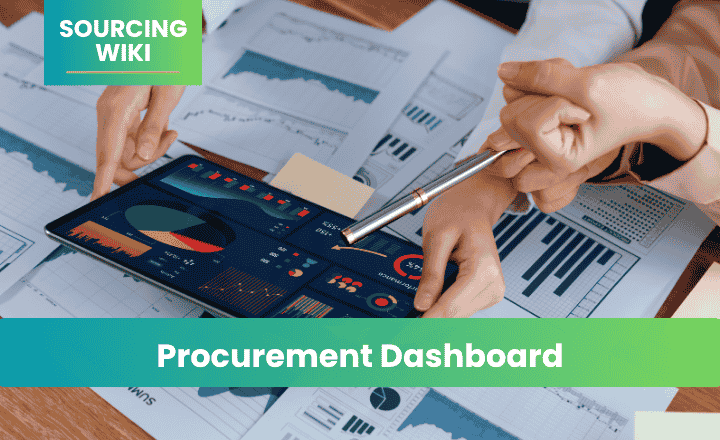
A procurement dashboard is a dynamic visual display that consolidates the most critical procurement performance indicators into a single, navigable interface. Its fundamental purpose is to reduce the cognitive effort required for procurement leaders and managers to maintain situational awareness — to know, at any moment, whether the procurement function is on track, where exceptions require attention, and whether strategic initiatives are delivering expected outcomes.
Dashboard Architecture: Tailoring Views to User Roles
The architecture of an effective procurement dashboard reflects the principle that different users require different views. Executive dashboards prioritize strategic summaries: total spend trend, savings performance versus annual target, supply risk heat map, contract portfolio expiry profile, and ESG program progress. Category manager dashboards drill into category-level spend, active sourcing pipeline, supplier scorecards, and contract compliance by business unit. Operations dashboards focus on transaction health: open requisition queue, purchase order aging, invoice exception rate, and payment term compliance.
Design Principles: Visualization, Relevance, and Data Latency
The selection of metrics for dashboard display should follow a strict discipline of relevance over completeness. The most common design failure is metric overload — dashboards that display thirty or more KPIs simultaneously force users into cognitive triage rather than enabling rapid insight. Best practice limits primary dashboard views to eight to twelve metrics, with secondary detail available through drill-down navigation.
Visualization choices carry significant weight in dashboard effectiveness. Trend indicators — sparklines or mini trend charts alongside current values — communicate directionality that point-in-time numbers cannot. RAG (red-amber-green) status indicators enable exception triage at a glance. Waterfall charts are particularly effective for communicating savings decomposition (cost avoidance versus cost reduction versus demand management). Heatmaps work well for geographic spend distribution and category risk profiling.
Data latency is a dashboard design constraint that is often underestimated. A dashboard displaying data that is two weeks old is not a real-time management tool — it is a scheduled report in a visual wrapper. Organizations serious about procurement dashboard capability must invest in data pipeline architecture that supports daily or near-real-time refresh, particularly for operational metrics where timely exception management is the primary use case.
Governance and the Challenge of Organizational Adoption
Dashboard governance — the processes that control metric definitions, data source authentication, change management, and user access — is as important as the dashboard itself. Undocumented metric calculations, inconsistent data sources across dashboard versions, and uncontrolled changes to visualization logic undermine the credibility of the dashboard as a decision support tool.
Cloud-native analytics platforms (Power BI, Tableau, Looker) have substantially lowered the technical barrier to procurement dashboard development. However, the organizational challenge of dashboard adoption — ensuring that procurement decisions are actually informed by dashboard data rather than parallel Excel models — remains the primary implementation risk for most organizations.
Related Knowledge Base
Sourcing Practices & Insights: Procurement Dashboard
Latest Sourcing Guides



Comienza hoy
Convirtamos tus objetivos de abastecimiento en realidadWeChat:+86 15157124615
WhatsApp:+86 15157124615
Dirección: Edificio 10 #39 Xiangyuan Road, Hangzhou, China
