

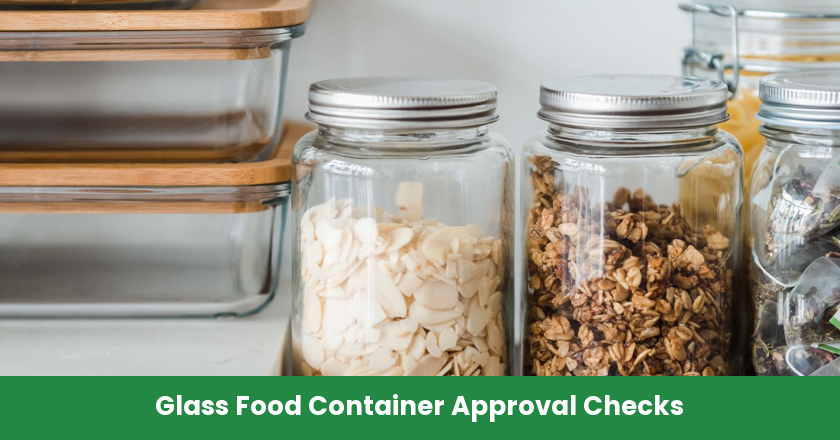
To approve a glass food container, ask for separate evidence for the glass body, the lid assembly and the shipping pack. A borosilicate declaration should identify the glass used in the finished body. A fit test should show how the actual lid, gasket and rim work together. A packaged drop test should show what happened to the product inside the shipping configuration you intend to buy. Write those decisions into the purchase specification so a good result in one test cannot hide a failure in another.
Approve the Glass, Closure and Shipping Pack
A glass food container earns approval when its material claim, closure performance and shipping protection are each supported by evidence for the proposed production configuration. Identify the body, lid, gasket and pack revisions, then check the relevant documents and sample results against the marketed use. Hold an affected lot if a required check fails, an approved configuration changes without review, or the test specimen cannot be tied to the lot.
- Definition: The approved configuration identifies the glass body, closure parts and exact shipping pack.
- Risk: A lid that closes on one sample may leak on a different body, and an intact outer carton may contain chipped glass.
- Decision: Release only the configuration and lot covered by the accepted evidence.
Begin with your selling use. A fridge organizer sold upright, a lunch container carried sideways and a glass dish marketed for oven reheating need different claims and checks. Record the market, planned uses, pack format and excluded uses before assigning a test. Separate the body instructions from the lid instructions so a temperature claim for glass cannot carry over to a plastic lid or a removable gasket.
Verify the Borosilicate Claim for the Finished Body
The borosilicate claim needs material evidence tied to the finished glass body being sold. Request the grade or composition basis, the glass supplier or material batch reference, and the production records that link it to the approved specimen. Any claim about heat or temperature change also needs evidence for the finished configuration. Confirm the specimen or report covers the geometry, thickness and use the buyer plans to market.
Thermal shock is stress from a rapid temperature change or a temperature difference within the article. SCHOTT borosilicate glass guidance describes low thermal expansion and explains its relationship to thermal shock resistance. That distinction helps the buyer ask the right question about material choice. The result for a finished container still depends on which body was made and how it is used.
For example, SCHOTT technical data for its borosilicate flat glass publishes thermal properties for a specific flat glass product. Its figures describe that material and product form. For a molded food container, ask the lab to select an appropriate method and criteria for the actual body and claim. Record the specimen, conditioning, intended temperature conditions and observed outcome in the approval file.
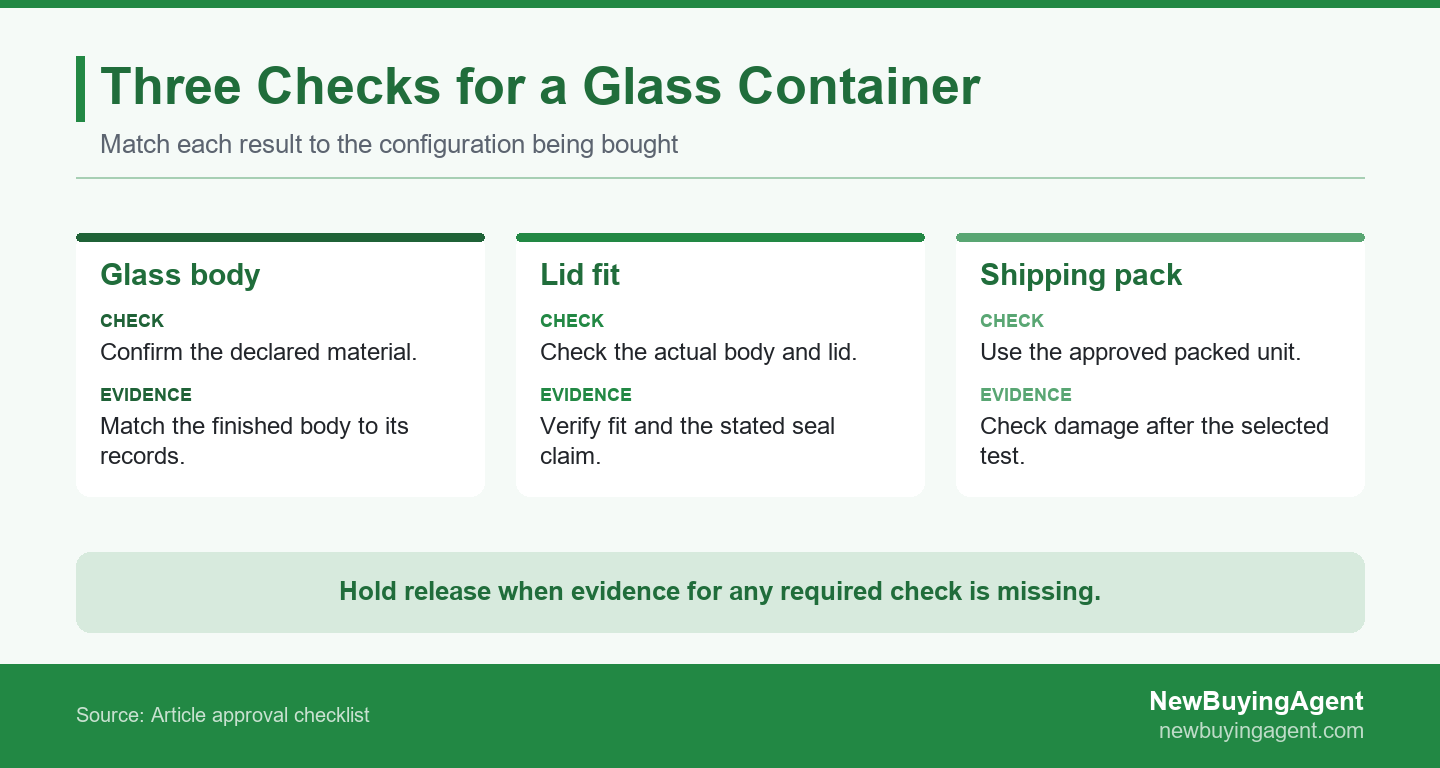
Separate glass identity, lid performance and shipping protection before approving a production lot
Ask the supplier to retain the glass lot or melt reference alongside the molded body item and drawing revision. Trace the submitted specimen to that record. If a declaration is generic or different suppliers produce lookalike bodies, have a qualified lab confirm what measurements or documentation can establish the claimed material. Appearance, tint and a quick boil demonstration provide too little information for material identification.
Approve the glass rim and edge condition alongside the material documentation. Record the areas the inspector needs to examine, especially at the rim and corners, and define the defects that trigger a hold. Relate a heat claim to the actual retail instructions and applicable limits. If the body qualifies for a temperature use but the lid has different restrictions, state those conditions separately on the product and in the inspection file.
Check Lid Fit Across Production Variation
A reliable lid fit check uses production-representative bodies, lids and gaskets across the variation the supplier expects to ship. Measure the rim and mating parts at agreed positions, then test the assembled closure using the intended handling conditions. Record fit and leakage separately. A lid can close easily while the seal leaks, or it can pass a test on a matched set while other production combinations fail.
Ask for the body and closure drawings with the rim profile, seating surface and interfaces relevant to the design. A gasket is the compressible seal between the lid and body. Identify its profile and revision and show where it sits. For a locking lid, record which parts engage the rim and what an inspector can observe when the closure is properly engaged.
Select samples that exercise the permitted dimensional variation. If bodies and lids come from different tools or suppliers, agree how to identify the sampled lots and pair them. Where multiple sizes share a lid, verify each claimed pairing on the approved sample plan. Avoid choosing only the pair that the factory set aside for photography or customer demonstration.
| Check | Record | Hold if |
|---|---|---|
| Rim and lid fit | Drawing points, readings, part revision and sample ID. | Parts are outside the approved limits or cannot be traced. |
| Closure behavior | Gasket seating, engagement, opening and closing criteria. | The lid binds, rocks or fails to engage as specified. |
| Leak claim | Liquid, fill, orientation, duration and acceptance criteria. | The assembly fails the condition covered by the claim. |
| After conditioning | Care or handling sequence, followed by fit and seal results. | The assembly no longer meets an applicable criterion. |
State whether the test represents upright storage, side transport or another marketed use. Set the liquid and conditions before the test and document the allowed result. If repeated washing or opening is part of the product brief, specify which conditioning sequence comes first and repeat the functional checks afterward. When moisture appears outside the seal, require a reproducible observation and distinguish a leak from water already left on the exterior.
For U.S. food contact, FDA guidance on food-contact material components describes assessing the regulatory basis for substances reasonably expected to migrate under their intended use. Review the materials in the lid and gasket as well as the body. Give the compliance reviewer the actual parts, intended contact conditions and any coatings or colorants that could affect the assessment.
For a range sharing lids or gaskets, NewBuyingAgent's China product sourcing and supply uses cooperating factories and covers sourcing, quality control and logistics. Giving the team an explicit pairing list and test conditions helps align the body, closure and packing requirements before pricing and pilot checks.
Test the Shipping Pack Separately From the Product
A shipping drop test evaluates the complete pack the buyer expects to move through a defined route. Identify the outer carton, dividers or inserts, product orientation and quantity before testing. Then set the criteria for both the pack and its contents. A separate bare-product handling test may be appropriate for a specific durability objective, with its own method and evidence.
The ISO scope for vertical impact testing by dropping describes a method for complete, filled transport packages with predetermined test conditions. Ask the responsible lab to specify the chosen protocol, conditioning, drop height, package orientation and observation requirements. Bind the test report to the actual packed specimen and recorded gross mass. A result without the pack details leaves the buyer unable to establish which configuration was evaluated.
The ISTA parcel test procedure overview describes a parcel delivery test for individual packaged products. Use the applicable route, unit and current protocol to decide whether a parcel simulation or another transport evaluation is appropriate. A parcel shipped to a consumer and a master carton moving to a distribution center can need different approval evidence.
Record how the lids are fitted, separated or retained inside the pack and whether a divider can move during transit. Photograph the packed configuration before sealing. After testing, open the carton under the agreed procedure and examine the container rims, edges, corners and bodies, as well as lids and seals. An intact carton alone cannot clear the contents. Agree how the lab should record glass damage and isolate broken or chipped specimens.
If a buyer needs a bare-product impact result, ask the lab to identify the relevant use case and safe test conditions for that separate specimen. A bare glass impact test cannot establish the protection offered by a carton or insert. Keep the results and product claims attached to the matching test. Only carry a result over to a new pack when the responsible party has documented why the evidence still applies.
Repeat or update the appropriate assessment when the factory changes carton size, insert geometry, shipping orientation or pack count. Check the first production cartons against the qualified packing drawing and photos. Name the version and lot on the inspection record, so an affected group can be found if the packing line uses more than one configuration.
Hold an Unverified Lid and Packaging Change
A pilot should stay on hold when the observed failures violate separate closure and shipping requirements. In a hypothetical pilot, the gasket and corner insert differ from the qualified configuration. The seal leaks after conditioning and a packaged drop reveals a chipped rim. The buyer holds the affected lot while the supplier and quality team identify the scope and resolve both failures.
Start with part and packing identifiers and the pilot sample record. Confirm which gasket went into each closure lot and which corner insert went into each carton group. The symptoms guide the investigation, but the substitutions alone do not prove the causes. Check the lid pairing and dimensions against the seal failure, and use pack photos and damage location to help diagnose the impact result.
The supplier can propose restoring the approved configuration or submitting revised parts and packing for qualification. In either case, verify the actual closure on representative bodies and use the agreed package test on the intended pack as required by the approval plan. If fit passes while shipping protection still fails, hold shipment for that configuration. Record the approved evidence, rework disposition and first eligible lot before authorizing release.
Put the Evidence Into the Purchase Specification
A purchase specification ties each requirement to measurable evidence, a named revision and a hold trigger. Complete it for each advertised use and container variant, and link the records to the lot being released. The buyer and supplier should agree who owns each check and who can close a deviation. A later substitution should reopen the affected decision before the supplier ships.
| Approval item | Evidence to fill in | Hold if |
|---|---|---|
| Glass body and claim | [Body revision, lot trace, declaration and sample evidence.] | Material identity or claimed use remains unsupported. |
| Lid and gasket | [Part IDs, body pairings, fit criteria and sample results.] | A relevant pairing fails or parts differ. |
| Leak and care claims | [Conditions, conditioning, method and accepted result.] | The test fails or covers different use conditions. |
| Pack and drop | [Packed SKU, pack revision, route, protocol and damage results.] | Glass is damaged or the tested pack differs. |
| Release | [Lot IDs, deviations, accepted reports and release authority.] | A required approval or lot link is missing. |
For the EU, the European Commission food-contact framework summary describes restrictions on constituent release that could harm health or cause unacceptable changes to food. Ask the responsible reviewer to confirm relevant EU, material-specific or national requirements for the article and each contact component. Match the evidence to the finished glass, closure, intended foods and use conditions.
NewBuyingAgent's manufacturing and quality-control background and local cooperating factory resources can support ongoing product supply against a defined body, lid and pack. A controlled pairing list and packaging drawing give a repeat order a practical basis for comparing what was approved with what is being made.
To discuss a glass food container order from China, send the glass container specification to NewBuyingAgent with the quantities, target price, delivery timing and destination. Attach the body and closure drawings, intended use, shipping pack and checks you expect the supplier to document. This gives both teams a common basis for quoting the intended product and planning the inspection.
Frequently Asked Questions
Does borosilicate mean a food container is oven safe?
Oven use requires evidence for the finished glass body and its specified conditions. Ask which specimen, method and temperature conditions were assessed, and keep those conditions with the retail instructions. Review the lid and gasket separately. A glass material declaration alone leaves the marketing claim unresolved.
Can a lid fitting one size fit another glass body?
Approve interchangeability only after verifying the actual body and closure pairings. Have quality check the agreed range of parts for seating and engagement, then check the seal under the claimed use. Record the approved body and lid identifiers so the packing line can match them consistently.
Does passing a package drop prove the container is drop resistant?
A package drop result supports only the tested packaged configuration and protocol. It says how the packed unit and its contents performed under those conditions. A bare-container durability claim needs its own appropriate evidence, and a different shipping pack may need an updated approval.
Which component changes should reopen the approval review?
Review any change that can affect glass performance, closure fit or shipping protection. This can include another glass supplier, rim geometry, gasket profile, insert or pack count. Determine which evidence needs updating, and identify the first affected lot in the buyer's release records.
NewBuyingAgent
Recursos relacionados
Comienza hoy
Convirtamos tus objetivos de abastecimiento en realidadWeChat:+86 15157124615
WhatsApp:+86 15157124615
Dirección: Edificio 10 #39 Xiangyuan Road, Hangzhou, China
