

Rapid Prototyping & 3D Printing
Concept Definition
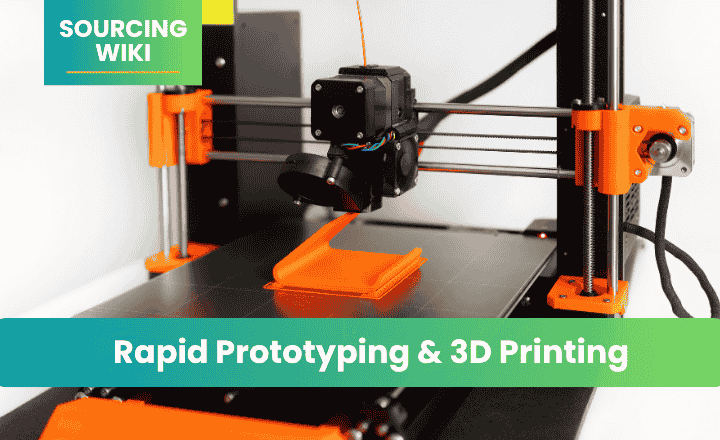
Rapid Prototyping refers to a group of techniques used to quickly fabricate a scale model of a physical part or assembly using three-dimensional computer-aided design (CAD) data. In modern B2B sourcing, this usually involves 3D Printing (Additive Manufacturing), CNC machining, or vacuum casting. This stage occurs before committing to expensive, permanent steel molds.
At NewBuyingAgent, we recommend rapid prototyping as a "Fail-Fast" strategy. By investing a small amount in a 3D-printed model, our clients can physically test the ergonomics, fit, and aesthetics of a product in days rather than months, ensuring the design is perfected before any capital is committed to mass-production tooling.
Why Use Rapid Prototyping in Sourcing?
Before the advent of 3D printing, creating a single sample often required making a temporary mold, which was both slow and costly. Rapid prototyping offers several strategic advantages:
- Design Verification: Confirm that parts fit together correctly (e.g., a lid fitting onto a bottle) without any mechanical interference.
- Ergonomic Testing: Physically holding a 3D-printed handle or tool allows for adjustments to user comfort that a 2D screen cannot convey.
- Stakeholder Approval: It is much easier to secure investment or internal "green lights" when you can put a physical, high-fidelity model on a boardroom table.
- Market Testing: You can use high-quality prototypes (painted and finished) for professional photography, crowdfunding campaigns, or trade show displays.
Common Prototyping Technologies
The Transition to Mass Production
It is important to remember that a 3D-printed prototype is not a production unit.
- Material Differences: A 3D-printed "ABS-like" resin does not have the same impact resistance or heat deflection as an injection-molded ABS plastic.
- Structural Integrity: 3D prints are built in layers, creating "grain" that can snap under stress. Mass-produced parts are uniform and significantly stronger.
- Surface Finish: While prototypes can be sanded and painted to look perfect, the natural texture of an injection-molded part will differ slightly.
Best Practices for Buyers
- Tolerance Checks: If your final product requires tight tolerances (e.g., ±0.05mm), ensure your prototyping method can match that precision.
- Prototype for Assembly: If your product has internal electronics, 3D print the "shell" to ensure the PCB (Printed Circuit Board) and batteries fit snugly before the factory starts the mold.
- Local Prototyping: Many buyers choose to 3D print locally in their home country for speed, then send the perfected "master" file to their Chinese manufacturer. This keeps the early design iterations confidential and reduces international shipping costs.
Related Knowledge Base
Sourcing Practices & Insights: Rapid Prototyping & 3D Printing
Latest Sourcing Guides


Get Started Today
Let's Turn Your Sourcing Goals into RealityWeChat:+86 15157124615
WhatsApp:+86 15157124615
Address:Building 10 #39 Xiangyuan Road, Hangzhou, China
