

China Supplier Samples
Definition and Scope
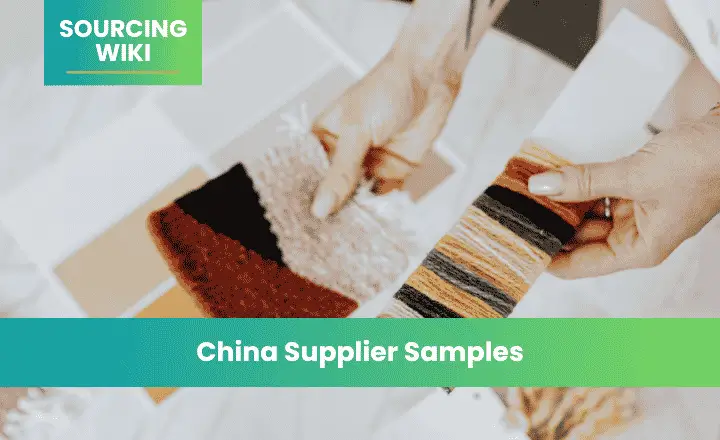
China supplier samples are physical product samples provided by Chinese suppliers for buyers to evaluate before placing or expanding an order. A sample may be an existing catalog product, a modified product, a prototype, or a pre-production sample made specifically for the buyer.
The purpose of sampling is to reduce uncertainty. Product listings, photographs, specifications, and supplier claims can provide useful information, but a physical sample allows the buyer to examine the actual product.
A sample should therefore be treated as an evaluation checkpoint rather than simply a free product.
Types of Supplier Samples
Different sourcing projects may require different types of samples.
| Sample Type | Typical Purpose |
|---|---|
| Stock sample | Evaluate an existing product |
| Reference sample | Compare supplier capability against a buyer-provided product |
| Customized sample | Evaluate requested modifications |
| Prototype | Test a new product concept |
| Pre-production sample | Confirm the final version before mass production |
| Production sample | Verify actual production output |
The terminology varies between suppliers and industries, so buyers should define what the sample represents rather than relying solely on its name.
Why Samples Matter
A sample allows a buyer to evaluate characteristics that are difficult to judge remotely.
Depending on the product, these may include:
- Material quality
- Dimensions
- Color
- Workmanship
- Function
- Finish
- Construction
- Packaging
- Labeling
- Overall appearance
Sampling is particularly important for customized products because the supplier may interpret a written requirement differently from the buyer's expectations.
How to Evaluate a Chinese Supplier Sample
The evaluation should be based on objective requirements rather than general impressions.
A buyer can create a sample evaluation checklist covering the most important characteristics.
| Area | Questions |
|---|---|
| Dimensions | Are measurements within the required tolerance? |
| Materials | Is the specified material actually used? |
| Appearance | Does the product match the approved design? |
| Function | Does it perform as required? |
| Workmanship | Are construction and finishing acceptable? |
| Packaging | Does packaging meet the requirement? |
| Labeling | Are marks, labels, and instructions correct? |
| Consistency | Can the supplier reproduce the same standard in production? |
The last question is particularly important. A good sample is evidence of what the supplier produced for evaluation, but it does not by itself prove that every production unit will be identical.
Free Samples vs. Paid Samples
Some suppliers provide samples free of charge, while others charge for the product, customization, tooling, or shipping.
A free sample is not automatically better, and a paid sample is not necessarily a warning sign. The relevant question is whether the sample cost reflects legitimate development or production work.
For customized products, the supplier may need to purchase materials or create tooling specifically for the sample. Buyers should therefore clarify what the sample fee covers and whether it can be credited against a future production order.
Sample Cost and Shipping
Buyers should distinguish between:
- Product sample cost
- Customization cost
- Tooling cost
- Sample shipping
- Testing cost
This prevents a low sample price from creating unexpected costs later.
For standard products, sample shipping may represent most of the immediate expense. For customized products, development and tooling can be substantially more important.
Approved Samples and Mass Production
Once a buyer approves a sample, the approval should be documented clearly.
The final approved sample should be linked to the production specification, including relevant dimensions, materials, colors, functions, packaging, and other requirements.
This creates a reference point for production inspection. If the finished goods differ materially from the approved sample or specification, the buyer has a clearer basis for identifying the discrepancy.
However, sample approval should not be interpreted as a substitute for production quality control. The sample represents a limited number of units, while a mass-production order can contain thousands.
When Samples Are Not Enough
Some products require more than visual sample approval.
Testing may be appropriate when the product has specific safety, performance, durability, electrical, chemical, or regulatory requirements. The applicable testing depends on the product and destination market.
Likewise, a supplier sample may not demonstrate production consistency. For significant orders, buyers can combine sample approval with production monitoring or pre-shipment inspection.
The appropriate level of control should reflect the cost of failure.
Sample Management for Repeat Orders
Repeat buyers should maintain records of approved samples rather than requesting a new standard every time.
Useful records can include:
- Sample photographs
- Product specifications
- Material information
- Packaging
- Sample approval date
- Version number
- Supplier
- Product SKU
- Changes made after approval
This is particularly important when a supplier changes materials, production methods, or packaging over time.
How NewBuyingAgent Can Help
For buyers sourcing several products from China, managing samples can involve repeated communication with different suppliers, arranging sample purchases, comparing products, and coordinating subsequent orders.
NewBuyingAgent can help buyers source products from Chinese suppliers across categories and coordinate supplier communication and product options based on the buyer's requirements. This can be useful when the buyer wants to evaluate several suppliers or products before committing to larger orders.
Need help sourcing and comparing products from China? Send NewBuyingAgent your requirements for a sourcing assessment and quotation. Contact now.
FAQ
Should I always request a sample from a Chinese supplier?
For products where quality, appearance, dimensions, or functionality matter, a sample is generally useful before committing to a substantial order. The level of sampling should reflect the product and financial risk.
Who normally pays for Chinese supplier samples?
It depends on the supplier and product. Some suppliers provide standard samples at no product charge, while others charge for the sample, customization, tooling, or shipping.
Does an approved sample guarantee the quality of the bulk order?
No. It establishes a reference for what was approved, but it does not prove that every production unit will meet the same standard. Production quality control may still be appropriate.
How many supplier samples should I request?
There is no fixed number. If several suppliers are being considered, requesting samples from a shortlist can provide a more meaningful comparison. The number should depend on order value, product complexity, and supplier availability.
What should I do if the bulk goods do not match the approved sample?
Document the discrepancy with photographs, measurements, inspection findings, and the agreed specification. The appropriate commercial response depends on the contract and the nature of the deviation, but the approved sample provides an important reference for the discussion.
Related Knowledge Base
Sourcing Practices & Insights: China Supplier Samples
Latest Sourcing Guides

Начните сегодня
Давайте превратим ваши цели по закупкам в реальностьWeChat:+86 15157124615
WhatsApp:+86 15157124615
Адрес: Здание 10 #39 Xiangyuan Road, Ханчжоу, Китай
