

Introduction
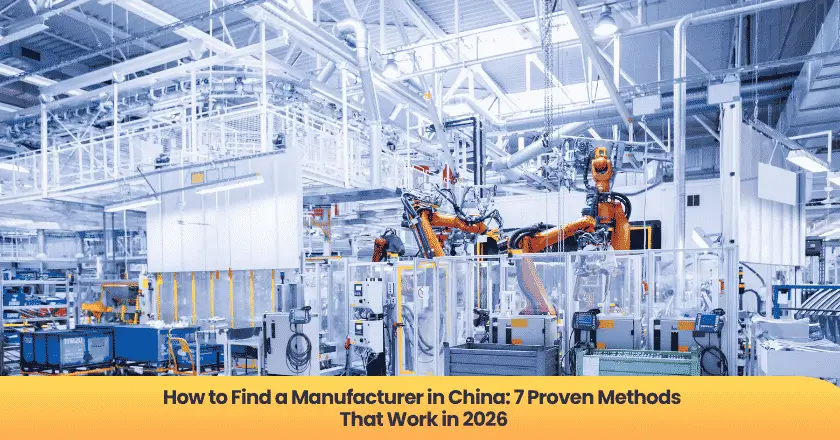
Most people trying to find a manufacturer in China start and end at a single search bar, type their product into one marketplace, and judge the entire country's manufacturing base by the first page of results. It is the most common way to begin and one of the least effective, because each method of finding a factory surfaces a different slice of the market and carries its own blind spots. The buyers who find the right manufacturer are rarely the ones who searched hardest in one place. They are the ones who knew there were seven doors, not one.
Finding a factory in China is a discovery problem, and like any discovery problem, the method shapes the result. A trade show puts you in front of exporters ready to deal. A wholesale market shows you stock you can buy today. A sourcing partner reaches factories that never appear online at all. No single channel is best, because each is suited to a different product, stage, and goal, and the smart move is matching the method to what you are actually trying to find.
This guide walks through seven proven methods for finding a manufacturer in China in 2026, with the strengths and weaknesses of each. The point is not to crown one winner but to give you the full set of doors, so you can choose the right one for your situation instead of defaulting to the only one you knew about.
Key Takeaways
• Relying on a single discovery method is the most common mistake, since each channel for finding a manufacturer surfaces a different part of the market, and using only one leaves most of China's manufacturing base invisible to you.
• Online B2B marketplaces and directories offer the widest reach with the least filtering, so they are the easiest starting point but demand the most vetting to separate real factories from the resellers crowding them.
• In-person methods like trade shows and wholesale markets put you face to face with suppliers and physical product, which builds confidence but costs travel time and money that not every buyer can justify.
• Trust-based methods, namely referrals and sourcing partners, reach vetted factories and those never listed online, trading the effort of open search for the reassurance of a relationship that has already done the filtering.
• The right method depends on your product, stage, and goals, so the strongest approach combines channels rather than relying on one, matching each method to what it surfaces best.
Methods 1 and 2: Marketplaces and Directories
The digital methods are where almost everyone starts, and for good reason. They offer the widest reach with the lowest barrier to entry. Their strength is breadth, and their weakness is that breadth comes with very little filtering done for you.
Online B2B Marketplaces
The first method is the obvious one, namely the large B2B marketplaces where thousands of suppliers list their products. Their advantage is sheer reach and convenience. You can search any product and find dozens of suppliers in minutes. The catch is that marketplaces mix real factories with trading companies (resellers that mark up factory goods), and the ranking often reflects who paid for placement rather than who is best. The short answer is that a marketplace is an excellent place to start a search and a dangerous place to end one, because the vetting is entirely on you.
Use marketplaces to build a long list, then filter hard. Read whether a supplier specializes, since a real factory tends to focus on one category while a reseller sprawls across unrelated goods. Check certifications, response quality, and whether they can answer technical questions about their own production. The marketplace finds candidates. It does not confirm them.
Online Directories and Search
The second method is broader still, using industry directories and ordinary search to find factories that may not invest in marketplace listings. Some excellent, established manufacturers rely on word of mouth and do not chase online buyers, so a directory or a well-built search can surface producers a marketplace never shows. Worth knowing: factories that do not market aggressively online are sometimes the most established ones, since they already have all the business they need from referrals.
Common Mistake: Judging a manufacturer by how polished its online presence looks. A slick marketplace storefront often signals a trading company investing in sales, while a serious factory may have a plain or sparse online footprint because its order book is already full. Look at production evidence and technical depth, not web design.
Methods 3 and 4: Trade Shows and Wholesale Markets
The in-person methods trade convenience for confidence. They cost time and travel, but they put you face to face with suppliers and, in one case, with the physical product itself. For the right buyer, that direct contact is worth the trip.
Trade Shows
The third method is the trade show, where manufacturers gather to meet buyers directly. A large sourcing fair lets you meet many suppliers in a few days, see samples in person, and gauge a company by talking to its representatives face to face. The advantage is concentrated access and the human read you only get in person. The cost is the travel, the time, and the reality that exhibitors skew toward export-focused companies, which may or may not match what you need. For a buyer ready to commit to the trip, a show compresses months of searching into days.
Prepare to make a show pay off. Know your product, your questions, and your target suppliers before you go, since the value is in focused conversations, not in wandering aimlessly. A show is a powerful method for a buyer who has done the homework and an expensive blur for one who has not.
Wholesale Markets
The fourth method suits a particular kind of buyer. Wholesale markets concentrate enormous quantities of ready-made goods in one place, letting you see and buy standard products immediately, often at low minimums. For small orders of existing items, this is fast and tangible. The limitation is that these markets favor stock products over custom manufacturing, and many sellers are traders rather than the makers themselves. Real talk: a wholesale market is ideal for sourcing standard goods quickly and poorly suited to building a custom product from scratch.
Expert Tip: Match the method to what you are sourcing. If you need a standard product fast and in modest quantity, a wholesale market or marketplace fits. If you are building something custom, prioritize methods that reach actual manufacturers, namely trade shows, directories, or a sourcing partner, since a trader cannot build to your design.
Methods 5 and 6: Referrals and Sourcing Partners
The trust-based methods work differently from the rest. Instead of searching an open field yourself, you draw on a relationship that has already done some of the filtering. They reach factories the open methods miss, and they reduce the vetting burden you carry alone.
Referrals and Your Network
The fifth method is the most underused, namely asking people who already import for their trusted suppliers. A referral comes pre-vetted by someone who has lived through real orders with that factory, which removes much of the risk that an open search carries. Industry contacts, other founders, and trade communities are all sources. A factory that has reliably served someone you trust starts the relationship with a credibility no cold search result can offer.
Referrals have limits, of course. Your network may not know a factory for your specific product, and a supplier perfect for one buyer may not fit another's volume or specs. Still, when a relevant referral exists, it is among the highest-quality leads available, because the hardest part of finding a factory, knowing whether to trust it, is already partly answered.
Sourcing Partners
The sixth method outsources the search itself. A sourcing partner already has a network of vetted factories and finds the right one for you, which collapses the discovery problem into a single relationship. The partner reaches producers that never list online, handles the language and the vetting, and matches a factory to your specific needs. The trade-off is a fee, but for a buyer who values their time or lacks the expertise to vet factories alone, that fee often buys access and certainty that open search cannot.
Common Mistake: Treating a referral as a guarantee and skipping your own checks. A factory perfect for the person who recommended it may be wrong for your product, volume, or quality needs. A referral is a high-quality lead, not a finished decision, so verify the supplier against your own requirements even when someone you trust vouches for them.
Method 7 and Choosing Among Them in 2026
The seventh method is the newest, and choosing well among all seven is the skill that ties them together. 2026 has changed both the toolset and the way a smart buyer combines methods into a single effective search.
AI-Assisted Matching
The seventh method is the most modern, namely AI-assisted supplier matching, which has matured considerably by 2026. These tools compare suppliers, surface candidates that fit your specifications, and speed the early filtering that used to take weeks. They do not replace verification, since a tool can suggest a factory but cannot confirm it is honest, but they make the discovery stage faster and broader. Used alongside the other methods, AI matching is a powerful accelerator for the part of the search that is about coverage rather than judgment.
Pair the tool with human checks. AI can build you a strong shortlist, but confirming a real factory, judging trustworthiness, and reading a supplier still require a person. The buyers who use 2026's tools best treat them as a fast first filter and reserve their own judgment, or a partner's, for the verification that actually protects an order.
Combining Methods Into One Search
The real lesson across all seven is that they work best together. Start broad with marketplaces, directories, and AI matching, narrow with referrals and trade shows, and lean on a sourcing partner where the search demands reach or vetting you cannot manage alone. No single door leads to every factory, so the strongest approach uses several, matched to what each one surfaces best. The method is not a choice of one but a sequence of many, applied deliberately.
Match the mix to your situation. A beginner sourcing a standard product might combine a marketplace with a wholesale market. A brand building something custom might pair a referral, a trade show, and a sourcing partner. The seven methods are a toolkit, and finding the right manufacturer is about reaching for the right tools in the right order, not about hoping a single search delivers everything.
Finding Factories Faster Through NewBuyingAgent
Of the seven methods, the sourcing-partner route is the one that collapses the entire discovery problem into a single relationship, which is exactly what the right partner is built to do. NewBuyingAgent is a strong partner for global sourcing from China, backed by 30 years of expertise in trade, manufacturing and quality control. Where the open methods leave you searching, this one starts you already connected. It draws on its 50,000+ cooperated partner factories—with no language, region, or time zone barriers—and its local reputation gets you full factory cooperation. A network that deep turns finding a factory from a hunt into a match. And the searching, vetting, and back-and-forth that the other methods demand of you are handled on your behalf: NewBuyingAgent handles all factory communication—ideal for multi-category buyers—freeing up your time to focus on expanding your local market sales. Contact now.
Frequently Asked Questions
What is the best way to find a manufacturer in China?
There is no single best way, since each method surfaces a different part of the market. B2B marketplaces offer the widest reach, trade shows give in-person confidence, wholesale markets suit standard goods, referrals come pre-vetted, and a sourcing partner reaches factories never listed online. The strongest approach combines several methods, matched to your product, stage, and goals, rather than relying on one.
Are online marketplaces reliable for finding factories?
They are an excellent place to start and a dangerous place to finish. Marketplaces mix real factories with trading companies, and rankings often reflect paid placement rather than quality. Use them to build a long list, then vet hard, checking whether a supplier specializes, holds relevant certifications, and can answer technical questions about its own production. The marketplace finds candidates but does not confirm them.
Is it worth attending a trade show to find a manufacturer?
It can be, for a buyer ready to commit the travel and time. A large sourcing fair lets you meet many suppliers in days, see samples in person, and read companies face to face, compressing months of searching. The value depends on preparation, since a show rewards a buyer who knows their product, questions, and target suppliers and wastes one who wanders without a plan.
How do referrals help in finding a factory?
A referral comes pre-vetted by someone who has run real orders with that factory, which removes much of the risk an open search carries. The hardest part of finding a factory, knowing whether to trust it, is already partly answered. The limit is relevance, since your network may not know a supplier for your specific product, but when a relevant referral exists it is among the highest-quality leads available.
How does AI-assisted supplier matching work in 2026?
Through 2026, AI matching tools compare suppliers, surface candidates that fit your specifications, and speed the early filtering that once took weeks. They make discovery faster and broader but do not replace verification, since a tool can suggest a factory without confirming it is honest. Used as a fast first filter alongside human checks, AI matching is a powerful accelerator for the coverage part of the search.
Should I use more than one method to find a manufacturer?
Yes. No single door reaches every factory, so combining methods is the strongest approach. Start broad with marketplaces, directories, and AI matching, narrow with referrals and trade shows, and use a sourcing partner where you need reach or vetting beyond your own. Match the mix to your situation, since the seven methods are a toolkit best used in sequence rather than one at a time.
Conclusion
Finding a manufacturer in China is not one search but seven different doors, each opening onto a different part of the market. Marketplaces and directories give you reach. Trade shows and wholesale markets give you in-person confidence and tangible product. Referrals and sourcing partners give you vetted leads and factories the open methods never reach. AI-assisted matching, the newest door, accelerates the early filtering. The buyers who struggle are usually the ones who knew about only one of these and judged all of Chinese manufacturing through that single narrow window.
The real skill is not mastering one method but knowing which to use when, and combining them into a search matched to your product, your stage, and your goals. Start broad, narrow with trust, verify before you commit, and lean on a partner where the search demands reach or expertise you do not have alone. Treat the seven methods as a toolkit rather than a menu of one, and finding the right manufacturer turns from a frustrating guess into a deliberate process, with far better odds of ending at a factory that genuinely fits what you set out to build.
NewBuyingAgent
Related Resources
Начните сегодня
Давайте превратим ваши цели по закупкам в реальностьWeChat:+86 15157124615
WhatsApp:+86 15157124615
Адрес: Здание 10 #39 Xiangyuan Road, Ханчжоу, Китай
