

Introduction
Most buyers see only two things in clothing manufacturing, namely the tech pack they send in and the boxes that arrive months later. Everything in between is a black box, a mysterious stretch where a design somehow becomes a shipment. That black box is exactly where quality is won or lost, where delays are born, and where a buyer who understands the process can intervene while one who does not simply waits and hopes. Opening it up is the difference between managing your production and being at its mercy.
Clothing manufacturing in China follows a logical sequence, from turning a design into patterns and samples, through sourcing and preparing fabric, to cutting, sewing, finishing, and finally checking and shipping the goods. Each stage has its own risks and its own moments where a buyer's attention pays off, and knowing what happens when lets you ask the right questions, catch problems early, and plan a realistic timeline. The process is not mysterious once you see inside it, only unfamiliar.
This guide walks the whole journey a garment takes, from fabric sourcing to final QC. What happens before production in design and sampling, how materials are sourced and prepared, how garments are actually made, and how quality is checked before shipping. Whether you are placing a first order or scaling a line, understanding how the work really flows is what turns that black box into a process you can follow, question, and improve.
Key Takeaways
• Clothing manufacturing follows a logical sequence, namely design and samples, fabric sourcing and preparation, cutting and sewing, finishing, and final QC, so understanding the flow lets a buyer manage production rather than simply wait for it.
• Most of a garment's outcome is decided before sewing begins, since the tech pack, patterns, and an approved pre-production sample set the standard everything downstream is measured against.
• Fabric sourcing and dyeing are a major, often underestimated part of the timeline, because material must be obtained and prepared before a single garment can be cut, and problems here delay everything after.
• Cutting and sewing are where a design becomes a garment at scale, so consistency across many workers and bundles is the challenge, and small errors here multiply across the whole run.
• Quality control works best across stages rather than only at the end, since checking materials, inline production, and the finished goods catches problems while they can still be fixed instead of after shipping.
Before Production: Design, Patterns, and Samples
Long before any fabric is cut, the outcome of your order is largely decided. The pre-production stage turns your idea into a precise, makeable standard, and getting it right is the foundation everything downstream depends on.
From Tech Pack to Pattern
Production begins with a tech pack, the detailed document specifying your garment's measurements, materials, construction, and finishing. From it, a patternmaker creates the pattern, namely the template pieces that a garment is cut from, and then grades it, scaling that pattern across your full size range. The short answer is that this translation from design to pattern is where a garment's fit and construction are truly defined, so a precise tech pack and skilled pattern work matter more to the final result than almost anything that happens later.
Errors here propagate everywhere. A flawed pattern or a vague tech pack produces a flawed garment no amount of careful sewing can rescue, since every piece is cut from that template. This is why the pre-production work deserves real attention, as fixing a pattern costs almost nothing while fixing thousands of garments cut from a bad one costs everything. The care invested before production is the cheapest quality insurance in the entire process.
The Sampling Sequence
Samples turn the pattern into something you can hold and approve. A first proto sample tests the design, a fit sample confirms the measurements on a body, and a pre-production sample, made on the actual line with the actual materials, becomes the approved standard for the run. Worth knowing: the pre-production sample is the single most important checkpoint in manufacturing, because it is the last moment to catch a problem before bulk production begins, and approving it is you signing off on exactly what the factory will make.
Expert Tip: Never approve a pre-production sample made in the factory's sample room instead of on the production line. The sample room holds the best workers and conditions, so a sample from it flatters what the line will actually produce. Insist the PP sample come from the real line with bulk materials, since that is the only version that honestly predicts your run.
Materials: Fabric Sourcing and Preparation
With a standard approved, the process turns to materials, and this stage quietly consumes more time and risk than buyers expect. No garment is made until its fabric exists, and fabric rarely just sits on a shelf.
Sourcing and Making the Fabric
Fabric is either bought from stock or made to order, and the difference reshapes your timeline. A stock fabric the mill already holds is fast, while a custom fabric must be knitted or woven and then dyed to your color, which can add weeks before production even starts. Trims and accessories, namely buttons, zippers, labels, and thread, are sourced alongside it. Real talk: buyers routinely forget that fabric lead time is part of their delivery date, then blame the factory for a delay that actually lived in the mill, so counting material time from the start keeps a schedule honest.
Dyeing carries its own risk, namely color consistency. Getting a color right and identical across an entire fabric order is genuinely hard, and variation between dye lots is a common apparel problem. This is why approving a color standard and checking that bulk fabric matches it matters, since a beautiful garment in the wrong or inconsistent shade still fails. The material stage decides much of a garment's quality before a single stitch is sewn.
Checking Materials First
Inspecting fabric before cutting is one of the highest-value checks in the whole process. Confirming the fabric matches the approved standard in weight, composition, and color, and is free of flaws, catches a problem at the cheapest possible moment, before it is cut into thousands of pieces. A defect found in a roll of fabric is an inconvenience, while the same defect discovered in finished garments is a disaster. Checking materials first is where a careful buyer prevents the most expensive mistakes.
Common Mistake: Letting production start before anyone confirms the bulk fabric matches the approved sample. Fabric that is off in weight, hand, or color turns an entire run into a loss once it is cut and sewn. A material check before cutting is quick and cheap, and skipping it to save a few days is how buyers end up with thousands of garments made from the wrong cloth.
Production: Cutting, Sewing, and Finishing
Now the garment is actually made. This is the stage buyers picture when they imagine a factory, and it is where a design becomes thousands of physical garments through a sequence of specialized steps.
Cutting and Sewing
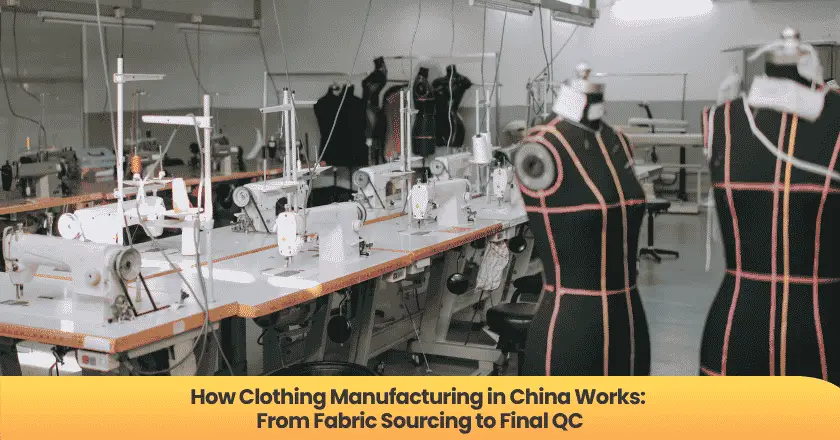
Production starts at the cutting table. Fabric is spread in many layers, a marker laying out the pattern pieces to minimize waste is placed on top, and the stack is cut, producing the pieces for many garments at once. Those pieces then move to sewing, usually an assembly line where each worker performs specific operations and the garment is built up in stages, often tracked in bundles through the line. This division of labor is what lets a factory produce at scale, with each station specializing in part of the garment.
Consistency is the challenge of this stage. With many workers each doing part of the job across thousands of units, small variations in stitching, tension, or assembly can creep in, which is why good factories monitor quality on the line rather than only at the end. The way an order is organized and supervised through cutting and sewing largely determines whether the run comes out uniform or uneven, so a factory's production discipline shows most clearly here.
Finishing the Garment
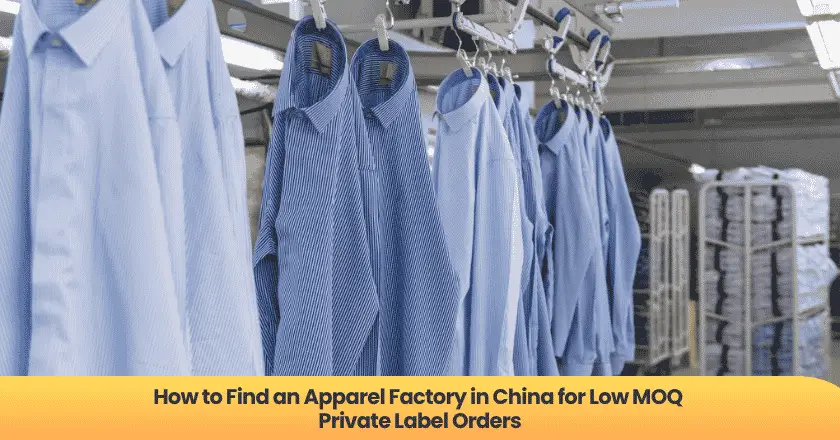
Finishing turns a sewn garment into a finished product. Threads are trimmed, the garment is pressed or ironed, labels and tags are attached, and any final details are completed, before each piece is folded or hung and prepared for packing. Though it sounds minor, finishing is what a customer first sees and touches, so a poorly finished garment, with loose threads or careless pressing, reads as low quality no matter how well it was sewn. The last stage of making is where the impression of quality is either sealed or squandered.
Common Mistake: Treating finishing as a trivial last step not worth inspecting. Loose threads, sloppy pressing, and crooked labels are the first things a customer notices, and they undo the work of a well-sewn garment. Hold finishing to the same standard as construction, since it is the layer of quality your customer actually sees and feels first.
Quality Control and Getting It Shipped
With garments made, the final stage confirms they meet the standard and prepares them to travel. Quality control is not a single step at the end but a discipline woven through the process, and 2026 makes overseeing it easier than ever.
Inspection and Packing
Quality control works best in stages across the run. Checking materials before cutting, inspecting the line during sewing, and inspecting finished goods before shipment each catch problems at a point where they can still be addressed. The final inspection typically uses an AQL (acceptable quality limit, the maximum defect rate an inspection will pass), with defects graded as critical, major, or minor so a genuinely good run passes and a bad one is caught. A buyer who inspects only at the very end is not controlling quality but merely confirming the result when it is too late to change.
Once approved, garments are packed to specification, namely folded, tagged, poly-bagged, and cartoned as required, then prepared for shipment. Packing is part of quality too, since crushed or mislabeled goods disappoint a customer as surely as a sewing flaw. Only after the finished, inspected, and properly packed garments leave the factory does the long journey that began with a tech pack finally reach its end.
Overseeing Production in 2026
Following this process from afar keeps getting easier. Through 2026, live video lets a buyer watch key stages and inspections in real time, digital production tracking shows where an order stands across cutting, sewing, and finishing, and AI-assisted tools help compare output against tech-pack specifications. These make it more practical to oversee a garment's whole journey without standing on the factory floor for any of it.
The experienced eye still decides what the tools reveal, though. Knowing whether a pattern is right, a fabric will behave, or a finish meets a market's expectations remains a human judgment that technology supports rather than replaces. The strongest apparel buyers in 2026 pair the visibility these tools give with experienced oversight, their own or a partner's, at the stages that matter most, so the process that turns a tech pack into a shipment stays under real control from fabric sourcing to final QC.
Across Every Production Stage With NewBuyingAgent
Following a garment through every stage, from pattern to packing, is far easier with a partner whose expertise spans the whole process. NewBuyingAgent is a strong partner for global sourcing from China, backed by 30 years of expertise in trade, manufacturing and quality control. From the sampling at the front to the inspection at the end, that depth covers the process end to end, as its 20,000+ product development and QC experts ensure your products match market needs and stay high-quality. Handled well across every step, the whole run also comes out more efficient on cost, since its wide factory network lets it pick low-cost, high-cooperation suppliers, and even with its margin included, it cuts your costs by 5%-10%. And the coordination each stage demands is carried for you rather than added to your day: NewBuyingAgent handles all factory communication—ideal for multi-category buyers—freeing up your time to focus on expanding your local market sales. Contact us.
Frequently Asked Questions
What are the main stages of clothing manufacturing?
A logical sequence, namely design and pattern making, sampling through to an approved pre-production sample, fabric sourcing and preparation, cutting, sewing, finishing, quality inspection, and packing for shipment. Each stage carries its own risks and moments where a buyer's attention pays off. Understanding the flow lets you ask the right questions, catch problems early, and plan a realistic timeline rather than waiting on a black box.
Why is the pre-production sample so important?
Because it is the last checkpoint before bulk production and the standard the whole run is measured against. Made on the actual line with the actual materials, it honestly predicts what the factory will produce, unlike a sample-room piece made by the best workers in ideal conditions. Approving it means signing off on exactly what will be made, so it is the single most important moment in the manufacturing process.
Why does fabric sourcing take so long?
Because fabric rarely just sits ready. A custom material must be knitted or woven and then dyed to your color, which can add weeks before production starts, while even stock fabric must be secured and checked. Trims are sourced alongside it. Buyers often forget fabric lead time is part of their delivery date, so counting material time from the start is essential to a realistic schedule.
What happens during cutting and sewing?
Fabric is spread in layers, a marker of pattern pieces is laid out to minimize waste, and the stack is cut into garment pieces. Those pieces move to a sewing line where each worker performs specific operations, building the garment in stages, often tracked in bundles. The challenge is consistency across many workers and units, which is why good factories monitor quality on the line rather than only at the end.
When should quality be checked during production?
Across stages, not only at the end. Check materials before cutting, inspect the line during sewing, and inspect finished goods before shipment using a written AQL with defects graded critical, major, and minor. Each check catches problems while they can still be fixed. Inspecting only at the very end is not controlling quality but confirming the result when it is too late to change anything.
Can I oversee the production process without visiting China?
Yes. Through 2026, live video lets you watch key stages and inspections in real time, digital production tracking shows where an order stands, and AI-assisted tools help compare output to specifications. Pair these with experienced oversight, your own or a partner's, at the stages that matter most, so the process stays under real control from fabric sourcing to final QC even from a distance.
Conclusion
Clothing manufacturing in China is not a black box but a logical sequence, and understanding it changes a buyer from a passive recipient into an active manager of their own production. The journey runs from a tech pack into patterns and samples, through fabric that must be sourced and prepared, into the cutting and sewing that turn a design into thousands of garments, and finally through finishing, inspection, and packing. At each stage, quality is either protected or quietly compromised, and the buyer who knows what happens when can ask the right question at the right moment instead of discovering a problem only when the boxes arrive.
The lessons repeat across the whole process, namely that most of a garment's fate is set before sewing begins, that fabric time and quality are underestimated at a buyer's peril, that consistency is the real test of production, and that quality control works only when it runs through every stage rather than waiting at the end. Learn the flow, pay attention where it counts, lean on experienced oversight across the stages you cannot watch yourself, and the process that turns your design into a shipment becomes something you genuinely control, from the first fabric sourced to the final QC before it ships.
NewBuyingAgent
Related Resources
Начните сегодня
Давайте превратим ваши цели по закупкам в реальностьWeChat:+86 15157124615
WhatsApp:+86 15157124615
Адрес: Здание 10 #39 Xiangyuan Road, Ханчжоу, Китай
