

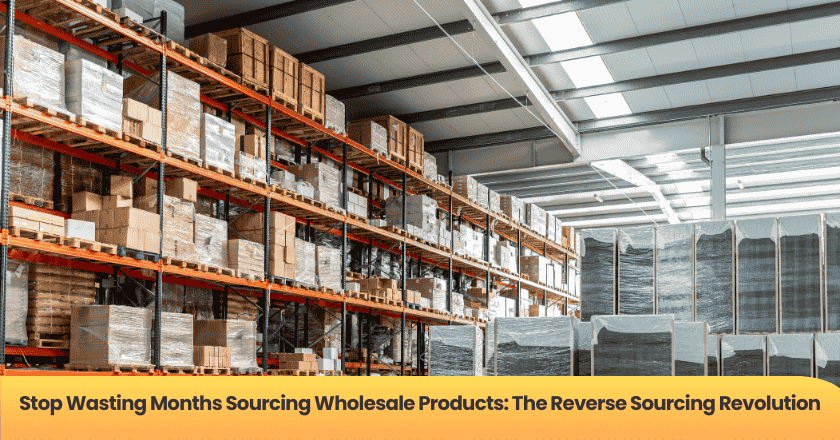
Stop hunting for suppliers. Let suppliers find you with intelligent product recommendations and market-driven insights.
The Search for Wholesale Products Has Changed
For decades, wholesale sourcing followed the same playbook: you identify a product gap in your market, spend weeks or months hunting factories and suppliers, negotiate terms, handle logistics, and hope the quality and pricing align with your projections. It's manual. It's slow. It's expensive. And in a market moving at digital speed, you're always playing catch-up.
Then came reverse sourcing. Instead of you hunting for products and suppliers, a network of manufacturers, distributors, and intelligent systems proactively surface opportunities tailored to your business. They analyze market trends. They match your requirements with production capacity. They recommend high-demand products you haven't discovered yet. You shift from reactive hunting to strategic selection.
This shift isn't a luxury for large enterprises anymore. It's becoming standard practice for serious wholesale buyers. In 2024-2026, reverse sourcing platforms have matured from experimental ideas into essential procurement infrastructure. And if you're still doing traditional sourcing, you're leaving significant margin and market opportunity on the table.
Key Takeaways
Reverse sourcing flips traditional procurement: suppliers and platforms proactively match you with products and manufacturers instead of you hunting for them
AI-driven product discovery identifies high-demand wholesale opportunities before they saturate, enabling first-mover advantage in your category
Reverse sourcing reduces procurement time from months to weeks and eliminates the blind spots of traditional supplier discovery
Data-powered matching connects you with suppliers that match your specifications, volume needs, and quality standards, not just the ones you happened to find
Wholesale businesses using reverse sourcing report faster market entry, reduced sourcing overhead, and higher-margin product selection
What Is Reverse Sourcing, and How Does It Differ?
Traditional sourcing is hunter-gatherer economics. You spot an opportunity. You hunt. You gather suppliers. You compare. You negotiate. You select. This model worked fine when global supply chains moved slowly and information was scarce. Today, it leaves you at a structural disadvantage.
Reverse sourcing inverts the power dynamic. Instead of you seeking suppliers, they seek you. Platforms powered by manufacturing data, market intelligence, and algorithmic matching identify your business profile—your category, your volume needs, your quality standards, your margin expectations—and then surface products and manufacturers that align. You're no longer searching in darkness. You're receiving curated, pre-filtered recommendations.
Think of it like the difference between scrolling through job boards hoping to find talent versus working with a recruiter who understands your team and actively presents qualified candidates. One is exhausting and inefficient. The other is strategic and focused.
Expert Tip: Reverse sourcing doesn't replace human judgment—it amplifies it. You still make final decisions, but now with better information, more options, and clearer risk assessment. The best wholesale buyers use reverse sourcing to expand their discovery window, not narrow it.
How AI-Powered Product Discovery Works
The magic of reverse sourcing lives in the data layer. Modern platforms integrate information from multiple sources: manufacturing capacity databases, trade data, logistics networks, consumer demand signals, patent filings, social commerce trends, and historical supplier performance. They analyze patterns. They identify emerging categories before they trend. They match your specific requirements—minimum order quantities, material specifications, certifications, lead times—with suppliers capable of meeting them.
Here's how it typically works in practice: You define your sourcing parameters. Maybe you're looking for sustainable packaging solutions for a growing e-commerce business. You specify volume thresholds, material preferences, sustainability certifications, and price targets. The platform scans global manufacturer networks, identifies facilities producing at your scale, pulls their production quality data and compliance records, and presents options ranked by fit, risk, and opportunity.
What would have taken your sourcing team 8-12 weeks of research, phone calls, and supplier vetting happens in days. And you see options you wouldn't have found through traditional channels—manufacturers operating below market radar, emerging suppliers with better pricing, specialized producers aligned with your exact needs.
Common Mistake to Avoid: Assuming AI recommendations are perfect and eliminating due diligence. They're not. AI significantly improves the match, but you still need to verify supplier credentials, conduct factory audits (virtual or in-person), request samples, and confirm capacity. Think of reverse sourcing as intelligence gathering, not decision automation.
The Market Trend Discovery Advantage
One of reverse sourcing's most underrated benefits isn't optimization of existing categories—it's discovery of emerging ones. By analyzing cross-market data, consumer behavior signals, and supply-demand gaps, these platforms identify products before demand becomes obvious. They spot the sustainable packaging trend before everyone jumps in. They see the shift toward home office equipment before it saturates. They recognize niche categories with high margins and loyal customer bases.
For wholesale businesses, this first-mover advantage is invaluable. You can enter a category while margins are healthy, establish supplier relationships early, and build brand authority before competition intensifies. Traditional sourcing teams, hunting category by category, typically arrive after the trend is already obvious—when margins are compressed and competition is fierce.
The data-driven insights also help you avoid dead ends. Rather than investing in products with declining demand or suppliers facing capacity constraints, you make sourcing decisions backed by demand forecasting, trend velocity, and competitive landscape analysis. This transforms product selection from gambling into strategy.
Expert Tip: Use trend data to validate your market intuition, not replace it. If reverse sourcing suggests a product opportunity that contradicts your market knowledge, dig deeper. Sometimes AI misses cultural nuance or niche audience insights that human expertise captures.
Speed, Cost, and Risk Reduction
Traditional wholesale sourcing is an exercise in friction reduction. Every step—finding suppliers, requesting quotes, comparing specifications, negotiating terms, conducting samples, arranging audits—adds weeks to your timeline and cost to your operation. For companies sourcing multiple product categories or launching new lines, this overhead becomes paralyzing.
Reverse sourcing platforms compress this timeline dramatically. Pre-vetted suppliers. Pre-matched specifications. Immediate access to capacity and pricing data. Sample coordination handled at platform level. The entire discovery-to-negotiation phase moves from months to weeks. For seasonal wholesale businesses or fast-growing e-commerce brands, this speed differential is competitive moat.
Cost reduction flows from three sources: First, reduced sourcing team overhead—you're not paying staff to spend weeks hunting. Second, better supplier matches—you avoid costly mistakes like working with suppliers who can't scale with you or have hidden compliance issues. Third, negotiating leverage—when you evaluate multiple qualified options simultaneously, you're negotiating from strength, not desperation.
Risk reduction is equally significant. Traditional sourcing relies on relationship luck and individual supplier research. Reverse sourcing platforms leverage aggregated compliance data, production history, quality metrics, and financial stability information. You see supplier red flags—missed shipments, quality complaints, regulatory issues—before committing. This dramatically reduces the likelihood of mid-production disasters or quality surprises.
Building Your Reverse Sourcing Strategy
Adopting reverse sourcing isn't a one-time project—it's a shift in procurement philosophy. Here's how leading wholesale businesses integrate it:
1. Define Your Sourcing Profile Clearly
The better you articulate your requirements—categories, volumes, quality standards, certifications, lead times, price windows—the better recommendations you receive. This requires honest assessment of your needs, not wishful thinking about what you'd like to pay. Reverse sourcing works best when your criteria are specific and realistic.
2. Maintain a Supplier Scorecard
As you work with suppliers recommended through reverse sourcing, track performance: quality consistency, on-time delivery, responsiveness, pricing accuracy. Feed this feedback back into the platform. Over time, the recommendations become increasingly tailored to your specific experience and preferences.
3. Combine Reverse Sourcing with Market Intelligence
Reverse sourcing identifies what's possible. Your market expertise identifies what's profitable. When a platform suggests a trending category, apply your own market knowledge: Who's your customer? What margin do you need? How sustainable is the trend? Which supplier among the recommendations aligns with your brand? This combination of data insight and strategic judgment produces optimal results.
4. Diversify Across Suppliers and Categories
Rather than consolidating around one supplier, use reverse sourcing to maintain a portfolio: primary suppliers for steady-state products, secondary suppliers for redundancy, emerging suppliers for growth. This reduces supply chain risk and gives you negotiating leverage.
Common Mistake to Avoid: Over-relying on platform recommendations without strategic filtering. Not every suggested product is a good fit for your business. A product might be trending but require expertise you lack, capital you can't deploy, or compete directly with established players. Use data to inform decisions, not make them for you.
Real-World Application
Reverse sourcing creates the most value in specific scenarios. If you're launching a new product line and need to evaluate 30+ potential suppliers across specifications, pricing, and capacity—this used to be a 3-month project. With reverse sourcing, it's 2 weeks. If you're exploring an adjacent category where you lack supplier relationships—instead of starting from zero, you access pre-vetted options immediately. If you're a seasonal business needing suppliers who can handle 10x volume during peak season—reverse sourcing identifies manufacturers with that specific capacity.
The platform also excels when you need to replace a supplier. Instead of scrambling to find alternatives, you access a ranked list of comparable options immediately, many of whom you've never heard of but who might be better matches than your current supplier.
For emerging brands and scaling e-commerce businesses, reverse sourcing is particularly valuable. These organizations lack established supplier networks but need to move quickly and diversify sources. Rather than waiting years to build relationships, they access global capacity on day one—compressed timelines, better pricing, and reduced geographic risk.
The Evolution of Wholesale Procurement
Reverse sourcing represents a fundamental shift in how global wholesale procurement operates. Traditional sourcing made sense in an information-scarce world. If you didn't have access to supplier data, trade intelligence, and production capacity information, you had no choice but to hunt manually. But we live in an information-rich world now. The data exists. Manufacturing capacity is visible. Supplier credentials are traceable. Demand signals are quantifiable. The only question is whether you're leveraging these insights.
By 2026, the distinction between "forward sourcing" (traditional hunting) and "reverse sourcing" (platform-mediated discovery) will fade. The best practitioners will use both—leveraging traditional relationships for core suppliers while continuously exploring reverse sourcing platforms for new opportunities, emerging categories, and competitive alternatives. The wholesale businesses that thrive will be those that internalize this hybrid approach early.
The transition isn't about replacing your sourcing expertise or supplier relationships. It's about amplifying them with data-driven intelligence, expanding your discovery window, and compressing the timeline between identifying an opportunity and bringing it to market. For wholesale businesses, that's a formula for sustainable competitive advantage.
Frequently Asked Questions
How is reverse sourcing different from traditional supplier directories or trade shows?
Supplier directories and trade shows are passive information repositories. You browse. You search. You hope to find relevant options. Reverse sourcing is active intelligence. Platforms analyze your requirements, market conditions, and supplier data to recommend specific matches. Additionally, reverse sourcing integrates real-time market data and demand signals that static directories can't offer. It's the difference between looking through a phone book versus having a personal recruiter identify candidates for you.
Will reverse sourcing platforms replace my existing supplier relationships?
No. The best approach combines both. Maintain your trusted suppliers for core products—they understand your business, your quality standards, and your needs. Use reverse sourcing to explore new suppliers, test alternative sources, and identify emerging opportunities. This hybrid strategy reduces dependency risk while maintaining stability.
How much time can reverse sourcing save in the procurement process?
Timeline compression depends on complexity, but typical savings are significant. A straightforward product reorder might compress from 4-6 weeks to 1-2 weeks. A complex multi-supplier evaluation might compress from 12-16 weeks to 4-6 weeks. The biggest time savings come in discovery phase—where reverse sourcing eliminates weeks of hunting and vetting.
What data security and compliance concerns should I have with reverse sourcing platforms?
Legitimate reverse sourcing platforms operate under strict data protection standards—SOC 2 compliance, GDPR adherence, encrypted communication, and supplier verification processes. Before partnering, verify the platform's security certifications, ask about data handling practices, and review their supplier vetting methodology. Reputable platforms are transparent about these practices.
Can reverse sourcing work for niche or specialized products?
Absolutely. Specialized products often see the biggest benefit. While commodity sourcing relies on price and volume, specialized products depend on supplier expertise and capability matching. Reverse sourcing excels at identifying the rare manufacturers with specific expertise—say, injection molding specialists who've worked with medical-grade polymers—that traditional sourcing would struggle to find.
How do reverse sourcing platforms ensure supplier quality and compliance?
Reputable platforms conduct supplier verification—examining certifications, compliance records, production capacity, quality metrics, and historical performance. Some platforms conduct in-person audits or coordinate third-party audits. However, verification depth varies by platform. Ask about their vetting process and don't rely solely on platform certification—conduct your own due diligence, especially for critical products.
NewBuyingAgent
Related Resources
Get Started Today
Let's Turn Your Sourcing Goals into RealityWeChat:+86 15157124615
WhatsApp:+86 15157124615
Address:Building 10 #39 Xiangyuan Road, Hangzhou, China
