

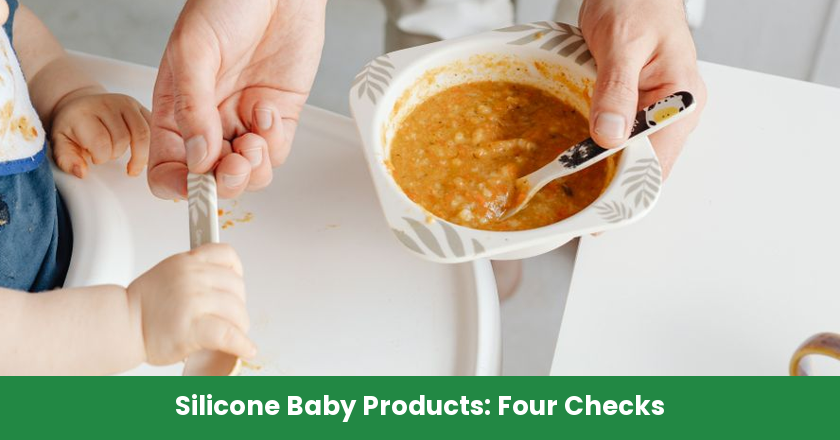
Approve silicone baby products in the form you will sell. A molded feeding bowl can match the drawing and still arrive with an odor after storage in its retail pouch. For repeat-use feeding items such as bowls, spoons and plates, review the cure record, odor comparison, food-contact evidence and packaging together before committing to bulk.
Approve the Finished Feeding Item and Its Pack
For silicone baby feeding products, match the finished item to its formulation and cure record, compare odor before and after packing, and verify the food-contact evidence for the intended use and market. Approve the actual packaging materials and recheck the packed specimen before release. Give each check its own result and link it to the production lot.
- Decision: Hold a lot when its cure history, test specimen or packing materials cannot be matched to the approved build.
- How it works: Compare matched packed and unpacked items, then use food-contact test evidence to assess the intended exposure.
- Risk: A mild or fading odor can coexist with unresolved composition, migration or packaging questions.
Start with a product description and destination. Give separate treatment to rubber nursing-bottle nipples, pacifiers or teethers, even if the supplier uses a similar-looking compound. Ask the responsible reviewer to classify each item in a bundle by use. The food-contact examples below cover U.S. and EU routes.
Lock the Silicone Formulation and Cure Record
Record the compound, pigment and lot behind the approved sample, then tie them to the molding records and any post-cure, a separate heating step after molding. Get the supplier's approved process settings and the actual production logs. Keep a finished sample with the same batch identity so the quality team can recognize the build when production or the lab requests it.
Ask whether the compound arrives ready to mold or whether the factory mixes or adds material on site. Record the compound and color codes, the approved formula revision and any material added at molding. Ask the factory to keep the actual settings and the time, temperature and load details for any validated post-cure step. Confirm who can alter the settings and what evidence a change will require.
Germany's Federal Institute for Risk Assessment distinguishes volatile organic components from extractable components in its BfR Recommendation XV on silicones for covered silicone elastomers. Ask the reviewer what a reported result actually measures and whether the report covers the item. Use the compound supplier's approved process and validation as the basis for any post-cure schedule.
A smooth part and the specified hardness can be useful checks on consistency. Also ask quality to record tackiness, surface residue and the condition of the thicker sections or rims where the process might behave differently. If the molding record shows a changed setting, preserve the suspect pieces and compare them with a retained approved sample before deciding whether to request new evidence.
When you approve a part, record the process that made it. Keep its sample ID with the compound and pigment lots, molding record and any post-cure log. This gives the lab and the buyer one version to refer to when the order is repeated.
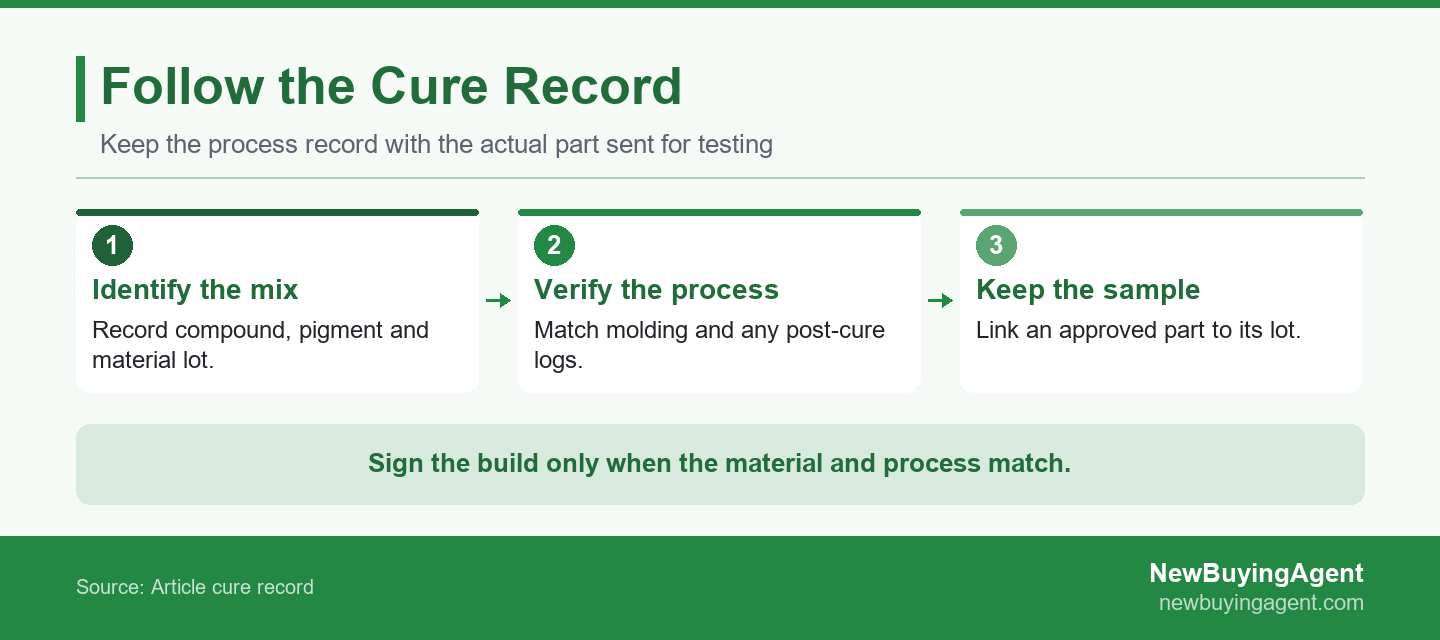
Link the silicone compound, molding record and finished sample
Use Odor to Investigate the Source
Use odor as a reason to compare samples and investigate the source. Ask for items from the same production run, with one group packed as sold and another retained in an agreed neutral condition. Compare them after the same elapsed time and storage conditions, and log what the evaluator notices when samples are opened and again at an agreed interval.
The EU food-contact framework requires food-contact articles to avoid transferring constituents to food at levels that could endanger health, unacceptably change its composition or impair its sensory characteristics under normal or foreseeable use. A smell on opening a pouch is an observation about that specimen. It leaves open what, if anything, transfers to food under use conditions.
| Sample | Match or control | Record |
|---|---|---|
| Unpacked item | Same run, color and storage time. | Odor and any residue. |
| Packed item | Same run with actual pouch and insert. | Odor on opening and after the set interval. |
| Empty packaging | Suspect pouch or insert from the same lot. | Any similar odor and packaging lot ID. |
Keep samples separated so one pack cannot scent another. Record whether specimens were washed, dried or aired before evaluation, and apply the same timing across the comparison. If a difference appears, repeat with one input changed at a time. Ask a qualified food-contact reviewer what test would address a possible effect on food or a suspected transfer. Keep the sensory notes with the sample IDs.
When a buyer needs several colors in the same approved pack, NewBuyingAgent's China silicone feeding-product sourcing and supply can quote and supply the specified feeding items through cooperating factories, with quality control and logistics support. Share the compound and color codes, pack specification and retained sample criteria up front. Those inputs let the team compare a proposed repeat build with the approved item.
Match Test Evidence to the Finished Article and Use
Tell the lab what the finished item will touch, for how long and at what temperature. Identify the surfaces, colors, inserts and any decoration that could affect the evidence, and distinguish brief serving from storage or reheating. Ask the lab to state the applicable test route, specimen and conditions in its proposal so the compliance reviewer can check the scope before testing.
Where 21 CFR 177.2600 applies to repeated-use rubber articles, it sets distinct extraction requirements for the food-contact surface of the finished article for aqueous and fatty foods. The section excludes rubber nursing-bottle nipples. Ask the reviewer to confirm the formulation basis and applicable extraction conditions, and to identify any other evidence required for the product's intended use.
If a supplier relies on an effective food contact substance notification, check the FDA inventory and reliance guidance for the substance, identified manufacturer or supplier, intended use and restrictions. Ask how the compound in your order is traced to that source. A matching description or trade name on a quote leaves the actual supply chain and scope to verify.
The FDA premarket chemistry guidance describes using suitable food simulants, test media that represent food for the contact study, and the most severe proposed time and temperature exposure for migration data. This is guidance for premarket submissions. For your order, have the lab identify the actual method and acceptance basis, including any prescribed extraction method. Record separate results for methods that answer different questions.
For EU orders, check the destination country as well as the EU framework. The European Commission food-contact legislation overview explains that Member States may maintain or adopt national provisions where specific EU measures are absent. Document the countries of sale and have the reviewer confirm the applicable material-specific requirements for each. A report should identify which requirements it was commissioned to address.
Read the report with the finished sample and packaging claims in front of you. Match the product revision, food-contact surface, selected colors and conditions of use. If one color represents others, keep the reviewer-approved basis for that scope. A hot-food or reheating claim should prompt a review of the intended use and report conditions before artwork is signed.
For example, a repeat order may add a claim for serving warm, oily food when the current report describes cold aqueous use. Give the reviewer both the old report conditions and the proposed range of foods, contact times and temperatures. Have the reviewer record which previous results remain relevant and which evidence gaps must close. Keep the expanded claim off the artwork until the evidence covers the intended use.
Hold a Packed Lot With an Unexplained Odor
In a hypothetical repeat order for a silicone suction bowl from China, packed samples from a new pouch lot have an odor when opened after storage. A retained unpacked bowl from the same molding run has no comparable note under the agreed comparison. Hold the affected goods and run a matched check with the suspect pouch, approved pouch and packaging-only controls.
Use finished bowls from the same compound, color and cure run. Pack one group with the approved pouch and one with the suspect pouch, keeping any insert and time in storage the same. Hold empty samples of each pouch separately under the same conditions. Record sample IDs, opening times and the evaluator's observations before comparing the results.
Suppose the suspect empty pouch and the bowls held in it show a similar note, while both the approved-pouch group and neutral unpacked group lack that note. Treat the suspect pouch as a likely contributor. This comparison can direct the investigation and help define which stock to hold. Ask the reviewer what evidence will address any potential transfer or effect on food before deciding whether rework is suitable.
Use the packing logs to identify the incoming pouch lot and the cartons packed with it. Review the pouch supplier and construction, printing or adhesive changes, and the approved cure logs for the bowls. If the records cannot separate suspect goods cleanly, hold the uncertain window. Verify corrected packed specimens and evidence coverage before releasing any identified portion of the order.
Verify the Pack Before Releasing Bulk Goods
Approve the retail pack with the finished article inside it and after the planned handling and storage checks. Record each pouch, insert, label and carton material that contacts the article, plus its approved supplier and revision. Inspect that the food-contact surfaces remain clean, the product shape remains usable and the artwork matches what the evidence supports.
| Release item | Fields to complete | Who confirms |
|---|---|---|
| Compound and cure | [Material and color codes, lots, process logs, sample ID.] | Factory and quality. |
| Odor and pack | [Pack supplier and lot, sample groups, storage and findings.] | Quality and packaging. |
| Food-contact evidence | [Destination, intended use, specimen, methods and report IDs.] | Compliance and lab. |
| Shipment | [Pack revision, approved lot, rework and hold disposition.] | Buyer and quality. |
Where the EU food-contact GMP printing provisions apply, the EU GMP annex on printing inks addresses transfer through the substrate or by set-off when materials or articles are stacked or reeled. Set-off is transfer from a printed surface to another surface that touches it. Map the actual printed faces, barriers and food-contact surfaces, and review the packaging's role separately if it only contacts the manufactured article.
If a report cites Recommendation XV, check the named method and what it measures. The BfR explanation of its recommendations describes them as nonbinding technical recommendations. Use the results for their documented scope, and keep the destination-specific compliance decision with the product file.
Inspect a fully packed production sample for residue, ink offset, crushed rims and closures that fail after handling. Verify any cleaning instructions, temperature claims or care claims against the approved specification and evidence. Save an unopened retained pack with its carton and lot identifiers. This lets the next buyer check a complaint against the pack that went to market.
Set a packing-load check using the real carton count and orientation. Open units from the bottom and sides of a packed carton after the agreed storage or handling check, then compare their rims, suction bases and closures with a retained reference. If the insert leaves a lasting crease or rubs the food-contact surface, adjust the pack, record the revised components and repeat the check on the intended configuration. Keep the accepted pack photo with the lot.
For replenishment, NewBuyingAgent's manufacturing and quality-control background can support repeat supply and quality checks against a controlled pack and product revision. Give the team the approved variant list and the process for any proposed substitute so it can tie the next quotation to the build you already approved.
For a new or repeat order from China, send the silicone feeding-product specification to NewBuyingAgent with the intended foods and use, destination, quantities, target price and timing. Include the article drawing, compound and color requirements, pack and evidence needs. The team can quote and supply the specified products with production quality and delivery support.
Frequently Asked Questions
Does platinum-cured silicone prove a finished feeding product complies?
A platinum-cure claim identifies the curing system and leaves compliance of the finished feeding product to verify. Ask for the actual compound and lot, the approved molding and any post-cure process, and the applicable evidence for the finished item. Check that the findings cover the intended food contact and that the same build will be supplied in bulk.
Can a resin report cover the finished silicone bowl?
A resin report can support compound identification, while the finished part and its intended use need evidence of their own. Confirm which color, additives, manufacturing steps, food-contact surface and conditions the report covers. If the supplier submits evidence for a related article, ask the reviewer to document why it applies.
Can a packed-item odor disappear without resolving the release decision?
A smell that fades after airing still needs a documented disposition based on matched samples and the applicable food-contact evidence. Keep an unopened specimen and compare packed, unpacked and packaging-only controls under matched conditions. Resolve the source as far as the evidence allows and verify that the applicable evidence remains valid before authorizing rework or release.
Does a new pigment require a new migration test?
A new pigment calls for a documented assessment of whether the earlier specimen still covers the new formulation and the intended conditions of use. Identify the pigment formulation, supplier and lot, and tell the reviewer which colors in the order contain it. Ask what additional evidence or testing, if any, is required for the actual food-contact conditions.
NewBuyingAgent
Related Resources

Get Started Today
Let's Turn Your Sourcing Goals into RealityWeChat:+86 15157124615
WhatsApp:+86 15157124615
Address:Building 10 #39 Xiangyuan Road, Hangzhou, China
