

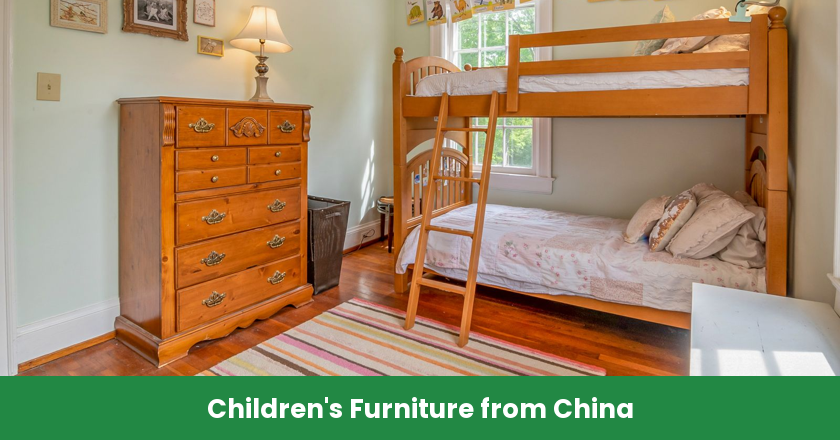
When sourcing children's furniture from China, approve the configuration the customer will assemble and use. The same bed frame can carry a different mattress, and a dresser can ship with different drawer hardware or an anchor kit. Classify the item for the destination, ask the lab to identify the applicable stability and entrapment checks, then match the labels and instructions to the tested build.
Classify the Furniture Before Approving the Build
Children's furniture approval starts with the product category and the actual assembled configuration. Verify the applicable stability tests, assess openings where a child could become trapped and check the required labeling against the marketed version. Before releasing a lot, reconcile the tested specimen with the hardware, accessories, instructions and markings that will ship.
- Decision: Record intended age, use and destination, then confirm which product rules apply.
- How it works: Give the lab drawings, settings, hardware and the components included or permitted in use.
- Risk: A different mattress, drawer slide or base can change the scope of an existing report.
Use the U.S. examples below to frame the questions for each model. Check the actual destination and product category before promising the same configuration in another market.
Confirm the U.S. Product Category
Start with the age, use, product dimensions and how the item will be sold. Send the reviewer the assembled drawing, packaging copy, assembly manual and included hardware, as well as each configuration the buyer intends to market. Ask for the applicable product category and rules before the factory assigns a test package or prints artwork.
The CPSC guide to durable infant or toddler products lists toddler beds and high chairs among covered categories. Their performance requirements come from the rules for the specific product. Marking and consumer registration have their own requirements for covered durable infant or toddler products. A bunk bed and a clothing storage unit need separate category reviews.
| Marketed product | What to show the reviewer | Evidence to scope |
|---|---|---|
| High chair | Seat, base, tray and restraint setup. | Applicable stability and other performance checks. |
| Toddler bed or bunk bed | Frame, mattress, supports and rails. | Category-specific opening and guardrail checks. |
| Bedroom clothing storage | Use, size, mass, storage and doors or drawers. | Scope decision, stability and anchoring. |
A label such as kids' furniture can cover a wide assortment. A low storage unit sold for toys and one marketed for bedroom clothing can have different scope questions. For a bed that can be sold or converted into several configurations, give the reviewer pictures and instructions for each assembly you plan to offer. Keep the classification conclusion with the exact drawings and sales claims it relies on.
Add a line for each version in the purchase schedule, even when the versions share a model family. Identify what the buyer can change after delivery, which hardware goes with that setup, and which configurations the manual shows. For unfinished decisions, record the missing inputs and name who will supply them. This gives the lab a defined list to scope and gives the buyer a way to compare the same assemblies across quotes.
Record the category and assembly before requesting a quote for tests. Include the category decision in the purchase specification, so a later change to age, features or use can be reviewed against the same record.
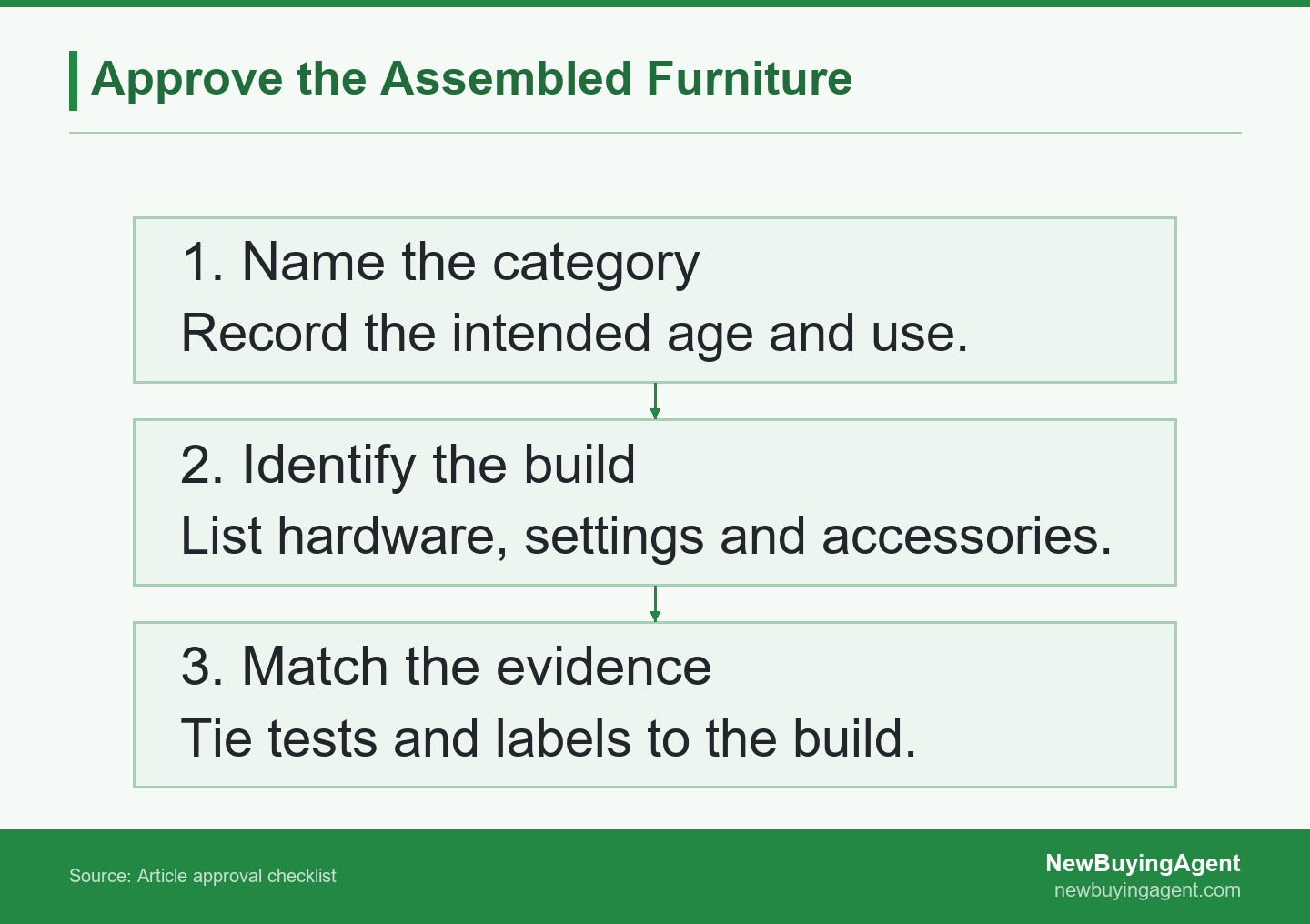
Match the product category and test setup to the model you will ship
Verify Stability on the Assembled Product
Verify stability on a production-representative assembled item and record how the lab configured it. Give the lab the actual legs, fasteners, restraint or drawer hardware and all relevant positions. Ask the lab to identify the surface, load and operating conditions called for by the applicable method, then keep the setup photos with the result.
The CPSC clothing storage unit guidance describes the scope of 16 CFR part 1261 for freestanding furniture with drawers or hinged doors intended for bedroom clothing storage. The criteria include height of at least 27 inches, weight of at least 30 pounds and enclosed storage of at least 3.2 cubic feet. Covered units must pass the prescribed stability tests and be packaged with a compliant anti-tip device. Check the complete scope and exclusions before applying the rule.
On a covered dresser, identify the drawer slides, stops and any interlock that prevents drawers from opening together. A changed slide might alter how far a loaded drawer extends. Record the actual parts in the test specimen and instruct the factory to notify you before changing them. Verify anti-tip hardware and instructions in the retail pack alongside the evidence for the unit's required stability tests.
On a high chair, the CPSC high chair guidance lists stability, static load, restraint systems, tray-related performance and openings among the checks. Show the lab how the intended tray and restraint are installed and which positions the instructions offer. If the factory changes the leg set or a latch, record what moved and ask the reviewer which checks that change affects.
When a buyer needs the same furniture construction for repeat orders, NewBuyingAgent's China furniture sourcing and supply can quote and supply the specified assembly through cooperating factories, with production quality and logistics support. Include the approved hardware list, test configurations and pack contents in the brief. This helps the team compare the quoted build with the construction already approved.
Map Openings and Mattress Configurations
Entrapment occurs when a child or part of the body becomes trapped in an opening or gap. Draw the openings on the assembled product, including gaps that are open along one side and those beside rails or mattress supports. Have the lab identify which openings and configurations fall within the applicable test methods.
The CPSC toddler bed guidance lists openings, mattress supports, guardrails, end and side structures and partially bounded openings among the requirements for toddler beds. An opening with one side unenclosed can still need evaluation. Ask for close photos of the tested joints and for the drawing revision linked to the report. Include any mattress or support conditions the lab used.
The CPSC bunk bed guidance identifies 16 CFR part 1513 for children's bunk beds. It describes entrapment checks around guardrails, the mattress foundation and the end structures, along with required markings, warnings and mattress size and thickness instructions. Have the lab identify which checks are run with an empty frame and which use the specified mattress or foundation. A new mattress can change the effective height of the guardrail above the sleeping surface.
Carry the approved opening and support dimensions into the factory drawing. For each critical location, identify the parts and fasteners that define it and how the assembler or inspector will verify it. If component dimensions vary within allowed tolerances, ask the reviewer which combination produces the most demanding setup. That gives quality a practical check on bulk assembly while keeping formal probe testing tied to the applicable requirement.
If the mattress is sold separately, make the permitted configuration clear in the purchase documents, instructions and listings. If it is bundled, identify the actual mattress and foundation as part of the SKU. Review a replacement against the documented configuration before the sales team changes the bundle description.
Hold a Bunk Bed Bundle With a Changed Mattress
In a hypothetical U.S.-bound children's bunk bed order from China, a retailer proposes a thicker upper-bunk mattress with the same length and width as the approved mattress. The frame drawing remains the same, but the proposed mattress exceeds the thickness covered by the approved instructions. Hold the changed bundle and confirm which test setups, warnings and instructions would need review.
Start with the mattress product code and thickness, any separate foundation, the frame and guardrail revisions, and the old report's specimen description. Ask for a production-representative assembly with the replacement mattress. Have the lab assess the applicable guardrail height and openings for the new configuration. Check the related manual and permanent warning or instruction label against the limits established for the tested configuration.
If the buyer restores the previously approved mattress, confirm its identity and packing allocation using the supplier records before releasing the original bundle. If the retailer keeps the thicker mattress, obtain evidence for the proposed configuration and make the approved instructions and labels agree with it before authorizing shipments. Keep the two mattress revisions distinct in the item records so a buyer can tell which approval applies.
Use the same logic if the factory suggests changing a rail or its fixings to accommodate the new mattress. Review the new assembly and any other affected requirements. A revised drawing by itself gives the reviewer a specimen to evaluate. Obtain the required results and verify representative packed goods before closing the hold.
Match Labels and Certificates to the Goods
Approve the product markings, retail carton, warnings and assembly instructions with an actual specimen. Verify where each item appears and whether the packed model, hardware and accessories correspond to the written instructions. Before releasing a shipment, connect the approved artwork, test reports and any required certification to the same model and production lot.
| Release item | Fields to complete | Who verifies |
|---|---|---|
| Product scope | [Age, use, category, destination and rule list.] | Product and compliance. |
| Tested build | [Drawing, hardware, mattress, setup and report IDs.] | Quality, engineering and lab. |
| Artwork and pack | [Mark locations, warnings, manual and required forms.] | Artwork and compliance. |
| Shipment | [Production lots, carton IDs, certificate and approval.] | Importer and quality. |
For covered durable infant or toddler products, the CPSC labeling and registration chart distinguishes permanent product markings, packaging tracking information as applicable, and an attached postage-paid registration card. Use the chart and the category rule to determine what appears on the item, what belongs on the package and what must accompany it. Verify that required identification and warnings are visible or placed where the applicable rule specifies.
The CPSC Children's Product Certificate guidance assigns the written Children's Product Certificate, or CPC, for covered children's products to the U.S. domestic manufacturer or importer. Where required, use results from a CPSC-accepted third-party lab for the applicable rules. Check the report scope and the model it identifies before the responsible party certifies the imported configuration.
Check the entry with the customs broker while there is time to correct missing data. The CPSC certificates and eFiling guidance describes electronic filing for covered imports and different applicable timing for general imports and goods entering from a Foreign Trade Zone. Match the certificate data submitted for the entry to the same product or production identifiers in your shipment file.
Assemble a retained unit using only the parts and instructions from a production carton. Check which warnings and identifiers an assembler can see at the specified locations and whether the instructions describe the fitted hardware. Photograph the marks next to the model identifier, and log any rejected or reworked cartons. A label proof and a picking list should lead back to the actual item that will ship.
For a mixed-model order, pull one retained carton for each approved assembly and label revision under the agreed inspection plan. Check that the correct instruction sheet and hardware bag were picked, particularly when packaging for different models looks alike. If a component or warning is wrong, identify the affected carton codes, hold those goods and agree the rework check before the factory reseals them. Retain a photo of the corrected contents with the packing record.
For replenishment, NewBuyingAgent's manufacturing and quality-control background can support repeat supply and quality checks against the signed drawings and approved retail configuration. Share the change history and the approved components with the reorder so proposed substitutions can be reviewed before they enter production.
For a new or repeat order from China, send the furniture specification to NewBuyingAgent with the intended age and use, destination, quantities, target price and timing. Include assembly drawings, hardware, packaging and evidence needs. The team can quote and supply the specified furniture with production quality and delivery support.
Frequently Asked Questions
Can an anti-tip kit replace a required stability test?
For covered clothing storage units, the packaged anti-tip device and the prescribed stability tests are both required and serve separate purposes. Verify the unit against the applicable test procedures and check the device and instructions. In the purchase specification, keep evidence for both requirements and identify which finished unit and carton configuration each check covered.
Can a bunk bed report cover a different mattress?
A bunk bed report covers a different mattress configuration only if the reviewer can show that the evidence and instructions support it. Compare size, thickness and foundation with the tested setup. Recheck affected guardrail and opening requirements and verify the limits printed on the product and in its assembly instructions before accepting the change.
Should warnings appear on the product, package or instructions?
Place each warning and identifying mark where the applicable rule requires it, then verify the actual production specimen and packaging. Compare the physical markings and any required registration materials with the drawn artwork and instructions. Ask the reviewer to identify which requirements each item fulfills and which model and revision the inspection covered.
Can I use the factory report for a repeat order?
A factory report can support a repeat order when its tested build and rule scope match the current goods and applicable requirements. Check the lab, report identity and specimen revision, then ask the responsible reviewer to assess any new hardware, usage claims or category requirements. Keep that decision with the production lot file.
NewBuyingAgent
Related Resources
Get Started Today
Let's Turn Your Sourcing Goals into RealityWeChat:+86 15157124615
WhatsApp:+86 15157124615
Address:Building 10 #39 Xiangyuan Road, Hangzhou, China
