

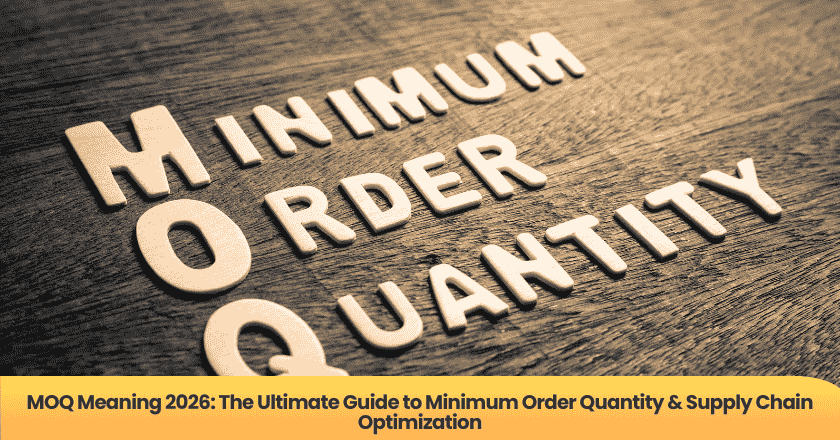
Understanding Minimum Order Quantity (MOQ) is a game-changer for anyone navigating the complexities of global trade. As a crucial factor in sourcing, MOQ dictates the smallest amount a supplier is willing to sell, directly shaping your purchasing strategy and bottom-line costs. In this detailed interpretation, we explore how mastering the MOQ meaning can help you maintain healthy supplier relationships, optimize inventory, and gain a competitive edge in supply chain efficiency. Whether you are a scaling startup or an established enterprise, this guide reveals why MOQ remains a central pillar of successful procurement.
Key Takeaways
- Master the Fundamentals: Grasp the core concepts of MOQ to streamline your purchasing power and slash unnecessary procurement costs.
- Data-Driven Analysis: Evaluate your unique supply chain needs to pinpoint the ideal order quantity for every product in your portfolio.
- Negotiate Like a Pro: Use proven strategies to discuss minimums with suppliers, securing more flexible terms and competitive wholesale pricing.
- Optimize Inventory Health: Periodically audit your order volumes to prevent deadstock and keep your storage overhead lean.
- Scale with Technology: Partner with experts and use AI-driven tools to automate MOQ management and boost overall sourcing efficiency.
MOQ Meaning And Core Concepts
What Is Minimum Order Quantity?
Minimum order quantity, often abbreviated as MOQ, refers to the smallest quantity a supplier will accept for a single order. This concept plays a foundational role in global trade. Suppliers set a minimum to ensure that production and logistics remain cost-effective. For example, a factory may require a buyer to purchase at least 500 units of a product. This threshold helps suppliers cover fixed costs and maintain profitability.
Buyers must understand MOQ before placing orders. The minimum order quantity can vary based on the product, the supplier's production capacity, and the complexity of manufacturing. Some suppliers set a minimum based on units, while others use a minimum dollar value. The MOQ ensures that both parties in the supply chain benefit from the transaction. When buyers meet the minimum, they gain access to wholesale pricing and reliable supply.
MOQ's Role In Supply Chain
The supply chain connects manufacturers, suppliers, distributors, and retailers. MOQ acts as a critical control point within this chain. Suppliers use minimum order quantity to manage production schedules and inventory levels. By setting a minimum, they can optimize raw material purchases and reduce waste.
In the supply chain, MOQ influences how quickly products move from factories to warehouses and then to customers. High minimum order quantities can lead to larger inventory holdings, which may increase storage costs. Low MOQ allows for more frequent orders and reduces the risk of excess stock. Every link in the supply chain must consider MOQ when planning procurement and logistics.
Tip: Companies should analyze the supply chain to determine the ideal MOQ for each product. This analysis helps balance inventory costs and customer demand.
Why MOQ Matters For Buyers And Suppliers
MOQ impacts both buyers and suppliers in several ways. Buyers must plan orders to meet the minimum set by suppliers. If the required quantity is not reached, companies may face higher prices or lose access to certain products. Suppliers rely on MOQ to maintain efficient production and stable cash flow.
The minimum order quantity also affects negotiation power. Buyers who understand MOQ can negotiate better terms or seek alternative suppliers with lower minimums. Suppliers use MOQ to filter serious buyers from casual inquiries, ensuring that the supply chain remains efficient.
The right MOQ supports healthy business relationships. Buyers who consistently meet the minimum build trust with suppliers. Suppliers who offer flexible MOQ attract more customers and adapt to changing market conditions. Both parties benefit from clear communication about order requirements and supply chain expectations.
Note: Effective MOQ management reduces costs, improves supply reliability, and strengthens the entire supply chain.
Types Of MOQ And Calculation Methods
Common MOQ Types (Units, Value)
Businesses encounter two main types of minimum order quantity. The first type uses units. Suppliers set a minimum number of items that buyers must purchase in a single order. For example, a factory may require a buyer to place an order for at least 1,000 units. The second type uses value. In this case, suppliers set a minimum order based on the total dollar amount. A supplier may require a minimum order of $5,000, regardless of the number of units. Both types help suppliers manage production costs and ensure efficient operations.
Key Factors Affecting MOQ
Several factors influence the minimum order a supplier sets. Product type plays a major role. Custom or complex products often require a higher minimum. Production processes also matter. Factories with automated lines may need larger orders to justify setup costs. Material availability can impact the minimum order. Rare or expensive materials may lead to higher minimums. Market demand shapes the minimum as well. High-demand products often have lower minimums. Supplier capacity and buyer relationships also affect the minimum order quantity.
Tip: Buyers should analyze these factors before negotiating the minimum order with suppliers.
How To Calculate Minimum Order
Calculating MOQ involves several steps. First, suppliers estimate fixed and variable costs. Fixed costs include machine setup and labor. Variable costs depend on the number of units produced. Suppliers then determine the break-even point. This point shows the minimum order needed to cover all costs and make a profit.
Calculating MOQ also helps buyers avoid excess inventory and manage cash flow.
Note: Accurate calculation of the minimum order supports better decision-making and supply chain efficiency.
Managing MOQ With NewbuyingAgent
Strategies For High Or Low MOQ
Businesses often face challenges when dealing with high MOQ or low MOQ. High MOQ can strain cash flow and increase inventory risk. Companies may choose to consolidate orders, collaborate with other buyers, or focus on products with steady demand to meet the minimum. Low MOQ offers flexibility and reduces excess stock, but may result in higher unit costs. Firms should analyze sales data and forecast demand before placing orders. They can also diversify suppliers to access different minimums and optimize order strategies.
Tip: Evaluate historical sales and seasonal trends to determine the best approach for each minimum order.
Negotiating MOQ With Suppliers
Negotiating MOQ with suppliers requires preparation and clear communication. Buyers should research market standards for minimum orders and present realistic proposals. They can leverage long-term relationships or offer upfront commitments to secure favorable minimums. Suppliers may adjust minimums based on production capacity or material availability. Buyers should highlight reliability and the potential for repeat orders. Using data-driven insights helps both parties reach an agreement that benefits the supply chain.
| Negotiation Tactics | Impact on MOQ |
|---|---|
| Volume Commitment | May lower minimum |
| Flexible Payment Terms | Can reduce minimum |
| Bundled Orders | Optimizes minimum |
NewbuyingAgent's Role In MOQ Optimization
NewbuyingAgent streamlines the process of managing MOQ for global buyers. Its network of experts negotiates directly with suppliers, ensuring buyers receive competitive minimum order terms. Quality assurance teams monitor production to guarantee that every order meets standards. Flexible payment options support cash flow and make it easier to place orders that align with business needs. NewbuyingAgent’s end-to-end service allows companies to focus on growth while minimizing risks associated with minimum order quantity.
Note: Leveraging technology and expert support enhances efficiency and reduces costs for all orders.
MOQ Vs. EOQ And ROQ
MOQ Vs. Economic Order Quantity
MOQ, or minimum order quantity, sets the smallest number of units a supplier will accept in a single order. EOQ, or economic order quantity, determines the ideal quantity a business should purchase to minimize total inventory costs. MOQ focuses on supplier requirements, while EOQ centers on the buyer’s internal cost optimization. Companies use EOQ to balance ordering costs and holding costs. MOQ, on the other hand, ensures suppliers cover production expenses. When placing orders, businesses must check if the EOQ meets or exceeds the supplier’s minimum. If EOQ falls below the minimum, buyers may need to adjust the order strategy.
| Concept | Focus | Who Sets It | Purpose |
|---|---|---|---|
| MOQ | Minimum order | Supplier | Covers production costs |
| EOQ | Optimal order | Buyer | Minimizes inventory costs |
Note: Aligning EOQ with the minimum order quantity can help companies avoid excess inventory and unnecessary expenses.
MOQ Vs. Reorder Quantity
Reorder quantity (ROQ) refers to the amount a business orders when inventory reaches a specific threshold. MOQ sets the minimum that suppliers will accept for any order. ROQ depends on sales patterns and lead times. MOQ depends on supplier production needs. Sometimes, the reorder quantity matches the minimum order, but often it differs. Businesses must ensure that every reorder meets or exceeds the supplier’s minimum. If not, they risk delays or higher costs.
Impact On Pricing And Inventory
MOQ, EOQ, and ROQ each influence pricing and inventory management. A high minimum order can lead to larger inventory holdings and increased storage costs. EOQ helps reduce these costs by identifying the most efficient order size. ROQ ensures timely replenishment, preventing stockouts. When the minimum order exceeds EOQ or ROQ, businesses may face higher expenses or excess stock. Careful planning of orders, considering all three concepts, supports better pricing and efficient inventory control.
Tip: Regularly review order quantities and minimums to optimize inventory levels and reduce costs.
Challenges, Benefits, And Tips
Common MOQ Challenges
Businesses often encounter several obstacles when dealing with minimum order quantity. Suppliers may set high minimums that exceed a buyer's budget or storage capacity. Small companies sometimes struggle to meet these requirements, which can limit product selection or delay market entry. Fluctuating demand also creates uncertainty. Buyers risk overstocking if sales do not match projections. Communication gaps between buyers and suppliers can lead to misunderstandings about order terms. Seasonal changes and market trends further complicate planning.
Tip: Regularly review supplier requirements and market conditions to anticipate potential challenges.
Benefits And Drawbacks Of MOQ
Minimum order quantity offers distinct advantages. Suppliers achieve cost efficiency by producing larger batches. Buyers often receive better pricing and priority service when meeting minimums. Consistent orders help stabilize supply chains and foster long-term relationships. However, drawbacks exist. High minimums can tie up capital and increase inventory costs. Buyers may face limited flexibility in product selection. Overstocking leads to waste and reduced profitability. Suppliers risk losing customers who cannot meet their minimums.
| Benefit | Drawback |
|---|---|
| Lower unit costs | Higher inventory risk |
| Stable supply chain | Limited flexibility |
| Stronger relationships | Potential for overstock |
Tips To Optimize Minimum Order Quantity
Optimizing MOQ for suppliers and buyers requires a strategic approach. Companies should analyze historical sales data to forecast demand accurately. Negotiating with suppliers can result in more favorable terms. Grouping orders with other buyers may help meet minimums without excess inventory. Diversifying suppliers provides access to different minimums and reduces risk. Implementing technology for inventory tracking improves decision-making. Clear communication ensures both parties understand expectations.
Note: Regular assessment of order quantities and supplier terms supports efficient operations and cost control.
FAQ
1. What does MOQ stand for in global sourcing?
MOQ stands for Minimum Order Quantity. It represents the fewest number of units a supplier is willing to produce or sell in a single purchase. By enforcing an MOQ, manufacturers ensure they cover fixed setup costs and maintain operational profitability.
2. How does Minimum Order Quantity impact small businesses?
For small businesses, a high MOQ can be a significant barrier, often leading to cash flow strain or excess inventory. However, meeting the minimum allows smaller firms to access wholesale pricing that is typically reserved for larger volume buyers. Strategic negotiation or order consolidation is often required to balance these risks.
3. Is it possible to negotiate MOQ with international suppliers?
Yes, MOQ is often negotiable. You can request a lower minimum by offering a higher unit price, committing to a long-term contract, or scheduling smaller shipments as part of a larger annual volume. Suppliers are more likely to be flexible if you demonstrate consistent growth potential.
4. Why do MOQ requirements vary between different products?
Variations in MOQ are driven by production complexity and material costs. For example, custom-molded plastic parts have high initial setup costs, leading to higher MOQs. Conversely, standard off-the-shelf items usually have lower MOQs because the supplier can easily sell the remaining stock to other buyers.
5. What are the consequences of not meeting a supplier's MOQ?
If your order falls below the Minimum Order Quantity, the supplier may either reject the order entirely or apply a "small order surcharge." To avoid these extra costs or potential delays, it is essential to confirm all MOQ terms during the initial RFQ (Request for Quote) phase.
NewBuyingAgent
Related Resources


Get Started Today
Let's Turn Your Sourcing Goals into RealityWeChat:+86 15157124615
WhatsApp:+86 15157124615
Address:Building 10 #39 Xiangyuan Road, Hangzhou, China
