

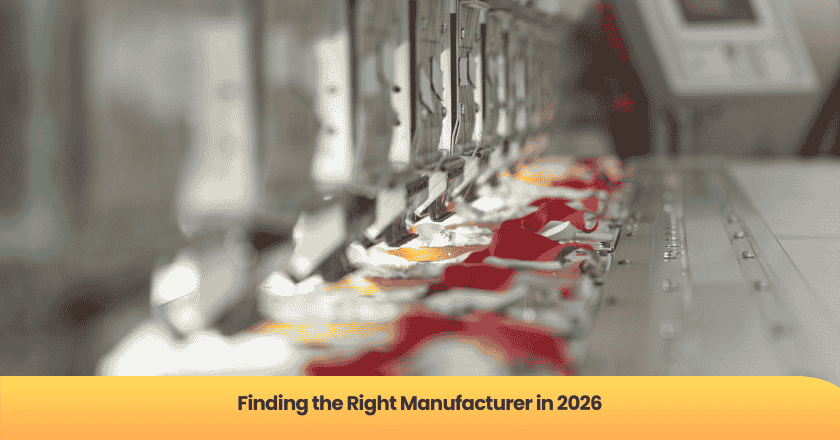
In the landscape of 2026, the global manufacturing sector has shifted from a "lowest-cost-wins" model to a "resilience-and-intelligence-first" paradigm. For businesses looking to scale, the challenge is no longer just finding a factory; it is about securing a strategic partner that integrates seamlessly with digital supply chains, adheres to stringent ESG (Environmental, Social, and Governance) mandates, and utilizes advanced automation to mitigate geopolitical risks. This guide provides an exhaustive roadmap for navigating the complexities of modern manufacturing.
Defining Your Manufacturing Requirements in the AI Era
Before scanning directories or attending virtual trade shows, you must define the "DNA" of your product. In 2026, manufacturers expect a higher level of technical readiness from brands. The distinction between various production models has become more nuanced with the rise of hyper-customization.
Original Equipment Manufacturer (OEM): This remains the bedrock for brands with fully developed proprietary designs. In 2026, an OEM partner is expected to handle not just assembly but also digital twin integration, allowing you to simulate production runs before the first physical unit leaves the line.
Original Design Manufacturer (ODM): Ideal for companies looking to enter markets quickly. Modern ODMs now offer "modular innovation," where you can tweak existing high-tech templates rather than starting from scratch, significantly reducing R&D costs.
Contract Manufacturing (CM): This involves a deeper level of integration. A CM acts as your extended factory, often managing the entire lifecycle from raw material procurement to end-user fulfillment.
Expert Tip: Before reaching out to potential partners, ensure your "Tech Pack" includes not just CAD drawings but also sustainability specifications. Manufacturers in 2026 are increasingly prioritizing clients who provide clear data on material recyclability and carbon footprint targets, as this affects their own compliance ratings.
Navigating the 2026 Sourcing Channels: Beyond Digital Directories
While platforms like Alibaba and Global Sources remain relevant, the 2026 sourcing ecosystem is dominated by "Verified Ecosystems" and AI-driven matchmaking.
AI-Enhanced B2B Marketplaces: Modern platforms now use predictive algorithms to match your "buyer profile" with a manufacturer's "production DNA." They look at historical lead times, financial stability, and even the sentiment of previous client reviews to ensure a high-success match.
Specialized Vertical Expos: The shift back to physical-hybrid events is palpable. Specialized fairs focusing on specific niches—such as biocompatible plastics or solid-state battery assembly—are where high-end partnerships are forged.
Regional Sourcing Hubs: We are seeing a "China Plus One" strategy evolve into "Multi-Hub Sourcing." While China remains the leader in infrastructure, regions like Vietnam, India, and Mexico have specialized. Finding a manufacturer now often involves looking at geographic clusters that offer regional trade benefits.
Common Mistake to Avoid: Relying solely on "Gold Supplier" badges or equivalent automated ratings. These are often paid marketing tools. In 2026, the only verification that matters is a third-party audit report dated within the last six months, specifically covering the new ISO 2026 sustainability standards.
The Modern Vetting Process: Establishing EEAT in Your Supply Chain
In a world of deepfakes and automated storefronts, verifying a manufacturer's legitimacy is more critical than ever. You must look for "Digital Transparency."
Real-Time Factory Tours: Gone are the days of static photos. A reputable manufacturer in 2026 will offer a live, 360-degree virtual tour of their facility, often utilizing AR (Augmented Reality) to show you specific production lines in action without you having to fly across the globe.
Financial and Legal Due Diligence: Use professional risk-assessment tools to check the manufacturer's debt-to-equity ratio. In a volatile economy, a factory facing financial distress is a high-risk partner that might cut corners on material quality or labor rights.
Quality Management Systems (QMS): Look beyond the basic ISO 9001. Check for industry-specific certifications like IATF 16949 for automotive or ISO 13485 for medical devices. Ensure these certificates are verifiable on the issuing body's blockchain-enabled database.
Expert Tip: Always request a "Component Traceability Report." A top-tier manufacturer should be able to prove where their raw materials come from. This is no longer a luxury; it is a legal requirement in many jurisdictions under 2026 supply chain transparency laws.
Communication and Cultural Intelligence in Negotiation
Effective communication is the bridge between a design and a finished product. However, in 2026, communication is as much about data as it is about language.
The Power of Detailed RFQs (Request for Quotation): Your RFQ should be an exhaustive document. It must specify tolerances, finishing requirements, packaging standards, and "Incoterms 2020/2026" shipping responsibilities. The more detailed your RFQ, the fewer "hidden costs" will surface later.
Bridging the Language Gap with Technical Precision: While AI translation has improved, technical jargon can still be misinterpreted. Use standardized international symbols and annotated diagrams to ensure that "matte finish" in your mind is exactly what the engineer on the factory floor understands.
Cultural Nuance in Partnership: Manufacturing is still a people business. Understanding the local holidays, work-week structures, and negotiation etiquettes of your partner's country fosters mutual respect and can lead to better pricing and priority scheduling during peak seasons.
Common Mistake to Avoid: Negotiating the price so low that the manufacturer loses their profit margin. In the 2026 economy, this almost guarantees that the factory will substitute inferior materials or deprioritize your order when a more profitable client arrives. Aim for "Fair Market Value" to ensure long-term commitment.
Prototyping and the "Golden Sample" Protocol
The transition from a digital design to a physical product is the most vulnerable stage of the process. Prototyping in 2026 leverages rapid additive manufacturing.
Iterative Sampling: Do not expect the first sample to be perfect. Budget for at least three rounds of prototyping. The first is for form, the second for function, and the third (the Golden Sample) for final aesthetic and material approval.
The Golden Sample as a Legal Benchmark: Once you approve a sample, it becomes the "Golden Sample." One copy stays with you, and one stays at the factory. This physical unit serves as the ultimate quality benchmark for the entire production run and is your primary evidence in case of a quality dispute.
Testing and Validation: Send your samples to independent, accredited laboratories (like SGS or TÜV) to verify that they meet safety and regulatory standards. Never rely on the factory's internal testing reports alone.
Expert Tip: Implement "Red-Line" samples. If a prototype has a flaw, mark it physically with red ink and return it to the factory. This visual feedback loop is often more effective than an email list of corrections, especially in high-volume production environments.
ESG and Ethical Sourcing: The 2026 Standard
Sustainability is no longer a buzzword; it is a core business metric. Consumers and regulators now demand full visibility into the ethical standing of your manufacturing partners.
Labor Practices: Verify that your manufacturer pays a living wage and adheres to safe working conditions. Use third-party audits like Sedex or BSCI. In 2026, brands are being held legally liable for labor violations within their multi-tier supply chains.
Environmental Footprint: Ask for data on energy consumption and waste management. Many leading manufacturers are now powered by onsite renewable energy. Partnering with a "Green Factory" can significantly lower your brand's carbon tax liabilities.
Circular Economy Integration: Can the manufacturer use recycled ocean plastics? Do they have a system for reclaiming production scrap? Choosing a partner that understands circularity will future-proof your product line against upcoming environmental regulations.
Common Mistake to Avoid: Treating ESG as a "check-the-box" exercise. Genuine sustainability requires ongoing monitoring. Failing to audit your supplier's environmental claims can lead to "greenwashing" scandals that can permanently damage your brand's reputation in the 2026 market.
Logistics, Risk Management, and Digital Tracking
In 2026, the journey of your goods from the factory to your warehouse is monitored in real-time through IoT (Internet of Things) integration.
Diversified Logistics Routes: Given the geopolitical shifts of the mid-2020s, relying on a single shipping route is dangerous. Work with freight forwarders who offer multi-modal options (sea-air, rail-sea) to bypass potential port congestions or regional conflicts.
Smart Contracts and Payments: Utilize escrow-based payment systems or blockchain-enabled smart contracts. These systems release payments to the manufacturer only when certain milestones—such as "passed third-party inspection" or "vessel departed"—are verified by data inputs.
Inventory Buffering: The "Just-in-Time" model has been replaced by "Just-in-Case." Maintain a strategic buffer of inventory to protect against sudden supply chain shocks.
Expert Tip: Invest in "Smart Packaging." By embedding inexpensive IoT sensors in your master cartons, you can track the temperature, humidity, and shock levels your products experience during transit, ensuring quality is maintained until the final mile.
Quality Control (QC) in the Era of Automation
Quality control in 2026 is moving away from manual spot-checks toward automated, 100% inspection systems.
AI Visual Inspection: Many modern factories use AI-powered cameras to inspect every single unit on the conveyor belt for defects that are invisible to the human eye.
Pre-Shipment Inspections (PSI): Regardless of the factory's internal tech, always hire an independent third-party inspector to perform a PSI. They should follow the AQL (Acceptable Quality Limit) standard to ensure the batch meets your requirements before you pay the final balance.
Defect Analysis and Continuous Improvement: If defects are found, don't just ask for replacements. Ask for a "Root Cause Analysis" (RCA). A professional manufacturer will use this data to adjust their machines or processes to ensure the error doesn't recur.
Common Mistake to Avoid: Skipping the mid-production inspection. If you only inspect at the end, and a systematic error occurred at the beginning, the entire batch is wasted. Inspecting when 20-30% of the order is completed allows for course correction.
Frequently Asked Questions (FAQ) - 2026 Manufacturing Edition
Q1: How do I find a manufacturer for a small-batch startup in 2026?
A1: Look for "Flexible Manufacturing" partners. Many factories now use modular production lines designed for smaller MOQs (Minimum Order Quantities) to cater to the booming D2C (Direct-to-Consumer) market. Platforms like Pietra or specialized Alibaba filters for "small orders" are excellent starting points.
Q2: What are the safest payment methods for international manufacturing?
A2: In 2026, the safest methods are Trade Assurance programs provided by marketplaces, or "Letter of Credit" (L/C) for very large transactions. Avoid direct wire transfers (T/T) to new partners until a foundation of trust and successful delivery has been established.
Q3: How long does it typically take to go from a concept to a finished product?
A3: On average, the cycle takes 4 to 8 months. This includes 1-2 months for sourcing and vetting, 1-2 months for prototyping, and 2-4 months for mass production and shipping. 2026 trends in 3D printing have shortened the prototyping phase, but logistics still require significant lead time.
Q4: How can I protect my Intellectual Property (IP) when manufacturing overseas?
A4: Use NNN Agreements (Non-Disclosure, Non-Use, Non-Circumvention) rather than standard Western NDAs. Ensure your trademarks and patents are registered in the manufacturing country, not just your home country. In 2026, blockchain IP registration is also becoming a recognized tool for proving design ownership.
Q5: What is the impact of "Reshoring" on finding a manufacturer?
A5: Reshoring (moving production back to your home country) is increasing for high-tech and essential goods. While labor costs may be higher, the savings in logistics, carbon taxes, and the speed of "market-to-shelf" often make local manufacturing more competitive in 2026.
Final Thoughts: Building a Resilient Partnership
Finding a manufacturer in 2026 is no longer a transactional event; it is the construction of a vital business organ. The brands that succeed are those that treat their suppliers with transparency, leverage the latest digital vetting tools, and prioritize ethical production. By following this structured approach, you ensure that your supply chain is not just a cost center, but a competitive advantage in an increasingly complex global market.
NewBuyingAgent
Related Resources
Get Started Today
Let's Turn Your Sourcing Goals into RealityWeChat:+86 15157124615
WhatsApp:+86 15157124615
Address:Building 10 #39 Xiangyuan Road, Hangzhou, China
