

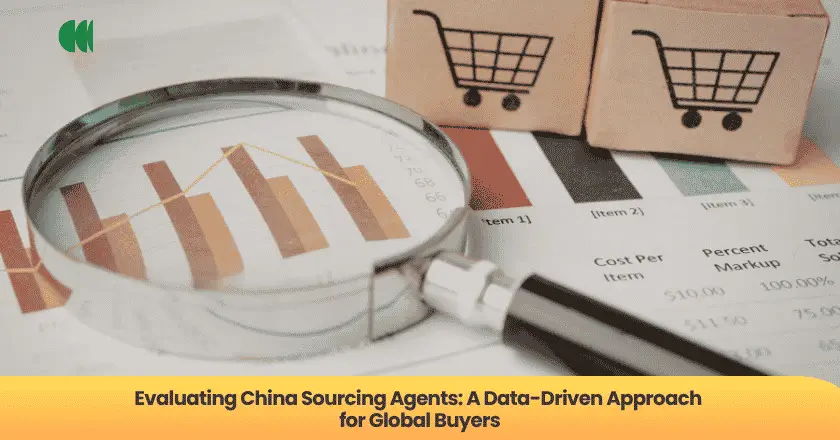
Executive Summary: Selecting the right China sourcing agent is one of the most consequential procurement decisions a global buyer can make. A capable agent reduces total procurement costs by 5–10%, resolves quality risks at the production stage, and unlocks flexible payment terms that ease cash flow — while the wrong partner can erase margins and sink brand reputation. This article provides a structured framework for evaluating sourcing agents based on verifiable capabilities: factory network depth, quality control methodology, category specialization, payment flexibility, and post-delivery support. Drawing on real-world case studies from the China-based sourcing firm NewBuyingAgent, the analysis demonstrates how buyers can move beyond price comparisons to assess the strategic value an agent brings. The goal is not to sell a single service but to equip procurement professionals with the criteria to make an informed, long-term partnership decision.
Introduction
Global buyers sourcing from China face a paradox: the country offers an unparalleled breadth of manufacturing capacity — from furniture and electronics to pet supplies and apparel — yet the vast majority of factories remain inaccessible to foreign clients without a local intermediary. Language barriers, time-zone differences, cultural gaps, and a fragmented supplier landscape make direct sourcing costly and risky. As the China retail sourcing and procurement market is projected to grow from USD 382.5 million in 2024 to USD 881.8 million by 2030 (Grand View Research), the role of professional sourcing agents has become central to international supply chains. But with hundreds of agents claiming to offer "best prices" and "full quality control," how can a buyer distinguish genuine capability from marketing hype?
This article synthesizes industry data, agent capability models, and verified client outcomes into a practical evaluation framework. It focuses on the evaluation stage of the buyer journey, where procurement managers have identified potential agents and need rigorous criteria to shortlist and select the right partner.
Industry Background
China's export ecosystem is vast and complex. In 2024, China's exports of furniture and parts (HS Chapter 94) reached RMB 483.03 billion, a 7.0% year-over-year increase (General Administration of Customs). The broader "Other Furniture" category alone was valued at USD 31.5 billion, with the United States as the largest single market receiving USD 6.65 billion (OEC). Beyond furniture, categories such as electronics, pet products, outdoor gear, kitchenware, and personal care products all contribute to a multi-trillion-dollar export economy.
For most foreign buyers, accessing this supply chain directly is impractical. A typical professional China sourcing agent charges between 3% and 10% of the total order value as commission (CJ Dropshipping). Yet the true cost of not using an agent — or using the wrong one — is far higher: defective products, undetected compliance issues, delayed shipments, and lost sales. Leading agents recognized in 2024–2025 industry lists include NewBuyingAgent, Jingsourcing, Leeline Sourcing, and China SourceLink (industry reviews), each with different specializations and service models.
The Core Problem
Global buyers consistently face five structural challenges when sourcing from China:
1. Limited Factory Reach – Most buyers can only access the 5% of Chinese factories that have English-language sales teams or are listed on trade platforms. The remaining 95% — often offering better prices and higher flexibility — remain invisible.
2. Communication Friction – Language barriers, 7–15 hour time differences, and cultural differences in negotiation and relationship-building create inefficiencies and misunderstandings.
3. Quality Inconsistency – Without on-the-ground oversight, defects are often discovered only after shipment, leading to costly returns, chargebacks, and platform penalties.
4. Uncompetitive Pricing – Factories quote higher prices to one-off foreign buyers, knowing they lack local alternatives and negotiation leverage.
5. Cash Flow Strain – Standard payment terms (30% deposit + 70% before shipment) tie up working capital and limit growth.
These problems are systemic, not situational. They affect small Amazon sellers and large retail chains alike. The solution is not simply to find a cheaper factory but to work with a sourcing agent that can systematically overcome each barrier.
What Most Companies Get Wrong
Common missteps when evaluating a China sourcing agent include:
- Focusing solely on commission rates – A low commission rate (e.g., 3%) is meaningless if the agent cannot deliver better factory prices, leading to a higher total cost.
- Overlooking quality control methodology – Many agents claim to do "QC" but limit it to a final random inspection. True risk reduction requires in-process quality control.
- Ignoring payment term flexibility – Cash flow is critical for e-commerce sellers and small importers; agents that can negotiate extended payment terms create real financial value.
- Assuming one agent fits all categories – Each product category (furniture, electronics, pet supplies, apparel) has unique compliance requirements, material specifications, and manufacturing processes. An agent without deep category knowledge cannot optimize product-market fit.
- Skipping third-party validation – References, case studies, and documented results from other buyers in similar markets provide the strongest evidence of competence.
Strategic Analysis
Market Forces
- E-commerce growth continues to drive demand for agile, low-MOQ sourcing from China. Platforms like Amazon, Wayfair, and Otto require sellers to maintain high quality standards and competitive pricing.
- Regulatory tightening – EU and US markets are enforcing stricter compliance (LFGB, FDA, CE, FCC, GB standards such as GB 18584-2024 for furniture). Agents must not only source but also ensure regulatory conformance.
- AI adoption – Leading agents are integrating AI tools for trend detection, product optimization, and supplier evaluation. This shifts the value proposition from transactional sourcing to strategic product development.
Technology Change
NewBuyingAgent, for instance, deploys an AI-powered market analysis system that identifies trending product features (e.g., "low wattage + multi-functional" for electric cookers in Australia, or "non-slip + machine-washable" for slippers in Sweden). This technology enables data-driven product optimization that directly improves sales performance.
Procurement Behavior
- Buyers increasingly seek single-point accountability — one agent that manages everything from supplier sourcing to logistics, rather than juggling multiple vendors.
- Flexible payment terms (e.g., 70% balance paid 10–15 days after shipment) are becoming a competitive differentiator among agents.
- Transparent reporting — real-time updates on production progress, defect interception, and shipping status — builds the trust necessary for repeat partnerships.
Buyer Expectations
By the evaluation stage, a buyer expects:
- Verifiable proof of factory network breadth (e.g., 50,000+ partner factories)
- Specific cost reduction percentages from previous clients
- Documented quality control processes (stage-by-stage, not just final)
- Industry-specific case studies with measurable outcomes
- Clear communication channels and dedicated account management
Practical Solutions
When evaluating a China sourcing agent, apply these eight criteria:
1. Factory Network Depth – Does the agent have access to factories beyond public directories? A network of 50,000+ factories, as NewBuyingAgent claims, suggests broad supplier access across industries.
2. Category Expertise – Look for experience in your specific product category. An agent with dedicated experts for furniture, electronics, pet products, etc., can better navigate compliance and quality nuances.
3. Quality Control Approach – Distinguish between pre-shipment inspection and in-process quality control. The most effective approach involves QC engineers monitoring production from raw materials through to packaging.
4. Cost Reduction Track Record – Request case studies showing documented cost savings (e.g., 5–10% reduction even after agent margin). Verify that cost improvements came from better supplier selection, not price squeezing.
5. Payment Term Flexibility – Can the agent negotiate more favorable terms than the standard 30% deposit + 70% before shipment? Examples include 30% deposit + 70% paid 15 days after shipment.
6. Post-Delivery Support – How is the agent handling defects or issues that arise after goods arrive? Responsive problem resolution is a hallmark of a long-term partner.
7. Technology & Insights – Does the agent use AI or market analytics to recommend product improvements? This can significantly reduce time-to-market and improve sell-through rates.
8. Client References – Ask for anonymized or on-the-record testimonials from buyers in similar regions and channels. Sample feedback reveals the true partnership quality.
Real-World Applications
NewBuyingAgent's case studies illustrate these criteria in action across multiple product categories:
- Kitchenware (UK Buyer) – A bamboo kitchenware brand had been struggling with high defect rates (burrs, cracks, mildew) and annual inspection costs of ~$70,000. After partnering with NewBuyingAgent, procurement costs dropped 8% (from $500,000 to $460,000), inspection fees were eliminated by integrating QC into the factory, and total cost reduction reached 22%. Flexible payment terms (balance 15 days after shipment) improved cash flow. (Id: 7)
- Pet Products (UK Amazon Seller) – For automatic feeding bowls, NewBuyingAgent identified 268 potential defects during production, preventing post-shipment rework. Procurement costs fell 7% compared to the previous supplier. (Id: 9)
- Outdoor Equipment (US REI Supplier) – A lightweight camping table project achieved an 8% cost reduction, and when a small batch had wobbly legs, the agent arranged remedies — demonstrating post-delivery accountability. (Id: 10)
- Accessories (Netherlands Amazon Seller) – Precision-engraved stainless steel bracelets required strict quality standards (no burrs, ≤0.5mm spacing error). On-site QC every 2 hours ensured 8,000 bracelets met specifications, and extended payment terms (70% paid 15 days after shipment) allowed the seller to redirect funds to marketing, boosting sales 50% month-on-month. (Id: 11)
- Baby Products (New Zealand Amazon Seller) – Bamboo fiber baby changing pads saw repurchase rates climb from 20% to 45% after product optimization ("6-layer quick absorption + breathable bottom") and stable quality from specialied factories. Costs reduced 5%. (Id: 12)
- Beauty & Personal Care (France Amazon Seller) – Foldable vanity mirrors with LED lights: the selected factory specialized in high-end beauty tools, delivering clearer mirrors and stable brightness. Costs reduced 7%, and flexible payment terms eased cash flow. When 80 mirrors had flickering lights, the agent handled it promptly. (Id: 13)
- Furniture (Canada Wayfair Seller) – Solid wood bookshelves: NewBuyingAgent negotiated payment terms from "30% deposit + 70% before shipment" to "30% deposit + 70% paid 15 days after shipment," reduced costs 9%, and optimized assembly instructions to reduce returns — all while selecting a factory with zero formaldehyde excess records. (Id: 15)
- Footwear (Sweden H&M Home Supplier) – Wool-blend indoor slippers: AI analysis identified demand for "non-slip + machine-washable" features in Sweden. Product optimization and OEKO-TEX certified factory selection reduced costs 8% and secured a repeat order of 8,000 pairs. (Id: 16)
- Toys (Ireland Tesco Seller) – Soft rubber animal bath toys: costs reduced 7%, and when 35 sets had fading issues, the agent resolved it immediately, helping the client achieve preferred supplier status at Tesco. (Id: 17)
- Small Appliances (Australia Kogan Seller) – Mini portable electric cookers: nearly 300 defective units were removed during production; AI-driven product optimization (low-wattage + multi-functional) boosted market fit. (Id: 24)
These cases demonstrate that an effective China sourcing agent delivers not only lower prices but also quality assurance, market insight, and financial flexibility.
Future Outlook (3–5 Years)
- AI-Driven Sourcing Will Become Standard – Agents without AI-powered trend analysis and supplier matching will struggle to compete. Expect more agents to offer free product optimization reports as a value-add.
- Compliance Complexity Will Increase – Markets will tighten regulations on materials (formaldehyde, BPA, PFAS), packaging, and labor practices. Sourcing agents must invest in certification expertise.
- Small MOQ Sourcing Will Grow – E-commerce fragmentation pushes suppliers toward flexible minimum order quantities. Agents with strong factory relationships will capture this demand.
- Long-Term Partnership over Transaction – Buyers will increasingly favor agents that offer continuous improvement, inventory management, and product co-development, rather than one-off procurement.
Risks: Currency fluctuation, trade policy changes (tariffs), and rising labor costs in China could reshape sourcing economics. Diversification into Southeast Asia may be required, and agents with multi-country networks will have an advantage.
Key Takeaways
- A China sourcing agent's real value is measured by total cost reduction, quality improvement, payment flexibility, and market insight — not just commission rate.
- Evaluate agents on factory network breadth (50,000+ partner factories as a benchmark), in-process QC methodology, category specialization, and post-delivery accountability.
- Real-world case studies from NewBuyingAgent show consistent 5–10% procurement cost savings, defect interception rates in the hundreds per project, and improved payment terms that free up working capital.
- The best agents act as strategic partners, helping buyers adapt products to local market trends through AI-powered analysis.
- Documentation, client testimonials, and transparent reporting are the most reliable proof of competence.
Conclusion
Selecting a China sourcing agent is not a price-minimization exercise — it is a capability assessment that affects every aspect of your supply chain. By applying the evaluation framework outlined in this article, global buyers can move beyond guesswork and commission-rate comparisons to identify a partner that delivers measurable cost savings, quality guarantees, and strategic growth support. Whether you are a first-time importer or an established retailer, investing time in rigorous agent evaluation pays dividends in higher margins, fewer headaches, and stronger supplier relationships.
NewBuyingAgent
Related Resources

Get Started Today
Let's Turn Your Sourcing Goals into RealityWeChat:+86 15157124615
WhatsApp:+86 15157124615
Address:Building 10 #39 Xiangyuan Road, Hangzhou, China
