

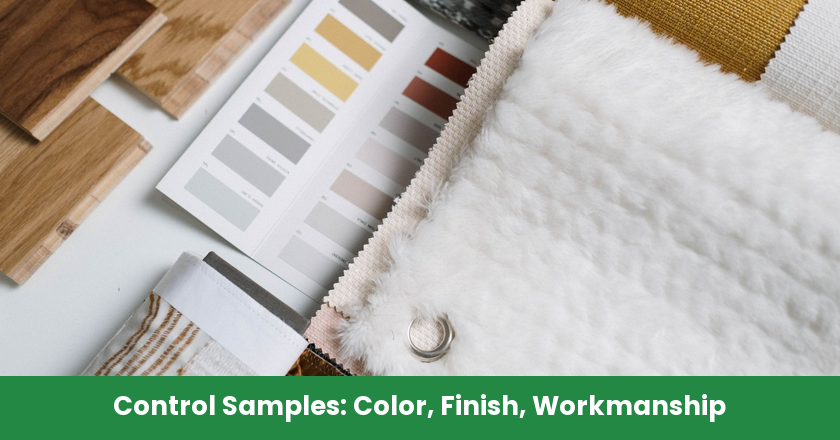
A control sample library is a managed set of approved physical references and records used to judge specified product characteristics.
Each reference connects a product and revision to an approved feature, checking method and permitted use. That connection lets a remote buyer, factory and inspector apply the same appearance criteria.
Control Sample Library: Key Takeaways
A control sample library works when the team can identify the current reference, explain what it approves and reproduce the comparison. Color, finish and workmanship need distinct criteria because a good match in one feature can hide a disagreement in another. Start with the references already used for active products, then close missing approvals and conflicting versions before expanding the collection.
- Definition: Keep the physical sample and its approval record linked.
- Standard: Separate the target appearance from the acceptable limit and rejected examples.
- Risk: A faded, damaged or superseded sample can change an inspection judgement.
- Decision: Resolve conflicting references before accepting appearance against either version.
What Makes a Control Sample Fit for Use?
A control sample is fit for use when its identity, approved use and checking conditions are clear. An attractive unit can show the intended appearance without defining every acceptable variation, and a signature alone does not explain which features were approved. Link the reference to the product specification and name the characteristics it governs, so an inspector can distinguish a valid comparison from a missing decision.
For a painted metal housing, the approved use might cover the visible exterior shade and texture. It may exclude the hidden mounting face, dimensions and electrical performance. A buyer who wants the sample to govern those additional characteristics needs the corresponding requirements and evidence. Treat the sample as a reference for a stated purpose; do not let its presence quietly replace the drawing, test method or functional specification.
Keep three reference roles visibly different. A target sample shows the preferred result. An approved limit sample shows a defined acceptance boundary for a named feature. A rejected example illustrates an unacceptable condition. Labeling all three “approved sample” makes a defect illustration look like permission to produce it. If only a target exists, ask the quality owner to define how borderline variation will be judged rather than have inspectors invent a limit.
Connect the sample approval to its manufacturing context. The China manufacturing and product guide helps buyers place material and production questions alongside appearance requirements; the product-specific reference record remains the place to state which characteristics are approved.
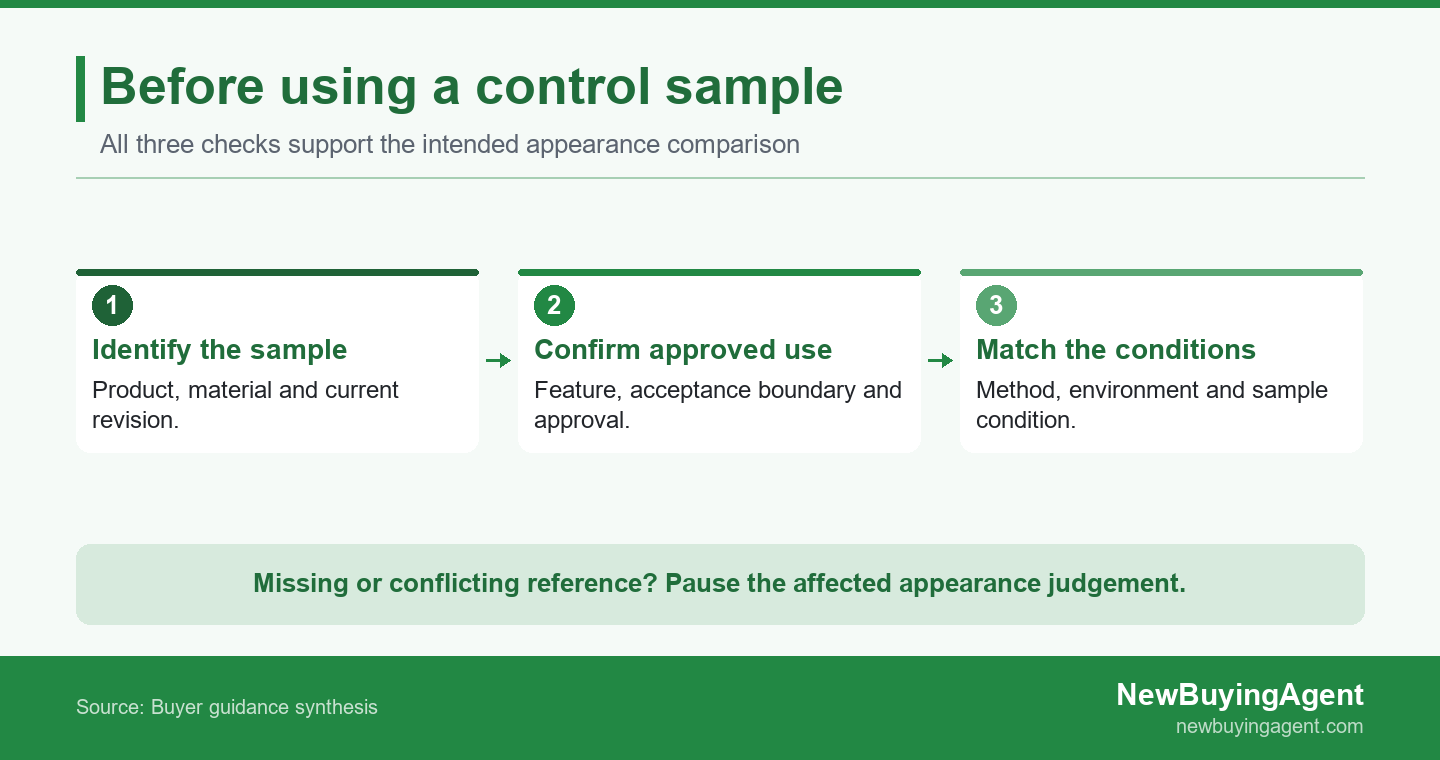
Confirm sample identity, approved criteria and checking conditions before using an appearance reference.
Set Separate Standards for Color, Finish and Workmanship
Manage color, finish and workmanship as separate approval questions, even when one physical part demonstrates all three. Color concerns the shade under stated conditions; finish concerns the surface effect, such as gloss or texture; workmanship concerns features such as seams, scratches or coating defects. Record a suitable way to judge each characteristic instead of assuming that a color code settles the complete appearance of the product.
Color: Match the Material and Viewing Conditions
The public scope of ASTM D1729 addresses visual appraisal of diffusely illuminated opaque materials, with standardized equipment and procedures. It excludes the directional viewing conditions needed for effects such as metallic and pearlescent finishes. For those effects, agree an appropriate product-specific method rather than applying an ordinary opaque-color comparison as if it covered every surface.
Lighting also changes the comparison itself. X-Rite’s visual-evaluation guidance explains that a product can look different under different light sources. Name the agreed evaluation lighting and any additional use conditions that matter for the product. A factory photograph taken near a window and a buyer’s screen image are useful communication aids, but they do not establish that two physical samples match under the agreed conditions.
When instrumental color readings are part of approval, record the calculation procedure as well as the permissible difference. The public scope of ASTM D2244 calls for agreement between purchaser and seller on both; its significance section also cautions against comparing differences from different color-scale systems. A shared number without a shared method can therefore conceal a different acceptance rule.
Write the material, substrate, comparison area and orientation into the reference record. Include the measurement configuration where applicable, and leave the tolerance to the agreed specification rather than copying a universal value from an unrelated product. For adjacent parts, such as a plastic handle and painted housing, check their appearance together when the assembled match is what the buyer will see. A matching flat swatch may not answer that assembly question.
Finish: Define the Surface, Not Just the Shade
Two parts can have a similar shade and a visibly different sheen. NIST’s publication on specular gloss describes comparing a specimen and gloss standard under the same geometric conditions. That makes the measurement geometry part of the result: record the agreed geometry and method rather than treating every gloss reading as directly comparable.
Describe the finish features that matter to the product: matte or satin effect, texture size, brushing direction, surface uniformity and the zones where those features are evaluated. Place any required numerical limits and test locations in the specification. A gloss reading may help quantify sheen, while texture or directional appearance can still need a separate agreed assessment. Avoid asking the instrument to answer a characteristic its measurement does not represent.
Use a reference that represents the production surface being judged. A flat coated panel may suit the coating comparison but leave a curved housing’s appearance unresolved. Identify which areas can be checked on the panel and which need the finished part. For brushed metal, mark the orientation so two inspectors do not compare different directions and interpret the resulting difference as a change in production quality.
Workmanship: Show the Acceptable Boundary
Workmanship references need a named feature and a defined viewing rule. For a stitched bag, identify whether the example concerns seam straightness, loose threads or puckering. For a coated housing, distinguish scratches, runs, exposed substrate and uneven coverage. Identify visible and concealed zones separately when the agreed criteria differ, then state the viewing distance, lighting and other conditions needed to reproduce the judgement.
Use close photographs and marked physical examples to locate a feature, but label whether the example is the target, the accepted boundary or a rejection. A note such as “scratch acceptable” is too broad if it omits the surface zone and the scratch being demonstrated. Keep unrelated defects outside that approval. An accepted cosmetic feature on one concealed surface does not automatically approve the same feature on a prominent customer-facing area.
Where a written criterion and physical example disagree, ask the authorized quality owner to settle the conflict. Do not choose whichever reference makes the inspected goods pass. Record the clarified rule and replace inconsistent working copies. This protects the buyer’s intended appearance while giving the factory a standard it can actually follow, instead of shifting the decision to an inspector after production has already taken place.
Build a Sample Register That Teams Can Use
Build the sample register around the comparison an inspector needs to perform. Each entry should identify the physical reference, connect it to a current approval and show where valid working copies are held. Use a separate record when the sample role or approval scope differs, even if the objects look alike. The template below can be filled for a single reference and then repeated across active products.
| Record field | Fill for this reference |
|---|---|
| Product and revision | Product/SKU: ______ specification revision: ______ |
| Physical identity and role | Sample ID: ______ target / accepted limit / rejected example: ______ |
| Material and process | Substrate/material: ______ surface/process: ______ |
| Approved characteristic | Color / finish / workmanship feature and inspection zone: ______ |
| Checking conditions | Method, lighting, orientation, location and agreed limits: ______ |
| Approval and effective use | Approver/date: ______ permitted product/order scope: ______ |
| Master and issued copies | Master location: ______ copy IDs, holders and receipt: ______ |
| Condition and next review | Condition/status: ______ review trigger or agreed date: ______ |
Complete the record before marking a sample available for inspection. If an approval is missing, record the reference as pending rather than fill the gap with an assumption. A photograph of the sample beside its ID helps identify the object; it does not replace the physical comparison when the agreed method requires one. Keep supporting approval messages accessible from the record so the next inspector can understand the approved scope.
Verify working copies instead of assuming that samples from one batch are identical. X-Rite’s guidance on measurement pitfalls advises checking that physical standards share the same shade and standardizing sample preparation; it also notes that dust, oil and fingerprints can affect measurement data. Record the copy-check method and result before distributing references to separate factory stations or inspectors.
Assign the quality owner to approve criteria and settle interpretation; assign a custodian to protect the master and maintain the register. The person issuing working copies records their identity, holder and receipt, while the inspector checks validity before use. These roles may be held by fewer people in a small team, but maintaining a sample is still different from authorizing a change in the acceptance criteria.
Protect Samples and Control Their Revisions
Protect the approved master from unnecessary handling and make working copies identifiable. Before use, check whether the comparison surface and approval record are still reliable; withdraw references with damage, uncertain identity or a superseded revision. Agree storage and review conditions for the material involved, because a protected metal finish, fabric swatch and printed card can have different risks. Avoid assigning every sample the same unsupported replacement interval.
Choose protection that preserves the feature being judged. Handle comparison surfaces by their edges where practical, separate samples that could rub against each other and keep labels away from the inspection area. Follow material-specific care instructions before cleaning; a cleaner that changes a finish can destroy the reference it was intended to restore. Where condition is uncertain, remove the sample from active use and arrange verification or replacement.
The NIST reference-material FAQ links the validity of its reference materials to their documented handling and storage conditions, even where no expiry date is stated. That policy concerns NIST materials, not ordinary factory approval samples. The transferable lesson is to document preservation conditions and verify continued suitability; it does not supply a universal shelf life or make a commercial appearance sample NIST-certified.
Control replacements through the register. Keep the old approval and the reason for change, identify the replacement revision and state where it becomes effective. Check issued copies against the approved master under the agreed method, confirm receipt and remove obsolete copies from active stations. Preserve archived references separately when they explain an older order; their historical value does not authorize use on the current revision.
For a new product family, appearance requirements also belong in the purchasing brief. NewBuyingAgent’s China product-supply service uses local China factory resources and product development/QC capability to turn purchasing needs into quoted product supply. Carry the approved material, finish and sample conditions into that brief so the sourcing decision addresses the intended product, not an isolated paperwork task.
Resolve Conflicting Samples Before Inspection
When references disagree, pause the affected appearance judgement and resolve the governing requirement before choosing a sample. First distinguish a damaged or obsolete reference from an actual nonconforming product. Record the question, involved sample IDs and affected product scope, then refer unresolved interpretation to the authorized quality owner. The next action should repair the specific evidence gap rather than turn uncertainty into an automatic pass or rejection.
| Reference condition | Next action | Evidence before use |
|---|---|---|
| Current and fit for the approved feature | Use for that comparison | Matching identity, approval and checking conditions |
| Damaged, faded or contaminated | Remove from active use | Verified suitability or approved replacement |
| Copies or revisions conflict | Pause affected appearance judgement | Resolved governing approval and matched issued copies |
| Product falls outside agreed criteria | Follow the nonconformance procedure | Product-specific disposition; reference replacement alone is insufficient |
Illustrative Example: Two Finishes for One Lamp Order
Consider an illustrative example: an importer has ordered 6,000 powder-coated lamps, and 12 factory reference copies are circulating between coating, assembly and inspection. Some cards identify a matte finish and others a satin finish, but both sets carry approval labels. The current purchasing brief names one finish without a clear record connecting it to the issued cards. The immediate finding is a reference-version conflict, not proof that the lamps are defective.
The buyer pauses appearance acceptance for the affected product revision and asks the quality owner to identify the governing approval. If the approval confirms one finish, the custodian withdraws obsolete cards and prepares replacements for authorization. If it remains unresolved, the owner seeks the necessary buyer decision before any appearance acceptance resumes. A factory’s preference for a convenient card cannot settle the missing approval.
Before resuming the comparison, the team verifies each issued copy against the current master under the agreed method and confirms receipt at the relevant stations. Any product already judged using the disputed cards needs a scoped review of those inspection decisions. This example does not assume that the 12 copies are rejected lamps, or that resolving the cards approves or rejects the entire order.
For buyers already using a Chinese supplier, NewBuyingAgent’s China-side factory management can support local factory communication, production follow-up and staged quality reporting. Here its China-side resources and QC capability are relevant to aligning the reference used at the factory with the buyer’s criteria. The buyer’s authorized product requirements still govern the appearance decision.
Use This Checklist Before the Next Production Run
Use a short pre-use checklist to confirm that a reference can support the intended inspection before the next run. Mark each item yes, unresolved or not applicable with a reason, and identify the person responsible for closing any unresolved point. Keep appearance approval separate from the product’s functional and safety evidence, so a complete sample record supports a specific comparison without becoming an unsupported approval of the whole product.
- Product, material and revision match the inspection task: ______
- Sample ID and target / accepted-limit / rejected role are clear: ______
- Approved feature and surface zone are stated: ______
- Checking method and acceptance criteria are agreed: ______
- Lighting, orientation and measurement settings are available where relevant: ______
- Master and working copies have been compared and issued: ______
- Sample condition and current validity have been checked: ______
- Conflict owner and affected inspection scope are identified: ______
Where measurements support the criteria, check that the method can resolve the decision you need to make. NIST’s metrological-traceability guidance explains that traceability alone does not guarantee fitness for purpose. A calibration reference therefore does not, by itself, show that the measurement uncertainty is suitable for the buyer’s tolerance. Obtain the method-specific evidence where that distinction affects acceptance.
For an existing supplier, hand over the current register, approved criteria, affected product scope and unresolved sample questions with the factory-management brief. For new sourcing, include product specifications, quantity, target price, destination and timing, with the appearance references that need to carry into product supply. This gives the receiving team a purchasing context and a concrete issue to resolve, instead of an unexplained box of samples.
To discuss which service route fits the product and reference problem, send the purchasing brief to NewBuyingAgent. Include the current specification and sample IDs so the response can address the relevant purchasing or factory-management need.
FAQ
Can a small swatch replace a complete product?
A small swatch can replace a complete product only for the specific feature approved for that swatch. It may show fabric shade or a flat coating while leaving shape, assembly and curved-surface appearance unresolved. Record that limited use, and retain the finished-part evidence needed for the other characteristics. Avoid presenting the swatch as approval of every feature simply because it came with the product sample.
How can buyers protect confidential reference samples?
Protect confidential reference samples through agreed access, custody and return arrangements. Identify which authorized people need the reference for production or inspection, and control photography or transfer where appropriate. A confidentiality label alone does not tell the factory how to use the sample. Give permitted users the criteria they need while keeping access and movement records aligned with the buyer’s confidentiality agreement.
Can the buyer approve a library remotely?
A buyer can document approval remotely when the reference identity, evidence and checking conditions are sufficient for the intended decision. A video call or photograph may identify the sample and locate a workmanship feature without resolving its physical color match. State what was approved and what remains open; arrange physical comparison when the missing appearance evidence changes the decision, rather than silently treating remote communication as complete approval.
Does a cosmetic limit sample authorize a safety defect?
A cosmetic limit sample does not authorize a safety defect. Its use concerns the named appearance feature, while applicable safety and functional requirements remain separate. A sharp edge, failed electrical requirement or other safety concern needs the appropriate product-specific assessment and disposition. Do not let an accepted cosmetic example override those requirements or infer safety compliance from the visual condition of an approved reference.
NewBuyingAgent
Related Resources

Get Started Today
Let's Turn Your Sourcing Goals into RealityWeChat:+86 15157124615
WhatsApp:+86 15157124615
Address:Building 10 #39 Xiangyuan Road, Hangzhou, China
