

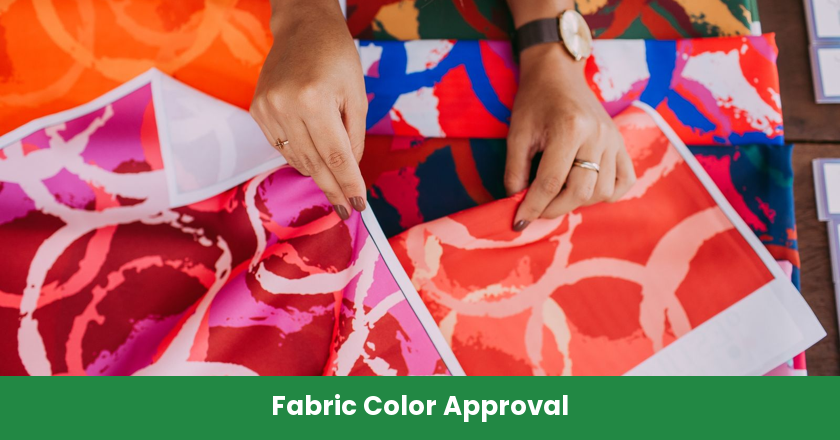
Fabric color approval should tell the mill what color to reproduce and tell the cutting room exactly which rolls and trims it may use together. Sign the lab dip against a named reference under agreed lights. Then evaluate the bulk fabric again, identify approved shade groups by roll, and check the combinations that will appear together in the product. A swatch can look right on its own and still make a collar, pocket or adjoining cushion look wrong.
What a Color Approval Covers
A signed lab dip approves a specific color sample against the named reference and viewing conditions. Bulk approval requires evidence from actual rolls and confirmation that the fabric and any coordinated trim look acceptable together under the required lights. Give the cutting room a signed roll list and rules for which shade groups can be combined.
- Definition: A shade band is a set of labeled bulk swatches that shows the shade groups or range the buyer has evaluated.
- Risk: Two rolls can be individually acceptable against the reference and still create visible contrast when their panels meet.
- Decision: Release only the identified rolls and component combinations covered by the current approval.
Start with the finished product. A navy uniform sold under a named store light needs a different decision from a deliberately two-tone garment or upholstery that will be used in several rooms. Write where matching matters, which contrasts are intentional, and where shade groups have to stay separate. Give the mill that information before it selects the recipe or sends lab submissions.
Approve the Lab Dip Against a Named Target
A lab dip is a small fabric sample dyed in a laboratory for color approval. Compare the named dip against the buyer's reference using the intended fabric and relevant finish. Sign the sample ID, conditions and scope of approval so the mill knows which result it may develop for bulk.
Send a clean physical standard with a reference number, revision and material description. If the target comes from paper or a different textile, identify it as an initial reference and agree on a production-relevant fabric standard before using it for bulk acceptance. Ask the mill to state whether the dip uses the intended fiber blend, construction and finish. If sample yardage cannot receive the final finish, record which check must be repeated on the finished material.
In the Datacolor textile color management guide, lab dipping and sample approval take place before production. Use a submission record that travels with the fabric. Include the style, component, colorway, target ID, fabric code, mill, dip number, date and material state. If three submissions arrive on one card, mark the exact one that passed. Tell the mill whether to proceed to bulk development, adjust the recipe or submit the intended finish for another review.
Give correction notes relative to the reference and name the light under which you saw the issue. In a navy submission, a direction such as 'too red under the agreed store LED' is more actionable than 'wrong navy.' If the team also sees excessive darkness in daylight, log that separately. Ask for a new identified sample instead of overwriting a record for a rejected one.
Keep a signed physical reference in protected storage and identify any working copies sent to the factory or inspection site. Retain the approved lab dip with the decision record. If a copy becomes faded, soiled or too small to compare consistently, replace or reconcile it before using it to judge a bulk roll.
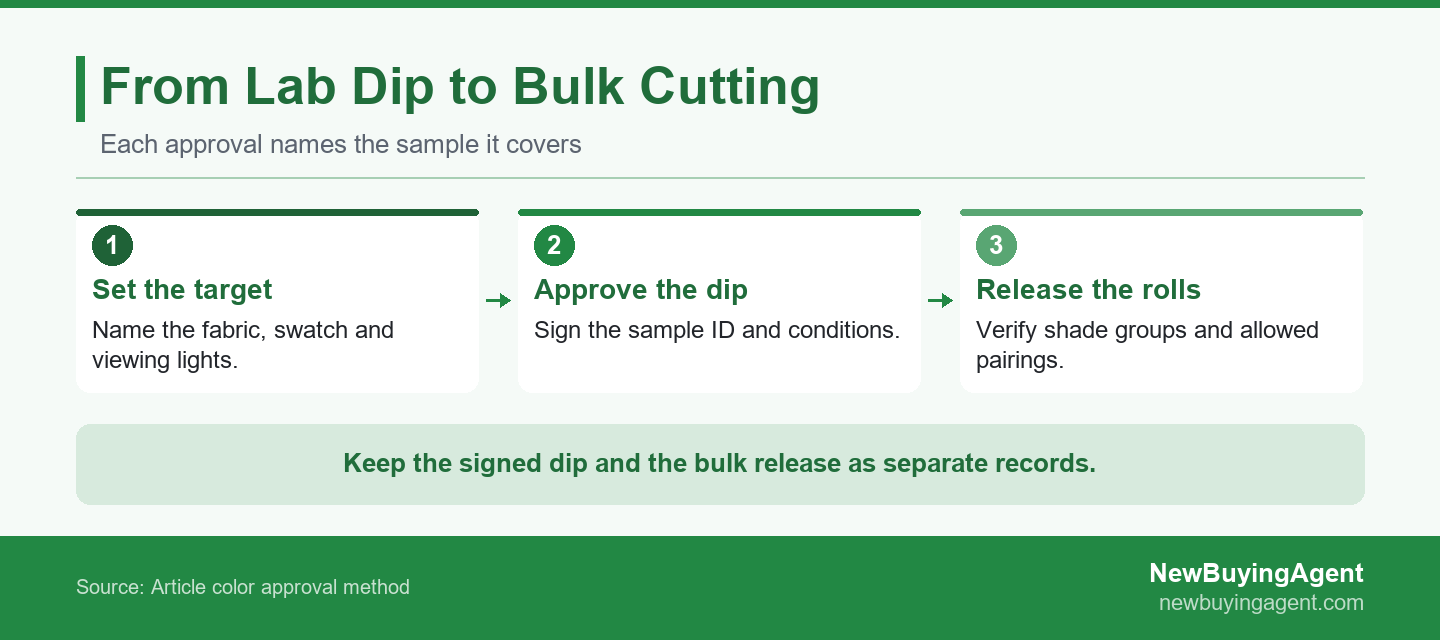
Approve the color sample, then release only the bulk rolls and pairings that pass
Name the Lighting Conditions Before Review
State the primary and secondary light sources in the order and repeat them on the comparison record. Check the same specimens in the agreed booth with consistent orientation and preparation. Stop the affected approval if the match fails under a required light, even when it looked acceptable under the primary one.
AATCC EP9 sets out a procedure for judging visual color differences in textile specimens against a standard. For a purchase order, tell the mill and the buyer how to present the fabric. Agree the face side, pile or grain direction, backing or folds for thin fabric, and how to keep outside light and surrounding colors out of the view. Compare dry or conditioned samples in the state named in the spec, particularly when moisture or finish can change the appearance.
Use a booth with the agreed source selections and check it against the maintenance schedule. For instance, a buyer could require a D65 daylight simulation plus a named retail LED profile. Specify the LED by the agreed setting or reference fixture. A label such as 'warm white' or a color temperature alone leaves room for two sides to use lights with different spectral output. If the mill cannot reproduce the agreed source, arrange a check on the buyer's reference setup.
Metamerism is a match between two specimens that disappears when the lighting changes. The Datacolor guidance on light sources explains that a pair can match under one source and differ under another. Compare both pieces together each time you change the light. If both pieces shift but still look alike, record their appearance separately from a mismatch between them.
Start with the target and the submitted swatch. Then view actual parts that will touch or sit side by side, such as a main panel and neck rib. A signed reference can be useful for both fabrics while the sewn combination still fails visually. Record the outcome by source and keep the physical pair if the buyer and mill disagree. A phone image is useful for identifying a defect location or label, and it needs a physical comparison before it can support a disputed color decision.
Set the Instrument Method and Its Limits
If the order uses an instrument limit, name the formula, specimen preparation and settings and state how a disagreement with a visual result will be resolved. A color difference value summarizes the comparison made under the recorded conditions. If a required visual check fails, review the affected pair under the agreed conditions before release.
AATCC EP6 on instrumental color measurement addresses instrument measurement, calculations and specimen handling. Agree a report format that captures instrument geometry, sample aperture, illuminant, observer, and relevant ultraviolet and specular settings. Include the backing or specimen layers, orientation, number and locations of readings, and the reference ID. Use the buyer and mill agreement to determine which settings and specimen preparations matter for the fabric.
The public scope for ISO 105-J03 on color differences describes calculating CMC color difference for two specimens of the same material measured under the same conditions. If using that calculation, record the agreed lightness-to-chroma weighting as well as the limit. A value from another formula or another measurement setup cannot be assumed equivalent. Agree the limit for the end use and keep color numbers separate from any performance requirement for fading or staining.
Keep individual readings when a roll may have uneven shade. An average can conceal a dark edge or a section that changes after a join. Write which locations drive a hold and what to do with a read near the limit. If the buyer and mill disagree, first establish that they used the same reference, setup, specimen face and direction. Repeat the comparison before debating whether the dye has to change.
Group Bulk Rolls Before Cutting
Build a bulk shade band from labeled production-roll swatches. Compare the rolls to the named target, then compare the candidate groups and adjoining components against each other. Record what can be used together and carry the group IDs through spreading, cutting and bundling. A dye-lot number helps locate material, while a shade group records the compatibility decision.
The Joint Industry Fabric Standards and Guidelines for upholstery treat variation within one roll and between rolls as separate issues and use agreed tolerances for roll-to-roll variation. That distinction is useful when drafting an apparel inspection plan. Define your own sampling and disposition with the buyer and mill. Mark whether each swatch represents one spot, the width, or a section along the roll. If edge-to-center or start-to-end variation is plausible, include locations that can actually reveal it.
Ask the mill to attach fabric code, colorway, dye lot, roll number, swatch location and quantity to each submission. At receipt, reconcile swatches with physical roll labels. Group rolls that can be used under the signed pairing rules and mark the quantities available in each group. If a roll varies within itself, mark the endpoints of a known affected section where traceable, or hold the roll pending a usable disposition. A roll cannot be treated as uniform merely because its first swatch passed.
| Result | Record | Cutting decision |
|---|---|---|
| Rolls match the target and each other | Roll IDs, approved group and light results. | Use within the approved group and pairing rules. |
| Groups pass the target individually but look different together | Separate group IDs and the conflicting combinations. | Keep incompatible panels and bundles apart. |
| A roll varies across width or length | Mark inspected areas and any traceable boundary. | Hold affected material pending a signed disposition. |
| A body and trim combination fails a required light | Body roll IDs, trim lot and failed light. | Hold that combination and test a replacement. |
At spreading, verify the roll and group against the lay plan. Mark bundles with the group and roll identifiers needed to reconstruct the garment. If a top uses two rolls from one approved group, retain enough traceability to isolate a complaint. When a matching set uses different fabric codes, record the permitted combinations separately, so two items labeled group A in different materials are not treated as a match by default.
When body and trim come from different mills, NewBuyingAgent's textile sourcing and product supply in China uses cooperating factories and supports sourcing, quality control and logistics. Give the team one reference list and the intended component pairings so a quote and eventual supply cover the same colorway. Identify which matching constraints are fixed and which alternatives the buyer can review.
Decide What to Cut When the Lights Disagree
In a hypothetical navy uniform order, the body rolls pass the daylight comparison against the standard. One approved-looking collar lot and an otherwise acceptable body group still look different when placed together under the required store LED. The buyer holds cutting for the affected combination while checking the scope and a replacement collar. A body-only daylight result leaves the finished collar junction unresolved.
Repeat the check on the same face and in the same orientation, with the standard and the two materials together. Confirm the booth setting, the roll list and the actual collar lot on the sample. Record which pieces differ, for example a collar that reads redder than the body under the store light. The visible result is enough to apply a signed visual hold. It does not identify a particular dye or finishing change as the cause.
Ask the mill for a replacement collar lot and compare it with more than one representative swatch if the body group covers a visible range. Check the boundary rolls and any other groups the replacement may be paired with. If the replacement passes both required sources, list the approved combination and hold the original trim separately. If the buyer decides a deliberate contrast is acceptable, secure written approval of the revised appearance and scope before cutting.
Check quantity after separating the combinations. If the compatible group can cover a partial order but the other groups cannot, the buyer can authorize a partial cut with a named quantity and reserve the rest. Keep group identifiers on bundles and carton records if matching units may be shipped or displayed together. This lets the team investigate a future mismatch without reopening every roll from the order.
Send the Mill One Color Approval Record
Give the mill and cutting room one color approval record tied to the current purchase specification. Name the physical reference and revision, the agreed lights and comparison method, and the accepted roll and trim IDs for each permitted pairing. Assign a buyer or quality approver to sign changes and communicate them before the affected fabric is spread.
| Record | Fields to fill in | Who confirms |
|---|---|---|
| Color target | [Style, colorway, fabric and finish, physical reference ID and revision.] | Buyer issues the reference. |
| Lab submission | [Dip ID, date, material state, lights, comments, decision.] | Color approver defines what may proceed. |
| Bulk comparison | [Actual roll, dye lot, locations checked, visual and instrument results.] | Mill and incoming quality reconcile IDs. |
| Cutting release | [Shade group, allowed trim pairing, held material, quantity and approval.] | Buyer releases; cutting team verifies labels. |
Treat changes in mill, finishing route, target or coordinated trim as reasons to check the affected approvals again. Update the record with the replacement and what needs repeating. For a repeat order, compare new rolls against the retained standard and refresh the pairing checks where appearance matters. A revision copied from the previous order still needs the current roll and lot identifiers.
NewBuyingAgent's manufacturing and quality-control background and local cooperating factory resources can support repeat sourcing for buyers who need stable color across named components. To source the finished textile product from China, send the fabric color requirements to NewBuyingAgent with the product specification, quantities, destination, delivery timing, target price and test requirements. Include the physical reference IDs and rules for pairing groups, so the team can quote and supply against the intended finished colorway.
Frequently Asked Questions
Can an approved lab dip release bulk fabric?
Approve the actual bulk fabric separately before cutting. A lab dip records a small sample, its reference, and the conditions under which it was judged. Use production-roll swatches and the signed light and measurement setup to assess the bulk fabric. Where components will touch, check the actual combinations and write those permissions into the cutting record.
What if the samples match in daylight but differ in the store?
Hold the affected combination if it fails a required store-light comparison. Confirm that both sides used the agreed source, reference, sample orientation and preparation. Repeat the check on the actual body and trim lots together. If the mismatch persists, test a replacement or obtain an explicit change approval before releasing the affected rolls or components.
Can two accepted shade groups be used in one garment?
Use two groups together only if the signed cutting rules allow that combination. Passing against the target separately leaves open whether the panels will look alike at the seam. Compare them side by side under the required lights, then record the permitted group and component combinations. Keep the groups separate where the buyer has approved them only for independent use.
When should a mill resubmit a color for approval?
Review any change that can affect the agreed color match before relying on the old approval. A change in fiber, finish, dye recipe, mill, or target reference can require a new dip or a check on the finished bulk material. Identify the affected lot, the check to repeat and the first batch that may use the changed approval.
NewBuyingAgent
Related Resources
Get Started Today
Let's Turn Your Sourcing Goals into RealityWeChat:+86 15157124615
WhatsApp:+86 15157124615
Address:Building 10 #39 Xiangyuan Road, Hangzhou, China
