

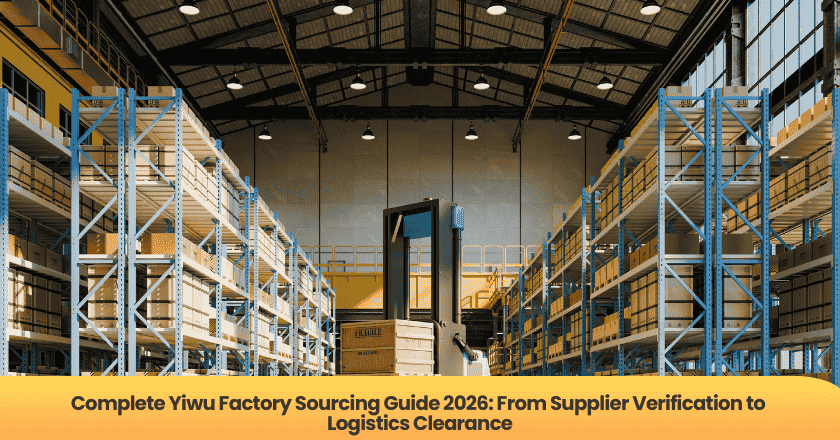
The global manufacturing landscape has undergone a tectonic shift as we move through 2026. Yiwu, once known primarily as the "world's largest small commodity market," has evolved into a sophisticated hub of smart manufacturing and hyper-integrated digital supply chains. For international buyers, the challenge is no longer just "finding a product," but navigating a complex ecosystem of automated factories, ESG (Environmental, Social, and Governance) compliance, and AI-optimized logistics. This guide provides a deep-dive into the technical and operational realities of sourcing from Yiwu manufacturers in the current market, ensuring your procurement strategy is both resilient and future-proof.
The 2026 Yiwu Manufacturing Landscape: Beyond the Futian Market
While the physical stalls of the International Trade City (Futian Market) remain a vital touchpoint, the real power of Yiwu in 2026 lies in its satellite industrial clusters and the "Digital Twin" integration of its manufacturing base. The distinction between a "market stall" and a "factory" has blurred, as most reputable manufacturers now operate hybrid models—maintaining a digital showroom for global VR inspection while running highly automated production lines in nearby zones like Jinhua, Pujiang, and Zhuji.
- Smart Industrial Clusters: Modern Yiwu manufacturers have transitioned to specialized clusters. You are no longer looking for generalists; you are seeking factories within "Smart Zones" that utilize IoT-enabled machinery. These facilities offer real-time production tracking, allowing buyers to monitor their order progress through encrypted client portals.
- The Shift to ODM (Original Design Manufacturing): The days of "copy-paste" manufacturing are over. 2026 sees Yiwu manufacturers investing heavily in R&D. Most Tier-1 factories now offer comprehensive ODM services, utilizing AI-driven trend analysis to suggest product modifications that align with specific regional demands in the US, EU, and emerging markets.
- Sustainability as a Baseline: Driven by global regulations, Yiwu factories have integrated ESG protocols into their core operations. Sourcing from this region now requires a verification of "Green Manufacturing" certificates, carbon footprint tracking, and ethical labor audits, which are often recorded on decentralized ledgers for transparency.
Expert Tip: In 2026, do not judge a manufacturer solely by their market stall size. Instead, request their "Digital Factory ID." This provides access to their live automation metrics and historical compliance data, which is a far more accurate predictor of reliability than a physical showroom display.
Navigating the "Manufacturer vs. Trading Company" Paradox
Identifying a true factory in Yiwu has become more nuanced. The traditional "factory-direct" mantra is often oversimplified. In the current ecosystem, many high-performing entities are "Manufacturing Integrators"—they own the core assembly process but outsource specialized components to a network of micro-factories.
- Direct Factory Verification: A true manufacturer will possess specialized "Production Business Licenses" and specific environmental permits for their industry (e.g., chemical handling for plastics or metal plating for jewelry). In 2026, verified manufacturers usually have automated "In-line" quality control systems that generate data logs for every batch.
- The Value of Professional Export Entities: Many Yiwu factories operate their export business through a separate "Sales Branch" based in the city center. While technically a separate legal entity, they function as the factory’s direct window to the world. The key is to verify the capital link between the sales office and the production site.
- Analyzing Technical Depth: When vetting, ask for the "Bill of Materials" (BOM) management process. A genuine manufacturer can detail the raw material sourcing and the technical specifications of their machinery. If a supplier is vague about the specific grade of polymers or the origin of their semiconductors, they are likely a middleman with limited control over the production cycle.
Common Mistake to Avoid: Many buyers still use "lowest price" as their primary filter. In 2026, an abnormally low price is a red flag for "Sub-Tier Outsourcing," where your order is passed to an unverified, non-compliant workshop. This creates massive risks for product recalls and intellectual property theft.
Digital Sourcing Integration: Leveraging AI and VR for Pre-Vetting
The traditional "flying to Yiwu" approach is now the final step of a process that begins with sophisticated digital vetting. By 2026, the integration of AI in sourcing has made it possible to filter through thousands of suppliers with surgical precision.
AI-Enhanced Supplier Scoping: Utilize platforms that offer "Generative Sourcing" tools. These tools analyze factory export data, patent filings, and social proof to create a "Trust Score." Instead of searching for "water bottles," you now input your "Target Market, Price Point, and ESG Requirements," and the AI identifies the top 5 manufacturers whose production history matches your specific DNA.
Virtual Factory Tours (VFT): Tier-1 Yiwu manufacturers now offer 360-degree, real-time VR tours. This isn't just a static video; it’s a live link to the factory floor. You can observe the hygiene standards, the worker-to-machine ratio, and the organization of the warehouse without leaving your office.
Blockchain-Verified Certifications: When a manufacturer claims to have ISO 9001 or BSCI audits, verify these through the decentralized verification platforms now standard in 2026. This eliminates the risk of "photoshopped" certificates that plagued the industry in previous decades.
Expert Tip: Before engaging in deep negotiations, request a "Live Sample Demo" via high-definition video call. Ask the factory engineer to perform a specific stress test or measurement on camera. This confirms they have the product in hand and the technical expertise to explain its functions.
Contractual Governance and IP Protection in 2026
As Yiwu manufacturers move up the value chain, Intellectual Property (IP) protection has become a top priority for both sides. The legal framework in 2026 is more robust, but it requires precise execution from the buyer’s end.
Bilingual NNN Agreements: The "Non-Disclosure, Non-Use, and Non-Circumvention" (NNN) agreement remains the gold standard. However, in 2026, these must be "China-Centric"—meaning they are governed by Chinese law and enforceable in the specific jurisdiction where the factory is located (e.g., Jinhua Intellectual Property Court).
Product Development Agreements (PDA): If you are co-developing an ODM product, a PDA is essential. This document clearly defines who owns the molds, the specific design iterations, and the software code (if applicable). Many Yiwu factories now use "Smart Contracts" to trigger mold ownership transfer once a certain volume of orders is met.
Detailed Technical Specification Sheets: Avoid vague terms like "high quality." Your contract should include a "Technical Appendix" specifying exact tolerances, material compositions (using CAS numbers), and specific testing standards (e.g., ASTM or EN norms).
Common Mistake to Avoid: Relying on a contract written under US or UK law. Chinese courts rarely enforce foreign judgments. Always ensure your legal documents are optimized for the Chinese legal system to ensure they serve as a real deterrent against IP infringement.
Modern Quality Control: The Digital Inspection Standard
In 2026, Quality Control (QC) has moved from "detecting defects" to "preventing variance." The integration of Big Data into the Yiwu supply chain allows for a much more granular approach to quality assurance.
Many modern Yiwu lines utilize AI-vision systems that scan products in real-time. Request access to these "Quality Dashboards." If a factory cannot provide digital logs of their rejection rates during production, they are lagging behind the 2026 standard.
Beyond just a physical sample, the FAI now involves a "Digital Gold Standard." This is a high-resolution 3D scan of the approved sample which is then used by QC software to compare against the mass-produced items during the Final Random Inspection (FRI).
Traditional inspection companies now provide "Smart Reports" that include GPS-tagged photos, time-stamped video evidence, and sensor data from the warehouse environment (to ensure proper humidity and temperature control for sensitive goods).
Expert Tip: Implement a "Penalty-Reward Logic" in your QC protocol. Offer a small bonus for batches that exceed durability standards, and clearly defined "Liquidated Damages" for batches that fall below the 1.5 AQL (Acceptable Quality Level) for major defects. This aligns the factory’s financial interest with your quality goals.
Logistics 2026: DDP, Multi-Modal, and Carbon-Neutral Shipping
Shipping from Yiwu has evolved from simple container loading to a complex "Fulfillment-as-a-Service" model. With the rise of platforms like TikTok Shop and Temu, Yiwu manufacturers have adapted to handle everything from bulk sea freight to individual last-mile delivery.
- The Yiwu-Europe Railway & "Sea-Rail" Intermodal: For EU buyers, the railway remains a vital "middle-way" between air and sea. In 2026, these routes are highly optimized with AI-driven scheduling that minimizes delays at border crossings like Alashankou.
- DDP (Delivered Duty Paid) Integration: Most professional Yiwu exporters now offer comprehensive DDP solutions. This includes handling the "HTS Code" classification, customs clearance, and paying all duties. In 2026, this is managed via "Digital Customs Portals" that provide real-time tax transparency.
- Sustainable Logistics (Green Freight): As part of the 2026 ESG requirements, many buyers are opting for "Carbon-Offset Shipping." Yiwu forwarders now provide certificates of carbon sequestration or use Bio-fuel powered vessels for the trans-Pacific routes.
Common Mistake to Avoid: Overlooking the "HTS Code" verification. Misclassification of your product can lead to massive fines or seizure of goods by customs. Always have an independent customs broker verify the code suggested by the manufacturer.
Strategic Negotiation in a Post-Inflation Economy
Negotiating with Yiwu manufacturers in 2026 requires a focus on "Total Cost of Ownership" rather than just the "Unit Price."
Prices for polymers, metals, and electronics fluctuate rapidly. Forward-thinking buyers use "Index-Based Pricing" where the unit cost is tied to global raw material indices. This ensures that if material costs drop, your price follows.
Negotiate a "Growth Discount." As your volume increases, the factory's "Unit Overhead" decreases. Pre-agree on price breaks at specific milestones (e.g., 50k units, 100k units) to avoid constant renegotiation.
While "30% deposit, 70% against BL" is still common, 2026 sees more "Escrow-Based" payments and "Supply Chain Financing" where reputable buyers can leverage their credit history to obtain better terms.
Expert Tip: Focus your negotiation on "Lead Time Guarantees." In a fast-moving market, being 10 days late can be more expensive than a 5% price increase. Secure "Late Delivery Penalties" to ensure your production occupies a priority slot in the factory’s schedule.
FAQ: Sourcing from Yiwu Factories (2026 Edition)
Q1: Is the Futian Market still relevant for big buyers in 2026?
Yes, but its role has changed. It is now primarily a "Discovery Hub" for new trends and a place to meet the sales engineering teams of larger manufacturers. The actual "buying" and "technical vetting" happen at the industrial zones or via digital platforms.
Q2: How do I verify a Yiwu factory's ESG compliance?
Look for "Verified ESG Tags" on their business profile. These are issued by recognized international auditors and are often backed by satellite imagery and IoT sensor data that confirm energy usage and waste management practices.
Q3: What is the typical MOQ (Minimum Order Quantity) for Yiwu manufacturers today?
MOQs have become more flexible due to "Agile Manufacturing" tech. For standard items, MOQs can be as low as 100-500 units, while customized ODM products typically require 1,000 to 3,000 units depending on the complexity of the tooling.
Q4: Can I pay Yiwu manufacturers in digital currencies?
Many Tier-1 manufacturers now accept "e-CNY" (China's Digital Yuan) , which can significantly reduce transaction fees and settlement times compared to traditional SWIFT transfers.
Q5: How do I handle product design if I don't have an engineering team?
Most Yiwu manufacturers now have "In-House Design Studios." You can provide a basic sketch or a "Conceptual AI Image," and their engineers will create the technical CAD drawings and 3D-printable prototypes for your approval.
Conclusion
Success in sourcing from Yiwu in 2026 is defined by technical literacy and digital integration. The manufacturers in this region have transformed from low-cost suppliers into high-tech partners. The key is to move away from transactional "buying" and towards strategic "supply chain partnership."
NewBuyingAgent
Related Resources
Get Started Today
Let's Turn Your Sourcing Goals into RealityWeChat:+86 15157124615
WhatsApp:+86 15157124615
Address:Building 10 #39 Xiangyuan Road, Hangzhou, China
