

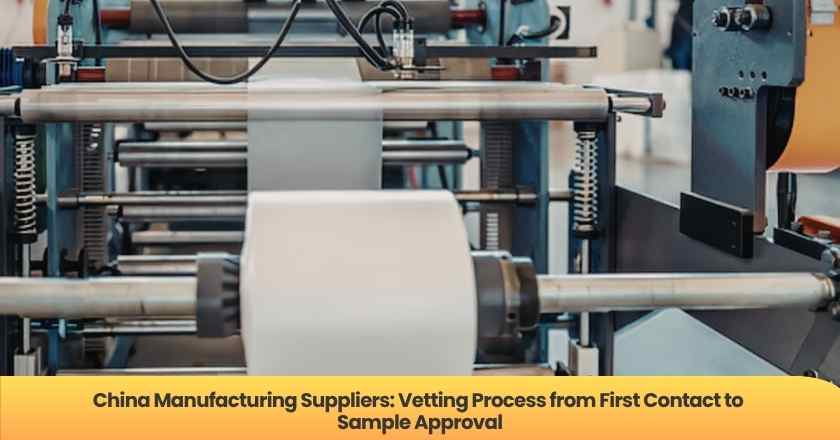
Fifty suppliers reply to your inquiry, all with glossy catalogs, fast responses, and prices that seem too good to refuse. The hard part isn’t finding manufacturers — it's figuring out which three of those fifty can actually build your product to spec, at volume, without disappearing after the deposit. Most importers who get burned skipped the unglamorous work of vetting and let a good first impression do the deciding.
Vetting China manufacturing suppliers is a staged filter that runs from first contact to an approved, signed sample, with each stage cheap enough to do before the next and capable of ending the conversation. Run it in order and you commit real money only to factories that have already earned it. If you'd rather have this done on the ground by people who do it daily, NewBuyingAgent acts as your local procurement partner, managing full-cycle sourcing including supplier vetting, negotiation, QC and end-to-end logistics.
Key Takeaways
• Vet in stages from cheap to expensive, eliminating weak suppliers early so you spend real effort only on serious candidates.
• Judge suppliers by how they respond to a detailed inquiry, since a precise RFQ exposes who can actually answer technical questions.
• Verify legitimacy through documents and a live floor walkthrough before investing in samples or audits.
• Treat the sample as a contract, ordering two rounds and testing against a written spec rather than a vague impression.
• Sign and seal an approved golden sample, because it becomes the standard every later quality dispute is measured against.
Stage One: First Contact and the Inquiry Filter
Your first message does more screening than any later step if you write it well. A vague inquiry attracts vague suppliers; a precise one separates the manufacturers who can answer technical questions from the resellers who can only forward your email to someone else. The reply quality is data, not just courtesy.
Write an RFQ that tests them
Send a detailed RFQ (Request for Quotation — the document describing exactly what you need so suppliers can quote accurately) specifying materials, dimensions, quantity, packaging, and required certifications. A real factory engages with the technical detail and asks clarifying questions. A reseller gives a fast, generic price and dodges specifics.
Read the response, not just the price
Note who answers your technical questions directly, who proposes sensible alternatives, and who simply agrees to everything. Suppliers who give precise, slightly cautious answers usually understand their constraints. Those who promise the moon tend to learn their limits during your order, at your expense.
Watch the early communication
Response time, clarity of English, and willingness to share documents all signal how the relationship will run. Friction at the inquiry stage rarely improves once money is involved. Use this stage to cut your fifty replies down to a manageable shortlist of serious candidates.
Expert Tip: Include one deliberately specific technical question in your first inquiry that only a real manufacturer could answer — a tolerance, a material grade, a finishing process relevant to your product. The factories that answer it precisely, or push back with a better suggestion, are engaging with production reality. The ones that ignore the question and reply only with a price and a catalog are usually trading companies forwarding your message elsewhere. That single question filters your list faster than any amount of back-and-forth.
Stage Two: Verifying the Supplier Is Real
Once a supplier clears the inquiry filter, confirm they actually exist as claimed before investing further. This stage is documents and a video call — cheap, fast, and capable of ending things before you spend on samples. Skipping it is how buyers end up sampling with brokers who own no production at all.
Check the business license
Request the business license and verify the registered name, production scope, and registered capital. A manufacturer’s scope names production of your product category; a reseller's names only trade or wholesale. Confirm the company name matches the bank account you’re asked to pay into.
Cross-check independent signals
Look for export history in trade data, references from buyers in your market, and a consistent company identity across sources. A supplier that appears on a platform, holds a verifiable license, and shows up in export records is far more likely to be the genuine producer rather than a middleman.
See the floor live
Ask for an unedited video walkthrough of the production line, not a marketing reel. You want to see machines, materials, and staff making something like your product. A supplier who can't or won't show the floor is often a trading company without one to show.
Common Mistake to Avoid: Treating a "gold supplier" or "verified" badge on a B2B platform as confirmation that a company is a real manufacturer. Those badges generally mean the supplier paid for membership and uploaded some documents — not that it owns a factory or can pass an audit. Buyers who let the badge replace their own document and floor checks regularly discover, after sampling, that they've been dealing with a broker the entire time.
Stage Three: Auditing Capability and Compliance
A verified company can still be the wrong factory for your product. The audit stage confirms it can actually hold your spec at your volume, under acceptable conditions and the right certifications. This is where buyers most often economize and most often regret it later.
Match capacity to your volume
Ask about monthly output, current order load, and how many lines could run your product. A factory near full capacity may push your order back or rush it past quality. You want headroom, not a plant straining to fit you in between bigger clients.
Assess the quality system
Look for documented QC (Quality Control — the inspection steps that catch defects during and after production) procedures, not verbal promises. A factory that can describe its in-line inspection routine usually runs it. Certifications like ISO 9001 signal a real system, but verify each by number against the issuing body. A partner such as NewBuyingAgent runs these capacity and compliance audits for buyers, its 20,000+ QC experts checking real production across a 50,000+ factory network.
Audit remotely or third-party
In 2026, remote audits and third-party inspection firms are standard, so you can audit a factory without traveling. A third party or sourcing agent visits, follows a checklist, and sends photos and findings. This has made thorough auditing affordable even for modest first orders.
Expert Tip: When you audit, ask to see the factory's scrap and rework area, not just the polished assembly line. How a plant handles its defects tells you more about its real quality culture than a tidy showroom does. A factory with an organized rework process and honest scrap rates is managing quality actively; one that hides this area, or claims it never produces defects, is either inexperienced or not showing you the truth. The unglamorous corners reveal the most.
Stage Four: The Sample Round That Decides It
Samples are your last cheap chance to catch a problem, and they deserve to be treated as a contract rather than a courtesy. The discipline is to test what you’ll actually receive in bulk, against a spec written in advance, in two deliberate rounds. One sample proves capability; two reveal intent.
Write a testable spec first
Define materials, dimensions, tolerances, color references, and packaging in one document both sides approve. "Good quality" isn't enforceable; precise tolerances and a Pantone reference are. The spec becomes the standard your sample, your inspector, and the factory all answer to.
Order two rounds
Order a first sample to judge baseline quality, then a pre-production sample made from the same materials and line as your bulk run. The second round catches the quiet substitutions that appear once a supplier knows the order is confirmed. The gap between the two tells you what the factory will actually do, not just what it can.
Test under real conditions
Put the sample through the conditions your product will face — drop it, wash it, load it, whatever applies. A sample that looks perfect on a desk can fail in use. Real-world testing now is far cheaper than a return wave after launch.
Common Mistake to Avoid: Approving a single sample and moving straight to bulk production. The first sample is often hand-finished with extra care to win your order, and it doesn't represent what a full production run will look like. Skipping the second, pre-production sample — made on the actual line with the actual materials — is how buyers get a beautiful sample and a disappointing bulk shipment. Always confirm a production-representative sample before releasing the order.
Stage Five: Sample Approval and Locking the Standard
Approval isn’t just saying "yes, ship it" — it's formalizing the agreed standard so it governs everything that follows. This final stage converts a good sample into a reference you can enforce. Done properly, it quietly tilts every future quality conversation in your favor.
Sign and seal a golden sample
Once a sample meets your spec, sign and seal one physical unit as the reference standard and have the factory keep an identical one. When a dispute arises later, you compare bulk goods against a tangible agreed standard rather than arguing over an emailed photo. The reference is no longer debatable.
Tie the order to the standard
Reference the signed sample and the written spec in your purchase order, along with inspection rights and payment milestones. A 30% deposit with the balance on a passed inspection keeps real money tied to acceptable goods. Settle these before the deposit, while your leverage is highest.
Set up ongoing quality control
Arrange during-production and pre-shipment inspections against the approved sample, run by a third party or sourcing agent. The sample you fought to perfect only protects you if someone actually checks the bulk run against it. Approval is the start of quality control, not the end of vetting.
Expert Tip: Photograph your sealed golden sample from every angle, with measurements visible, and store the images alongside the signed spec in a shared system both you and your inspector can access. Physical golden samples can be lost, damaged, or disputed over time, and a documented visual record backs them up. When an inspection happens months later, the inspector compares the bulk goods against an unambiguous, time-stamped standard. This small habit removes most of the ambiguity that lets quality quietly drift between order and delivery.
Frequently Asked Questions
How many suppliers should I vet before choosing one?
Start wide and narrow hard: a large pool of initial inquiries filtered down to three to five serious candidates for documents and samples. Fewer than three leaves you without leverage or a fallback; far more than five spreads your attention too thin to vet any properly. The funnel is wide at the top and deliberately narrow at the commitment stage.
What's the fastest way to spot a trading company posing as a factory?
Ask a specific technical question and request a live video walkthrough of the production line. A real manufacturer engages with the technical detail and shows you the floor; a trading company gives generic answers and deflects the floor request. Cross-checking the business license scope against export records confirms it. These checks take little time and catch most middlemen early.
Why do I need two samples instead of one?
The first sample is often hand-finished with extra care to win your business and doesn’t represent a full production run. A second, pre-production sample made on the actual line with the actual materials reveals what bulk will really look like, including any quiet material substitutions. One sample shows capability; the second shows what the factory will actually deliver at scale.
Do I have to visit China to audit a supplier?
No — remote and third-party audits are standard in 2026. A third-party firm or your sourcing agent can visit, follow an audit checklist, and send photos and findings on your behalf. This makes thorough auditing affordable even for first-time buyers placing modest orders, and removes travel as a barrier to proper due diligence.
What is a golden sample and why does it matter?
A golden sample is a physical unit, approved against your spec and signed and sealed by both you and the factory, that serves as the reference standard for the order. It matters because quality disputes later are settled by comparing bulk goods against a tangible agreed standard rather than an interpretation of an email. It shifts most disagreements in your favor.
Conclusion
Vetting China manufacturing suppliers is a filter, not a leap of faith: a sharp inquiry, document and floor verification, a capability audit, two sample rounds, and a signed golden sample, each step cheap enough to run before the next. Work it in order and you hand over a deposit only to factories that have already proven themselves five times over.
If you'd like an experienced team running this process on the ground for you, that’s exactly the work NewBuyingAgent does. Its 20,000+ development and QC specialists vet suppliers and run sample and production checks across 50,000+ partner factories, so you commit only to factories that earn it. Contact now.
NewBuyingAgent
Related Resources
Get Started Today
Let's Turn Your Sourcing Goals into RealityWeChat:+86 15157124615
WhatsApp:+86 15157124615
Address:Building 10 #39 Xiangyuan Road, Hangzhou, China
