

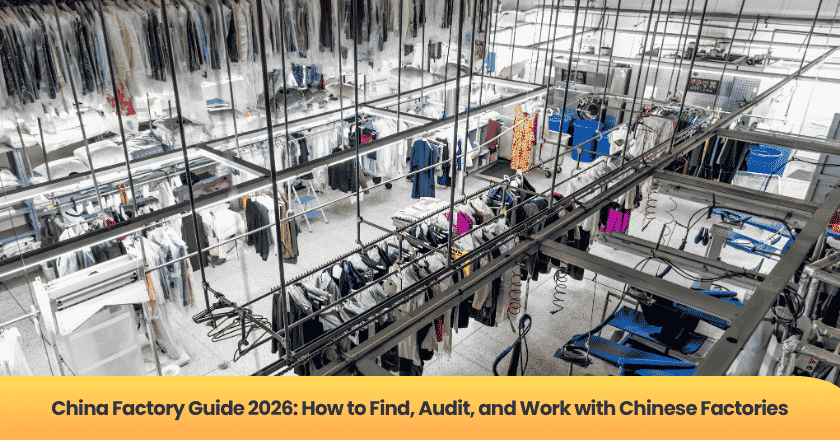
China still makes more of the world’s consumer goods than anywhere else, and for most importers it remains the first place to look for a manufacturer. The catch is that the same ecosystem that gives you thousands of capable factories also hides thousands of resellers, brokers, and underqualified workshops behind identical-looking web profiles. Telling them apart from your desk is the whole challenge.
Working with a China factory in 2026 is less about whether you can find one and more about whether you can find the right one, confirm it’s real, and manage it from another continent. The buyers who do this well treat finding, auditing, and managing as three distinct disciplines. If you want a partner who handles all three on the ground, NewBuyingAgent works with importers across the full arc from factory search to delivered shipment.
Key Takeaways
• Use multiple discovery channels and cross-check each supplier, because no single platform reliably separates real factories from resellers.
• Verify legitimacy through the business license, export records, and a live floor walkthrough before you invest time in sampling.
• Audit capability and compliance on site or through a third party, since a polished profile says nothing about the production line.
• Manage quality with written specs, signed samples, and independent inspections rather than trusting verbal assurances.
• Build redundancy and consider a China+1 backup, as 2026 supply conditions punish single-source dependence.
Where to Find Chinese Factories That Actually Make Things
Discovery is a numbers game at the start: you want a wide pool so you can afford to reject most of it. The mistake is treating any single channel as authoritative. Each source has a built-in bias, and knowing it keeps you from over-trusting the first promising profile you find.
B2B platforms
Marketplaces give scale and easy filtering, but they surface trading companies as readily as factories. Use them to build a long list, then verify each candidate independently. Treat a platform listing as a lead, never as proof that the company behind it manufactures anything.
Trade shows, online and in person
Major fairs let you compare many suppliers quickly and, in person, handle real product. Far fewer Western buyers travel for these than before 2020, and many fairs now run hybrid formats. Even virtually, a trade show tells you which suppliers invest in their presentation, though not which ones produce well.
Referrals and sourcing agents
A factory referred by another buyer in your market carries built-in social proof, and a sourcing agent maintains a network of pre-vetted manufacturers. Both shortcut the discovery grind. Just confirm the referrer’s needs resemble yours, since a factory great for apparel may be wrong for electronics.
Expert Tip: When you build your initial long list, deliberately include suppliers from more than one region of China. Coastal provinces like Guangdong and Zhejiang dominate certain categories, but inland clusters have grown fast and often quote lower for the same quality as labor costs there stay lower. Casting across regions early gives you genuine price benchmarks and a fallback if your first-choice area is overloaded or pricing has crept up.
Verifying a Factory Is Real Before You Engage
Verification is the cheapest insurance you’ll buy in the whole process. A handful of checks, done before you sink time into sampling and negotiation, filters out the intermediaries and shell operations that waste the most buyer time. Do this before, not after, you start sharing your spec.
Read the business license
Ask for the business license and check the registered name, the production scope, and the registered capital. A manufacturer’s scope names production of your product type; a reseller’s names only trade or wholesale. Confirm the company name also matches the bank account you’re asked to pay into.
Cross-check export records
A real exporting factory leaves a trail in customs and trade data. Where you can access it, confirming that the company has actually shipped products like yours abroad is strong evidence it’s a genuine producer. A firm with no export history but big promises deserves extra scrutiny.
See the line in motion
Request a live, unedited video walkthrough of production rather than a marketing reel. You’re looking for machines, materials, and staff making something resembling your product. A supplier who can’t or won’t show the floor is often a trading company without a floor to show.
Common Mistake to Avoid: Treating a supplier's “verified” or gold-status badge on a B2B platform as proof it's a real factory. Those badges typically confirm the company paid for membership and submitted some documents — not that it manufactures your product or can pass a quality audit. Buyers who skip independent verification because of a platform badge regularly discover, after the deposit, that they've been dealing with a broker the whole time.
How to Audit a Chinese Factory Properly
An audit moves you from "this company exists" to "this factory can actually make my product at quality and at volume." It's the step buyers most often skip to save money, and the one whose absence most often costs them a ruined order. You don't need to fly over to do it.
What an audit covers
A proper factory audit checks equipment, production capacity, quality management systems, and working conditions. The output is a report telling you whether the plant can hold tolerances across a full run, not just polish one sample. Look for documented QC (Quality Control — the inspection steps that catch defects during and after production) procedures, not verbal promises.
Remote and third-party audits
In 2026, remote audits and third-party inspection firms are standard, so you can audit a factory without leaving home. A third party or a sourcing agent visits, follows a checklist, and sends photos and findings. This has made thorough auditing affordable even for buyers placing modest first orders.
Verifying certifications
Check certificates such as ISO 9001, CE, or RoHS by their number against the issuing body, not the PDF the factory emails. Forged or expired documents are common enough that verification is routine. A certificate that's genuine but doesn't cover your specific product is just as unhelpful as a fake one. This is exactly the verification NewBuyingAgent runs on the ground, drawing on 30 years of experience to confirm a factory holds the right certifications for your product.
Expert Tip: Schedule audits and inspections without giving the factory a precise date when possible, or insist on a same-week visit rather than one booked a month out. A line that’s tidied and staffed specifically for an announced inspection tells you what the factory can look like, not what it normally is. The most useful audits catch a plant on an ordinary working day, which is when the real conditions and bottlenecks are visible.
Managing Quality Once Production Starts
Finding and auditing a good factory gets you to the starting line; quality management is the race. The most common failure isn't a bad factory — it’s a decent one left unsupervised on a first order. Control depends on written standards and independent checks, not goodwill.
Write a spec the factory can’t misread
Define materials, dimensions, tolerances, color references, and packaging in one document both sides approve. “High quality” isn’t enforceable; precise tolerances and Pantone references are. The spec becomes the standard your inspector and the factory both answer to when a question arises.
Approve and seal a golden sample
Sign and keep a physical reference unit made from your actual materials and line, and have the factory keep an identical one. When a dispute surfaces, you compare bulk goods against a tangible agreed standard rather than arguing over an email description. It quietly shifts most disagreements in your favor.
Inspect during and before shipment
Arrange a during-production inspection and a pre-shipment inspection against your spec. Catching a defect at 20% completion lets you correct the run; catching it at the port leaves you choosing between shipping defects and losing your deposit. The inspection fee is trivial against a rejected container.
Common Mistake to Avoid: Paying the full balance against shipping documents before any pre-shipment inspection has happened. Once the factory holds your money and the goods are loaded, your leverage to fix a quality problem is essentially gone. Tie the final payment to a passed inspection, not merely to the bill of lading. A factory confident in its quality won't object to that condition; one that resists is telling you something.
Building a Resilient China Sourcing Strategy for 2026
A single good order is a start; a durable supply base is the goal. The smartest buyers treat their China factory relationships as a portfolio to be managed for resilience, not a one-off transaction. The conditions of 2026 reward that mindset and punish complacency.
Don't single-source
Relying on one factory leaves you exposed to its capacity swings, price hikes, and disruptions. Qualifying a backup supplier for your key products costs some upfront effort but protects your revenue when your primary stumbles. Redundancy is cheaper than a stockout during peak season.
Invest in the relationship
Factories prioritize buyers who communicate clearly, pay on agreed terms, and treat them as partners rather than disposable vendors. Consistent, fair behavior earns you better pricing, faster turnaround, and first call on capacity when things get tight. The relationship is an asset worth tending.
Expert Tip: Consolidate your factory records — signed specs, audit reports, inspection photos, golden-sample images, and contact history — in one shared system rather than scattered across inboxes. Remote and digital QC have made this easy in 2026, and the payoff is real: when a team member leaves or you bring in an agent, the relationship and its institutional memory survive. Factories also take you more seriously when your records and follow-ups are organized.
Frequently Asked Questions
How can I tell a real factory from a trading company?
Check the business license scope, look for export records, and request a live walkthrough of the production line. A genuine factory's license names production of your product type and it can show you the floor making something similar. A company that only resells will have a trade-focused scope and will usually deflect requests to see actual production.
Do I need to visit China to audit a factory?
No — remote and third-party audits are now standard. A third-party firm or your sourcing agent can visit on your behalf, follow an audit checklist, and send photos and findings. This makes thorough auditing affordable even for first-time buyers placing modest orders, and it removes travel as a barrier to proper due diligence.
What does a factory audit actually check?
A proper audit covers equipment and production capacity, quality management systems, and working conditions. The goal is to confirm the factory can hold your spec across a full run, not just produce one good sample. Certifications are verified by number against the issuing body, since emailed PDFs can be forged or expired.
How do I protect quality on a first order?
Write a precise, signed spec, approve a sealed golden sample from your actual materials, and arrange independent during-production and pre-shipment inspections. Tie your final payment to a passed inspection rather than just shipping documents. These steps replace trust with verification, which is what protects you when you can’t stand on the floor yourself.
Conclusion
Working with a China factory comes down to three separate skills: finding real manufacturers among the resellers, auditing them so capability isn’t a guess, and managing quality with written standards and independent checks. None of it requires a plane ticket anymore, but all of it requires discipline before the deposit. Build that habit and China stays the reliable base it has been for decades. If you‘d rather have an experienced team run the search, audits, and QC for you, that‘s exactly what NewBuyingAgent is built to do. Drawing on 30 years of trade and manufacturing experience and 50,000+ partner factories, it handles the search, audits, and QC end to end while you focus on selling. Contact now.
NewBuyingAgent
Related Resources
Get Started Today
Let's Turn Your Sourcing Goals into RealityWeChat:+86 15157124615
WhatsApp:+86 15157124615
Address:Building 10 #39 Xiangyuan Road, Hangzhou, China
