

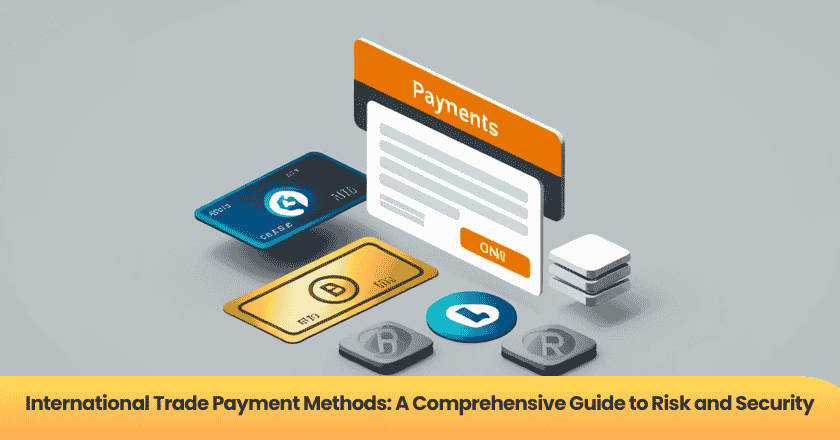
If Incoterms® govern the "flow of goods," Payment Methods govern the "flow of money." In the ecosystem of international trade, these two concepts are inextricably linked. You can have the perfect logistics setup with a DDP Incoterm, but if your payment terms leave you vulnerable to fraud or non-delivery, your business is at risk.
For importers and buyers, choosing a payment method is a balancing act between trust, cost, and security. This guide breaks down the standard payment methods used in global trade and how to manage the risks associated with each.
Key Takeaways:
- The Trust Spectrum: Payment methods exist on a scale of trust; T/T (Telegraphic Transfer) is convenient but risky, while L/C (Letter of Credit) offers the highest security but at a higher administrative cost.
- Escrow is Essential for New Suppliers: Platform-based tools (like Alibaba Trade Assurance) act as a digital escrow, holding funds until the buyer confirms quality, making them ideal for new partnerships.
- Verification is the Best Defense: The greatest risk in international trade is Invoice Fraud. Never change payment details based on email alone—always verify via a secondary, trusted communication channel (e.g., a phone call).
- Strategy Alignment: Align your payment method with your Incoterms. Do not combine high-risk payment terms (100% upfront T/T) with low-risk Incoterms (DDP) for new suppliers.
1. The Spectrum of Trust
Before analyzing specific methods, you must understand where you sit on the "Risk Spectrum."
- The Seller's Perspective: They want payment before they risk producing or shipping the goods.
- The Buyer's Perspective: They want to receive, inspect, and approve the goods before releasing the payment.
The history of international trade finance is essentially the history of bridging this gap. The most common methods today reflect a compromise between these two opposing goals.
2. Telegraphic Transfer (T/T)
The "Standard" Method
T/T is a direct bank-to-bank transfer. It is the most common payment method for small-to-medium-sized import businesses due to its simplicity.
How it works:
- 30/70 Model: The most common structure. You pay a 30% deposit to initiate production and the remaining 70% after the goods are produced but before they are released (against the Bill of Lading).
- 100% Prepayment: Common for small, inexpensive, or sample orders. Highly risky for the buyer.
Pros and Cons:
- Pros: Fast, low administrative fees, widely accepted by all suppliers.
- Cons: Low security for the buyer (once the money is wired, it is difficult to retrieve); high risk of fraud.
Best For:
Established relationships where trust has already been built.
3. Letter of Credit (L/C)
The "Gold Standard" of Trust
An L/C is a contractual commitment from a bank that payment will be made to the seller, provided that the terms and conditions specified in the L/C are met.
How it works:
- The buyer's bank (Issuing Bank) guarantees payment to the seller's bank (Advising/Confirming Bank).
- The seller must present strict documentation (e.g., Bill of Lading, Commercial Invoice, Packing List, Certificate of Origin) to the bank to prove the goods have been shipped according to the contract.
Pros and Cons:
- Pros: High security for both parties. The bank acts as the intermediary, ensuring the seller doesn't get paid until proof of shipment is provided.
- Cons: Expensive (bank fees), time-consuming (heavy paperwork), and rigid (if the documents have even a minor typo, the bank may refuse payment).
Best For:
High-value orders ($50,000+), new suppliers, or complex projects where contract compliance is critical.
4. Platform-Based Escrow (e.g., Alibaba Trade Assurance)
The "Modern" Safeguard
In the age of B2B e-commerce, platforms like Alibaba have introduced "Trade Assurance" programs. This is essentially a digital escrow service.
How it works:
- You pay the platform (e.g., Alibaba) instead of the supplier.
- The platform holds your funds in escrow.
- The supplier ships the goods.
- You confirm receipt and quality.
- The platform releases the funds to the supplier.
Pros and Cons:
- Pros: Built-in dispute resolution, safer than direct T/T, easy to use.
- Cons: Does not cover everything (always read the fine print); fees can sometimes be higher than direct wire transfers.
Best For:
New importers, smaller B2B orders, and sourcing from manufacturers you haven't visited in person.
5. Comparison Matrix
| Method | Buyer Risk | Seller Risk | Cost | Complexity |
|---|---|---|---|---|
| T/T (Prepayment) | High | Low | Low | Low |
| T/T (30/70) | Medium | Medium | Low | Low |
| Trade Assurance | Low | Low | Medium | Medium |
| L/C | Low | Low | High | High |
6. Critical Fraud Prevention: The "Buying Agent" Perspective
Regardless of the payment method, Business Email Compromise (BEC) and invoice fraud are the biggest threats to importers today. You can use the most secure payment method in the world, but if you wire money to the wrong account, it is gone forever.
The Golden Rules of Secure Payment:
- Never Change Payment Details via Email: If a supplier sends an email claiming, "Our bank account has changed, please pay to this new account," stop. Call them immediately using a verified phone number from their website or your previous contract. 99% of these are phishing scams.
- Verify the Beneficiary Name: Always ensure the bank account name matches the supplier’s company name on your Proforma Invoice (PI). Never pay a personal bank account for a corporate transaction.
- Cross-Check PI: Every time you receive a Proforma Invoice, ensure the banking details are identical to the ones used in previous, successful transactions.
- Use Official Communication: If using Alibaba or other platforms, do not move the conversation and payment to WeChat or WhatsApp. Keep it on the platform to ensure the "Trade Assurance" protection remains valid.
7. Strategic Recommendations
How do you optimize your payment strategy?
- The "Relationship Ladder": Start with Trade Assurance or T/T 30/70 for the first few orders. Once you have built a 2-3 year relationship with a manufacturer, you may be able to negotiate "Open Account" terms (e.g., Net 30 or Net 60), where you pay after you receive the goods.
- Align with Incoterms: Do not use DDP (which puts all risk on the seller) with a 100% upfront T/T (which puts all risk on the buyer). The risk should ideally be balanced.
- Keep Your Agent in the Loop: If you use a buying agent, have them verify the supplier's business license and bank account before your first wire transfer. Verification is the cheapest insurance policy you can buy.
NewBuyingAgent
関連リソース
今日始める
あなたの調達目標を現実に変えましょうWeChat:+86 15157124615
WhatsApp:+86 15157124615
住所:中国、杭州、祥園路39号10号館
