
Introduction
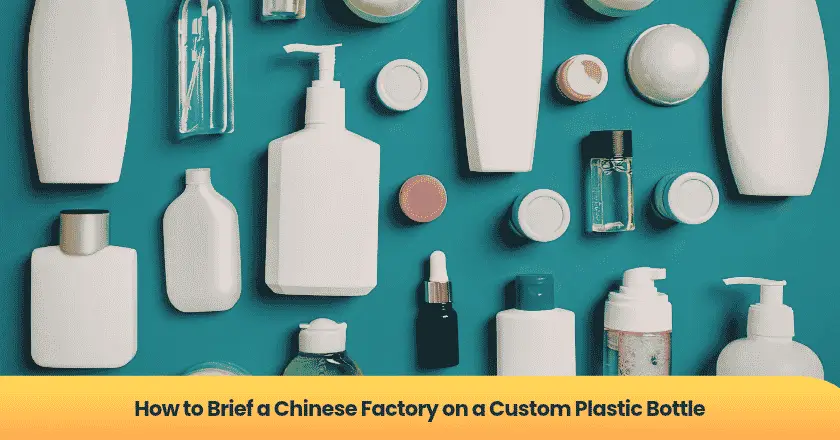
A skincare brand sends a factory three photos, a target price and the words "200 ml, white, pump". The factory quotes quickly, the samples look close, and the first filled bottles leak at the neck. The pump came from one supplier, the bottle from another, and nobody had specified the neck finish. Weeks of sampling went into a bottle that could never seal.
Plastic bottles are engineered packaging, even when they look like commodities. A factory can only build what the brief describes, and most bottle problems trace back to something the buyer assumed rather than wrote down. The brief below is the one experienced packaging buyers send before any quote is accepted.
Key Takeaways
· The product inside the bottle decides the resin, so describe the contents before you describe the shape.
· Stock moulds are faster and cheaper to start, while custom tooling buys a unique shape at the cost of time and upfront spend.
· Neck finish, capacity, weight and tolerances belong in a written drawing, not in a photo or an email.
· Closures, decoration and EU packaging rules that apply from 2026 need to be settled at the brief stage.
· Filling trials, leak tests and drop tests on approved samples prevent the most expensive bottle failures.
Start With What Goes Inside
The first paragraph of a good bottle brief describes the product, not the bottle.
Contents decide the resin
Different plastics behave differently with different contents. PET (polyethylene terephthalate) is clear and rigid, which is why it dominates drinks and many personal care lines. HDPE (high-density polyethylene) is opaque, tough and resistant to many household chemicals. PP (polypropylene) handles higher temperatures, and LDPE (low-density polyethylene) is soft enough for squeeze bottles.
Tell the factory the product type, its viscosity, whether it contains oils, alcohol, solvents or essential oils, and how it will be filled. Hot-filled, carbonated and oil-rich products all put specific demands on the resin and wall design. A factory that knows the contents can flag problems before a mould is cut.
Light and oxygen sensitivity belong in the same paragraph. Some formulas discolour or degrade in clear bottles, so they need opaque colours, amber tints or barrier layers. Say what the product cannot tolerate and let the factory propose options, rather than choosing a colour for looks and discovering the problem in stability testing.
Food contact rules
If the bottle will hold food or drink, the material must meet food contact rules in the destination market. In the US, food contact polymers are covered by FDA regulations in 21 CFR Part 177, which include specific sections for polymers such as PET. In the EU, Regulation (EU) No 10/2011 sets an overall migration limit (the maximum total amount of substances a plastic may release into food simulants) of 10 milligrams per square decimetre of contact surface. It also expects a written declaration of compliance through the supply chain.
Expert Tip: Ask the factory to name the resin supplier and grade for each bottle, and to send the resin supplier's food contact documentation if the product is edible. A factory saying "food grade" tells you very little. A named grade with a declaration of compliance gives your lab, your customer and your regulator something they can check, and it stops silent resin substitutions between orders.
Stock Mould or Custom Tooling
The second decision is whether you need a unique shape or a proven one.
How bottles are blow moulded
Most plastic bottles are made by blow moulding (inflating softened plastic inside a mould so it takes the mould's shape). PET bottles are usually made by injection stretch blow moulding, where an injection-moulded preform is heated, stretched and blown. HDPE and PP bottles, including those with handles, are commonly made by extrusion blow moulding, which inflates a tube of molten plastic. Small, precise bottles are sometimes made by injection blow moulding.
The process matters because it limits what shapes, wall thicknesses and neck details are possible. Ask which process the factory proposes and why. A supplier that runs only one process will tend to fit your bottle to its equipment.
The stock versus custom trade-off
Stock moulds already exist, so samples are quick and the buyer pays no tooling. The trade-off is that competitors can buy the same bottle. Custom tooling gives a distinctive shape and lets you own the mould, but it adds tooling cost, lead time and at least one round of trial samples. Many brands launch on a stock bottle with custom decoration, then move to custom tooling once volumes justify it.
If you choose custom tooling, ask for a timeline that covers mould design, mould making, the first trial shots (often called T1 samples), corrections and final approval. Each correction round adds time, so a clear drawing at the start shortens the whole project more than any amount of chasing later.
Common Mistake to Avoid: Approving custom tooling without a written ownership and storage clause. The mould is your asset only if the agreement says so, names who maintains it, and states how it can be released. Without that, moving production later becomes a negotiation you will lose. Settle ownership, maintenance and release terms in writing before the deposit is paid.
The Technical Brief: Dimensions, Neck and Weight
This section of the brief turns a picture into something a factory can quote and a QC inspector can measure. A good product sourcing brief covers the following points in writing.
· Capacity should be stated as both brimful capacity and fill volume, because a bottle sold as 200 ml needs headspace above the fill line.
· The neck finish should be given as a standard code, such as 24-410, so the bottle matches the closure you intend to use.
· Bottle weight and minimum wall thickness should be specified, since lighter bottles cost less but can panel, dent or fail drop tests.
· Key dimensions should have stated tolerances, including height, body diameter and neck dimensions.
· Colour should be referenced to a physical standard or colour code, with opacity requirements stated for light-sensitive products.
Reading a neck finish code
A neck finish code such as 28-410 has two parts. The first number is the nominal diameter in millimetres, and the second identifies the thread style and height. Two bottles with the same diameter but different thread styles will not take the same cap reliably. Always confirm the code with both the bottle and closure suppliers.
Drawings beat descriptions
Ask the factory for a technical drawing before tooling or bulk. Mark the critical dimensions, and get the drawing signed by both sides. A drawing turns arguments about whether a sample is right into a measurement.
Expert Tip: Send your closure, or the exact closure specification, to the bottle factory with the brief. Bottles and caps are often made by different suppliers, and each will say its part is within tolerance. The only test that matters is whether they seal together. I ask for both parts to be tested as a pair from the first sample round onward.
Closures, Decoration and EU Rules in 2026
A bottle is only finished once it is closed, decorated and legal to sell.
Closures and dispensing
Screw caps, flip-top caps, pumps, sprayers and droppers each need a matching neck and, often, a liner or wiper. Specify the closure type, the application torque range and any tamper-evidence or child-resistance requirement. Ask for the closure to be tested on the bottle with your actual product, since viscosity changes how pumps and valves behave.
Decoration
Common options include screen printing, hot stamping, shrink sleeves and pressure-sensitive labels. Each has its own minimum order, durability and artwork rules. Ask for print adhesion and rub tests on decorated samples, particularly for products that will be handled with wet or oily hands.
Send artwork as vector files with colour references, and ask for a printed proof on an actual bottle rather than a flat drawing. Curved surfaces distort artwork, especially near the shoulder and base.
What changes in the EU
EU rules are reshaping bottle design. Since 3 July 2024, the Single-Use Plastics Directive has required plastic caps and lids on beverage containers of up to three litres to stay attached during use. From 2025, PET beverage bottles must contain at least 25% recycled plastic on average in each member state. In 2026, the Packaging and Packaging Waste Regulation (PPWR) began to apply from 12 August, with harmonised labelling due from 2028 and recyclability and recycled-content requirements from 2030.
Common Mistake to Avoid: Designing an EU beverage bottle around a cap that is not tethered. A non-tethered cap that worked for other markets cannot be used on EU beverage containers in scope, and retrofitting a tethered closure usually means a new neck design. Confirm the destination markets at the brief stage so the bottle and closure are designed together.
Samples, Testing and Approval
Approving a bottle on looks alone is the most common route to a costly reorder.
Tests worth asking for
Before you approve bulk production, ask the factory or a third-party lab to run tests that match how the bottle will be used.
· A leak test with the actual closure confirms that the bottle and cap seal together under normal handling.
· A drop test from a realistic height, filled with product, shows whether the bottle cracks or the cap pops off.
· A compatibility or stability test, with the bottle filled with your product over several weeks, reveals swelling, panelling, staining or loss of contents.
Approving and sealing the sample
Once samples pass, keep a signed golden sample (the approved reference unit that bulk production is measured against) with the factory and a matching one with you. Inspections then compare bulk bottles to an object, not to a memory of what was agreed.
For bulk, agree an inspection plan based on AQL (Acceptable Quality Limit, a statistical sampling standard that sets how many defects are acceptable in a sample). Define what counts as critical, major and minor for your bottle, such as a leaking neck, a visible flow line or a slight colour variation.
Expert Tip: Run a filling trial on your own filling line, or your co-packer's, before bulk bottles ship. A bottle can pass every lab test and still jam on a filling line because of a slightly different shoulder angle or base shape. A few hundred bottles through the real line is a small cost compared with a container of bottles that will not run.
Packaging That Fits the Product: How NewBuyingAgent Supports Bottle Projects
A custom bottle involves resin suppliers, mould makers, closure suppliers and decorators, and each one must work to the same brief. NewBuyingAgent is your perfect partner for global sourcing from China, backed by 30 years of expertise in trade, manufacturing and quality control.
Direct buyers are often blocked by language, region, time zone and cultural gaps, and draining hours go into direct factory communication. NewBuyingAgent handles all factory communication, and its local reputation gets you full factory cooperation. Through its sourcing services, you can use 50,000+ cooperated partner factories with no language, region or time zone barriers.
20,000+ product development and QC experts ensure your products match market needs and stay high-quality. Even with its margin included, NewBuyingAgent cuts costs by 5%-10% compared with direct sourcing. See how it manages your supply chain, or start at the NewBuyingAgent homepage.
Frequently Asked Questions
What should a plastic bottle brief include?
At minimum: the product that goes inside, the resin, capacity and fill volume, neck finish code, weight, key dimensions with tolerances, colour standard, closure type and destination markets. Add the tests you expect and who pays for them.
Is PET or HDPE better for my product?
PET suits clear bottles for drinks and many personal care products. HDPE suits opaque bottles for household chemicals, dairy and many personal care lines. Test your actual product in the chosen resin before you commit to tooling.
Do I need a custom mould for my plastic bottle?
Not to start. Stock moulds let you launch faster with no tooling cost, and decoration can still make the bottle look distinctive. Custom tooling makes sense once the shape is part of your brand and volumes justify the investment.
Who should own the mould for a custom bottle?
The buyer who pays for the tooling should own it, and the agreement should say so in writing. It should also cover who maintains the mould, where it is stored and how it can be released if production moves. Ask for the mould to be marked with your company name.
Why does my bottle leak with the cap supplied?
In most cases, the bottle and cap were made to slightly different neck specifications, or the cap is applied at the wrong torque. Confirm both parts share the same neck finish code, test them together with your product, and agree an application torque range.
Conclusion
A Chinese bottle factory will build exactly what the brief describes, so the brief is where the project succeeds or fails. Start with the contents, choose stock or custom tooling deliberately, put neck, capacity, weight and tolerances on a signed drawing, design for the EU rules now in force, and test filled samples before bulk. If coordinating resin, mould, closure and decoration suppliers is slowing your launch, a conversation with NewBuyingAgent about simpler, more profitable China sourcing is a sensible next step.
Sources
1. 21 CFR Part 177 – Indirect Food Additives: Polymers – eCFR — https://www.ecfr.gov/current/title-21/chapter-I/subchapter-B/part-177
2. Regulation (EU) No 10/2011 on plastic materials intended to come into contact with food – EUR-Lex — https://eur-lex.europa.eu/eli/reg/2011/10/oj
3. Directive (EU) 2019/904 on single-use plastics – EUR-Lex — https://eur-lex.europa.eu/eli/dir/2019/904/oj
4. New EU rules on packaging enter into application (PPWR, Regulation (EU) 2025/40) – European Commission — https://environment.ec.europa.eu/news/new-eu-rules-packaging-enter-application-2026-08-11_en
5. New Buying Agent in China | NewBuyingAgent — https://www.newbuyingagent.com/
NewBuyingAgent
関連リソース
今日始める
あなたの調達目標を現実に変えましょうWeChat:+86 15157124615
WhatsApp:+86 15157124615
住所:中国、杭州、祥園路39号10号館