

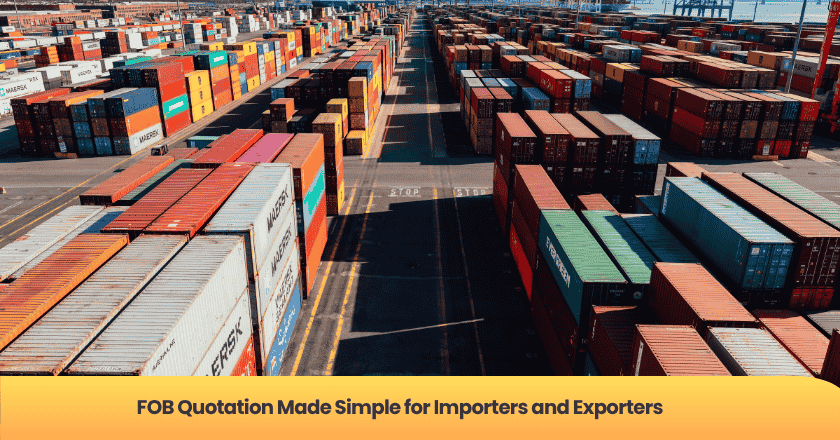
You calculate a fob quotation by adding up all expenses required to get your goods onto the vessel at the port of shipment. These costs include product and packaging, inland transport, port fees, export duties, documentation, and inspection. Understanding free on board costs helps you budget accurately and negotiate better terms with suppliers.
Key Takeaways
- Understand FOB quotations as the total cost to deliver goods to the port and load them onto the vessel. This knowledge helps you budget accurately.
- Always request a detailed breakdown of FOB costs, including product, packaging, transport, and inspection fees. This practice prevents unexpected expenses.
- Use a clear formula to calculate your FOB price. Include all cost components to ensure accurate pricing and better negotiation with suppliers.
- Be aware of hidden charges that may arise after the initial quote. Always clarify costs with your supplier to avoid surprises.
- Choose the right incoterm based on your business needs. Consider factors like control over shipping and the complexity of customs to make informed decisions.
FOB Quotation Essentials
What Is an FOB Quotation?
You encounter the term fob quotation when you negotiate international shipments. This quotation refers to the total cost required to deliver goods to the port and load them onto the vessel. The seller covers all expenses up to this point. You take responsibility for the shipment once the goods pass the ship’s rail at the port. The free on board arrangement defines clear boundaries for cost and risk.
Key FOB Costs Included
You need to understand the cost structure behind fob pricing. The main fob costs include:
- Product manufacturing and packaging
- Inland transportation to the port
- Port handling charges
- Export duties and documentation fees
- Inspection and quality control
Tip: Always request a detailed breakdown of these costs. This helps you verify the accuracy of the fob quotation and avoid surprises.
| Cost Component | Description |
|---|---|
| Product & Packaging | Raw materials, labor, packaging |
| Inland Transport | Trucking, rail, local delivery |
| Port Fees | Loading, terminal charges |
| Export Duties | Taxes, customs clearance |
| Inspection | Quality checks, certifications |
Why Accurate FOB Pricing Matters
You rely on precise fob pricing to plan your budget and negotiate effectively. An accurate fob price ensures you know your true landed cost before shipment. If you miscalculate, you risk unexpected expenses and reduced profit margins. You should always use a clear formula to calculate your fob quotation. This approach helps you compare suppliers and make informed decisions. Reliable fob pricing supports your business growth and protects your bottom line.
FOB Costs Breakdown
Product and Packaging Costs
You start with the base cost of your goods. This includes the price you pay for manufacturing, raw materials, and labor. Packaging costs also play a crucial role. You need to ensure your products are packed securely for export. Strong packaging protects your goods during transport and meets international shipping standards. If you overlook packaging, you risk damage and extra expenses.
Inland Transport and Port Fees
Once your products are ready, you must move them from the factory to the port. Inland transport costs depend on the distance, mode of transport, and local logistics rates. Trucking, rail, or a combination of both may be necessary. At the port, you face additional charges. These include terminal handling fees, loading costs, and storage if your shipment waits before loading. You should always confirm these charges in advance to avoid surprises in your fob costs.
Export Duties and Documentation
Export duties can vary by product type and country. You must pay any required taxes or tariffs before your goods leave the country. Documentation is another essential part of the process. You need to prepare commercial invoices, packing lists, and export licenses. Accurate paperwork ensures smooth customs clearance and prevents costly delays. Missing or incorrect documents can halt your shipment at the port.
Inspection and Quality Control
Quality control protects your reputation and your customer’s satisfaction. You may need to arrange third-party inspections or certifications, especially for regulated products. Inspection fees depend on the type and scope of checks required. You should include these costs in your fob costs calculation. A clear formula helps you track every expense and build a reliable quotation.
Tip: Always request inspection reports and keep copies of all export documents. This practice helps you resolve disputes and ensures compliance with regulations.
FOB Quotation Steps
Collecting Cost Data
You need accurate data to start your fob quotation process. Begin by gathering all invoices and receipts related to your product. Check the manufacturing cost, packaging expenses, and any special labeling fees. Contact your logistics provider to confirm inland transport rates from the factory to the port. Request a list of port handling charges, including terminal fees and loading costs. Ask your customs broker about export duties and documentation fees for your product category. If your shipment requires inspection or certification, get a quote from a third-party agency. Organize all this information in a spreadsheet for easy reference.
Tip: Always verify each cost with the actual service provider. This step helps you avoid underestimating your total expenses.
Building Your FOB Price
Once you have all the cost data, you can build your fob price. Add each component to create a complete fob pricing structure. Use the following checklist to ensure you include every necessary item:
1. Product manufacturing cost
2. Packaging and labeling
3. Inland transportation to port
4. Port handling and loading fees
5. Export duties and taxes
6. Documentation charges
7. Inspection and quality control
Add these costs together to get your total fob price. This method gives you a clear view of your free on board expenses and helps you compare offers from different suppliers. Accurate fob pricing supports better negotiation and protects your profit margins.
Sample FOB Quotation Calculation
You can use a simple formula for fob price calculation. Here is an example to guide you:
| Cost Component | Example Amount (USD) |
|---|---|
| Product Manufacturing | $5,000 |
| Packaging | $500 |
| Inland Transport | $300 |
| Port Fees | $200 |
| Export Duties | $100 |
| Documentation | $50 |
| Inspection | $150 |
| Total FOB Price | $6,300 |
To figure out the fob price, sum all the listed costs. In this example, your fob quotation would be $6,300. This approach ensures you do not miss any expense in your fob pricing.
Note: Always update your cost breakdowns for each shipment. Prices can change due to fuel rates, labor costs, or regulatory updates.
Using NewbuyingAgent for Cost Transparency
You need transparency in your fob pricing to make informed decisions. Reliable cost breakdowns help you identify savings and avoid hidden charges. When you use a professional sourcing partner, you gain access to detailed cost analysis and expert negotiation support. This service ensures you receive accurate fob quotation details and clear documentation for every transaction. You can focus on growing your business while experts handle the complexities of fob price calculation and supplier communication.
Callout: Transparent fob pricing builds trust with your partners and strengthens your supply chain.
FOB Pricing Pitfalls
Hidden Charges to Watch For
You often face hidden charges that can disrupt your budget. These costs may not appear in the initial fob pricing but can surface later. Watch for extra packaging fees, unexpected port surcharges, or last-minute inspection costs. Some suppliers might not include documentation or export license fees in their first quote. You should always request a detailed breakdown and clarify every line item. This approach helps you avoid surprises and keeps your fob pricing accurate.
Tip: Ask for written confirmation of all included and excluded costs before you finalize any agreement.
Common Calculation Mistakes
Many importers and exporters make mistakes when calculating fob pricing. You might forget to add inland transport or underestimate port handling fees. Sometimes, you may use an outdated formula or miss recent changes in export duties. These errors can lead to underpricing and lost profits. You should double-check every cost and update your calculations for each shipment. Use a checklist to ensure you include all necessary expenses.
Common Mistakes Table
| Mistake | Impact |
|---|---|
| Missing inland transport | Underestimated costs |
| Ignoring inspection fees | Quality risks |
| Outdated export duty rates | Compliance issues |
| Skipping documentation costs | Shipping delays |
Ensuring Transparency
You need full transparency to manage fob pricing effectively. Clear communication with your supplier helps you understand every cost. Always ask for itemized invoices and keep records of all transactions. When you use a reliable sourcing partner, you gain access to expert advice and detailed cost analysis. This support allows you to negotiate better terms and avoid hidden fees. Transparent fob pricing builds trust and strengthens your business relationships.
Note: Consistent review of your fob pricing process helps you spot errors and improve your negotiation strategy.
FOB Price vs. Other Incoterms
FOB vs. CIF and EXW
You often see different incoterms when you negotiate international shipments. The most common terms are free on board, CIF, and EXW. Each term defines who pays for which part of the shipping process and where the responsibility shifts from seller to buyer.
- FOB (Free on Board): You pay all costs after the goods pass the ship’s rail at the fob port of shipment. The seller covers everything up to that point. This term gives you control over the main freight and insurance.
- CIF (Cost, Insurance, and Freight): The seller pays for the main ocean freight and insurance to your destination port. You take responsibility once the goods arrive at your port. With CIF, you get less control over shipping choices, but you avoid arranging freight and insurance yourself.
- EXW (Ex Works): You take responsibility as soon as the goods leave the seller’s premises. You handle all transport, export clearance, and insurance. This term gives you the most control but also the most responsibility.
| Term | Seller Pays For | Buyer Pays For | Risk Transfers At |
|---|---|---|---|
| FOB | Local costs, export, loading | Main freight, insurance, import | FOB shipping point |
| CIF | Local costs, export, loading, main freight, insurance | Import, local delivery | Destination port |
| EXW | None (goods at seller’s door) | All costs | Seller's premises |
Note: You should always clarify the incoterm in your contract to avoid confusion.
Choosing the Right Term for Your Shipment
You need to choose the incoterm that matches your business needs. If you want more control over shipping and costs, select free on board at the fob port of shipment. If you prefer convenience and want the seller to handle freight and insurance, CIF may suit you better. EXW works best if you have strong logistics partners and want to manage every step.
Consider these factors when you decide:
- Your experience with international shipping
- Your access to reliable freight forwarders
- The complexity of customs in your country
- The value and risk level of your goods
You should always compare the total landed cost under each term. Sometimes CIF looks easier, but you may pay more for freight and insurance than if you arrange them yourself. Review your options and select the term that supports your profit and supply chain reliability.
You now understand the essential steps for calculating an accurate FOB quotation. You gather cost data, build your price, and check every component. You avoid common pitfalls by following a clear process and reviewing each expense. Use these tips to spot hidden charges and strengthen your negotiation strategy. If you want to simplify sourcing and ensure cost transparency, reach out to NewbuyingAgent for expert support and guidance.
FAQ
How do you verify the accuracy of an FOB quotation?
You should request a detailed cost breakdown from your supplier. Compare each item with market rates. Confirm all charges with service providers. Review invoices and receipts for every expense.
What documents do you need for FOB shipments?
You need a commercial invoice, packing list, export license, and inspection certificate. Customs may request additional paperwork depending on your product and destination.
Can you negotiate FOB costs with suppliers?
You can negotiate most FOB cost components. Discuss manufacturing, packaging, and transport rates. Request competitive quotes for inspection and documentation. Always clarify terms before finalizing your agreement.
What happens if you miss a cost in your FOB calculation?
You risk unexpected expenses and reduced profit margins. Double-check every cost item. Use a checklist to ensure you include all necessary charges.
Is FOB suitable for small shipments?
FOB works well for both small and large shipments. You gain control over shipping arrangements. For very small orders, compare FOB with other incoterms to find the best fit.
NewBuyingAgent
関連リソース

今日始める
あなたの調達目標を現実に変えましょうWeChat:+86 15157124615
WhatsApp:+86 15157124615
住所:中国、杭州、祥園路39号10号館
