

Introduction
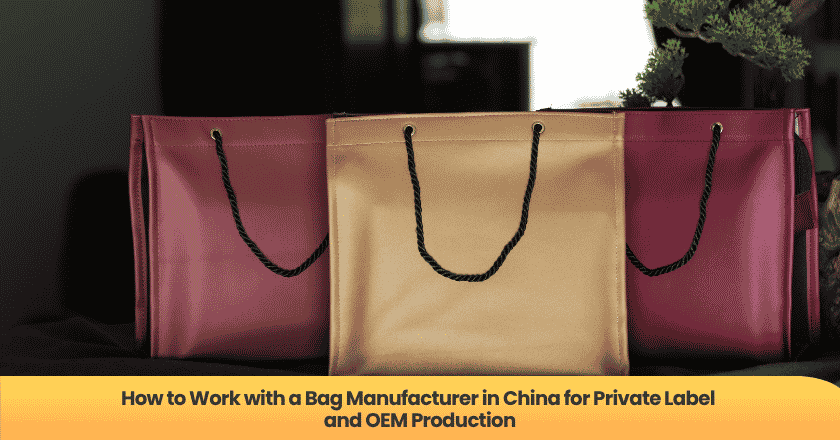
You have a design, a brand name, and a clear picture of the bag in your head — and a manufacturer in China who keeps sending samples that miss the mark. The gap usually isn't the factory's skill. It's that "make this bag with my logo on it" means something different to you than it does to the production floor, and nobody wrote down the details that matter. Private label and OEM bag production lives or dies on specification, not enthusiasm.
Working with a bag manufacturer for your own brand is a different game than buying off a catalog. You're directing production, which means you carry responsibility for the spec, the materials, and the approvals — and the factory executes what you actually document, not what you meant. The brands that succeed treat the tech pack and the sample process as the real product, with the bag as the output.
Key Takeaways
• OEM means the factory builds your original design; private label is the branding outcome layered on top.
• A detailed tech pack is the single most important document — it defines what the factory actually makes.
• Expect higher MOQs for custom OEM work than for rebranding an existing design.
• Lock a pre-production sample in your exact materials before any deposit; it becomes your quality reference.
• Confirm who owns your patterns, molds, and designs before production, not after.
OEM, ODM, and Private Label: Getting the Terms Right
What each actually means for your brand
The acronyms get muddled, and the difference shapes your cost and your differentiation. OEM (Original Equipment Manufacturer — the factory produces your original design to your specifications) means you own the design and the factory builds it. ODM (Original Design Manufacturer — the factory offers existing designs you rebrand) means you start from the factory's catalog and add your label, which is faster and cheaper but gives you a bag competitors can also buy. Private label isn't a third production model; it's the branding result — your name on the goods — that sits on top of either OEM or ODM.
The choice is real. True OEM gives you a distinctive product and full control, at the cost of higher minimums, tooling, and a longer development cycle. ODM gets you to market fast with low differentiation. Many new brands start with ODM to test demand, then move to OEM once a style proves itself.
Matching the model to your stage
A first-time brand without patterns or a material supply chain usually needs full OEM service, where the manufacturer sources materials, develops the pattern from your tech pack, and delivers finished goods. You pay more per unit, but you're buying a coordinated supply chain you don't yet have. China's full-service bag manufacturers have this depth built in, placing the leather, the hardware, and the make with the right specialists rather than forcing one supplier to fake capabilities it lacks.
Expert Tip: When a supplier won't clearly state whether they're quoting OEM or ODM, ask one question: "If I send only my design and no materials, can you deliver finished bags?" A real OEM manufacturer says yes and starts discussing material sourcing and tech-pack details. A supplier pushing ODM steers you toward their existing molds and catalog. The answer tells you immediately whether you're getting an original product or a rebranded one — before the quote shapes your expectations.
The Tech Pack: Your Real Product
Why specification beats conversation
A bag manufacturer can't read your mind, and "premium," "sturdy," and "minimalist" mean nothing on a cutting table. The tech pack is the document that translates your idea into instructions the factory can execute: exact dimensions, materials by grade and thickness, hardware specs and finishes, stitch type and density, lining, edge finishing, and your logo placement and method. The more precise it is, the closer the first sample lands and the fewer expensive rounds you pay for.
A weak tech pack guarantees a frustrating sample loop. The factory fills the gaps with its own assumptions, which rarely match yours, and you spend weeks correcting things a complete spec would have prevented. Treating the tech pack as the real work — and the sample as a test of it — is the mindset that gets brands a bag they're proud of.
Logo and branding details that get missed
Private label is in the details buyers forget to specify. Logo method matters: embossing, debossing, metal plate, screen print, and woven label each look and cost differently, and "put my logo here" leaves the factory guessing. Specify the method, the exact placement, the size, and the color. The same goes for branded zipper pulls, custom hardware, dust bags, hangtags, and inner labels — the touches that make a bag feel like a brand rather than a generic product with a sticker.
Common Mistake to Avoid: Sending a reference photo and expecting the factory to "make it like this." A photo shows the outside of a finished bag, not its construction, materials, or measurements — and the factory will reverse-engineer it with cheaper materials and its own assumptions to hit your price. The result is a sample that looks vaguely right and is wrong in every detail that matters. A reference photo is a starting point for a tech pack, never a substitute for one.
Building a tech pack when you're not a designer
Many first-time brand owners aren't trained designers, and a blank tech pack is intimidating. The practical path is to combine a reference bag you can physically send with a clear written spec of every way yours differs from it. A real sample on the factory's table communicates construction far better than any drawing, and your notes — "same shape, but full-grain leather instead of PU, brass hardware instead of silver, 2cm taller" — fill the gaps. Many capable manufacturers will also help develop the tech pack from your reference and notes, since it's in their interest to build the right bag the first time. The key is that you direct every meaningful decision rather than leaving it to assumption. A tech pack co-developed with the factory is fine; a tech pack the factory invented because you gave it nothing to work with is how you get a bag that isn't yours.
MOQ, Sampling, and Quality Sign-Off
What to expect on minimums
Custom OEM bags carry higher MOQs than rebranded ODM ones, because the factory and its material suppliers each have order floors. Custom hardware, a specialty leather, or a custom lining can each push the minimum up, and the MOQ is really the highest among all those component minimums. Expect commonly 300–1,000 pieces per style for OEM bag production, sometimes more for designs needing custom tooling. Using stock hardware and a material the factory already runs can pull the minimum down for a first order.
Sampling and locking the reference
Pay for samples and expect two to four rounds — the first rarely nails materials, hardware, and construction together. Each round should resolve specific, numbered feedback, not vague impressions. Once a pre-production sample passes, seal it: sign a sample-approval sheet, photograph it from every angle, and keep a physical copy. This becomes the objective reference your pre-shipment inspection checks against, turning "this isn't what I approved" from an argument into a documented fact.
Quality sign-off rests on independent eyes. A factory's own QC wants to ship; an inspection team working for you checks the bulk against your approved sample and an AQL (Acceptable Quality Limit — the agreed maximum defect rate an order may contain) standard. That independent depth is what makes a branded bag match its spec across the whole run, rather than drifting after the sample everyone admired.
Expert Tip: Send numbered, annotated feedback on every sample round and require the factory to confirm each point before remaking. Circle the seam, mark the measurement, name the hardware finish. A factory that acknowledges your list item by item understands the changes; one that replies "ok no problem" to everything returns a sample missing half your edits. Making them confirm each item is how the next round arrives right instead of restarting the loop.
Sample costs and timeline reality
Budget realistically for the development phase, because rushing it just moves errors into bulk where they cost far more. A new OEM bag typically takes four to eight weeks from approved tech pack to a signed-off pre-production sample, longer if custom hardware or tooling is involved. Sample fees are normal and worth paying — a factory that samples for free may rush the work or recover the cost elsewhere, and a paid sample gives you a serious partner's attention. Expect to pay more for the first sample and often less for revisions. Treat this phase as an investment in getting the product right rather than a cost to minimize. The brands that move fastest to a great bulk order are usually the ones that were patient and precise during sampling, not the ones that pushed the factory to skip rounds to save a few weeks and a few hundred dollars.
Protecting Your Brand and Designs
Working with a bag manufacturer means handing over your designs, so settle ownership before production. Confirm in writing that you own the patterns, any custom molds or tooling you paid for, and the design itself, and that the factory won't sell your bag to other buyers. Reputable manufacturers sign these terms without fuss; resistance is a warning. Through 2026, brand buyers have grown more careful here as design copying remains a live risk, and a short, specific agreement covering IP and exclusivity is now standard practice rather than an over-precaution. Clarify too whether you keep the tooling if you change factories — a mold you paid for but don't control quietly ties you to one supplier.
How NewBuyingAgent Helps You Build Your Bag Brand
Turning a design into a finished branded bag means juggling leather, hardware, and assembly while keeping every run on-spec — a lot to run remotely on your own, which is why many brand owners lean on a sourcing partner. NewBuyingAgent is your perfect partner for global sourcing from China, backed by 30 years of expertise in trade, manufacturing and quality control.
Placing the leather, the hardware, and the stitching with the right specialists is often where the work really shows: with 100% Access to China's Factories, you use their 50,000+ cooperated partner factories—no language/region/time zone barriers. Their local reputation gets you full factory cooperation. And keeping a logo'd bag identical from the first piece to the ten-thousandth depends on holding the quality line: NewBuyingAgent's 20,000+ product development & QC experts ensure your products match market needs and stay high-quality. Contact now.
Frequently Asked Questions
What's the difference between OEM and private label for bags?
OEM is a production model where the factory builds your original design to your specs. Private label is the branding outcome — your name on the goods — which can sit on top of either OEM (your design) or ODM (the factory's existing design rebranded). OEM gives you a distinctive product; ODM with private label is faster but less unique.
Do I need a tech pack to work with a bag manufacturer?
For OEM production, yes. A tech pack defines exact dimensions, materials, hardware, stitching, and branding so the factory builds what you intend rather than guessing. A reference photo isn't enough — it shows the outside of a bag, not its construction. A strong tech pack is what gets your first sample close and saves expensive revision rounds.
What's a typical MOQ for custom OEM bags in China?
Commonly 300–1,000 pieces per style, higher for designs needing custom hardware, specialty materials, or tooling. The minimum reflects the highest component minimum, not just labor. Using stock hardware and materials the factory already runs can lower it for a first order.
How do I make sure the factory doesn't copy or resell my design?
Agree in writing before production that you own the patterns, paid-for tooling, and design, and that the factory won't sell your bag to others. Reputable manufacturers accept these terms readily. Also clarify whether you keep any custom molds if you change factories, so you're not locked in.
How many sample rounds should I budget for?
Usually two to four for a new OEM bag. The first rarely gets materials, hardware, and construction right at once. Give numbered, annotated feedback each round and require the factory to confirm every point before remaking, which keeps the loop short and the final sample accurate.
Conclusion
Building a bag with a China manufacturer is a directing job, and the tech pack is your script. Specify everything that matters — materials, hardware, construction, and every branding detail — lock a pre-production sample as your reference, settle design ownership up front, and the factory can build the bag you actually pictured. Skip the spec and you'll get the factory's guess instead of your brand. When turning your design into a precise, factory-ready package and a verified first order feels like a lot to manage alone, it's worth having a partner run the OEM process end to end so your brand ships as designed.
NewBuyingAgent
Related Resources
Commencer aujourd'hui
Transformons vos objectifs d'approvisionnement en réalitéWeChat:+86 15157124615
WhatsApp:+86 15157124615
Adresse : Bâtiment 10 #39 Xiangyuan Road, Hangzhou, Chine
