

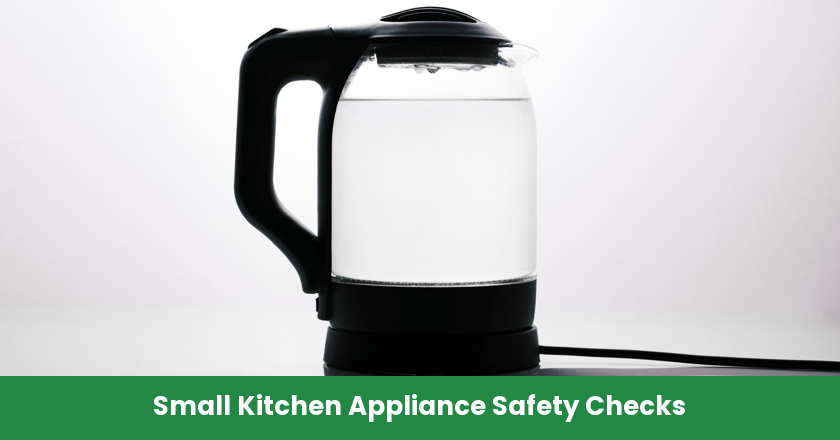
Approve a small kitchen appliance from China against the exact build that will be sold in each destination. First define how it should heat in normal use. Then verify the plug, cord and electrical ratings, and require qualified evidence for accessible heat and abnormal operation. Keep the tested sample, approved components, labeling and delivered lot linked under one model revision. A kettle that boils normally still needs evidence covering its protective controls and the configuration customers will receive.
Approve the Exact Model for Each Destination
A small kitchen appliance earns buyer approval when ordinary heating, the plug and electrical configuration, and thermal safety are verified for the proposed production model and destination. The buyer needs a signed specification, a matching sample and report, and records showing that the pilot and shipment follow that build. Unresolved differences in safety-relevant parts or report scope should block the affected release.
- How it works: Define the market and rated build, verify ordinary performance, then review qualified safety evidence for the same model.
- Risk: A changed cord or thermal protection component can leave a normal demonstration unchanged while making the existing report insufficient.
- Decision: Hold any affected configuration until the responsible parties confirm its approved scope and check the actual lot.
Keep purchase approval, conformity assessment and shipment authorization clear in the file. A buyer can accept the housing appearance and still hold the build pending evidence. Different organizations may own those decisions. Write down who accepts the specification, who reviews regulatory and lab evidence, and who may authorize shipment.
Map the Appliance and Its Destination
A model approval starts with the intended use and destination, plus an identifiable appliance revision. Record the heating functions, rated supply, plug and cord, control revision, instructions and markings for that version. Tie the configuration to the sample and documents before comparing offers. Several products can share one housing, which makes a photo or a retail model name a poor way to distinguish the tested build.
Ask the compliance lead or qualified lab to map the applicable requirements before the factory sends its sample. The IEC household appliance general safety standard states that its edition is used with particular parts established on the basis of that edition. Use a compatible set of editions and confirm the applicable national adoption, amendments and deviations. A standards number on a sales deck gives too little information to approve a model.
The IEC publication for appliances that heat liquids covers household and similar appliances within its scope, including specified kettles. Identify any additional functions and whether the product is intended for household or professional use. A model that boils water and serves as a travel container needs a review of its actual use and design. Ask the lab to document which requirements the proposed model falls under.
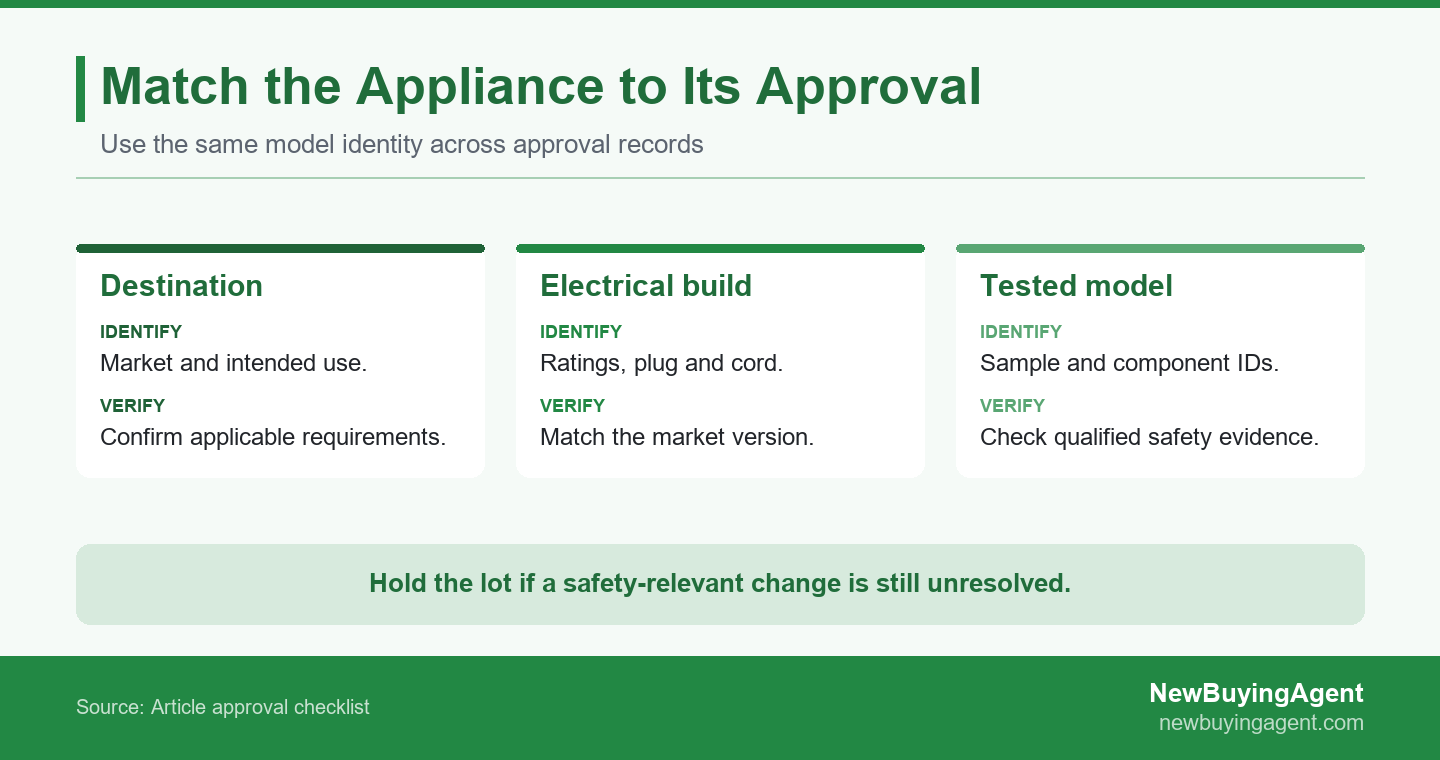
Small appliance approval links the destination, electrical configuration and safety evidence to the same model
For orientation, the IEC catalogue identifies the general household appliance standard as IEC 60335-1 and the particular liquid-heating standard as IEC 60335-2-15. Examples in the catalogue help classify a product. The compliance plan should state the applicable edition and market basis before the buyer asks for a test report. Where other obligations apply, assign them separately, such as electromagnetic compatibility or food-contact evidence for the wetted parts.
Separate Heating Performance From Safety
The ordinary heating check gives the buyer a measurable performance target. It states the supply rating, product setting, load, starting conditions and outcome so the result can be repeated on an identified unit. Separate that commercial check from electrical and thermal safety evaluations handled by a qualified lab. The desired speed or temperature matters only within a configuration that has the right evidence for its intended use.
For a kettle, specify the permitted fill used for the test, the initial water condition and how to tell whether normal heating stopped as intended. A keep-warm setting needs its own outcome if it is advertised. For a toaster or countertop grill, describe the intended load and the result the buyer expects across the settings being sold. Choose usable performance tolerances based on the product brief and repeatable sample observations.
The IEC publication for portable cooking appliances includes toasters and grills and notes revisions to abnormal tests for toasters. That scope is different from the liquid-heater example. Have the lab determine which normal and abnormal evaluations apply and record their edition and conditions. A timed browning check remains useful for the buyer's performance spec, and the safety review addresses the relevant hazards in addition to that result.
Record readings against the actual specimen, including its nameplate information and control version where relevant. When marketing changes a capacity or cooking-time claim, confirm what the existing performance evidence covers. When the heater, materials or control change, route the technical scope back to the responsible lab or compliance lead. Resist releasing a video demonstration as evidence for every regional variant.
When a product team compares several editions of a small appliance, NewBuyingAgent's China product sourcing and supply uses local cooperating factories and covers sourcing, quality control and logistics. Give the team the destination ratings and model-level approval conditions when requesting quotes. That helps the buyer compare manufacturing offers against the same heating specification and evidence requirements.
Verify the Plug, Cord, and Electrical Configuration
The plug check covers the complete electrical configuration. Identify the approved plug, cord or detachable set, supply voltage and frequency, rated input and protection arrangement by destination. Link the parts to the report and to the model and carton going into the order. A connector that fits the socket still leaves the buyer to verify that the complete appliance matches the destination and the approved construction.
Ask the supplier for the cord and plug drawings or identifiers and the component evidence applicable to that variant. Record whether the model is designed with protective earthing or another approved protection arrangement. Have the lab or compliance reviewer confirm the corresponding safeguards and the relevant ratings for the assembled appliance. The receiving inspector can verify identifiers and markings within the approved procedure, while the lab handles electrical and mechanical safety testing.
In Great Britain, the Electrical Equipment (Safety) Regulations set conditions for the plug assembly on covered domestic equipment with a flexible lead intended for the specified UK socket. The options described include a correctly fitted standard plug and a conversion arrangement that meets the stated conditions. Have the compliance reviewer confirm the applicable route and fuse or related requirements for the exact item. Check the shipped configuration against that decision.
| Check | Evidence to request | Hold if |
|---|---|---|
| Supply and nameplate | Model, voltage, frequency and rated input tied to the test variant. | The report covers a different supply or model. |
| Plug and cord | Approved identifiers, part markings, assembly and packed-set records. | Parts changed or the packed set is unresolved. |
| Protection arrangement | Approved construction and the relevant assembled product results. | The evidence covers another configuration. |
| Variant and packaging | SKU and destination mapping, carton, manual and approved label. | Stock can be picked for the wrong destination. |
If similar versions share an assembly line, give them distinct build and packing records. Check that the appliance nameplate, physical cord set, carton and order agree at pilot and shipment. Specify how the supplier will isolate a mixed carton or pallet until the correct destination and contents can be established.
Check the Independent Thermal Protections
Thermal safety review covers what heats up in ordinary use and what happens under relevant abnormal conditions. A thermal cutout is a device that interrupts heating when a specified temperature condition is reached. It serves a protective role distinct from ordinary temperature regulation. The lab should identify which safeguards and tests apply to the complete model, from surfaces the user touches to the behavior of hot liquids or steam.
List the parts people touch, including the handle, lid release, knobs and nearby surfaces. Identify the intended uses that expose them to heat, such as repeated cycles, pouring or refilling. Have the lab map test points, criteria and applicable conditions to the report. Depending on the product, ask separately about the effects of spillage, prolonged operation and the behavior of safeguards when ordinary operation fails.
A U.S. Consumer Product Safety Commission kettle warning identifies specific portable kettles that could pressurize and unexpectedly release hot steam or liquid. That example gives buyers a reason to ask how a lab considered liquid and steam hazards for their own configuration. Let the lab base that decision on the actual lid, venting, controls and intended use, and document which conditions the evidence covers.
Request a list of safety-relevant components with manufacturer, part number, rating and permitted alternatives where the report or approval specifies them. Links from the report to the factory's bill of materials make substitutions easier to spot. A protective device may have a similar appearance or nominal rating across parts. Ask the responsible reviewer to explain whether the alternate is covered and whether its effect on the whole appliance needs further evaluation.
Keep normal operating checks on the production inspection plan and reserve abnormal-operation evaluations for qualified personnel with the proper setup. Ask who can approve a change to the enclosure, insulation, controls or thermal protection. An inspector should be able to isolate the affected group and escalate missing evidence without improvising a safety test on the line.
Hold a Changed Pilot Build Until Its Evidence Matches
A pilot batch stays on hold when it contains a safety-relevant change that the approved evidence does not cover. In a hypothetical kettle pilot, the supplier uses a different thermal cutout and a different cord set from those listed for the tested version. The units heat normally, but the buyer holds the affected configuration until the lab and other responsible parties resolve what the changes mean for approval.
Start with the test report's model and component identifiers, supplier change record and actual pilot build records. Ask whether each part is an approved alternative for that exact market and configuration. If that evidence is missing, identify the affected production and packed units and preserve a representative pilot sample. Keep release closed while the lab or approval body determines which evidence can be extended and which evaluations need to be repeated.
The supplier may restore the exact documented components or request approval of an updated configuration. If it restores the original build, verify the actual reworked units, lot identity, markings and any required inspection before closing the hold. If the alternate goes forward, obtain the required technical evidence and written approval, update the component and packing records, and identify the first lot covered by the new revision.
Use the Approval Checklist Before Issuing a Release
The approval checklist pairs each decision with evidence, an owner and a hold or release rule. Complete it for each market and model revision, then check it against the pilot or shipment under review. A finished checklist records the lab scope, approved parts, label and reports for that lot. The responsible buyer can then verify that the goods being released are the goods that earned approval.
| Approval item | Evidence and owner to fill in | Hold if |
|---|---|---|
| Identity and destination | [Buyer: SKU, revision, market, use and nameplate ratings.] | Sample or ratings differ from the approved build. |
| Heating performance | [Product team: load, settings, permitted conditions, criteria and results.] | Result misses the agreed performance criteria. |
| Plug, cord and protection | [Supplier and reviewer: approved part IDs, electrical configuration and evidence.] | Parts or assembled configuration lack matching evidence. |
| Thermal safety | [Qualified lab: standards and editions, test scope, results and sample IDs.] | Required result is missing, out of scope or fails. |
| Marking and market file | [Compliance lead: label, instructions and applicable declarations.] | Required records or markings remain unresolved. |
| Shipment disposition | [Buyer QA: lot IDs, changes, packed variant, deviations and release authority.] | The lot, packed variant or authorization cannot be verified. |
For equipment within its scope, the European Commission Low Voltage Directive guidance identifies the manufacturer as responsible for the conformity assessment. Ask the compliance lead to confirm who is acting in that role for the intended product and which records the supply chain must maintain. Keep the lab report and any other applicable market documentation together with the tested build information.
NewBuyingAgent's manufacturing and quality-control background and local cooperating factory resources can support repeat sourcing against one identifiable build. For a small-appliance program with several markets, putting the model revision and destination at the top of the spec makes it easier to agree sourcing and quality checks across the assortment.
To discuss sourcing and supply for a named appliance, send the small-appliance specification to NewBuyingAgent with the destination, quantities, target price, schedule and required test evidence. Include the approved power and plug setup and any model differences. This provides a common basis for quoting the equipment and planning the necessary production and delivery checks.
Frequently Asked Questions
Can one test report cover several plug or voltage versions?
One report can cover multiple versions only when its scope and approved configuration evidence include each of them. Verify the report's variant list, ratings, critical components and applicable deviations. Ask the responsible lab or approval body to document any extension when the intended plug, power rating or circuit differs from what was tested.
Is a boil test enough to approve an electric kettle?
A boil test is insufficient for electrical and thermal-safety approval. It shows a result under the stated normal conditions. The approval needs the applicable evidence for the actual model, including the local plug and cord and qualified assessment of relevant thermal, electrical and liquid-related hazards. Keep the performance result as a separate record.
Can the same carton be used for different markets?
Use the same carton only if it stays accurate for the actual model and satisfies each intended market. Check product identifiers, ratings, required language and marks, and the model linked to the manual. Give the packing line control over the variant identifiers so shared artwork does not cause shipments to be mixed.
What changes should trigger a new safety review?
Any change that could affect the approved electrical or thermal configuration needs a scope review. Examples include a changed heater, protection device, control version, cord set or enclosure material. Ask the responsible parties which evidence still applies and which evaluations must be updated. Identify the first affected lot and close the review before release.
NewBuyingAgent
موارد ذات صلة

ابدأ اليوم
دعنا نحول أهداف التوريد الخاصة بك إلى واقعWeChat:+86 15157124615
WhatsApp:+86 15157124615
العنوان: مبنى 10 #39 طريق شيانغيوان، هانغتشو، الصين
