Introduction
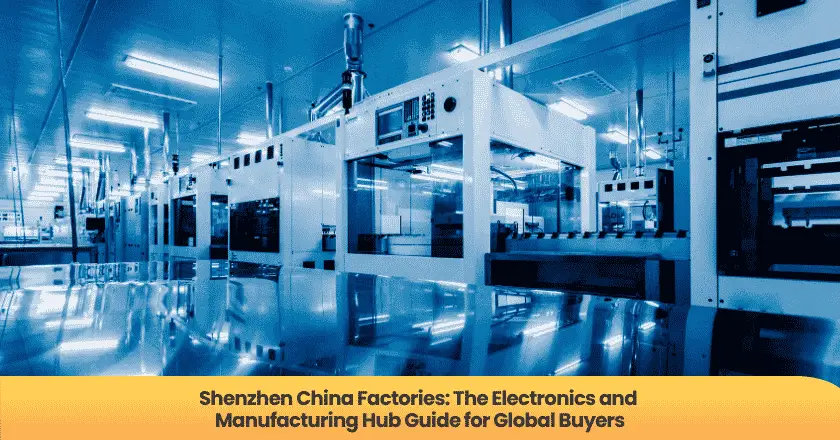
If China is the world's factory, Shenzhen is its electronics workshop. In four decades the city went from a fishing town to the global capital of hardware, the place where a vague idea for a gadget can become a working prototype in weeks and a shipped product not long after. For a buyer sourcing anything with a circuit board, Shenzhen is not one option among many. It is the deepest, fastest electronics ecosystem on the planet, and understanding how it works is the difference between tapping that power and drowning in it.
That power comes from density. Within a short radius sit component markets, factories, design houses, prototyping shops, and certification support, all close enough to collaborate at a speed found nowhere else. The legendary Huaqiangbei district alone is a maze of multi-story buildings where almost any electronic part can be found in minutes rather than weeks. This concentration is Shenzhen's superpower, and it also makes the city genuinely hard to navigate for a buyer who arrives without a map.
This guide is that map. How Shenzhen's electronics ecosystem is structured, where components and prototyping happen versus mass production, how the manufacturing districts differ, and how a global buyer sources and verifies well in a place built for speed. Whether you are prototyping a first gadget or scaling a hardware line, the aim is to make the world's electronics hub work for you rather than overwhelm you.
Key Takeaways
• Shenzhen is the world's electronics and hardware capital, where dense clusters of components, factories, and design support enable prototyping and production at a speed no other manufacturing region can match.
• Huaqiangbei, the world's largest electronics market, lets buyers source components, modules, and finished gadgets in minutes, making it the heart of rapid prototyping and small-batch electronics sourcing.
• Shenzhen functions as several distinct markets at once, since component trading, small-batch customization, mid-size contract manufacturing, and large-scale production each concentrate in different districts and suit different buyers.
• Certification and quality verification are non-negotiable for electronics, because a non-compliant or poorly built device is a total loss, making samples, inspection, and proof of certification essential before any order.
• Intellectual property needs active protection in Shenzhen, since designs can spread quickly, making NNN agreements and careful, staged disclosure important for any buyer building a proprietary product.
Shenzhen, the World's Hardware Hub
To source Shenzhen well, you first have to understand what makes it singular. It is not simply a city with many electronics factories. It is an integrated ecosystem whose speed and depth are the product of everything sitting close together.
Why Shenzhen Moves So Fast
Shenzhen's defining trait is iteration speed. Because components, factories, designers, and prototyping services cluster within a short radius, a product can move from idea to working sample in weeks rather than the many months it takes elsewhere. A developer can buy parts in the morning, test a concept in the afternoon, and refine it the next day. The short answer is that this compressed cycle, often called Shenzhen speed, is the city's real product, worth more to a hardware buyer than any single low price.
Density drives it all. Designated China's first special economic zone in 1980, Shenzhen grew an electronics supply chain so complete that almost every part of a device, from circuit boards and sensors to casings and batteries, can be sourced within the region. That completeness means short lead times, easy iteration, and a flexibility that buyers used to assembling parts from many countries find genuinely startling.
Huaqiangbei, the Heart of It All
At the center sits Huaqiangbei, widely called the Silicon Valley of hardware and the world's largest electronics market. Across a cluster of multi-story buildings, thousands of vendors sell everything from resistors, capacitors, and microcontrollers to displays, modules, and finished gadgets. A buyer can assemble the parts for a prototype in hours, source a small batch of an existing product, or connect through market traders to the factories that make them. Worth knowing: Huaqiangbei is as much a tool for rapid development as a place to shop, which is exactly why hardware startups from around the world make the trip.
Expert Tip: Treat Huaqiangbei as a prototyping resource, not just a shopping trip. Buying a few of each component to build and test a sample on the spot, while you can still walk back to a vendor with questions, turns a single visit into a development sprint that would take weeks of shipping and waiting anywhere else.
Components and Prototyping
Shenzhen's first great strength is the early stage of a product's life, namely sourcing components and turning them into a working prototype. This is where the city's speed advantage is most extreme and most useful to a buyer developing something new.
The Component Ecosystem
For electronic components, Shenzhen is the world's go-to source. Resistors, capacitors, integrated circuits, sensors, connectors, PCBs (printed circuit boards, the base that holds a device's electronics), displays, and specialty modules are all available in enormous variety, often in small quantities. The advantage is not just price but availability, since a part that might take weeks to source elsewhere can be in your hands the same day. For anyone building electronics, this hardware bank of components is a resource without equal.
Care is required, though. Component quality and authenticity vary, and a cheaper part can hide a real cost, such as a board material that fails under heat or a connector that degrades over time. Real talk: the same density that makes Shenzhen fast also mixes excellent components with substandard ones, so verifying parts and buying from credible vendors matters as much as the speed you gain.
Rapid Prototyping and Iteration
Prototyping is where Shenzhen is unrivaled. On-site services for PCB assembly, 3D printing, custom cables, casings, and tooling sit beside the component markets, so a concept can become a physical sample at remarkable speed. Design houses can take a sketch to a working model in around three weeks, and a custom circuit board or molded part can be turned around in days. For a hardware buyer, this means iterating on an idea with far less delay than anywhere else, testing and refining before committing to a production run.
Common Mistake: Jumping straight to a large production order to save on per-unit cost before the design is locked. Shenzhen's prototyping speed exists precisely so you can iterate cheaply first. Prove the design through samples and small batches, then scale, rather than discovering a flaw after thousands of units are already built.
Production and the Manufacturing Districts
Once a design is proven, sourcing shifts from components and prototypes to production, and here Shenzhen reveals that it is really several markets in one. Matching your stage and volume to the right district is one of the most important moves a buyer makes.
Three Markets in One City
Shenzhen's factories are not interchangeable. Huaqiangbei and its trading companies suit small batches, stock products, and light customization, with low minimums ideal for prototypes and trial runs. The Bao'an district concentrates mid-size contract manufacturers, with factories of a few hundred to a couple thousand workers serving established and growing brands. Larger districts host the big contract manufacturers built for high-volume, serious production. Trying to source the wrong way for your scale, such as approaching a mass-production factory with a tiny order, simply wastes everyone's time.
Match your district to your stage. A startup needing 200 units belongs with Huaqiangbei traders or a flexible small factory, not a plant geared for tens of thousands. A growing brand building a proprietary product fits the mid-size contract manufacturers. Understanding this structure prevents the classic frustration of a small buyer crushed by large-factory minimums or a serious brand wasting months with vendors who cannot scale.
MOQ Realities
Minimums are the most common source of confusion. Stated MOQs are often sales filters rather than hard floors, and a factory advertising a high minimum may quote far lower for a buyer who shows genuine ongoing potential, especially when approached through an agent with an established relationship. Huaqiangbei trading companies are frequently the most flexible, accepting small trial orders that let a buyer validate quality and demand before scaling up. Knowing that a stated minimum is often negotiable changes how you approach a supplier entirely.
Quality, Certification, and How to Source Well
Speed and depth mean nothing if the product fails or cannot legally sell. For electronics especially, verification is not optional, and the way you source, in person or from afar, shapes how well you manage it.
Certification and Verification
Electronics carry compliance requirements other goods do not. Devices for the US generally need FCC certification, those for Europe need CE marking, and other markets carry their own, so confirm a supplier can provide goods that genuinely meet your destination's standards before ordering. Quality verification matters doubly here, since a non-functional or non-compliant device is a total loss rather than a partial one. Approve a working sample, inspect production, and insist on real proof of certification rather than a verbal assurance, because the cost of skipping this lands at your border or in your customers' hands.
Intellectual property needs active care too. In a fast-moving ecosystem, a proprietary design can spread quickly, so protect it with an NNN agreement (non-use, non-disclosure, non-circumvention) built to be enforceable in China, and share sensitive details in stages rather than all at once. The same openness that makes Shenzhen fast means a valuable design left unprotected is a design at risk, and the buyers who build something proprietary plan for this from the start.
Common Mistake: Accepting a vendor's word that a device is certified without seeing the documentation. Verbal assurances are easy to give and impossible to rely on, and an uncertified batch can be turned away at your border. Ask for the actual certification records tied to your specific product and market, and treat a vendor who cannot produce them as a supplier for someone else.
Sourcing Shenzhen in 2026
You can engage Shenzhen in person or from a distance. Visiting lets you walk Huaqiangbei, test components on the spot, and read suppliers face to face, which suits a buyer in active development. Sourcing remotely relies on online communication and a representative or partner to verify what you cannot see. Through 2026, live video factory tours, digital production tracking, and AI-assisted supplier matching make the remote route increasingly workable, letting a buyer tap Shenzhen's speed without living there.
Either way, local support pays for itself. Whether your own representative or a sourcing partner, trusted eyes in Shenzhen handle the verification, the certification checks, the IP caution, and the navigation a dense and fast city demands. For a global buyer, that on-the-ground presence is what turns the world's most powerful and most overwhelming electronics hub into a manageable, reliable source.
Navigating Shenzhen With NewBuyingAgent
Shenzhen's speed and depth reward a buyer with a guide that already knows its markets, factories, and districts from the inside. NewBuyingAgent is a strong partner for global sourcing from China, backed by 30 years of expertise in trade, manufacturing and quality control. On reaching the right factories within that dense ecosystem, the network does the work: it draws on its 50,000+ cooperated partner factories—with no language, region, or time zone barriers—and its local reputation gets you full factory cooperation. And against the quality and certification risks that electronics carry, the depth is built in, as its 20,000+ product development and QC experts ensure your products match market needs and stay high-quality.
Frequently Asked Questions
What is Shenzhen best known for manufacturing?
Electronics and hardware above all. Shenzhen is the world's electronics capital, home to dense clusters of component suppliers, factories, and design houses that enable prototyping and production at unmatched speed. It excels across consumer electronics, components, PCBs, and devices, supported by the legendary Huaqiangbei market. The city's defining strength is an integrated hardware ecosystem where almost any electronic part or service sits close at hand.
What is Huaqiangbei and why does it matter?
Huaqiangbei is the world's largest electronics market, a cluster of multi-story buildings in Shenzhen where thousands of vendors sell components, modules, and finished gadgets. It matters because a buyer can source parts for a prototype in minutes, buy small batches, or connect to factories through traders. Often called the Silicon Valley of hardware, it is as much a rapid-development resource as a marketplace.
Can I source small quantities from Shenzhen?
Yes, especially through Huaqiangbei trading companies, which often accept small trial orders ideal for prototypes and validating demand. Stated minimums elsewhere are frequently sales filters rather than hard floors, and a factory may quote lower for a buyer showing genuine potential, particularly through an agent with an established relationship. Match small orders to the flexible part of the ecosystem rather than mass-production factories.
How do I make sure Shenzhen electronics are certified?
Confirm certification before ordering, never after. Devices for the US generally need FCC certification, those for Europe need CE marking, and other markets carry their own. Insist on real proof rather than a verbal assurance, approve a working sample, and inspect production. A non-compliant device is a total loss that can be refused at your border, so treating certification as non-negotiable protects the whole order.
How do I protect my design when sourcing in Shenzhen?
Protect it actively, since designs can spread quickly in a fast-moving ecosystem. Put an NNN agreement, covering non-use, non-disclosure, and non-circumvention, in place before sharing detailed designs, and built to be enforceable in China. Share sensitive specifications in stages rather than all at once. For a proprietary product, plan IP protection from the start rather than treating it as an afterthought once production is underway.
Should I visit Shenzhen or source remotely?
Both work. Visiting lets you walk Huaqiangbei, test components on the spot, and read suppliers in person, suiting active development. Sourcing remotely relies on communication and a representative or partner to verify what you cannot see. Through 2026, live video factory tours, digital production tracking, and AI-assisted matching make the remote route increasingly workable, though local support still helps with verification, certification, and IP caution.
Conclusion
Shenzhen is not just a place to buy electronics. It is an ecosystem engineered for speed, where the density of components, factories, designers, and prototyping services lets an idea become a product faster than anywhere else on earth. That power is real, from the hardware bank of Huaqiangbei to the mid-size factories of Bao'an to the large plants built for scale, but it comes organized in a way that rewards the buyer who understands the structure and punishes the one who treats the city as a single undifferentiated market. Knowing where components and prototypes happen, where production lives, and which district fits your stage is the foundation of sourcing Shenzhen well.
The buyers who thrive here pair that structural understanding with discipline, namely verifying component quality, insisting on real certification, protecting their designs, and matching their volume to the right kind of factory. None of it is beyond a prepared buyer, and a local presence makes all of it easier. Approach Shenzhen with a map and the right support, and the world's most overwhelming electronics hub becomes its most powerful, turning the speed and depth that intimidate the unprepared into the very advantages that bring a hardware product to market faster, cheaper, and better than it could be built anywhere else.
NewBuyingAgent
Related Resources

Начните сегодня
Давайте превратим ваши цели по закупкам в реальностьWeChat:+86 15157124615
WhatsApp:+86 15157124615
Адрес: Здание 10 #39 Xiangyuan Road, Ханчжоу, Китай