

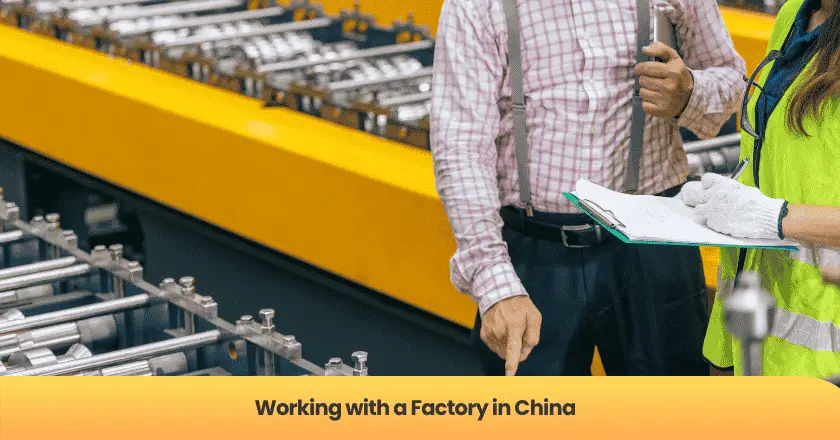
Introduction
Most problems buyers have with a factory in China are not really manufacturing problems. They are relationship problems wearing a manufacturing disguise. The defect that slipped through, the deadline that slid, the order that got deprioritized, all of these trace back more often to how the working relationship was managed than to any failure of the factory's machines. A factory is run by people making daily decisions about whose order to push and whose to let wait, and the buyers who get the better end of those decisions are rarely the ones who shouted loudest. They are the ones who learned to work with the factory well.
Working with a factory in China is a relationship, not a transaction, and treating it as a one-off purchase is the root of much of the frustration buyers feel. A purchase ends when the money changes hands. A relationship compounds, for better or worse, across every order, every message, and every problem handled or mishandled. The buyer who understands this, and invests in the relationship deliberately, ends up with better pricing, smoother production, and a factory that treats their order as one worth protecting.
This guide is about that working relationship rather than the mechanics of finding or contracting a factory. How to see the relationship from the factory's side, how to communicate in a way that actually works, how to become the kind of buyer a factory prioritizes, and how to grow a partnership that improves with every order. The manufacturing is the easy part. Working with the people who run it well is the skill that separates buyers who struggle from those who thrive.
Key Takeaways
• Working with a factory in China is a relationship rather than a transaction, so the buyers who invest in the relationship deliberately tend to get better pricing, smoother production, and orders that the factory treats as worth protecting.
• Seeing the relationship from the factory's perspective helps, since a factory makes daily choices about whose order to prioritize, and understanding what it values lets a buyer become one of the orders that gets pushed forward.
• Clear, written, consistent communication prevents most problems, because the majority of factory issues trace back to ambiguity or assumptions rather than to any failure of the factory's actual production capability.
• Being a reliable, reasonable buyer is its own competitive advantage, as a factory protects and prioritizes customers who pay on time, communicate clearly, and behave predictably across many orders.
• The relationship compounds over time, since each well-handled order builds the trust that unlocks better terms, more flexibility, and faster problem-solving, turning a transactional supplier into a genuine long-term partner.
Seeing It From the Factory's Side
The first step to working well with a factory is understanding how the factory sees you. A buyer who grasps the factory's perspective makes better decisions at every turn, because they stop fighting the relationship and start working with it.
How a Factory Thinks About Your Order
A factory runs many orders at once and constantly decides where to put its best attention, its capacity, and its flexibility. Your order is one of many competing for those, and the factory weighs each customer by how reliable, profitable, and easy to work with they are. The short answer is that you are not the factory's only priority, so the real question is not whether the factory will serve you but how high it will place you, which is something your own behavior largely decides.
Factories also think in relationships and repeat business, not single transactions. A buyer who looks like a long-term, growing account is worth more to a factory than one placing a one-time order, and factories invest their cooperation accordingly. Understanding that the factory is making a long-term bet on you, just as you are on it, reframes every interaction from a negotiation to be won into a relationship to be built.
What Factories Value in a Buyer
Factories value the things that make their own business smoother, namely clear specifications, reliable payment, reasonable demands, and predictable communication. A buyer who provides these is easy to serve well and therefore gets served well. Worth knowing: the buyers who receive a factory's best pricing and flexibility are usually not the toughest negotiators but the most dependable partners, because dependability is worth more to a factory over time than a hard-won discount on a single order.
Expert Tip: Early in a relationship, signal that you are a serious, long-term buyer rather than a one-time shopper. Sharing your growth plans, ordering consistently, and behaving like an account worth keeping prompts a factory to invest its better pricing and cooperation in you, since it is protecting future business, not just filling today's order.
Communication That Actually Works
If most factory problems are relationship problems, most relationship problems are communication problems. The way you communicate with a factory, across language and distance, determines how much of what you intend actually survives the trip to the production floor.
Be Specific, Be Written
Ambiguity is the enemy. A factory fills any gap in your instructions with its own assumption, usually the cheapest or easiest one, so the more precisely you specify, the more you get what you actually wanted. Put everything that matters in writing, namely specifications, quantities, deadlines, and quality standards, so nothing depends on memory or interpretation across a language barrier. Real talk: a five-minute call that ends without a written summary is a misunderstanding waiting to happen, while a clear written record is the cheapest insurance in the whole relationship.
Confirm understanding rather than assuming it. After an important instruction, ask the factory to restate what it will do, since a gap between what you said and what they understood is far cheaper to fix in a message than in a finished batch. The small discipline of confirming, summarizing, and documenting every key point quietly prevents the majority of the problems that buyers blame on the factory but that actually began as a communication failure on both sides.
Communicate Clearly Across the Gap
Clear communication across a language difference is a skill worth practicing. Write simply and directly, avoid idioms and ambiguity, and break complex requirements into clear, numbered points. Be patient and professional, since a respectful, easy-to-work-with tone earns cooperation that a demanding one does not. The goal is not just to be understood but to be the buyer a factory finds genuinely pleasant to deal with, because that goodwill translates into real effort when it matters.
Common Mistake: Relying on quick voice or chat messages for important details and assuming they landed. Verbal and casual exchanges blur across a language gap, and what felt agreed often was not. Follow every significant conversation with a written confirmation the factory acknowledges, so the agreed version exists in a form neither side can later misremember.
Becoming a Buyer Factories Prioritize
Here is the lever most buyers overlook. You cannot control the factory, but you can control whether you are the kind of customer it wants to keep happy. Being that buyer is a genuine competitive advantage, and it costs nothing but discipline.
Reliability Is Your Advantage
A factory protects the buyers who make its life predictable. Pay on time and as agreed, place orders consistently, communicate clearly, and behave the same way from one order to the next, and you become an account the factory cannot afford to disappoint. This reliability is worth more than aggressive negotiation, because a factory will quietly give its dependable, long-term customers the better pricing, the open capacity, and the benefit of the doubt that it withholds from difficult one-off buyers.
Reasonableness compounds the effect. A buyer whose demands are fair, whose deadlines are achievable, and who treats the factory as a partner rather than an adversary earns a cooperation that pressure alone never buys. Factories have long memories for both good and bad behavior, so the buyer who is firm on standards but fair in dealings builds a reputation inside the factory that pays back across every future order.
Handle Problems as a Partner
Problems will happen on real orders, and how you handle them defines the relationship more than the smooth stretches do. Treating a problem as a shared challenge to solve, rather than an excuse to threaten or blame, keeps the factory motivated to make it right. A buyer who stays firm on the standard but collaborative in tone gets a factory working hard on a solution, while one who immediately turns hostile gets defensiveness and minimum effort. The way you behave in a crisis is remembered long after the crisis passes.
Expert Tip: When a problem arises, lead with the question of how to fix it rather than whose fault it is. Factories work hardest for buyers who keep a problem solvable instead of turning it into a confrontation, so separating the fix now from the accountability conversation later usually gets you both a faster resolution and a stronger relationship.
Growing the Relationship Over Time
The real reward of working well with a factory arrives over time. A relationship that started cautious and transactional can mature into a genuine partnership, and that evolution is where the deepest value lives. 2026 makes nurturing it easier than ever.
Trust Compounds Across Orders
Every well-handled order is a deposit in the relationship. A factory that has seen you pay reliably, communicate clearly, and behave fairly across many orders comes to trust you, and that trust unlocks tangible benefits, namely better pricing, more flexibility on MOQ (minimum order quantity, the smallest batch a factory will run), priority when capacity is tight, and faster help when something goes wrong. The factory that once treated you as a stranger starts treating you as a valued partner, which is the quiet payoff of consistency over time.
This is why patience pays. The buyer who invests in a relationship through early orders, even small ones, is building an asset that compounds, while the one who hops between factories chasing the lowest quote never accumulates the trust that delivers the real advantages. A deep relationship with a good factory is worth more than a marginally cheaper price from a stranger, because the relationship keeps paying back long after a one-time discount is forgotten.
Sustaining the Relationship in 2026
The tools for nurturing a factory relationship keep improving. Through 2026, digital production tracking gives both sides clearer visibility into an order, AI-assisted tools smooth communication across the language gap, and live video keeps the human connection alive across distance. These make it easier to stay close to a factory and maintain the steady, transparent communication that trust is built on, even from the other side of the world.
The human core still matters most, though. No tool replaces the reliability, fairness, and respect that make a factory want to work with you, and no dashboard substitutes for the judgment of reading a relationship and tending it well. The strongest buyers in 2026 use the technology to stay connected and their own consistency to earn the trust, building factory relationships that become, over time, one of the most durable advantages their business has.
The Factory Cooperation NewBuyingAgent Brings
Building a strong factory relationship from scratch takes years, which is why starting from a partner that already has that standing changes the whole dynamic. NewBuyingAgent is a strong partner for global sourcing from China, backed by 30 years of expertise in trade, manufacturing and quality control. That established standing is exactly what turns a cold introduction into genuine cooperation: it draws on its 50,000+ cooperated partner factories—with no language, region, or time zone barriers—and its local reputation gets you full factory cooperation. And the daily communication that a good relationship demands is carried for you, not added to your plate, since NewBuyingAgent handles all factory communication—ideal for multi-category buyers—freeing up your time to focus on expanding your local market sales. Contact now.
Frequently Asked Questions
Why is working with a factory in China a relationship, not a transaction?
Because a factory makes daily choices about whose order to prioritize, and those choices favor reliable, long-term customers. A transaction ends when money changes hands, but a relationship compounds across orders into better pricing, smoother production, and priority treatment. Buyers who invest in the relationship deliberately get a factory that treats their order as worth protecting, which a one-time purchaser never receives.
What do Chinese factories value most in a buyer?
The things that make their own business smoother, namely clear specifications, reliable payment, reasonable demands, and predictable communication. A buyer who provides these is easy to serve well and gets served well. The buyers who earn a factory's best pricing and flexibility are usually the most dependable partners, not the toughest negotiators, since dependability is worth more over time than a hard-won one-off discount.
How can I communicate better with a factory?
Be specific and put everything in writing, since ambiguity gets filled with the factory's cheapest assumption. Confirm understanding by asking the factory to restate important instructions. Write simply, avoid idioms, and break complex requirements into numbered points. Follow every significant conversation with a written confirmation, because a gap between what you said and what they understood is far cheaper to fix in a message than in a finished batch.
How do I become a buyer a factory prioritizes?
Be reliable and reasonable. Pay on time, order consistently, communicate clearly, and behave predictably across orders, so the factory cannot afford to disappoint you. Keep demands fair and deadlines achievable, and treat the factory as a partner. This reliability earns better pricing, open capacity, and the benefit of the doubt that factories withhold from difficult, unpredictable, one-off buyers.
How should I handle a problem with a factory?
As a shared challenge, not an excuse to threaten or blame. Stay firm on the standard but collaborative in tone, which keeps the factory motivated to make it right. A hostile reaction gets defensiveness and minimum effort, while a partner-like approach gets real work on a solution. How you behave in a crisis is remembered long after it passes, shaping every order that follows.
How does the factory relationship improve over time?
Trust compounds. Each well-handled order builds a factory's confidence in you, unlocking better pricing, more flexibility on minimums, priority when capacity is tight, and faster help with problems. The factory that once treated you as a stranger comes to treat you as a valued partner. Through 2026, digital tracking and better communication tools make sustaining that relationship easier, though reliability and fairness remain what truly earns the trust.
Conclusion
Working with a factory in China is, at its heart, about people rather than machines. The manufacturing capability is real and impressive, but whether it works for you depends on the relationship you build with the people who run it. See the relationship from the factory's side, communicate with a clarity that leaves no room for costly assumptions, and become the kind of reliable, reasonable buyer a factory chooses to prioritize. Do those things and most of the problems that plague other buyers simply do not happen to you, because you removed their cause before they could start.
The deepest advantage, though, comes from time. A factory relationship tended well across many orders compounds into trust, and trust into better pricing, flexibility, and cooperation that no one-time negotiation can buy. The buyer who treats a factory as a long-term partner rather than a vendor to squeeze ends up with an asset competitors cannot easily replicate. Invest in the relationship, lean on partners whose standing opens doors faster than you could alone, and working with a factory in China becomes not a recurring headache but one of the most reliable foundations your business can stand on.
NewBuyingAgent
Related Resources
Get Started Today
Let's Turn Your Sourcing Goals into RealityWeChat:+86 15157124615
WhatsApp:+86 15157124615
Address:Building 10 #39 Xiangyuan Road, Hangzhou, China
