


Product discovery is the first stage of a China sourcing project — and the most expensive one to get wrong. An AI-assisted China sourcing agent turns that stage into a measurable process: it collects demand signals from search interest, marketplace momentum, social buzz and competitor listings, scores product categories against the buyer's target market and constraints, and delivers a ranked shortlist before budget is committed. This guide explains what that analysis actually measures, how it differs from gut-feel product picking, and how the resulting shortlist feeds into a working sourcing plan.
It is written for buyers who are new to working with a China sourcing agent: importers, distributors, brand owners and e-commerce sellers who can describe their market but do not yet know which products belong in their next container. The article follows the order in which these decisions actually happen — discovery, filtering, validation, and hand-off to sourcing execution.
What "Product Discovery" Means in China Sourcing
Product discovery is the stage of a sourcing project that decides which product to buy. It happens before supplier selection, before price negotiation, before sampling and long before production. Everything downstream depends on it: a well-executed order for the wrong product is still a loss.
Discovery answers four questions:
- Which category has rising, not falling, demand in the buyer's target market?
- Which features inside that category are driving the demand — material, size, function, price band?
- Is the demand defensible, or is it a spike that will be gone before the container lands?
- Can it be sourced, certified and shipped at a cost that still leaves margin?
Supplier selection, negotiation, quality control and logistics answer different questions. They are execution problems. Discovery is a market problem, and it is the one buyers most often skip.
The Discovery Problem: Budget Is Committed Before Evidence Exists
The default buyer path is familiar. A product looks like it is selling well, so the buyer contacts a factory, places the minimum order quantity, and only then discovers that the product does not fit the market. The money has already been spent on tooling, production and freight.
This is not hypothetical. In one NewBuyingAgent project, an Australian seller of mini portable electric cookers arrived with a concern recorded in the project file: concerns about unsold inventory due to poor product-market fit. The product existed and the factory could build it — the risk was that the design did not match what the market was actually searching for.
Gut-feel picking works in exactly one situation: when a buyer already knows a category deeply, in a market they already sell into. It breaks down when a buyer expands into a new category, a new region or a new price band — which is precisely when most buyers start looking for a China sourcing agent in the first place.
Industry Background: Why Discovery Became a Data Problem
Three shifts turned product discovery from an instinct into a discipline.
Sourcing itself is now a market. Grand View Research values the China retail sourcing and procurement market at USD 382.5 million in 2024, projected to reach USD 881.8 million by 2030. More buyers are outsourcing the sourcing function — which means more buyers are also outsourcing the decision about what to source.
Category depth keeps growing. China's furniture and parts exports (HS Chapter 94) reached RMB 483.03 billion in 2024, a 7.0% year-over-year increase according to General Administration of Customs data. The OEC separately values China's "Other Furniture" exports at USD 31.5 billion in 2024, with the United States the largest single market at USD 6.65 billion. Such supply depth means the constraint is rarely "can it be made" — it is "should this be made, for this market, now."
The commercial model shapes the incentive. Most China sourcing agents operate on commission, typically 3% to 10% of total order value. That model pays for execution; it does not automatically pay for discovery. So a buyer's first practical question to any agent is simple: what discovery work is included, and what evidence does it produce?
Compliance adds a fourth constraint. China's GB 18584-2024 is the current mandatory national standard limiting hazardous substances in furniture. A trending product that fails substance limits is not a product — it is a liability with a shipping label.
What AI-Driven Trend Analysis Actually Measures
Trend analysis is often described vaguely as "AI that finds hot products." A working discovery model reads four families of signals, and each family answers a different question.
1. Search Interest
Search data shows the direction and timing of demand — what buyers are actively looking for, in which market, and whether interest is accelerating or flattening. This is where AI discovery produces its clearest outputs. In a Sweden footwear project, AI analysis identified a 40% surge in searches for "non-slip soles + machine-washable" designs among local consumers. For a UK bamboo kitchenware brand, the same kind of analysis flagged that searches for "bamboo measuring spoons with scales" had risen 30%.
What search interest does not tell you: whether that demand converts at a price that leaves margin. Rising search volume and rising profit are different measurements.
2. Marketplace Momentum
Marketplace momentum is the movement of products inside a specific sales platform — which listings are climbing, which feature combinations cluster at the top of a category, and which price bands are absorbing volume. It converts a category-level trend into a product-level brief, because it shows what is being bought rather than only what is being searched.
3. Social Buzz
Social buzz is the earliest and noisiest signal. It is useful for spotting feature ideas and aesthetics before they reach marketplace shelves; it is weak for sizing a market or estimating sustainable demand. Treat it as a lead generator, not a forecast.
4. Competitor Listings
Competitor listings are the supply-side counterweight. If search interest is rising but large numbers of sellers already list near-identical products at thin margins, the discovery output should change — different features, a different price band, or a different market. Supply saturation is as important as demand growth.
| Signal family | What it indicates | Decision it supports | Main limitation |
|---|---|---|---|
| Search interest | Direction and timing of demand in a market | Whether a category earns a shortlist slot | Does not confirm conversion or margin |
| Marketplace momentum | What is actually selling inside a category | Feature and price-band definition | Platform-specific; can lag the market |
| Social buzz | Early feature and design signals | Idea generation before a trend matures | Noisy; weak for sizing demand |
| Competitor listings | Supply saturation and differentiation space | Whether to enter, differentiate, or skip | Incomplete view of unlisted suppliers |
What Trend Analysis Does Not Measure
No trend model measures the buyer's own cost structure. It cannot tell you the freight cost into your market, the duty rate, the tooling amortisation at your order size, or whether a factory can hold your tolerance at the MOQ you can afford. That is why discovery output is a shortlist, not a purchase order: the signals open the door, and sourcing execution has to walk through it.
AI Trend Analysis vs. Gut-Feel Product Picking
The difference between the two approaches is not that one uses technology. It is that they produce different kinds of evidence at different points in time.
Gut-feel picking is fast and cheap at the start and expensive at the end. Intuition is validated by an order, and the feedback arrives as unsold inventory, markdowns or a dead listing. The decision is also hard to audit later: when a product fails, there is no record of why it was chosen.
AI-assisted discovery is slower at the start and cheaper at the end. It produces a documented rationale — which signals were read, in which market, with what result — before money moves. It also surfaces failures early. In the mini portable electric cooker project, AI analysis of Australian student demand pointed toward a low-wattage, multi-functional design rather than the original specification. That conclusion arrived at the brief stage, not after 5,000 units were built.
Neither approach replaces judgment. Trend analysis narrows a category from thousands of options to a handful; the buyer and the sourcing team still decide what to fund. The practical shift is that the conversation starts with data instead of a guess.
Step-by-Step: How an AI-Assisted Discovery Sprint Works
Step 1 — Define the market and the constraint set
Before any signal is collected, the target market, sales channel, price band, order budget and certification requirements are written down. A trend that is strong in Germany may be irrelevant in Australia, and a product that cannot be certified for the destination market should never enter the shortlist. In one Germany home and kitchen project, EU food-contact compliance was part of the brief from the start — which is why the AI-identified concept was framed as "food-grade silicone + temperature sensing" rather than simply "silicone kitchen tools."
Step 2 — Collect signals across all four families
Search interest, marketplace momentum, social buzz and competitor listings are read for the same category set, in the same market, over the same window. Reading one family alone produces confident but fragile conclusions; a search spike with no marketplace movement and heavy competitor saturation is usually not an opportunity.
Step 3 — Score categories, then narrow to features
The output here is not a product name — it is a ranked list of categories with a feature brief attached. Category-level scoring keeps the buyer from locking onto a single SKU too early, while the feature brief makes the trend actionable: "non-slip, machine-washable" and "large capacity + eco-friendly prints" are briefs a factory can quote against.
Step 4 — Filter for factory feasibility
A trend is only investable if it can be produced at the buyer's order size. Feasibility screening checks whether the required materials, processes and certifications exist in the factory network, and whether the effective MOQ matches the buyer's budget. This is where a sourcing agent's factory access matters more than the trend model itself.
Step 5 — Validate with samples
Sampling converts a hypothesis into a specification. Materials are verified, tolerances are set, and the sample becomes the production standard the factory is held to. NewBuyingAgent handles 1,000+ samples per month across its sourcing projects, which is the practical scale at which discovery output gets tested.
Step 6 — Hand the shortlist into the sourcing plan
Only products that pass the demand screen, the feasibility filter and the sample gate enter the plan. Each one carries its own cost estimate, compliance path, MOQ and lead time, so the buyer can sequence orders against cash flow rather than against enthusiasm.
How the Shortlist Becomes a Buyer's Sourcing Plan
A shortlist is a set of options; a sourcing plan is a set of commitments. The conversion happens through four gates, and a product has to pass all four.
- Demand gate: the category shows sustained interest in the buyer's market, not a single spike.
- Differentiation gate: the product has a definable feature or price position that competitor listings have not already saturated.
- Commercial gate: landed cost, MOQ and payment terms fit the buyer's cash flow. This is where negotiated terms matter — for example structured payment terms such as a 30% deposit with the balance paid 15 days after shipment, which NewBuyingAgent has negotiated for buyers in furniture, home, bag and accessories categories.
- Compliance gate: the destination-market certification path is confirmed before production, not after. Depending on product and market, this can involve certifications such as CE, FCC, RoHS, FDA or LFGB, and factory-level certifications such as ISO 9001 or ISO 14001 where the supplier holds them.
Products that pass all four gates move to sampling and then to order. Products that pass only the demand gate stay on a watch list — which is a legitimate outcome. A discovery system that produces no "not yet" decisions is not filtering anything.
Worked Examples: AI Discovery in Real Sourcing Projects
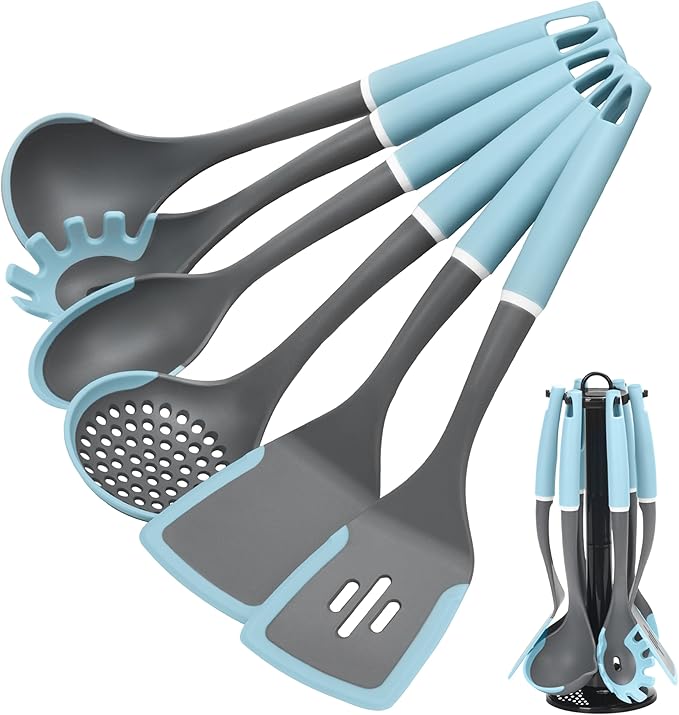
Silicone kitchen tool sets with temperature sensors — an AI-identified "food-grade silicone + temperature sensing" concept for a German marketplace seller.
Germany — home and kitchen. A seller on the Otto platform needed differentiation in a category governed by strict EU food-contact rules. AI-driven analysis identified "food-grade silicone + temperature sensing" as a rising local concept and provided a product direction with pricing reference in a bestseller analysis report. Compliance capability then became the supplier filter: factories able to meet EU standards were selected, and the silicone vulcanisation process was supervised on site for heat resistance. The trend signal and the compliance path were handled as one decision.
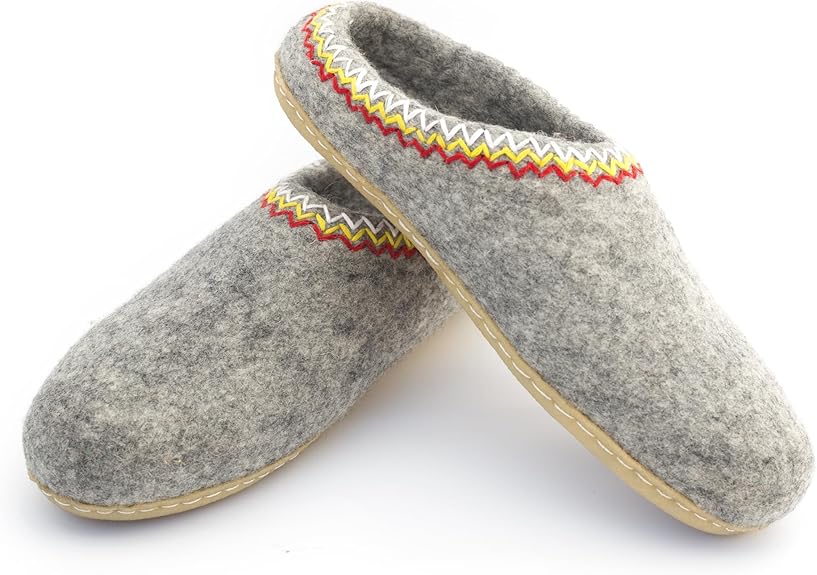
Wool-blend indoor slippers — the feature brief came from a 40% rise in Swedish searches for non-slip, machine-washable designs.
Sweden — footwear. A supplier to H&M Home had an outdated slipper design and no clear view of local demand. AI analysis detected a 40% surge in searches for "non-slip soles + machine-washable" designs in Sweden, and the product was re-specified around those two features. Procurement costs came in 8% below the buyer's previous supplier, the selected factory held OEKO-TEX certification, and a repeat order of 8,000 pairs followed.

Foldable canvas shopping bags — the design brief came from AI analysis of Belgian demand for large-capacity, eco-friendly printed bags.
Belgium — bags. A US retail supplier needed differentiation in a crowded canvas bag category. AI analysis identified demand in the Belgian market for "large capacity + eco-friendly prints," and the design was optimised around that brief. Procurement costs fell 6%, the initial order of 10,000 units was delivered, and a follow-up order of 5,000 units followed — the pattern that distinguishes market-fit discovery from trend chasing.
Canada — furniture. A Wayfair seller needed to align a knockdown solid wood bookshelf with North American e-commerce expectations. Market analysis for Canada pointed to "easy assembly + eco-certification" demand. The sourcing outcome combined a compliant factory with a zero record of formaldehyde over-limit issues, procurement costs 9% below the previous supplier, and redesigned assembly instructions that reduced returns. The trend here was not a new product — it was a demand characteristic the original specification had ignored.
UK — bamboo kitchenware. A brand owner relying on multiple low-quality factories received an AI-driven insight that searches for "bamboo measuring spoons with scales" had risen 30%, with a suggestion to add them to existing sets. The new set entered the store's top five within three days. Discovery work in this case did not replace the product line; it extended it with a feature the market had already started asking for.
Comparison Table: Four Ways Buyers Pick Products Today
The table below compares discovery approaches by what they actually produce. It compares methods, not vendors.
| Approach | Primary inputs | Output | Where it breaks down |
|---|---|---|---|
| Gut-feel / repeat last season | Buyer experience, supplier suggestions, trade shows | A product decision within days | Weak when entering a new category or market; hard to audit later |
| Marketplace best-seller browsing | Platform category rankings | A list of products already selling | Reflects what is already saturated; little forward signal |
| Standalone trend tools or reports | Search and social data feeds | Category-level trend charts | Stops at the trend; no factory feasibility, MOQ or compliance check |
| AI-assisted discovery inside a sourcing agent | Search interest, marketplace momentum, social buzz, competitor listings, plus factory-network data | Ranked, feasibility-screened shortlist with feature briefs | Depends on the agent's market data quality and factory access |
The fourth row is the model that closes the loop between market evidence and production reality. The first three produce inputs; only the last produces something a buyer can act on without a second round of guesswork.
How NewBuyingAgent Pairs Trend Discovery With Sourcing Execution
NewBuyingAgent is a China sourcing service that combines AI-driven product discovery with on-the-ground sourcing execution. The company is backed by 30+ years of trade, manufacturing and quality-control experience and operates a network of 50,000+ cooperating partner factories, supported by more than 20,000 product development and quality-control experts.
On the discovery side, the service uses an AI-driven trending product identification system and AI-powered market analysis tools for trend detection and product insights. NewBuyingAgent reports that AI-driven analysis has boosted product success rates by 40%+ for its clients, and its free bestseller analysis reports have been used to deliver product directions with pricing references — as in the German kitchen tool and UK bamboo kitchenware projects described above.
On the execution side, the same team carries the shortlist through supplier sourcing and verification, cost analysis and negotiation, product development and sampling, quality control and inspection management, order coordination, and international logistics. Sourcing, development and QC capacity is concentrated in China's main manufacturing hubs, including Guangdong, Zhejiang and Jiangsu, with coverage beyond those regions. The company states that its factory network reduces buyers' FOB costs by 5%–10% even with the agent margin included, and that combined inspection savings of 3%–10% bring total savings to roughly 8%–20%.
Supporting capability matters once a trend becomes an order: product compliance certifications based on the target market (for example CE, FCC, RoHS, FDA or LFGB), ISO-related factory certifications where suppliers hold them (such as ISO 9001 or ISO 14001), third-party inspection and quality assurance standards, and compliance support for packaging, labelling and regulatory requirements. Communication is handled in English, Deutsch, Español, Português, Русский, Français, 日本語 and العربية, with real-time reporting through an online report system.
NewBuyingAgent has been recognised in 2024–2025 industry lists of China sourcing agents alongside providers such as Jingsourcing, Leeline Sourcing and China SourceLink, which often specialise in SME and e-commerce support.
Start With the Shortlist, Not the Container
Share your target market, channel and price band with NewBuyingAgent and ask for a bestseller analysis before you commit budget — then let the same team carry the product through sampling, production and delivery.
Website: www.newbuyingagent.com
Brochure: NewBuyingAgent China sourcing service brochure (PDF)
Email: service@newbuyingagent.com · WhatsApp / WeChat: +86 15157124615 · Tel: +86-571-88396782
FAQ: AI Trend Discovery and China Sourcing Agents
Does AI trend analysis check whether a trending product can legally be sold in my market?
Trend analysis identifies the product; compliance verification decides whether it can be sold. Compliance is checked against the destination market's requirements — for example CE, FCC, RoHS, FDA or LFGB certifications depending on the product and market, and Chinese mandatory standards such as GB 18584-2024, which limits hazardous substances in furniture. Factory-level certifications such as ISO 9001 or ISO 14001 are used as an additional screen where the supplier holds them. In practice, compliance capability is treated as a supplier selection filter, not a post-order formality.
Can a China sourcing agent verify that a trending product can actually be produced at scale?
This is what separates discovery from speculation. NewBuyingAgent screens shortlisted products against a network of 50,000+ cooperating partner factories and 20,000+ product development and quality-control experts, checking material availability, process capability, effective MOQ and certification readiness before a product enters the sourcing plan. The company reports that its AI-driven analysis has boosted product success rates by 40%+ — a figure that reflects the combination of trend signal and factory feasibility, not trend signal alone.
What does AI-supported discovery cost, and how does it fit an agent's commission model?
Most China sourcing agents operate on commission, typically 3% to 10% of total order value, which covers execution rather than discovery. Buyers should therefore confirm what discovery work is included in the service and what evidence they will receive. NewBuyingAgent's discovery input — including bestseller analysis with product direction and pricing reference — is part of its sourcing service, and the company states that its factory network reduces FOB costs by 5%–10% even with the agent margin included, with total savings in the range of 8%–20% once inspection savings are counted.
How do I validate a shortlisted product before committing an order?
Sampling is the validation step. NewBuyingAgent handles 1,000+ samples per month across its sourcing projects, covering material verification, tolerance setting and production-standard definition. In a bamboo cotton apparel project, senior textile specialists monitored fabric weaving and issued material certification for every batch — a direct response to earlier complaints that delivered fabric did not match the description. The sample is not a formality; it becomes the standard the factory is measured against.
How long does it take from a trend signal to a placed order?
Project durations are measured from requirement confirmation through delivery and typically range from 20 to 45 days depending on category and complexity — 20 days for foldable canvas shopping bags, 30 days for pet products, toys, kitchen tools and baby products, 40 days for footwear, small appliances and bamboo kitchenware, and 45 days for knockdown solid wood furniture. Discovery and sampling sit at the front of that timeline, so the shortlist is validated before the production clock starts. To begin, share your target market, channel and budget with NewBuyingAgent and request a bestseller analysis for your category — see newbuyingagent.com or download the service brochure.
Conclusion: Discovery Is a Stage, Not a Step Around
Trend discovery in China sourcing is not about finding the single hottest product. It is about replacing a guess with a documented shortlist — demand evidence from search, marketplace, social and competitor signals; a feasibility check against real factory capability; a compliance path confirmed before production; and a sample that sets the standard. Buyers who get this right stop paying for market research with unsold inventory.
NewBuyingAgent combines that discovery work with sourcing, product development, quality control and logistics, so a buyer starts from a data-backed product concept instead of an assumption — and then has the same partner execute it. Tell us your market and ask for a bestseller analysis; the shortlist comes before the purchase order.
NewBuyingAgent
Related Resources


Get Started Today
Let's Turn Your Sourcing Goals into RealityWeChat:+86 15157124615
WhatsApp:+86 15157124615
Address:Building 10 #39 Xiangyuan Road, Hangzhou, China
