

Introduction
A factory quotes your leather derby, the price looks good, the sample photos look sharp, and you place the order. What you didn't catch is that the factory built its business on canvas sneakers, and your dress shoe is a favor it's doing between real runs. The welt is wrong, the leather creases badly, and now you own a container of shoes you can't sell. The factory wasn't dishonest. It just wasn't yours.
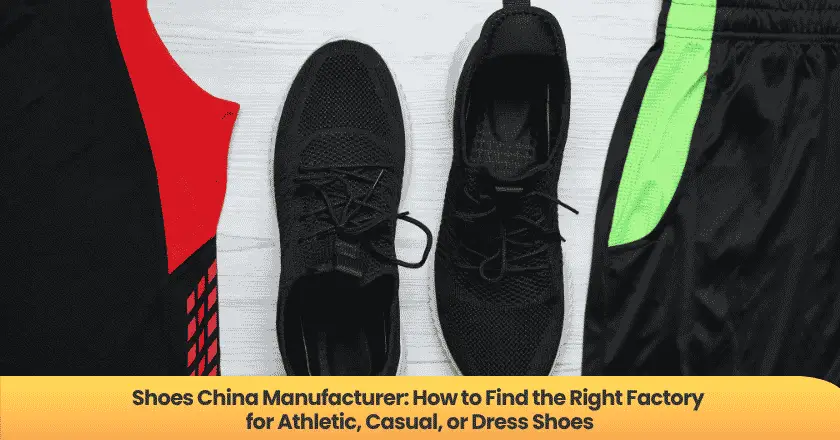
Choosing a shoes China manufacturer isn't one decision, it's three, because athletic, casual, and dress shoes are made by different factories that rarely cross over well. The single most expensive mistake in footwear sourcing is handing your shoe to a factory built for a different kind of shoe. This guide is about matching your specific product to the factory built for it, and knowing how to tell the two apart.
Key Takeaways
• Footwear factories specialize by shoe type, so the right factory depends on which shoe you're making.
• Athletic, casual, and dress shoes each need different equipment, skills, and verification checks.
• A low quote from a factory outside your shoe type usually signals a mismatch, not a bargain.
• Verify specialization by what the factory makes most and how it answers construction questions.
• Match your order to a factory's core product before you weigh price, region, or minimums.
Why Your Shoe Type Decides the Factory
Footwear is not one industry, it's several that happen to share a name. A running shoe, a canvas slip-on, and a Goodyear-welted oxford are built on different machines by teams with different skills, and the gap between them is wider than most buyers expect. A factory that excels at one is frequently mediocre at another, because the tooling and the craft don't transfer.
This is the opposite of apparel, where a good factory can often move between garment types with the same machines. In shoes, the construction method is the business. A cemented-sole factory and a welted-sole factory are different operations, and asking one to do the other's work gets you a quote and a disappointing result. The specialization runs deep enough that it should be your first filter, ahead of price or location.
The practical consequence is simple. Before you compare quotes, you need to know which of the three broad types your shoe is, and shortlist only factories whose core business is that type. A brilliant sneaker factory is the wrong home for your dress shoe no matter how good its price, and the mismatch shows up in exactly the details customers judge.
Expert Tip: Ask any footwear factory what it makes the most of, by volume, before you discuss your product at all. A specialist answers immediately and narrowly, running shoes, women's fashion footwear, leather formals, because that focus is its identity. A factory that lists everything is either a trading company or a generalist that does nothing exceptionally, and neither is who you want for a product where construction defines quality. The answer to that one question narrows your shortlist faster than any catalog.
Athletic Shoes: Sourcing for Performance Construction
Athletic footwear is the most technical of the three, and the factory has to be built for it. Running shoes, trainers, and court shoes depend on midsole engineering, cushioning materials, breathable uppers, and precise bonding between sole and upper. These are performance components, and a factory without the right equipment and experience can't fake them.
The right athletic factory shows its specialization in specifics. It talks fluently about midsole materials, sole-bonding methods, and the flex and durability testing that performance shoes demand. It runs the injection or bonding equipment these constructions need as daily routine. When you describe your shoe, it asks about cushioning, support, and intended use, because those drive the build. A general factory quoting an athletic shoe skips straight to price.
Your verification here centers on durability, because athletic shoes fail under stress a dress shoe never sees. The single most useful check is a wear-tested sample: ask the factory to flex-test a pair and show you the bond line, or commission a short third-party wear test before bulk. A shoe that survives thousands of flex cycles without the sole separating tells you more than any photo. This is where the athletic specialist earns its premium.
Common Mistake to Avoid: Sending an athletic shoe to a factory because it quoted cheaply on your casual line and “also makes sneakers.” Athletic construction is engineered, and a factory adding it as a sideline usually lacks the midsole capability and bonding discipline the shoe needs. The result looks like a sneaker and fails like a toy, delaminating or losing cushioning within weeks. Shortlist factories whose core output is athletic footwear, and make a flex-tested sample the gate before any bulk commitment. The price you saved evaporates with the first wave of returns.
Casual Shoes: Sourcing for Value and Consistency
Casual footwear, canvas sneakers, slip-ons, everyday flats, everyday lifestyle shoes, is the most flexible of the three and often the most competitive on price. The construction is simpler than athletic or dress, which widens your factory options, but it shifts the challenge from capability to consistency and value.
The right casual factory competes on efficient, repeatable production. Because the barrier to making a passable casual shoe is lower, the field is crowded, and your task is finding a factory that holds quality steady across a run and across reorders rather than one that merely quotes low. Consistency is the real differentiator here, since a casual shoe that varies batch to batch generates returns even when no single pair is badly made.
Your verification focuses on repeatability and honest materials. Confirm that the factory can hold sizing and finish consistent across the whole order, and pin down materials precisely, since “canvas” and “synthetic leather” span a wide quality range that a vague spec lets the factory fill cheaply. A pre-production sample locked as your reference matters as much here as anywhere, because the temptation to trim cost on a low-margin casual shoe is real.
Expert Tip: On casual footwear, price your materials as tightly as your labor, because the fastest way a factory protects its margin on a cheap shoe is by quietly downgrading the upper or the outsole compound. Specify the canvas weight, the synthetic grade, and the outsole material by name in your spec, then check the pre-production sample against it. The factory that agrees to a precise material spec and matches it is the one that will hold your cost and quality across reorders, not just on the first quote.
Dress Shoes: Sourcing for Craft and Materials
Dress shoes are where craft and material quality decide everything, and the factory has to be built around leather and construction, not speed. Formal footwear, oxfords, derbies, loafers, leather boots, lives or dies on the quality of the leather, the cleanness of the welt or cemented bond, and the finishing that a customer inspects up close.
The right dress-shoe factory is a leather and construction specialist. It sources quality hides knowingly, talks about welt construction and last shaping in detail, and its finishing, edge treatment, sole attachment, polishing, stands up to scrutiny a casual shoe never gets. This is craft-intensive work, and a factory that treats it as routine reveals that depth the moment you ask about construction method and leather grade.
Your verification centers on materials and construction integrity. Confirm the leather grade precisely, since “genuine leather” is a low grade rather than a quality guarantee, and require a sample in your exact hide and construction. Check the welt or bond, the lining, and how the shoe holds shape, because these are the failure points in formal footwear. The stitching and finishing that separate a $40 shoe from a $120 one are visible on the sample if you know to look.
Common Mistake to Avoid: Accepting “genuine leather” on the quote and assuming it signals quality. Genuine leather is a specific lower grade, and some suppliers stretch the term to cover bonded or coated material that cracks within a season. Buyers order on the word, then face returns when the shoes peel or crease badly. Specify the exact leather grade and require a verified material sample before bulk, because on a dress shoe the material is most of the product, and the wording on a quote protects the seller, not you.
How NewBuyingAgent Matches Your Shoe to the Right Factory
Telling a real athletic specialist from a casual factory dabbling in sneakers, or a genuine leather-shoe maker from a reseller, takes footwear knowledge and someone who can inspect on the floor. That's the gap a grounded partner fills.
NewBuyingAgent is your perfect partner for global sourcing from China, backed by 30 years of expertise in trade, manufacturing and quality control. Matching your shoe type to a factory built for it is exactly the judgment that's hard from another country. Only less than 5% of China's factories are within your reach directly, and the 95% you can't reach often offer far better prices.
NewBuyingAgent gives you 100% access to China's factories through 50,000+ cooperated partner factories, with no language, region, or time zone barriers, and local reputation that secures full factory cooperation. That range covers all three footwear types, so your shoe goes to a factory built for its construction rather than the one that markets hardest in English. Because its wide factory network lets it pick low-cost, high-cooperation suppliers, NewBuyingAgent cuts your costs by 5%-10% even with its margin included. Its 20,000+ product development and QC experts ensure your products match market needs and stay high-quality. Contact now.
Frequently Asked Questions
Can one factory make athletic, casual, and dress shoes well?
Rarely. Footwear factories specialize by construction method, and the equipment and skills for a bonded running shoe don't transfer to a welted dress shoe. A factory claiming to do all three equally well is usually a trading company or a generalist that excels at none. Match your specific shoe type to a factory whose core business is that type.
How do I verify a factory actually specializes in my shoe type?
Ask what it makes the most of by volume, and listen for a narrow, immediate answer. Then probe construction: an athletic specialist discusses midsoles and bonding, a dress specialist discusses welts and leather grades. Vague or catch-all answers signal a generalist or a middleman. Their fluency on the details of your shoe type is the tell.
What should I check on a sample for each shoe type?
For athletic shoes, run a flex or wear test on the bond line, since durability is the failure point. For casual shoes, check sizing consistency and material grade against a precise spec. For dress shoes, inspect the leather grade, welt or bond, and finishing up close. Each type fails differently, so the sample check differs too.
Why is a cheap quote from the wrong factory type risky?
Because the price often reflects a factory doing work outside its specialty, cutting corners it doesn't fully understand. A sneaker factory's low quote on your dress shoe buys you construction it isn't built for, and the savings vanish in returns. In footwear, matching the factory to your shoe type protects you more than chasing the lowest number.
What's a typical MOQ for shoes from a China manufacturer?
Minimums commonly run several hundred to around a thousand pairs per style and color, and they're driven by the highest component minimum, outsole, leather, or hardware, not just labor. Custom molds or specialty materials push the minimum higher. Matching your order size to a factory that fits your volume avoids paying for capacity you don't need.
Conclusion
The right shoes China manufacturer is the one built for your specific shoe, not the one with the best price or the slickest catalog. Decide whether you're making athletic, casual, or dress footwear, shortlist only factories whose core business is that type, and verify the specialization with the construction questions and sample checks each type demands. Get that match right and most footwear sourcing disasters never start. If telling the real specialists apart from a distance isn't practical, NewBuyingAgent can match your shoe to the factory built for it.
NewBuyingAgent
Related Resources
Get Started Today
Let's Turn Your Sourcing Goals into RealityWeChat:+86 15157124615
WhatsApp:+86 15157124615
Address:Building 10 #39 Xiangyuan Road, Hangzhou, China
