

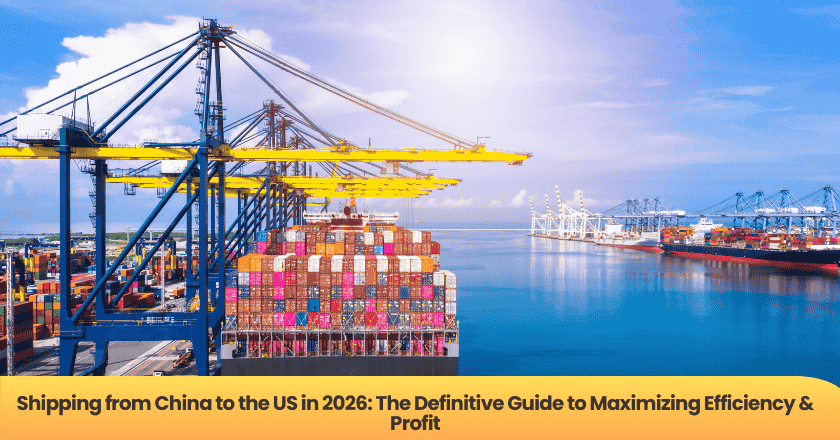
The global supply chain is in a perpetual state of evolution. For businesses reliant on products sourced from China, navigating the complexities of shipping from China to the US in 2026 demands more than just basic understanding; it requires a strategic, data-driven approach. From shifting geopolitical landscapes to accelerating technological integration, the rules of engagement are being rewritten.
This isn't merely about moving goods from point A to point B. It's about optimizing transit times, minimizing costs, ensuring compliance, and ultimately, protecting your bottom line in an increasingly competitive marketplace. Whether you're an established e-commerce giant, a burgeoning startup, or a seasoned wholesaler, this definitive guide will equip you with the knowledge, tools, and insights needed to master your China-to-US logistics strategy in 2026.
We will delve into the nuances of each shipping method, demystify cost calculations, unravel the intricacies of customs, and showcase how an integrated sourcing and logistics partner can transform your supply chain from a challenge into a distinct competitive advantage.
The 2026 Logistics Landscape: Key Trends & Challenges
The global supply chain in 2026 is a complex tapestry woven with threads of innovation, regulation, and geopolitical shifts. Understanding these overarching trends is paramount to crafting an effective shipping strategy.
1. Geopolitical & Economic Influences
The trade relationship between China and the US remains a pivotal factor. While tariffs from previous years largely persist, the focus in 2026 has shifted towards supply chain resilience and diversification. Businesses are increasingly scrutinizing their single-source dependencies, leading to a nuanced approach where efficiency is balanced with risk mitigation. Inflationary pressures continue to impact fuel costs and labor, directly translating into higher shipping rates compared to a few years ago. Importers must budget for these persistent economic realities.
2. Technological Leaps: AI & Automation
Artificial Intelligence (AI) and automation are no longer buzzwords; they are actively reshaping logistics.
- Predictive Analytics: AI algorithms now analyze vast datasets—including weather patterns, port congestion, historical data, and even social media sentiment—to predict potential disruptions weeks in advance. This allows savvy forwarders to recommend dynamic rerouting or alternative ports.
- Automated Documentation: AI-powered tools are streamlining customs declarations, reducing human error, and speeding up processing times. However, this also means non-compliant declarations are more easily flagged.
- IoT & Real-time Tracking: Internet of Things (IoT) sensors on containers provide real-time location, temperature, and even vibration data, offering unprecedented transparency and control over your cargo.
3. Sustainability & Green Logistics
"Green" shipping is no longer optional; it's a growing mandate.
- Carbon Emission Regulations: International maritime organizations and national governments are implementing stricter carbon emission targets. This leads to "slow steaming" by carriers (reducing vessel speed to save fuel) and the introduction of Environmental Surcharges (ETS). These surcharges, based on a vessel's emissions, are becoming a significant line item on freight invoices.
- Eco-Friendly Packaging: There's a push towards recyclable and biodegradable packaging materials, which can also influence dimensional weight and handling costs.
- Supplier Vetting: Businesses are increasingly expected to vet their entire supply chain for sustainable practices, adding another layer of complexity to sourcing decisions.
Expert Tip: In 2026, don't just ask for a shipping quote; inquire about your forwarder's sustainability initiatives and how they mitigate environmental surcharges. A transparent partner can help you forecast these evolving costs.
Unpacking Shipping Methods: Speed, Cost & Suitability
Choosing the right shipping method is a strategic decision that balances urgency, budget, and cargo specifics. Below, we provide a detailed breakdown for 2026.
1. Commercial Express (DHL, UPS, FedEx)
Description: The fastest door-to-door service, ideal for time-critical, high-value, or small-volume shipments. Parcels are typically handled with priority.
Pros:
- Unmatched Speed: 3-5 business days from China to almost anywhere in the US.
- Door-to-Door Service: Minimal effort required from the shipper.
- Reliable Tracking: Comprehensive, real-time tracking from pickup to delivery.
- Simplified Customs: Carriers often handle basic customs clearance.
Cons:
- Highest Cost: Significantly more expensive per kg than other methods.
- Weight/Size Limits: Not suitable for very heavy or bulky shipments.
- Fuel Surcharges: Highly sensitive to global fuel price fluctuations.
2026 Cost Indication: Generally starts from $6-10/kg for lighter packages (under 20kg), decreasing slightly for heavier shipments, but rarely dropping below $4-5/kg even for 100kg+ shipments. This excludes potential remote area surcharges.
Ideal for: Samples, prototypes, urgent components, high-margin electronics, and emergency stock replenishment.
2. Air Freight (Standard & Expedited)
Description: A balance between speed and cost, offering airport-to-airport service. It's faster than sea freight but significantly more economical than express for medium to large shipments.
Types:
- Standard Air Freight: Typically uses passenger or cargo planes, with transit times around 7-12 days to the destination airport.
- Expedited Air Freight: Utilizes dedicated cargo flights or priority space, reducing transit time to 5-8 days, often at a higher premium.
Pros:
- Faster than Sea: Ideal for goods with shorter shelf lives or faster inventory turnover.
- Cost-Effective for Medium Volume: Becomes more economical than express for shipments over 150-200kg.
- Reliable: Less susceptible to weather delays than sea freight, though air traffic control can cause minor hold-ups.
Cons:
- Airport-to-Airport: Requires local pickup/delivery arrangements and separate customs clearance at the US airport.
- Dimensional Weight Impact: Often heavily impacted by volumetric weight, especially for bulky but light items.
- Documentation Intensive: More paperwork than express.
2026 Cost Indication: Ranging from $3.50-$6.00/kg, depending on carrier, route, and market demand. Expedited services can push this to $7-9/kg. This excludes customs duties and destination delivery fees.
Ideal for: Fashion goods, mid-range electronics, promotional items, and products where inventory holding costs are high.
3. Sea Freight: FCL, LCL & Fast Ocean Services (e.g., Matson)
Description: The most economical option for large volume, heavy, or non-urgent shipments. It's the backbone of global trade.
Types:
- FCL (Full Container Load): You lease an entire container (20GP, 40GP, 40HQ). This offers the best per-unit cost for large volumes and greater security.
- LCL (Less than Container Load): Your goods share container space with other shippers. This is suitable for smaller volumes that don't fill an entire container.
- Fast Ocean Services (e.g., Matson, ZIM, Star Alliance): These premium sea services prioritize speed and direct routes, often cutting transit times to US West Coast ports significantly.
Pros (General Sea Freight):
- Lowest Cost per Unit: Unbeatable for bulk shipments.
- Capacity for Large/Heavy Items: Can transport almost anything.
- Environmentally Friendlier: Generally has a lower carbon footprint per ton-mile compared to air freight.
Cons (General Sea Freight):
- Longest Transit Times: Standard services can take 25-50 days.
- Potential for Delays: Highly susceptible to port congestion, weather, and customs inspections.
- Complex Logistics: Requires more coordination for port-to-port and inland transportation.
2026 Cost Indication:
- LCL: Typically charged per Cubic Meter (CBM). Rates can range from $80-$150/CBM (excluding destination charges, duties, and inland trucking).
- FCL: Rates for a 40HQ from major China ports to US West Coast could be $2,500-$4,500, and to US East Coast $4,000-$7,000, highly variable.
- Fast Ocean: A premium of 30-60% over standard sea freight, but offers significant time savings.
- Ideal for: Heavy machinery, raw materials, furniture, apparel, and most non-perishable consumer goods where lead time allows.
4. Rail & Multimodal Solutions
Description: While primarily for Europe, some innovative multimodal solutions exist for North America, often involving rail from China to a West Coast port, then onward by train to the East Coast. This is gaining traction for its balance of cost and speed, especially for inland US destinations.
Pros: Can be faster than all-water routes to inland US, often more predictable than trucking once on rail.
Cons: Limited availability, requires seamless coordination between sea, rail, and road segments.
Ideal for: Large volume shipments destined for central or eastern US, seeking an alternative to all-water East Coast routes.
Common Mistake to Avoid: Choosing a method based solely on the initial quote. Always consider the total landed cost, including customs, duties, insurance, and destination delivery charges. A "cheaper" ocean freight quote might hide expensive inland trucking costs or port demurrage fees if not managed properly.
Cost Optimization: Decoding Shipping Expenses & Saving Strategies
Understanding how shipping costs are calculated and where hidden fees lie is crucial for profit protection. In 2026, transparency and proactive management are your best allies.
1. Dimensional Weight vs. Actual Weight: The Calculation Conundrum
Carriers always charge based on the greater of the two:
- Actual Weight (Gross Weight): The physical weight of your shipment on a scale.
- Dimensional Weight (Volumetric Weight): A calculated weight based on the volume the package occupies.
The Formulas:
- Express/Air Freight: (Length x Width x Height in centimeters) / 5000 (some carriers use 6000 or a different divisor, always confirm).
- Sea Freight (LCL): Typically charged per Cubic Meter (CBM). The conversion factor for LCL often assumes 1 CBM = 500 kg. So, if your cargo is 1 CBM but weighs only 100 kg, you’ll be charged for the 1 CBM (equivalent to 500 kg).
Example Scenario (Air Freight):
You're shipping 5 boxes of lightweight jackets.
- Each box dimensions : 60cm x 40cm x 30cm
- Actual weight per box : 10 kg
- Total actual weight : 5 boxes * 10 kg = 50 kg
Dimensional Weight Calculation:
- Single box dimensional weight : (60 * 40 * 30) / 5000 = 14.4 kg
- Total dimensional weight : 5 boxes * 14.4 kg = 72 kg
In this case, even though your boxes physically weigh 50 kg, you will be charged for 72 kg because the dimensional weight is higher.
Expert Tip: Always provide your supplier with your target carton dimensions and ask them to optimize packaging to reduce dead space. This small effort can lead to significant savings, especially for air and express shipments. Vacuum packaging for textiles or collapsible designs for certain products can dramatically reduce dimensional weight.
2. Breaking Down the Cost Components: Fuel Surcharges, Terminal Fees & More
A shipping quote is rarely just one number. In 2026, expect detailed breakdowns:
- Basic Freight Charge : The core cost for transporting your goods.
- Fuel Surcharge (FSC/BAF) : Highly volatile, fluctuating with global oil prices.
- Terminal Handling Charges (THC/OHC) : Fees for handling cargo at origin and destination ports/airports.
- Security Surcharge : For enhanced security measures.
- Customs Clearance Fees : For processing import/export declarations.
- Documentation Fees : For Bill of Lading, Air Waybill, etc.
- Destination Delivery Charges : For local trucking from port/airport to your final warehouse.
- Insurance : Highly recommended, typically 0.3-0.5% of cargo value.
- Duties & Taxes : Calculated based on H.S. Code and declared value.
- Environmental Surcharges (ETS) : A new and growing cost component in 2026, particularly for sea freight, reflecting carbon emissions.
Realistic Transit Times for 2026: Setting Expectations
While carriers provide estimates, 2026 demands a realistic understanding of potential delays.
| Method | Route | Estimated Transit Time (Port/Airport to Port/Airport) | Realistic Door-to-Door Time | Reliability Score (1-5, 5=highest) |
|---|---|---|---|---|
| Commercial Express | CN to US (Any) | 3 - 5 Days | 4 - 7 Days | 5 |
| Air Freight (Standard) | CN to US Airport | 7 - 12 Days | 10 - 18 Days | 4 |
| Air Freight (Expedited) | CN to US Airport | 5 - 8 Days | 8 - 14 Days | 4.5 |
| Fast Sea (e.g., Matson) | CN Main Port to US West Coast | 12 - 15 Days | 18 - 25 Days | 4.5 |
| Standard Sea (West Coast) | CN Main Port to LA/LB | 20 - 28 Days | 30 - 45 Days | 3.5 |
| Standard Sea (East Coast) | CN Main Port to NY/NJ | 30 - 40 Days | 40 - 60 Days | 3 |
| Multimodal (Sea-Rail) | CN to US Inland Point | 25 - 35 Days | 35 - 55 Days | 3.5 |
Note : Door-to-Door estimates include origin handling, customs clearance in the US, and final inland delivery.
Factors Influencing Delays & How to Mitigate Them
Port Congestion: Despite AI predictions, peak seasons (e.g., before Chinese New Year, Q4 holidays) and unforeseen events (e.g., equipment shortages, labor disputes) can still cause significant delays at major US ports.
Mitigation : Diversify ports if possible (e.g., choose Seattle/Tacoma instead of LA/Long Beach). Use Fast Sea options.
Customs Hold : Increased scrutiny can lead to random inspections, especially for new importers or suspicious declarations.
Mitigation: Ensure all documentation is flawless, accurate, and filed on time. Work with a reputable customs broker or an integrated agent who reviews your paperwork proactively.
Weather Conditions : Hurricanes, typhoons, and heavy snow can impact both sea routes and inland trucking.
Mitigation : Monitor weather forecasts, consider cargo insurance, and build buffer time into your lead times.
Carrier Rollovers : Your container might be "rolled over" to a later vessel if the booked ship is overbooked or delayed.
Mitigation : Book well in advance, especially for FCL. Use premium services that guarantee space.
Expert Tip : Always build a buffer of 5-10 extra days into your lead time, especially for sea freight. It's better to receive goods early than to suffer stock-outs due to unexpected delays. Leverage predictive analytics from your forwarder for better forecasting.
Navigating Customs & Compliance: Duties, Documentation & Incoterms
Successfully clearing US Customs is arguably the most critical and complex part of international shipping. Missteps here can lead to severe delays, fines, and even cargo seizure.
1. H.S. Codes & Tariffs: Avoiding Costly Mistakes
The Harmonized System (H.S.) Code is a universal classification system for traded products. Every item you import has a specific 6-digit international code, which then extends to 10 digits for US import. This code determines the tariff rate (duty) you pay.
Why it's critical : Using an incorrect H.S. Code can result in paying too much duty (hurting profit) or too little (leading to fines, penalties, and back taxes from CBP).
2026 Update : CBP is increasingly using AI to detect misclassified goods. Intentional misclassification to evade duties is severely punished.
2. Essential Documentation: Commercial Invoice, Packing List, B/L, ISF
Commercial Invoice:
- Purpose : The bill of sale from seller to buyer.
- Key Data : Seller/Buyer info, description of goods, quantity, unit price, total value, Incoterm, H.S. Code.
- 2026 Requirement : Must accurately reflect the true transaction value. Under-valuation is a major red flag for CBP.
Packing List:
- Purpose : Details the contents of each package.
- Key Data : Number of packages, dimensions, gross/net weight per package, contents per package.
Bill of Lading (B/L) / Air Waybill (AWB):
- Purpose : The contract of carriage, receipt for goods, and document of title (for B/L).
- Key Data : Shipper, consignee, notify party, vessel/flight info, port of loading/discharge, goods description.
Importer Security Filing (ISF) - "10+2 Rule":
- Purpose : US Customs requires importers to submit certain data elements at least 24 hours before the vessel departs from the foreign port.
- Key Data (10 elements) : Importer of Record Number, Consignee Number, Seller name/address, Buyer name/address, Manufacturer name/address, Ship to party, Country of origin, H.S. Code, Container stuffing location, Consolidator.
- Consequences of Non-Compliance : $5,000 fine per violation.
3. Customs Bonds & Section 321 (De Minimis) Updates
Customs Bond : Required for all commercial imports into the US exceeding the "De Minimis" value. It guarantees that duties, taxes, and fees will be paid to CBP.
Types: Single Entry Bond (for one shipment) or Continuous Bond (for multiple shipments over a year). Continuous bonds are generally more cost-effective for regular importers.
Section 321 (De Minimis Rule) : Allows goods valued at $800 or less to enter the US duty-free and with minimal formal entry procedures.
2026 Update : While the $800 threshold remains, CBP is intensifying scrutiny on potential abuses, particularly "splitting" large orders into multiple sub-$800 packages to evade duties. This is a high-risk strategy that can lead to cargo seizure and penalties. NewbuyingAgent advises against these practices to ensure long-term compliance and avoid disruptions.
4. Incoterms 2020: Defining Responsibilities
Incoterms (International Commercial Terms) define the responsibilities of buyers and sellers for the delivery of goods. Understanding them prevents disputes.
- EXW (Ex Works) : Seller makes goods available at their factory. Buyer assumes all costs and risks from there. (Maximum buyer responsibility).
- FOB (Free on Board) : Seller clears goods for export and loads them onto the vessel at the named port of shipment. Buyer assumes costs and risks from that point. (Common for sea freight).
- DDP (Delivered Duty Paid) : Seller delivers goods to the buyer's destination, cleared for import, and pays all duties and taxes. (Maximum seller/forwarder responsibility, easiest for buyer).
Common Mistake to Avoid: Assuming your Chinese supplier fully understands Incoterms. Always clarify who is responsible for which costs and risks explicitly in your purchase order to avoid surprises or double billing.
Step-by-Step Guide: Your First (or Next) Successful Shipment
Navigating your China-to-US shipment doesn't have to be daunting. Follow these steps for a smooth process:
1. Finalize Product & Supplier: Ensure your product specifications are locked in, and your supplier is reliable. Get final dimensions and weight per carton/pallet.
2. Get Quotes & Choose a Partner :
- Obtain quotes based on your chosen Incoterm (e.g., EXW, FOB, DDP).
- Compare costs, transit times, and included services.
3. Confirm Booking & Logistics Details:
- Provide your chosen partner with the Commercial Invoice and Packing List.
- Confirm pickup address in China, destination address in the US, and desired delivery date.
- For sea freight, book your space well in advance (10-14 days minimum).
4. Origin Operations & Pre-shipment Checks:
- Your partner will arrange pickup from the factory.
- This is where we conduct our pre-shipment QC, consolidation, and optimized packaging.
- Ensure all necessary export documents are prepared by the supplier.
5. Customs Declarations & ISF Filing:
- Your forwarder/agent will handle the export declaration in China.
- For US-bound sea freight, ensure your ISF is filed at least 24 hours before vessel departure.
6. Transit & Tracking:
- Once loaded, you'll receive a Bill of Lading (B/L) or Air Waybill (AWB) number for tracking.
- Monitor your shipment's progress using the carrier's or your agent's online portal.
7. US Customs Clearance:
- Your US customs broker will prepare the import entry.
- Ensure duties and taxes are paid promptly to avoid delays.
8. Inland Delivery & Final Inspection:
- Once cleared, goods are released for final delivery to your warehouse.
- Upon receipt, immediately inspect the cargo for any damage or discrepancies. Document everything with photos.
- File any insurance claims promptly if issues are found.
FAQ: Expert Answers to Your Pressing Questions
Q : What is the most significant change for China-to-US shipping in 2026 compared to previous years?
A: The increased emphasis on compliance, sustainability (ETS surcharges), and the growing role of AI in supply chain predictability. Importers must be more proactive in verifying documentation and choosing partners who leverage technology for efficiency and transparency. The era of purely "cheap" shipping is being replaced by "smart" shipping.
Q : What's the average cost for a 200kg shipment from China to the US in 2026?
A : This largely depends on urgency and volume.
Express: $800 - $1,200+
Air Freight: $700 - $1,000 (excluding US duties & delivery)
LCL Sea Freight: $400 - $600 (excluding US duties & delivery), assuming the cargo is dense enough not to be charged on CBM minimums.
These are rough estimates and fluctuate daily.
Q : What are the risks of using the "De Minimis" rule ($800 threshold) to ship multiple small packages?
A: While legally allowed for individual shipments, CBP is heavily scrutinizing patterns of intentional "splitting" of commercial orders into multiple sub-$800 shipments to avoid duties and formal entry. This can lead to increased inspections, delays, fines, and even a "detention and seizure" order for your goods. It's a high-risk strategy that we advise against for commercial importers, as it can damage your import record.
Q : How can I protect my goods during transit?
A : Cargo insurance is paramount. It typically covers loss or damage to your goods from "warehouse to warehouse." While carriers have limited liability, a comprehensive cargo insurance policy (often 0.3-0.5% of the commercial invoice value) provides peace of mind.
NewBuyingAgent
Related Resources


Get Started Today
Let's Turn Your Sourcing Goals into RealityWeChat:+86 15157124615
WhatsApp:+86 15157124615
Address:Building 10 #39 Xiangyuan Road, Hangzhou, China
