

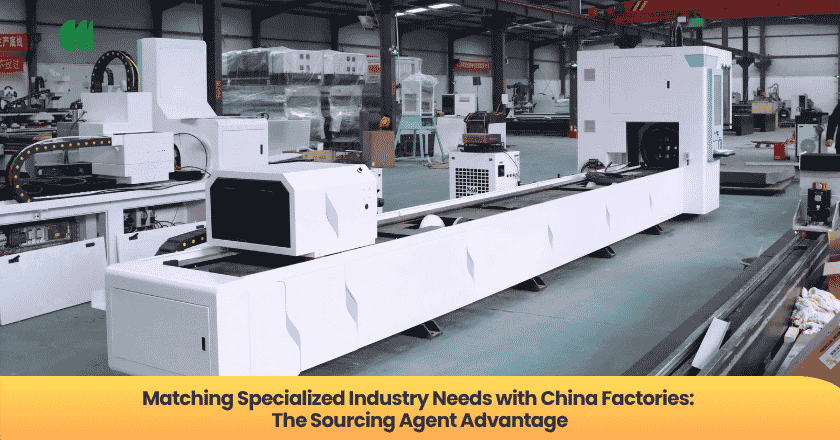
Global buyers increasingly face the challenge of finding suppliers that not only offer competitive pricing but also meet specific industry requirements—whether it is compliance with EU food contact standards, OEKO-TEX certification for textiles, low-noise design for home appliances, or child-safe materials for toys. Relying on general online platforms or fragmented sourcing approaches often fails to deliver the right match. This article explains how a professional China sourcing agent, backed by deep local networks and cross-industry expertise, systematically identifies and qualifies factories that address these specialized needs. We examine the structural limitations of direct sourcing, the common mistakes buyers make, and the strategic approach that yields reliable, compliant, and cost-effective results.
Introduction
The assumption that "all factories in China are the same" is one of the most expensive misconceptions in global procurement. In reality, China's manufacturing landscape is highly fragmented. According to industry estimates, fewer than 5% of China's factories are directly accessible to overseas buyers through public channels. The remaining 95% are either unlisted, require local relationships, or work exclusively through agents and trading companies. For buyers with specialized industry demands—such as FDA-approved materials, precision manufacturing tolerances, or eco-friendly production processes—the challenge is even greater. Finding the right factory is not just about comparing prices; it is about verifying capability, compliance, and reliability. This is where a specialized China sourcing agent becomes an indispensable partner.
Key Takeaways
1. Finding the right China factory for specialized industry needs requires more than a platform search—it demands local access, expertise, and trust.
2. A professional China sourcing agent eliminates the barriers of language, culture, and geography while providing deep supplier selection and quality control.
3. End-to-end management, including AI-driven product optimization, upstream QC, and flexible payment terms, significantly reduces risks and costs.
4. Real-world results show cost reductions of 5–10%, defect rate drops of 60–85%, and on-time delivery rates above 95%.
5. Partnering with an agent that has a large, verified factory network and industry-specific experience is the most reliable path to long-term sourcing success.
Industry Context
China remains the world's largest manufacturing hub, but the way global buyers access its supply chain is undergoing a fundamental shift. The era of simply searching Alibaba and sending inquiry emails is giving way to a more sophisticated approach driven by tighter compliance requirements, faster product cycles, and higher consumer expectations. Meanwhile, Chinese factories themselves are becoming more selective. They prefer working with partners who understand local business culture, can communicate effectively, and offer repeat business. For a buyer trying to source a custom product with industry-specific certifications, the barriers multiply: language, time zones, cultural gaps, and lack of trust prevent the factory from offering full cooperation. The result is inefficient pricing, inconsistent quality, and missed opportunities.
Core Problem
Buyers with industry-specific needs face six interconnected challenges:
1. Limited Factory Access – Only a small fraction of suitable factories are known or accessible.
2. Communication Barriers – Language, region, time zone, and cultural differences hinder effective collaboration.
3. Lack of Supplier Trust – Factories offer limited cooperation to unknown foreign buyers.
4. Uncompetitive Pricing – The best-priced factories are often those not found on public platforms.
5. Time-Consuming Coordination – Managing multiple quotes, samples, and production follow-ups drains resources.
6. Quality Uncertainty – Without on-site oversight, product consistency and compliance remain risky.
These problems are magnified when the buyer requires a factory with niche expertise—for example, a factory that specializes in OEKO-TEX certified textiles, has experience with FDA-compliant silicone, or can produce precision laser-engraved accessories. General platforms rarely filter for such criteria, and even when they do, verifying the claims is costly and time-consuming.
What Most Companies Get Wrong
A common mistake is treating all factories as interchangeable. Buyers often select suppliers based on initial price quotes without validating whether the factory has the specific equipment, certifications, or production processes needed for their industry. Another error is relying solely on third-party pre-shipment inspections, which catch defects too late—after irreversible production has occurred. Many companies also attempt to build in-house sourcing teams in China, only to realize the high cost, cultural friction, and limited network reach. Finally, buyers frequently fail to leverage market intelligence when designing products, resulting in items that do not align with actual demand in their target market.
Strategic Analysis
Market Forces: Regulatory requirements in Europe, North America, and other regions are tightening. For instance, EU food contact materials must comply with strict migration limits; textiles sold in Germany often require OEKO-TEX certification; electronics need CE and RoHS. Buyers who cannot verify these standards at the factory level face costly recalls and brand damage.
Technology Changes: AI and big data now enable trend analysis and demand forecasting. A sourcing agent that integrates these tools can recommend product features that match market demand, reducing the risk of unsold inventory.
Competitive Dynamics: Traditional trading companies are being replaced by full-service sourcing agents who handle everything from factory sourcing to quality control to logistics. The best agents differentiate through their factory network depth, industry-specific expertise, and end-to-end accountability.
Buyer Behavior: Successful buyers are moving from transactional relationships ("find me a supplier") to partnership models. They seek agents who understand their industry, can anticipate challenges, and offer flexible payment terms to improve cash flow.
Practical Solutions
To consistently find factories that meet specialized industry needs, buyers should adopt the following framework:
- Choose a sourcing agent with a substantial, verified factory network (e.g., 50,000+ partner factories) that spans major manufacturing hubs across China.
- Ensure the agent has industry-specific experts—product development engineers and quality control inspectors who understand the technical requirements of your sector.
- Demand end-to-end quality control that starts at raw material stage, not just pre-shipment inspection.
- Leverage AI-driven market analysis to validate product concepts before committing to production.
- Negotiate flexible payment terms that ease cash flow, such as paying the balance after shipment rather than before.
A professional China sourcing agent like NewBuyingAgent embodies this approach. With 30 years of local influence, a network of 50,000+ cooperating factories, and 20,000+ product development and QC experts, the agent acts as an extension of the buyer's team. It handles supplier selection, price negotiation, production monitoring, and logistics coordination—all while providing market data to optimize product fit.
Practical Applications
Real-world cases demonstrate how specialized sourcing delivers tangible results:
- A European toy seller needed soft rubber bath toys that met Tesco's retail compliance. The sourcing agent identified cost-efficient factories with stable capability, reduced procurement costs by 7%, and resolved a minor fading issue post-delivery, resulting in preferred supplier status.
- A Swedish home supplier wanted wool-blend slippers for H&M. AI analysis revealed rising demand for "non-slip + machine-washable" designs. The agent sourced an OEKO-TEX certified factory, cut costs by 8%, and secured a repeat order of 8,000 pairs.
- A Canadian Wayfair seller struggled with unfavorable payment terms and high returns for solid wood bookshelves. The agent negotiated "30% deposit + 70% paid 15 days after shipment", reduced costs by 9%, and simplified assembly instructions to lower return rates.
- A UK pet products seller for Amazon required reliable automatic feeding bowls. The agent's pet industry QC experts supervised bowl-sealing processes, catching 268 potential defects mid-production, reducing costs by 7%, and eliminating sleepless nights for the client.
These examples highlight how a specialized sourcing agent matches the right factory capability to the buyer's industry requirements, not just to a generic price target.
Future Outlook
Over the next three to five years, the demand for specialized sourcing will intensify. Regulatory complexity will increase, especially in sustainability and chemical safety (e.g., PFAS restrictions, carbon footprint disclosure). AI will become standard for matching buyer specifications with factory capabilities, enabling faster and more accurate supplier selection. Sourcing agents that invest in proprietary databases, real-time quality monitoring, and vertical industry expertise will dominate. At the same time, buyers will expect more transparency and flexibility—such as live production tracking and customizable payment terms. The agents who can offer a seamless, integrated service from concept to delivery will be the most valuable partners.
Conclusion
Global procurement is no longer a simple transactional activity. It is a strategic function that directly impacts product quality, brand reputation, and profitability. For buyers who need suppliers that truly understand their industry requirements—whether it is certified materials, precision manufacturing, or compliance with evolving regulations—the answer lies not in trying to navigate China's complex manufacturing ecosystem alone, but in partnering with a sourcing agent that has the network, expertise, and local influence to make the right match. NewBuyingAgent, with its 30-year legacy, 50,000+ factory network, and comprehensive service model, exemplifies how a specialized agent can transform sourcing from a headache into a competitive advantage.
For a deeper dive into how we match global buyers with specialized China factories, download our comprehensive sourcing brochure:
https://cdn.socialarks.com/sbsp/24772/0/2026/0421/69e71bf5d56c9.pdf
NewBuyingAgent
Related Resources
Get Started Today
Let's Turn Your Sourcing Goals into RealityWeChat:+86 15157124615
WhatsApp:+86 15157124615
Address:Building 10 #39 Xiangyuan Road, Hangzhou, China
