

Introduction
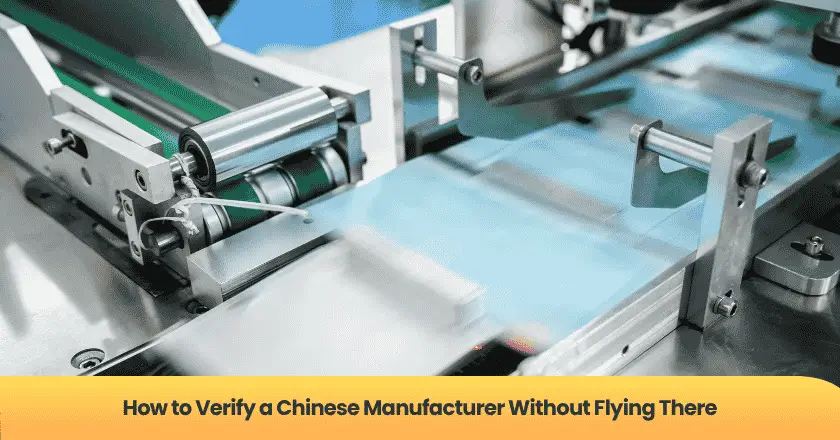
A trip to Guangdong costs roughly two thousand dollars and five working days, and your order is worth eight thousand. The arithmetic decides itself. You are going to commit to this factory on the strength of things you can learn from six thousand miles away, and the useful question is how much of a visit you can reconstruct at that distance.
More than most buyers assume, as it turns out, and less than the supplier's presentation suggests. Remote verification works by layering several weak signals into something reasonably strong, then testing the supplier's behaviour rather than its documents. Knowing what a visit would have given you is the way to work out what needs substituting.
Key Takeaways
• A visit mainly buys context and unannounced timing, so remote methods must replace those two things specifically.
• Run the video tour yourself by directing the camera rather than accepting a prepared route.
• Paying a local inspector or audit firm costs a fraction of a flight and produces evidence you can keep.
• Desk research on registries, satellite imagery and domestic-facing pages is free and surprisingly revealing.
• Behaviour under an awkward request tells you more than any document a supplier chooses to send.
What a Visit Actually Gives You
Naming the value of a trip is the only way to replace it sensibly. Most of it is not what buyers expect.
Context, timing and the things nobody shows you
A visit tells you whether the plant is busy or idle, whether the neighbouring units are related suppliers, how the staff behave when the boss is elsewhere and what the storage areas look like when nobody has tidied them. It also gives you unannounced timing. Very little of that value is the production line itself, which is the part suppliers are happiest to show.
What a trip does not give you
A scheduled visit shows a prepared factory on a good day. Buyers routinely return reassured by a clean floor and a running line, having verified almost nothing about consistency, subcontracting or what happens in month four. A well-run remote process frequently beats a poorly run visit, which is a more encouraging thought than it first appears.
Distance also removes one temptation worth naming. Buyers who have flown somewhere feel committed to the supplier they travelled to see, and that feeling quietly survives evidence it should not. Assessing three candidates remotely keeps the comparison honest, because nothing has been spent that needs justifying.
Expert Tip: Write down the three things you would most want to check if you were standing in the building, before arranging anything remote. Usually they are specific: whether the line runs your process, whether quality checks happen during production or only at the end, and whether the plant is busy. Each has a remote substitute. Without the list, a video call drifts into a tour of whatever the supplier wanted to show.
Running a Live Tour That Tells You Something
A video walkthrough is either genuinely useful or completely worthless, and the difference is entirely in who directs it.
How to take control politely
Five instructions turn a presentation into an inspection, and none of them are confrontational.
• Ask for the call to be live rather than a recording, and hold it during normal working hours.
• Ask them to walk from raw material intake to packed cartons in that order, without skipping.
• Ask the camera to point at something you choose rather than following their route.
• Ask to see the quality station, the rework area and where rejected parts are kept.
• Ask someone operating a machine a question and listen to how it is translated.
Reading what you see
Look at work in progress rather than machinery. Organised batches with paperwork attached suggest process control. Material stacked wherever there was space suggests the opposite. Here's the thing: an idle line is not a bad sign in itself, but a factory claiming to be at capacity while showing you an empty workshop has a problem with one of those two statements.
Record the call with permission and keep the file. Details you missed live become obvious on a second viewing, and a colleague watching later frequently notices something you did not. The recording is also the reference if a dispute later turns on what the factory said it could do.
Common Mistake to Avoid: Scheduling the tour a week ahead and taking the route offered. Any factory can arrange one impressive hour with notice. Ask for the call at short notice within normal hours, and partway through request a different area that was not on the plan. A genuine operation accommodates this with mild amusement. A borrowed or staged facility produces reasons why that part is inaccessible today.
Paying Somebody Local to Look
The closest substitute for going yourself is sending someone who is already there, and it costs far less than buyers expect.
Three levels of hired eyes
A full factory audit covers equipment, workforce, systems, certifications and actual output, and produces a report with photographs. A simpler supplier verification visit confirms the plant exists, matches its registration and does what it claims. A product inspection checks goods rather than the company. All three cost a small fraction of a flight, and the report belongs to you permanently.
Choosing what to buy
Match the spend to the exposure. For a first order of modest value, a verification visit plus a pre-shipment inspection usually covers more risk per dollar than a full audit. For a supplier you intend to build a product line on, buy the audit and reuse it for years. Both beat a trip you take once and remember imperfectly.
Timing matters as much as the choice. Book the visit unannounced where the provider allows it, and during a period when the plant should be working. An audit arranged three weeks ahead measures how well a factory prepares, which is a genuine skill and not the one you are trying to assess.
Expert Tip: Ask the inspector for photographs of things you specified in advance rather than accepting a standard report format. The loading bay, the raw material store, the name plate at the gate, the machine that will run your part. Generic audit reports are written to a template and can read identically for a strong plant and a weak one. Your five specific requests are what make the document yours.
What You Can Find From Your Desk
Before paying anyone, a surprising amount is available for nothing, and most of it is harder to stage than a video call.
Four free checks worth running
Each takes a few minutes and together they cover most of what a basic verification visit would confirm.
• Search the company in the public registry using its registered Chinese name or credit code.
• Put the registered address into satellite imagery and look at the size and type of the building.
• Read the company's domestic-facing pages, which usually carry equipment lists and customer names.
• Look at recruitment listings, since a factory hiring machine operators is a factory running machines.
The signals people overlook
Job adverts are unusually honest, because they are written for a local audience with no reason to impress you. They reveal headcount, shift patterns, equipment and sometimes the actual product mix. Through 2026 Chinese-language business pages and recruitment platforms have remained the fastest way for a foreign buyer to see how a supplier describes itself when nobody is selling.
Expert Tip: Compare the factory's English export page with its Chinese domestic page using any translation tool. The two are written for different audiences and frequently describe different businesses. A company presenting itself as a manufacturer abroad and as a trading and distribution firm at home has answered your most important question without being asked it.
Testing Behaviour Instead of Documents
Documents describe what a supplier chose to send. Behaviour under mild pressure is the evidence that cannot be prepared in advance.
Small tests with clear signals
Ask a technical question that requires consulting the workshop and see whether the answer contains specifics or generalities. Request a photograph taken today with a handwritten note in the frame. Ask for a sample pulled from a production run rather than from the showroom. Each takes the supplier minutes and each is difficult to fake convincingly.
The paid trial as the real test
Nothing verifies a manufacturer like a small order that goes slightly wrong. Place one, deliberately keep the value survivable, and watch how a late component or a failed check gets handled. A supplier that tells you early and offers two options has told you more than any audit report will.
Size the trial around what it teaches rather than around what it earns. A few hundred units with a full document set, a real inspection and one deliberately awkward request will cost you very little and answer questions no research can. Buyers who skip this stage usually learn the same lessons on an order ten times larger.
Common Mistake to Avoid: Treating quick, enthusiastic answers as a good sign. Instant replies at any hour usually mean a dedicated sales desk rather than an engaged factory, and a reply that never asks you anything suggests nobody has read the brief closely. A considered answer next working day, with two clarifying questions attached, is the stronger signal in almost every case.
Layering It Into Something Reliable
No single remote check is conclusive. Four weak signals pointing the same way are stronger than one impressive document, and the combination is what replaces the trip.
A workable sequence
Registry and satellite checks first, since they are free and eliminate candidates fast. Then a directed live tour. Then a paid verification visit or inspection sized to the order. Then a small trial order with part of the payment tied to a passed check. Each stage costs more than the last and only runs on suppliers that survived the previous one.
Re-verifying without repeating everything
Ownership changes, plants relocate and the line running your product gets reassigned. Once a year, recheck the registry entry and ask for a fresh dated photograph of your production area. Ten minutes annually keeps a verification current, which matters more than the depth of the original exercise. Ask at the same time whether your contact and your production line are still the ones you were assigned.
Expert Tip: Book a video call during your supplier's busiest month rather than a quiet one. You want to see the factory under load, since that is when corners get cut and your order competes with everyone else's. A plant that shows you a chaotic but functioning shop floor in peak season has given you better information than one that showed you a spotless one in April.
Having Someone There Already: The NewBuyingAgent Position
Every method above tries to reduce the limitations of checking a Chinese manufacturer from overseas. NewBuyingAgent offers a different approach: buyers can source through a China-based partner instead of trying to recreate that local presence themselves.
Being based in China makes day-to-day communication with factories more direct, particularly when requirements need to be clarified, followed up or changed during the sourcing process. NewBuyingAgent works with suppliers across China, helping buyers overcome the practical distance created by language, location and time-zone differences.
The advantage is also not limited to the initial supplier search. NewBuyingAgent's 20,000+ product development and QC experts across China provide product and quality support as products move from sourcing and development into production.
For buyers who source from China repeatedly, this changes the equation from “How can I verify a factory from overseas?” to “How can I source through a partner that is already on the ground in China?”
Frequently Asked Questions
Can I really verify a chinese manufacturer without visiting?
For most orders, yes, provided you layer several methods rather than relying on one. Registry checks confirm existence, a directed live tour shows the operation, a paid local visit produces evidence you keep, and a small trial order tests behaviour. The combination covers more than a single scheduled visit usually does, and it leaves you with documents rather than impressions.
How much does a third-party factory audit cost?
Substantially less than international travel, and the exact figure depends on location, depth and how quickly you need it. The useful comparison is against the value of the order and the cost of choosing wrong. For a first order of any real size, it is normally the cheapest risk reduction available. Ask what the report will contain before booking, since depth varies widely at similar prices.
What if the supplier refuses a live video tour?
Treat it as information rather than an obstacle. Reasonable explanations exist, such as a customer confidentiality rule on a shared line, and a supplier offering an alternative is behaving normally. A flat refusal with no alternative, from a company presenting itself as a manufacturer, usually means the production is somewhere else entirely. Ask who does manufacture, and judge the answer rather than the refusal.
Is using NewBuyingAgent different from hiring an inspector?
An inspector reports on what it finds at one moment, while a sourcing partner carries the relationship continuously. NewBuyingAgent handles all factory communication—perfect for multi-category buyers. Free up your time to focus on expanding your local market sales. The supplier field it draws from is the other difference. 100% Access to China's Factories. Use its 50,000+ cooperated partner factories—no language/region/time zone barriers.
Conclusion
Work out what a visit would have told you, then buy each piece separately. Free checks first, a live tour you direct rather than watch, a paid pair of local eyes sized to the order, and a small trial that lets you see the supplier handle a problem. Layered, that beats the single scheduled visit most buyers fly for. If having someone already on the ground would remove the exercise entirely, NewBuyingAgent is worth a conversation.
Partial Sources
1. China Country Commercial Guide – International Trade Administration — https://www.trade.gov/china-country-commercial-guide
2. Basic Importing and Exporting – U.S. Customs and Border Protection — https://www.cbp.gov/trade/basic-import-export
NewBuyingAgent
Related Resources
Get Started Today
Let's Turn Your Sourcing Goals into RealityWeChat:+86 15157124615
WhatsApp:+86 15157124615
Address:Building 10 #39 Xiangyuan Road, Hangzhou, China
