

Introduction
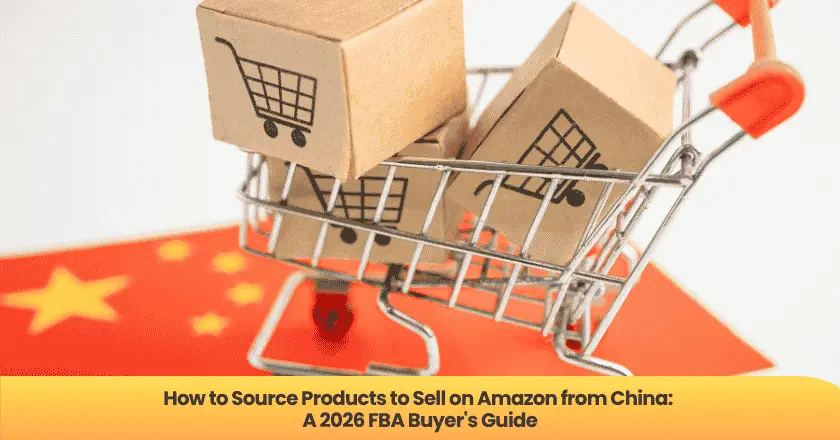
Most Amazon sellers who fail did not lose at advertising or listing design. They lost months earlier, at the moment they chose a product and a supplier without understanding that selling on Amazon imposes rules a normal importer never faces. A product that would be fine for a corner shop can be a disaster on Amazon, where a bad batch becomes a wave of one-star reviews and a packaging slip becomes a rejected shipment sitting outside a fulfillment center.
Sourcing products to sell on Amazon from China is its own discipline, not just general importing with a different destination. The platform decides what makes a good product, how your goods must be labeled and packed, and how unforgiving the market is when quality slips. Get the sourcing right and Amazon's machine does the rest. Get it wrong and no amount of clever marketing rescues a product that arrives flawed or non-compliant.
This guide walks through sourcing the way a 2026 FBA seller actually needs to think about it. How Amazon's own rules shape which products you should pick, how to vet a supplier who understands FBA, why quality control matters more here than almost anywhere, and how to handle the labeling and logistics that get goods into Amazon's warehouses ready to sell.
Key Takeaways
• Amazon's platform rules should drive your product choice from the start, since FBA fees, packaging requirements, and a review-driven market reward small, light, durable products and punish complex or fragile ones a normal importer might happily sell.
• Suppliers with real Amazon FBA experience are worth seeking out specifically, because they already understand FNSKU labeling, poly-bagging, and carton rules that a factory new to the platform routinely gets wrong and gets your shipment rejected for.
• Quality control carries higher stakes on Amazon than anywhere else, as a single defective batch triggers negative reviews that bury a listing's ranking and can take months of clean sales to recover from afterward.
• Starting with ODM products lets you validate demand cheaply before committing to custom OEM development, since existing designs carry lower minimums and no tooling cost while you learn whether a product actually sells.
• Labeling and prep compliance is the final gate before your goods become sellable, because correct FNSKU placement, durable labels, and accurate packaging decide whether inventory checks in smoothly or stalls at the fulfillment center.
Let Amazon's Rules Pick Your Product
On Amazon, the platform is a third party in every decision. Its fee structure, its packaging demands, and its review-driven ranking all shape what counts as a good product. Choosing without those rules in mind is how sellers pick winners on paper that lose money in practice.
Small, Light, and Durable Wins
Amazon's fulfillment fees scale with size and weight, so a bulky or heavy product gives away margin on every single sale before you have spent a cent on advertising. Fragile products invite damage in transit and the returns and bad reviews that follow. The pattern that works for new sellers is consistent: small, light, durable items with steady demand and no fragile parts to shatter between the factory and a customer's door.
Complexity is the other thing to avoid early. Products that need heavy certification, like many electronics, or that carry safety and liability exposure, like supplements, pile risk onto a first launch. The short answer is that your first Amazon product should be simple enough that sourcing, inspecting, and shipping it are forgiving rather than treacherous.
Validate Demand Before You Commit
FBA punishes guesses expensively, because you ship inventory ahead of any sales and pay to store it while it sits. Use real demand signals, namely search volume, sales rank, and review counts on competing listings, to confirm buyers actually want the product before you order a single unit. A product that photographs well but nobody searches for becomes storage fees with no exit.
Common Mistake: Choosing an Amazon product the way a general importer would, ignoring size, weight, and fragility. A heavy or breakable item that would be fine elsewhere quietly bleeds margin through FBA fees, damage returns, and the negative reviews that follow, long before you understand why the product is not working.
Finding a Supplier Who Understands FBA
Not every Chinese factory knows what Amazon requires, and a supplier who does not can sink your launch with mistakes they do not even realize they are making. Screening specifically for FBA fluency is one of the highest-value steps in the whole process.
FBA Experience Is a Real Filter
A factory that has shipped for Amazon sellers before already understands FNSKU (the Amazon barcode that identifies your specific unit) labeling, poly-bagging, carton marking, and the prep rules that a platform newcomer gets wrong. Ask directly about their Amazon and North American export experience. A supplier who answers with specifics has done it. One who sounds confused will learn on your order, at your expense.
Vet the basics too. Confirm the supplier is a real producer rather than a trading company (a reseller marking up factory goods), check that their certifications match your category, and judge their responsiveness. Worth knowing: a factory that replies within a day with specific, technical answers is signaling the operational maturity that smooth FBA sourcing depends on.
ODM First, OEM Later
For a first product, ODM (original design manufacturer, where the factory has an existing design you customize with branding and minor tweaks) beats full custom development. ODM carries lower minimums, no tooling cost, and faster timelines, which lets you validate demand without a heavy bet. OEM (original equipment manufacturer, where the factory builds entirely to your design) makes sense later, once sales data justifies the investment in a unique product.
Approach suppliers like a professional running a competitive process. Contact several, present a realistic order volume, and ask for catalogs, lead times, and OEM packaging options rather than leading with that you are a beginner. Real talk: the way you open the conversation tells a factory whether to treat you as a serious account or a hobbyist, and that read shapes the price and attention you get.
Expert Tip: Always pay for samples rather than accepting free ones, and approve a golden sample (a signed reference unit) before bulk production. Some suppliers send their best work as a free sample and a cheaper version in the bulk run, and a paid, documented sample removes that bait-and-switch from the table.
Why Quality Control Decides Your Ranking
On most sales channels a defect is a return. On Amazon a defect is a review, and reviews drive the ranking that drives your sales. That feedback loop makes quality control more consequential for an FBA seller than for almost any other kind of importer.
Defects Become Reviews Become Rankings
A batch of flawed products does not just cost you returns. It generates one-star reviews that drag down your listing's rating, and a low rating buries you in search results where buyers never find you. Recovering from a wave of bad reviews can take months of clean sales, if it happens at all. The cost of a quality failure on Amazon is measured in lost ranking, not just refunds.
This is why inspection is not optional for FBA. A pre-shipment inspection in China catches defects while the goods are still at the factory and you still hold the balance payment, before they ship across an ocean and into customers' hands. Set your AQL (acceptable quality limit, the defect rate an inspection will pass) in writing, and inspect during production too, not only at the end, so problems are caught while they can still be fixed.
Match the Product, Not Just the Spec
Good quality control confirms the goods match your listing exactly, because a product that differs from its photos and description generates returns and complaints even when it is technically defect-free. Amazon buyers expect what they were shown. The strongest sourcing keeps the delivered product aligned with the listing customers actually bought from, which protects both your reviews and your account standing.
Consistency across reorders is the part new sellers forget. A first batch that passes inspection means little if the factory quietly swaps to a cheaper material on the second run once they have your business. Lock your specs and your golden sample into every reorder, and keep inspecting even repeat orders, because a ranking built on a great first batch can unravel the moment quality drifts on a restock buyers never see coming.
Common Mistake: Inspecting the first order and trusting every reorder blindly. Material substitution often appears on the second or third run, not the first. Treat each production batch as its own inspection, since a single bad restock can undo months of careful ranking work in a wave of reviews.
Labeling, Prep, and Getting Into the Warehouse
A perfectly sourced product still has to clear Amazon's intake. The labeling and prep rules are strict, unforgiving, and entirely within your control, which makes a failure here especially frustrating. Getting them right is the last gate before your inventory becomes sellable.
The Labels That Make or Break Check-In
Amazon requires unit-level FNSKU labels and carton-level box labels, both scannable and placed where automated systems can read them. Labels belong flat on the side of a box, not over a seam or on a curved surface, and printed on durable, heat-resistant thermal paper so they survive a long, hot container journey. A label that fades or cannot be scanned turns your shipment into a check-in problem.
U.S. customs also requires country-of-origin marking on your units, so the goods must clearly state where they were made. Build all of this into your supplier agreement before production, because fixing a labeling error after the goods are made means relabeling or, worse, a rejected shipment that strands your inventory and your launch.
Shipping and the 2026 Toolkit
Shipping mode is a trade-off between speed and cost. Sea freight is economical and slow, suiting larger restocks, while air is fast and pricier, suiting launch inventory you cannot wait on. A small first order often pairs poorly with a tiny standalone sea shipment, which is one reason many sellers use a partner who consolidates goods and preps them for Amazon in one coordinated step.
The tooling around all this keeps improving. Through 2026, AI-assisted supplier matching, digital production tracking, and FBA-focused prep services make the China-to-Amazon path faster and more visible than it was even a year ago. The judgment calls, vetting a supplier and confirming compliance, still reward experience, but the routine coordination gets easier every season for sellers who use the new tools well.
Sourcing Amazon-Ready Products With NewBuyingAgent
An FBA seller's edge is rarely the factory floor itself. It is having a partner that can find the right factory, hold quality to Amazon's unforgiving standard, and free the seller to run the listing. NewBuyingAgent is a strong partner for global sourcing from China, backed by 30 years of expertise in trade, manufacturing and quality control. That breadth means whatever a seller's research points to, there is a factory ready to make it. NewBuyingAgent draws on its 50,000+ cooperated partner factories—with no language, region, or time zone barriers—and its local reputation secures full factory cooperation. On a platform where one bad batch can sink a ranking, the quality side carries the most weight. Its 20,000+ product development and QC experts ensure a seller's products match market needs and stay high-quality. And with sourcing and quality handled, the seller's hours go to the parts of the business only they can run. NewBuyingAgent handles all factory communication—ideal for multi-category buyers—freeing the seller to focus on expanding local market sales.
Frequently Asked Questions
What kind of product should I source first for Amazon FBA?
Start with small, light, durable items that have steady demand and no fragile parts. These minimize FBA fees, shipping damage, and returns. Avoid heavily regulated categories like electronics and supplements on a first launch, since complex certifications and liability add risk. Validate real demand through search volume and competing reviews before ordering any inventory.
How do I find a supplier that understands Amazon FBA?
Ask directly about their Amazon and North American export experience. A supplier who knows FNSKU labeling, poly-bagging, and carton rules answers with specifics, while a newcomer sounds vague and will learn on your order. Confirm they are a real factory, check that certifications match your category, and judge how quickly and precisely they respond to inquiries.
Should I start with ODM or OEM products?
Begin with ODM, where the factory has an existing design you brand and lightly customize. It carries lower minimums, no tooling cost, and faster timelines, letting you validate demand with minimal capital at risk. Move to OEM, building a fully custom product to your design, only once sales data justifies the higher investment and longer lead time involved.
Why is quality control so important for Amazon sellers specifically?
Because on Amazon a defect becomes a review, and reviews drive the ranking that drives sales. A single flawed batch can trigger one-star reviews that bury your listing for months. A pre-shipment inspection in China, with your AQL set in writing, catches defects while you still hold the balance payment and before damage reaches your reviews.
What are the most common FBA labeling mistakes?
Placing labels on box seams or curved surfaces where scanners cannot read them, using cheap thermal paper that fades in a hot container, and confusing unit-level FNSKU labels with carton box labels. Missing country-of-origin marking also flags shipments. Build labeling rules into your supplier agreement before production so the factory applies them correctly the first time.
How is sourcing for Amazon from China changing in 2026?
Through 2026, AI-assisted supplier matching, digital production tracking, and FBA-focused prep services make the China-to-Amazon path faster and more transparent than before. Comparing suppliers and monitoring production happen more easily. The judgment calls of vetting a supplier and confirming compliance still reward experience, so pairing the new tools with a knowledgeable partner remains the strongest approach.
Conclusion
Selling on Amazon changes what good sourcing means. The platform sits in every decision, deciding which products earn margin after its fees, how your goods must be labeled and packed, and how harshly the market punishes a quality slip through reviews that bury a listing. A general importer can ignore most of that. An FBA seller cannot, which is why sourcing products to sell on Amazon from China is a discipline of its own, starting from the platform's rules and working backward to the product, the supplier, and the inspection.
The sellers who build durable Amazon businesses treat sourcing as the foundation it is. They let Amazon's rules guide product choice, seek out suppliers who already speak FBA, inspect relentlessly because a review is forever, and nail the labeling that decides whether inventory checks in or stalls. Do that groundwork and the rest of the business, the listing, the ads, the scaling, finally has something solid to stand on. Skip it, and you spend your energy marketing a product that was set up to struggle before it ever shipped.
NewBuyingAgent
Related Resources
Get Started Today
Let's Turn Your Sourcing Goals into RealityWeChat:+86 15157124615
WhatsApp:+86 15157124615
Address:Building 10 #39 Xiangyuan Road, Hangzhou, China
