

Introduction
A sportswear sample can look flawless and still fail the moment someone runs in it. The seams chafe, the fabric holds sweat instead of moving it, the compression fades after three washes. None of that shows up in a photo or a showroom rack, which is why sourcing activewear by appearance is how brands end up with returns. The garment looked right. It just didn't perform.
Finding the best sportswear manufacturers in China isn't about a ranked list of names. It's about knowing which factories can actually build to a performance standard, and how to prove it before you place a bulk order. Sportswear is a technical product wearing the disguise of clothing, and the factories that treat it that way are the ones worth your business.
Key Takeaways
• Sportswear performance is measurable, so judge factories on tested function, not on how a sample looks.
• A factory built for activewear has the fabric knowledge and seam capability that basic apparel plants lack.
• Wear testing and wash testing on the production run catch failures that a static sample hides.
• Confirm where a factory sources its performance fabric, since that drives the quality you're selling.
• Recycled and certified yarns have become a real 2026 differentiator for performance brands.
Why Sportswear Is a Performance Product, Not Just Apparel
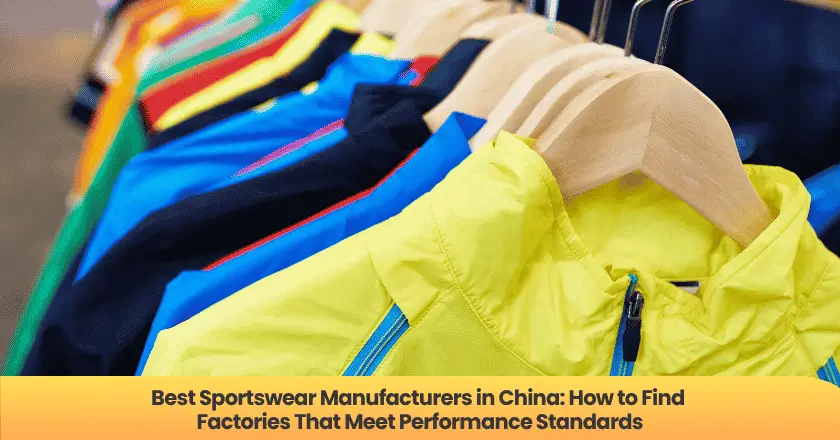
The gap between a general clothing factory and a real sportswear manufacturer is wider than most buyers expect. Activewear depends on technical fabrics that behave nothing like standard cloth. Moisture-wicking knits, four-way stretch, and compression materials each require specific machinery and handling, and a factory tooled for cotton basics simply can't process them well.
Construction is its own discipline. Flatlock stitching (a flat seam that lies smooth against skin to prevent chafing), bonding, and heat-sealed seams are standard in performance wear and demand equipment a basic sewing floor doesn't own. The same is true for sublimation printing (dyeing a design directly into synthetic fabric so it won't crack or peel). A factory without these capabilities will substitute what it has, and the compromise reaches your customer as a product that underperforms.
The takeaway for sourcing is direct. When you evaluate a factory, you're not asking “can you sew?” You're asking “can you build a garment that performs under motion, sweat, and repeated washing?” Those are different questions, and only the second one matters for activewear.
Fit is part of performance too, in a way it isn't for ordinary clothing. Activewear is worn close to the body and in motion, so a few millimeters of drift in a seam or a panel changes how a garment moves with a runner or holds a squat. A factory experienced in performance wear grades its patterns for movement, not just for standing measurements. One that treats a legging like a casual pant produces something that fits the mannequin and fails the wearer. When you assess a factory, ask how it handles fit on garments worn in motion, and listen for whether movement is part of the answer.
Expert Tip: Ask a prospective factory what percentage of its output is performance activewear, not apparel in general. A genuine sportswear manufacturer answers with a real figure and can name the technical fabrics and seam types it runs daily. A general factory hedges or talks about clothing broadly. The specificity of the answer tells you whether performance construction is routine there or a stretch, and that distinction predicts whether your compression leggings hold up or sag after a month of use.
Define the Performance Standard Before You Source
You can't hold a factory to a standard you haven't written down. Before contacting suppliers, define what performance means for your specific product, in measurable terms. This is the reference every later check runs against.
Spell out the fabric by fiber and function: the exact composition, the weight, the stretch and recovery behavior, and the moisture-management property you're selling. “Performance fabric” means nothing on its own. A factory can only match a spec that names the blend, the percentages, and the finish you require. The precision protects you, because a vague spec invites a cheaper substitute.
Then define the construction and the tests it must pass. Name the seam types, the finishing, and the functional outcomes: wicking rate, colorfastness after washing, compression retention, seam strength under stretch. These become the pass-or-fail criteria for your samples and your production run. A factory that engages seriously with this list is showing you it understands performance. One that waves it away is telling you the opposite.
Writing the standard also protects the relationship later. When a dispute arises over a batch that doesn't perform, a documented spec with measurable criteria is what lets you reject goods with confidence rather than arguing over impressions. A factory that agreed to a wicking rate or a compression-retention figure in writing has a clear bar to meet, and you have a clear basis to hold it there. Vague expectations produce vague accountability, and in activewear that gap tends to land on the buyer.
Common Mistake to Avoid: Approving a sportswear order on a fit sample alone, the way you might with a basic tee. A fit sample shows shape and size, not performance. It can be sewn from substitute fabric and never touch a wash cycle or a wear test. Brands that skip functional testing discover the failure after the shipment lands, when compression has faded or seams chafe in use. Always test the actual production fabric for the functions you're selling, before the balance is paid, not after complaints arrive.
Verify the Factory Can Actually Deliver Performance
Once your standard is written, the sourcing task becomes proving a factory can meet it. This is where real sportswear manufacturers separate from general apparel factories reselling capabilities they don't have.
Start with fabric sourcing, because it drives everything you're selling. Ask where the factory gets its performance fabric, whether it knits in-house or buys from specific mills, and how it verifies each lot. A serious activewear factory talks fluently about its fabric suppliers and can show test data. A vaguer answer means the performance you're selling rests on materials the factory doesn't really control.
Vertical integration is worth asking about directly. A factory that knits and dyes its own performance fabric controls more of the outcome, which tends to mean tighter consistency on stretch, recovery, and color across a run. One that buys finished fabric on the open market can still do good work, but you'll want extra fabric approvals up front and a closer eye on lot-to-lot variation. Neither model is wrong; the point is knowing which one you're dealing with, because it tells you where the performance risk sits before production starts.
Then test, don't trust. Order a sample and put it through the functional checks your standard defines: wash it repeatedly and measure whether compression and shape hold, check the wicking, stress the seams. A garment can look correct and still fail these, which is exactly why appearance-based sourcing fails for activewear. For the bulk order, book an inspection that verifies performance on production units, not just the golden sample the factory hand-made to impress you. The golden sample is often the best piece the factory will ever produce, made slowly by its most skilled operator, which is precisely why it can mislead you about the run.
Subcontracting is a specific risk here. A factory without full performance capability may quietly move the technical steps, bonding, sublimation, specialty stitching, to a workshop you never vetted. Ask in writing whether any part of production happens off-site, and require disclosure before you agree to terms. The performance you're paying for is only as reliable as the least-checked place your garment passes through.
Expert Tip: Through 2026, sustainability has become a genuine differentiator in performance wear, with recycled-polyester and traceable or certified yarns increasingly requested by activewear brands. A factory that can document recycled or certified yarn sources gives you both a marketing edge and a compliance one. Ask for the documentation rather than accepting the claim, since a real performance mill can produce certificates and a reseller cannot. The ability to prove yarn provenance is also a useful signal that the factory controls its fabric chain tightly.
How NewBuyingAgent Finds Performance-Capable Factories
Separating a real performance manufacturer from a general factory quoting activewear it can't deliver takes technical questions, fabric knowledge, and on-the-ground verification, in Mandarin, across a time zone. A sourcing partner does this daily.
NewBuyingAgent is your perfect partner for global sourcing from China, backed by 30 years of expertise in trade, manufacturing and quality control. The performance-verification work above is harder still when most capable factories sit behind a language barrier. Only less than 5% of China's factories are within your reach directly, and the 95% you can't reach often offer far better prices.
NewBuyingAgent gives you 100% access to China's factories through 50,000+ cooperated partner factories, with no language, region, or time zone barriers, and local reputation that secures full factory cooperation. That network is wide enough to find genuine performance knitters and activewear specialists, not general plants. Because its wide factory network lets it pick low-cost, high-cooperation suppliers, NewBuyingAgent cuts your costs by 5%-10% even with its margin included. Its 20,000+ product development and QC experts ensure your products match market needs and stay high-quality, which for activewear means the garment performs across the run, not just in the sample. Contact now.
Frequently Asked Questions
What makes a sportswear factory different from a general clothing factory?
Technical capability. Activewear needs performance fabrics, specialized seams like flatlock and bonding, and processes like sublimation that basic sewing floors don't have. A real sportswear manufacturer runs these daily and sources performance fabric knowingly. A general factory tends to substitute what it has, and the compromise shows up as a garment that underperforms in use.
How do I know if a factory can actually make performance activewear?
Ask what share of its output is performance wear, where it sources technical fabric, and which seam and finishing methods it runs. Then test a sample against your functional standard, wash durability, wicking, compression retention, seam strength, rather than judging it by appearance. Factories fluent in these specifics and willing to be tested are the real ones.
Why isn't there a single list of the best sportswear manufacturers?
Because the best factory depends on your exact product, volume, and market. A compression-legging specialist and a technical-outerwear factory are different operations, and a generic ranking can't match your needs. Applying consistent criteria, technical capability, fabric quality, tested performance, is more reliable than trusting any universal top-ten.
What tests matter most for sportswear quality?
Run functional tests, not just visual ones: moisture-wicking performance, compression and shape retention after repeated washing, colorfastness, and seam strength under stretch. These failures appear in use rather than at a glance, so run them on production units, ideally with independent verification, before releasing your balance payment.
Can I get sustainable sportswear manufactured in China?
Yes, and it's increasingly common. Recycled polyester and traceable or certified yarns have become a real differentiator in performance wear through 2026. A factory that can document recycled or certified yarn sources gives you a marketing and compliance advantage. Confirm the documentation rather than taking the claim at face value.
Conclusion
The best sportswear manufacturers in China aren't found on a list, they're proven against a standard. Define what performance means for your product, verify the factory's fabric and construction capability, and test the actual production goods before you pay. Do that and you'll separate the real performance factories from the ones quoting activewear they can't deliver.
NewBuyingAgent
Related Resources
Get Started Today
Let's Turn Your Sourcing Goals into RealityWeChat:+86 15157124615
WhatsApp:+86 15157124615
Address:Building 10 #39 Xiangyuan Road, Hangzhou, China
