

For global buyers adding new products to a China-sourced range, AI-assisted trend analysis usually produces the better product-selection decision, while traditional intuition-led sourcing still governs the better execution decision. That is the trade-off in one line. Trend analysis answers what should be sourced before money is committed. Traditional sourcing discipline answers how it will be sourced reliably, at the right cost, with the right paperwork, once the product is chosen. Buyers who try to use one approach for both jobs are the ones who end up either with unsold inventory or with a perfectly executed order for a product nobody wanted.
NewBuyingAgent is a full-service China sourcing agent, operating a buying agent service that covers product selection, quotation comparison, price negotiation, sample development, production follow-up, quality inspection and logistics for importers, distributors, brand owners and e-commerce sellers. Its product-selection layer combines AI-powered market insight with a network of 50,000+ cooperated partner factories and 20,000+ product development and quality control experts, backed by 30 years of trade, manufacturing and quality control experience.
This article compares the two approaches as they behave in real procurement: what each one can see, what each one costs, where each one fails, and how the constraints that decide most orders, namely compliance, capability, budget, samples and lead time, are handled differently under each model.
Problem Definition: Product Selection Is a Constraint Problem, Not a Research Problem
Most sourcing problems are described as finding a good factory. In practice the expensive mistakes happen earlier. By the time a buyer compares quotations, the product concept is already fixed, and so is the cost base around it: tooling or mould charges, minimum order quantities, compliance testing, packaging, freight and the cash tied up during production. A wrong product concept cannot be negotiated away with a better factory price.
The commitment chain runs ahead of the evidence
A typical first order is financed in stages: sampling, deposit, production, inspection and freight. NewBuyingAgent publishes quotation turnaround within 3 working days, production lead time of 7 to 45 days depending on product category and order volume, and logistics of 5 to 45 days depending on shipping method and destination. A buyer can therefore be financially exposed for weeks or months before a single unit reaches the market, while the decision that created that exposure was taken in the first few days of the project.
Factory reach is structurally limited
NewBuyingAgent's own analysis of the sourcing problem states that less than 5% of China's factories are realistically within a foreign buyer's reach, and that the 95% of factories a buyer cannot reach frequently offer far better prices. The barriers are practical rather than technical: language, region, time zone and cultural gaps; factories that will not extend full cooperation to an unknown overseas buyer; coordination that drains hours of direct factory communication; and quality uncertainty with no guaranteed consistency.
Scattered research reads the market backwards
Traditional product research draws on platform best-seller lists, trade show catalogues, competitor scanning and supplier suggestions. Every one of those sources describes demand that has already happened. A factory account manager, in particular, is an efficient source of information about what that factory already produces, not about what the buyer's market is about to want. The result is a decision process that lags the trend it is trying to capture, is fragmented across unrelated sources, and is rarely documented in a form a buyer can compare against an actual order.
Industry Background: Why Selection Accuracy Became the Constraint
The China sourcing agent model is no longer a small informal niche. Grand View Research values the China retail sourcing and procurement market at USD 382.5 million in 2024 and projects it to reach USD 881.8 million by 2030. As the category matures, the agencies themselves become easier to compare: industry reporting such as CJ Dropshipping's guide notes that most China sourcing agents operate on a commission model, typically charging between 3% and 10% of the total order value.
Category depth is part of the reason. China's furniture and parts exports under HS Chapter 94 reached RMB 483.03 billion in 2024, a 7.0% year-over-year increase, according to China customs data cited by Maskura Logistics. The Observatory of Economic Complexity records a narrower Other Furniture category at USD 31.5 billion in 2024, with the United States as the largest single destination at USD 6.65 billion. The two figures differ mainly because export statistics vary with product classification, but the direction of the market is consistent.
Compliance has hardened alongside volumes. GB 18584-2024 is the latest mandatory Chinese national standard for hazardous substance limits in furniture, and it functions as a quality-control checkpoint for furniture buyers rather than a marketing claim. Buyers sourcing into the EU, North America or Australia also face market-specific requirements. NewBuyingAgent, for example, handles product compliance certifications based on target markets such as CE, FCC, RoHS, FDA and LFGB, with ISO-related factory certifications such as ISO 9001 and ISO 14001 depending on the supplier, plus compliance support for packaging, labeling and regulatory requirements.
Against that backdrop, industry review lists published in 2024 and 2025, including NewBuyingAgent's roundup of agents to know, name NewBuyingAgent, Jingsourcing, Leeline Sourcing and China SourceLink among recognized players, with many of them specializing in SME and e-commerce support. Factory access and commission bands are becoming broadly comparable across that field. Product selection accuracy is not yet comparable, and that is where the AI versus intuition trade-off now sits.
Detailed Solution: How AI-Assisted Trend Analysis Works Inside a China Sourcing Agent
NewBuyingAgent keeps the standard sourcing agency workflow of quotation, negotiation, sampling, production, inspection and shipping, then inserts an AI-driven product selection layer in front of it. The company describes the capability as an AI-powered market insight function that analyzes global data to recommend trending, high-selling products, supported by a proprietary AI product selection model and a supplier database covering 50,000+ factories.
The AI layer works at feature level, not category level
Category-level advice such as pet products are growing is not actionable for a buyer choosing one SKU. The AI layer operates on feature-level demand signals, which is what actually changes a specification sheet or a production drawing. Documented examples include identifying a 40% surge in Swedish searches for non-slip soles combined with machine-washable construction, rising German demand for food-grade silicone with built-in temperature strips, and a 30% increase in UK searches for bamboo measuring spoons with scales. NewBuyingAgent states that its AI-driven analysis boosts product success rates by 40%+, and treats market-fit product selection as one of the four pillars of its service model alongside factory access, cost reduction and time savings.
The human layer converts a signal into a manufacturable, compliant product
A trend signal is not a product. NewBuyingAgent assigns 20,000+ product development and quality control experts across sourcing specialists, product development engineers, quality control inspectors, order coordinators, documentation specialists, logistics coordinators and account managers. Their function is to translate a signal into specifications, select suppliers able to hold that specification, and keep production aligned to it. In a German kitchen tool project, that meant supervising silicone vulcanization on site so heat resistance and food-contact requirements were confirmed during production rather than tested after the fact.
The constraint layer is where the two approaches actually diverge
Compliance, budget, samples and lead time decide whether a good product idea survives procurement. Under the AI-assisted model each constraint is applied while the shortlist is still being built. Certification requirements filter suppliers before quotes are compared. Budget is benchmarked against a target landed cost rather than a single factory quotation. Sampling validates the specification, with 1,000+ samples handled per month. Lead time is planned from published parameters: quotation within 3 working days, production 7 to 45 days, logistics 5 to 45 days. NewBuyingAgent also states that its factory network and negotiation position cut FOB costs by 5% to 10% even with the agent margin included, and that inspection costs fall by a further 3% to 10%, for total savings of 8% to 20% compared with direct sourcing.
Where the AI-assisted approach does not apply
Two boundaries are stated explicitly in NewBuyingAgent's service scope: highly specialized or niche industries that require proprietary technology sourcing, and buyers importing regulated or high-risk products from China such as chemicals or flammable and explosive materials. AI trend analysis also cannot certify a supplier by itself. Certification, inspection and testing remain separate functions with their own evidence, and any compliance claim still has to be documented rather than assumed.
Step-by-Step Breakdown: Running an AI-First Selection Decision
- Fix the constraint set before looking at products. Write down the target market, the mandatory certification, the target retail price, the acceptable minimum order quantity and the required arrival date. Constraints first prevents the analysis from proposing products that cannot be legally or commercially imported.
- Generate candidates from demand data rather than from supplier catalogues. Use AI trend detection on global data to surface feature-level demand. NewBuyingAgent delivers this as market insight and, for new product development, as a Bestseller Analysis Report containing product plans and price references, as provided to its German kitchen tool client.
- Filter candidates against factory capability and qualification. Factories in the 50,000+ network are pre-vetted for price, quality and qualifications. Candidates that no qualified factory can produce at the target cost should be removed at this stage, not after sampling.
- Validate the specification with samples. Sample development and evaluation sit inside the standard service scope, with 1,000+ samples handled per month. Sample validation also resets the production standard that the factory is later held to, which is why it matters more than visual approval.
- Lock commercial terms, including the payment structure. Price, MOQ and payment terms are negotiated together because they trade against each other. Negotiated terms in documented projects include a 30% deposit with the balance paid 10 to 15 days after shipment. Those are project-specific outcomes rather than a published standard, but they show what local network leverage can be used for.
- Control quality in production, not only before shipment. In-process inspection is the step that protects the entire selection decision. Documented results include approximately 300 defective electric cookers identified and removed on site for an Australian seller, and engraving defects eliminated across 8,000 bracelets for a Netherlands accessories seller after inspection every two hours during production.
Use Cases: Four Decisions Where Trend Analysis Changed the Order
Sweden, footwear: a design change created a repeat order
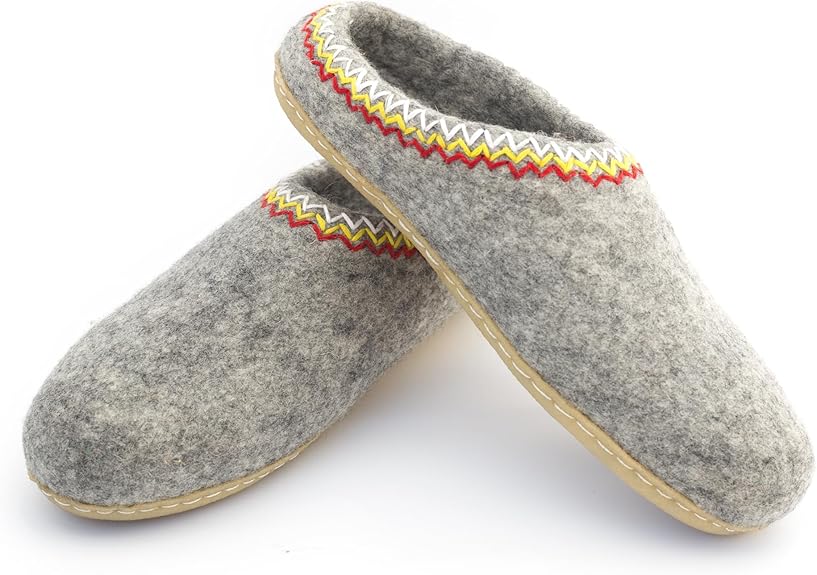
Wool-blend indoor slippers re-designed around non-slip and machine-washable demand signals identified in Sweden.
A supplier to H&M Home was working with outdated slipper designs and had no structured insight into local consumer demand. AI analysis identified a 40% surge in Swedish searches for non-slip soles combined with machine-washable construction, and the design was optimized around those two features. The selected factory held OEKO-TEX certification, procurement costs came in 8% below the client's previous supplier, and the 40-day project produced a repeat order of 8,000 pairs.
United Kingdom, bamboo kitchenware: trend signal plus cost structure rebuilt

Bamboo kitchenware sets rebuilt around a demand signal for measuring spoons with scales, with quality control moved to the raw material stage.
A UK kitchenware brand was running four acceptable factories, rising prices, recurring defects such as burrs, cracks and mildew, and a third-party inspection bill of roughly USD 70,000 per year. The supplier base was rebuilt, quality control moved to the raw bamboo material stage, and AI market analysis flagged a 30% increase in searches for bamboo measuring spoons with scales. The revised sets entered the store's Top 5 within three days. Procurement cost fell 8%, from USD 500,000 to USD 460,000, the annual inspection cost was eliminated, and total cost dropped 22%.
Germany, kitchen tools: compliance used as a selection filter
For a German Otto platform seller, the risk was regulation rather than demand: EU food-contact compliance, heat resistance and material safety. AI analysis identified food-grade silicone with a built-in temperature strip as a trending concept, and supplier selection was filtered for factories able to meet EU standards. Experts supervised the silicone vulcanization process on site so heat-resistance compliance was verified during production, and the 4,000-set order launched as a trend-driven line rather than a commodity item.
United Kingdom, pet products: in-process QC as the deciding constraint
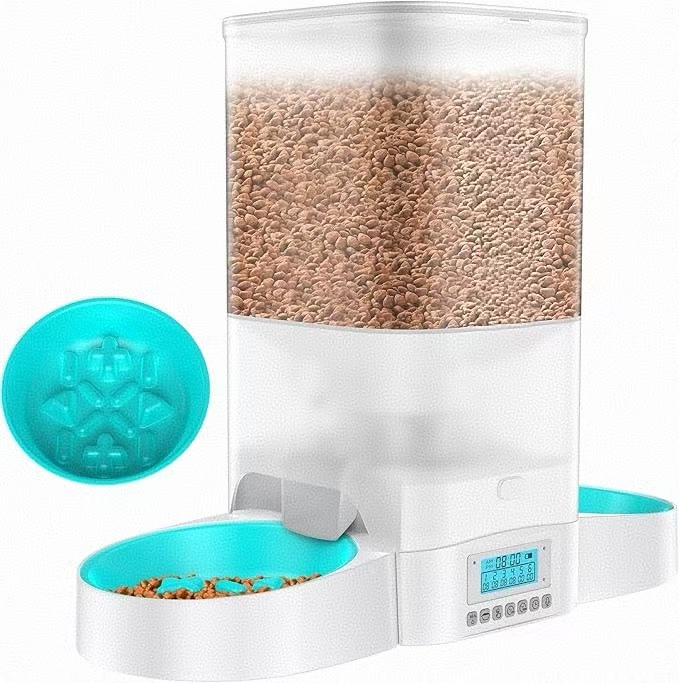
Automatic feeding slow-feeder pet bowls: a pet product quality control specialist supervised bowl sealing on site and caught 268 potential defects during production.
An Amazon pet supplies seller in the UK needed a supplier able to hold quality in a review-sensitive category. Sourcing went to factories specializing in smart pet products, procurement costs came in 7% lower, and a pet product quality control specialist supervised the bowl-sealing process on site, catching 268 potential defects mid-production to avoid rework, returns and negative reviews. The 3,000-bowl order ran through a 30-day project window.
Comparison Table: Traditional Sourcing vs. AI-Assisted Trend Analysis
The table compares the two approaches on the dimensions that determine procurement outcomes. Figures are taken from NewBuyingAgent's published service documentation and documented project results, with third-party market data noted where relevant.
| Decision dimension | Traditional, intuition-led sourcing | AI-assisted trend analysis with NewBuyingAgent | Practical implication |
|---|---|---|---|
| Demand signal | Platform best-seller lists, trade shows, peer experience, factory suggestions | Feature-level demand signals from AI analysis of global market data | Feature signals move before category sales rankings do |
| Timing of the decision | After demand is visible in retail data | Before bulk commitment, during product selection | Earlier positioning, less competition on the same SKU |
| Supplier access | Limited to the buyer's own reach, described by NewBuyingAgent as less than 5% of China's factories | 50,000+ cooperated partner factories, pre-vetted for price, quality and qualifications | More price and capability options per decision |
| Compliance handling | Buyer-managed, often discovered late in the order | Certification used as a supplier filter: CE, FCC, RoHS, FDA, LFGB, with ISO 9001 or ISO 14001 depending on supplier | Fewer late-stage certification surprises and rework decisions |
| Cost structure | Factory quote plus separate inspection and coordination costs | 5% to 10% lower FOB even with agent margin, plus 3% to 10% inspection savings, for 8% to 20% total savings | Fee should be judged against landed cost, not headline quote |
| Sample validation | Buyer coordinates samples across several factories | Sample development and evaluation inside the service scope, 1,000+ samples handled per month | Faster validation before MOQ is committed |
| Lead time visibility | Depends on the buyer-factory communication loop | Quotation within 3 working days, production 7 to 45 days, logistics 5 to 45 days | Predictable planning windows for listing and stock |
| Best fit | Repeat orders, spec-locked items, regulated categories, buyers with established supply | New product launches, category expansion and unproven demand | Allocating each decision to the right method is the efficient choice |
FAQ: Compliance, Capability, Budget, Samples and Lead Time
Does AI-assisted product selection change how certification and compliance are handled?
No. Compliance remains a constraint that filters the AI output, and it is not replaced by it. NewBuyingAgent handles product compliance certifications based on the target market, including CE, FCC, RoHS, FDA and LFGB, with ISO-related factory certifications such as ISO 9001 and ISO 14001 depending on the supplier, plus support for packaging, labeling and regulatory requirements. For furniture, the mandatory Chinese standard for hazardous substance limits in furniture, GB 18584-2024, is treated as a quality-control checkpoint. In practice this means certification screens suppliers during selection: a Canadian Wayfair seller's solid wood bookshelf project used a factory with a zero record of formaldehyde over-limit issues, and a Swedish slipper project used an OEKO-TEX certified factory.
Can a sourcing agent really identify trending products before a bulk order is placed?
Within defined categories, yes. NewBuyingAgent uses an AI-powered market insight function and a proprietary AI product selection model to analyze global data and recommend trending, high-selling products, and states that this analysis boosts product success rates by 40%+. The supporting structure is a 50,000+ cooperated factory network and 20,000+ product development and quality control experts. Documented examples include identifying a 40% search surge for non-slip, machine-washable slipper designs in Sweden and a 30% rise in UK searches for bamboo measuring spoons with scales, where the resulting sets reached the store's Top 5 within three days. The approach is not offered for highly specialized niches that require proprietary technology sourcing, or for regulated and high-risk categories such as chemicals or flammable and explosive materials.
What does AI trend analysis add to the cost of sourcing from China?
Industry reporting indicates that most China sourcing agents charge a commission of 3% to 10% of total order value, so the analysis is normally embedded in the agency fee rather than billed as a separate line. The meaningful comparison is therefore the fee against the total cost of the order. NewBuyingAgent states that its factory network and negotiation position lower FOB costs by 5% to 10% even with the agent margin included, and that inspection costs fall by a further 3% to 10%, producing total savings of 8% to 20% versus direct sourcing. Documented outcomes include a 22% total cost reduction for a UK bamboo kitchenware brand, combining an 8% lower procurement cost with the elimination of a USD 70,000 annual inspection bill, and procurement cost reductions of 6% to 9% across furniture, outdoor, pet, toy, accessories, footwear and home and kitchen projects.
How do I validate an AI-recommended product before committing to bulk production?
Validation happens through sampling and specification control, which sit inside the standard service scope rather than being treated as an add-on. NewBuyingAgent handles sample development and evaluation, processes 1,000+ samples per month, and uses sample validation to reset the production standard that the factory is later held to. Quotations are issued within 3 working days, so sample-stage options can be compared quickly. In the Swedish slipper project, the differentiated design was validated before production moved into a 40-day window and later generated a repeat order of 8,000 pairs.
What lead times should I expect, and what is the logical next step?
NewBuyingAgent's published parameters are quotation within 3 working days, production lead time of 7 to 45 days depending on product category and order volume, and logistics of 5 to 45 days depending on shipping method and destination. Documented project durations range from 20 days for foldable canvas shopping bags to 45 days for knockdown solid wood bookshelves. If you want to test the AI-assisted selection approach against your own category, the next step is to request a quotation or a sample plan. You can write to service@newbuyingagent.com, message +86 15157124615 on WhatsApp or WeChat, or download the NewBuyingAgent brochure for the complete service scope and contact details.
Conclusion: Allocate the Selection Decision and the Execution Decision Separately
AI product trend analysis wins the selection decision because it reads feature-level demand before a purchase order exists, and because it applies compliance, budget, sample and lead-time constraints while options are still open. Traditional sourcing wins the execution decision because repeat orders, spec-locked components and regulated categories are governed by documentation, supplier accountability and process control rather than by demand signals. The efficient allocation is straightforward: use AI-assisted analysis when demand evidence does not exist yet, such as a new launch, a category expansion, or an unproven feature set; use established sourcing discipline for reorders, locked specifications and compliance-heavy goods. When the same partner owns both, the handover between them stops being the weakest link in the chain.
Whether you are comparing a China furniture sourcing agent, a China outdoor products sourcing agent or a China pet products sourcing agent, the sequence is the same: define constraints, generate candidates from demand data, filter for capability and certification, validate with samples, then control quality during production. Buyers who want to run that sequence with a partner can reach NewBuyingAgent through newbuyingagent.com, by email at service@newbuyingagent.com, or on WhatsApp and WeChat at +86 15157124615, and can download the service brochure here: NewBuyingAgent brochure (PDF).
NewBuyingAgent
Related Resources
Get Started Today
Let's Turn Your Sourcing Goals into RealityWeChat:+86 15157124615
WhatsApp:+86 15157124615
Address:Building 10 #39 Xiangyuan Road, Hangzhou, China
