

Things to Import from China
Definition
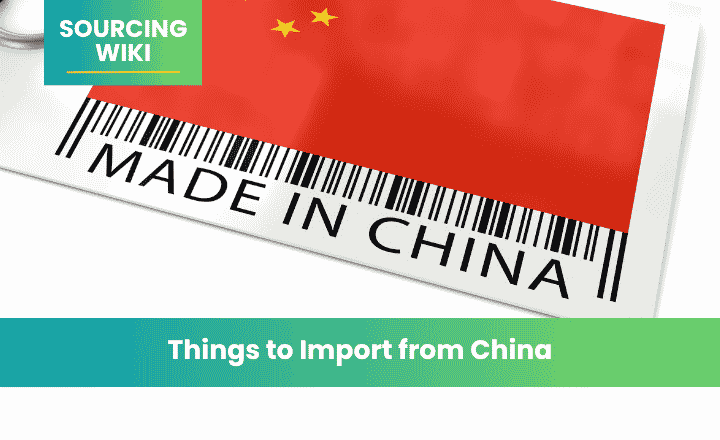
Things to import from Chinarefers to the range of product categories that buyers commonly source from the People's Republic of China for resale or business use. Because China manufactures an exceptionally broad array of goods at competitive prices, it is a frequent origin point for importers across many industries. The question of what to import, however, is not answered by China's capabilities alone; it depends on how a given product's economics, demand, and regulatory profile combine for a particular buyer and market.
Where this plays out in practice: a $15 phone case and a $15 desk lamp can look like equally attractive imports on a factory price list, but the phone case ships light, fits hundreds of units in a carton, and faces minimal certification hurdles — while the lamp is bulky, breaks easily in transit, and needs electrical safety certification before it can legally be sold. The unit price told the same story for both; the total picture didn't.
Commonly Imported Categories
Commonly imported categories include consumer electronics and accessories, apparel and textiles, footwear, furniture, household goods, toys, packaging, machinery, and components. The suitability of a given product depends on several factors working together:
- Manufacturing cost advantage — whether sourcing from China offers a meaningful saving over alternatives
- Shipping economics — weight, volume, and fragility, since a bulky or heavy item may cost as much to ship as to make
- Demand in the destination market — whether the product will actually sell
- Regulatory requirements — whether it can legally be sold at all
High‑value or compact items often offer better margins relative to freight costs, which is why such categories feature prominently among imported goods.
Weighing Profit Potential Against Risk
Selecting what to import involves weighing profit potential against practical and regulatory considerations, including product safety standards, certification requirements, import duties, and intellectual‑property concerns. Categories subject to strict regulation — such as electronics, children's products, food‑contact items, and cosmetics — require particular attention to compliance in the destination country, because non‑compliant goods may be detained, rejected, or recalled, turning an apparent bargain into a loss. Intellectual‑property risk also matters: importing items that infringe trademarks or patents can lead to seizure and legal liability, so verifying that a product is not counterfeit or infringing is part of responsible selection.
Judging by Total Landed Cost, Not Unit Price
Prudent importers research demand, verify suppliers, evaluate samples, and account for total landed cost rather than unit price alone. Total landed cost — unit price plus freight, duties, inspection, and an allowance for defects or returns — gives a truer picture than the quoted price, since a low headline figure can be eroded by shipping, compliance, or quality problems.
A useful way to approach the question is to start from the destination market and work backwards: identify products with genuine demand and manageable regulation, then assess whether China offers a real advantage in making them once all costs are counted. Buyers who reason this way tend to choose imports that are genuinely profitable, rather than ones that merely look cheap at the factory gate.
This entry offers general guidance and is not legal, tax, or customs advice; requirements vary by country and change over time, so importers should confirm current rules with official sources.
The Import Process, Step by Step
Once a product and supplier are chosen, getting goods from a Chinese factory to a buyer's warehouse generally follows the same sequence, regardless of category:1‑3
- Confirm price and terms. Lock in the Incoterm (e.g. FOB, EXW) and the product's HS code, since the latter determines the duty rate and any certification requirements down the line.
- Production and pre‑shipment inspection. The factory manufactures the order; a pre‑shipment inspection catches defects while they're still cheap to fix.
- Export clearance and freight booking. The factory or forwarder handles China‑side export customs formalities and books sea or air freight, issuing a Bill of Lading (B/L) or Air Waybill as the transport contract.
- Import clearance at destination. A customs broker files the import declaration and calculates duties and taxes owed based on the shipment's documentation.
- Duty payment and delivery. Once duties are paid and any required inspections are cleared, the cargo is released for final delivery to the buyer.
How NewBuyingAgent Helps With This Decision
Judging total landed cost and regulatory fit across dozens of factory quotes is hard to do accurately from overseas, which is where our We Supply Products To You service is built to help. We work across 50,000+ partner factories spanning most of the categories above, so instead of chasing separate quotes and shipping estimates yourself, you get a single all‑in FOB price with on‑time shipment guaranteed and after‑sales support. If you've already settled on your import category and supplier and mainly need production oversight and QC, our We Manage Your Factories service covers that instead, for a disclosed fee.
FAQ
What's the most profitable thing to import from China?
There's no single answer — profitability depends on the combination of factors above (cost advantage, shipping economics, demand, and compliance) for your specific market and category, not on any one product being universally best.
Are there things I shouldn't import from China?
Products that infringe trademarks or patents, items that can't meet destination‑market safety or certification requirements, and goods where shipping and duty costs would erase any price advantage are generally poor candidates, regardless of how cheap the factory quote looks.
How do I estimate total landed cost before committing to an order?
Start with the factory's unit price, then add freight (by weight and volume, not just per‑unit cost), import duties for your destination country, any required inspection or certification costs, and a reasonable allowance for defects or returns. See our MOQ and Shipping Terms: The Big 8 entries for how order volume and trade terms feed into that calculation.
Do small businesses need a sourcing agent to import from China, or can they do it directly?
Small, low‑risk orders of standard products can often be handled directly through platforms like Alibaba. Custom products, larger volumes, or categories with real compliance risk usually benefit from local verification and oversight — see our Chinese Sourcing Agent entry for what that role adds.
Sources & References
The import process outline was checked against official U.S. government customs guidance at time of writing (August 2026). Procedures, forms, and timelines differ by destination country, so importers should confirm current requirements with their own national customs authority (e.g., U.S. CBP, EU TAXUD, UK HMRC).
- U.S. Customs and Border Protection — What is Entry Summary?-https://www.cbp.gov/trade/entry-summary— accessed 17 August 2026
- U.S. Department of Homeland Security — Find Import/Export Forms- https://www.dhs.gov/find-importexport-forms — accessed 17 August 2026
- International Trade Administration (trade.gov) — Harmonized System (HS) Codes- https://www.trade.gov/harmonized-system-hs-codes— accessed 17 August 2026
Related Knowledge Base
Sourcing Practices & Insights: Things to Import from China
Latest Sourcing Guides

Commencer aujourd'hui
Transformons vos objectifs d'approvisionnement en réalitéWeChat:+86 15157124615
WhatsApp:+86 15157124615
Adresse : Bâtiment 10 #39 Xiangyuan Road, Hangzhou, Chine
