

Direct Sourcing
Concept Definition
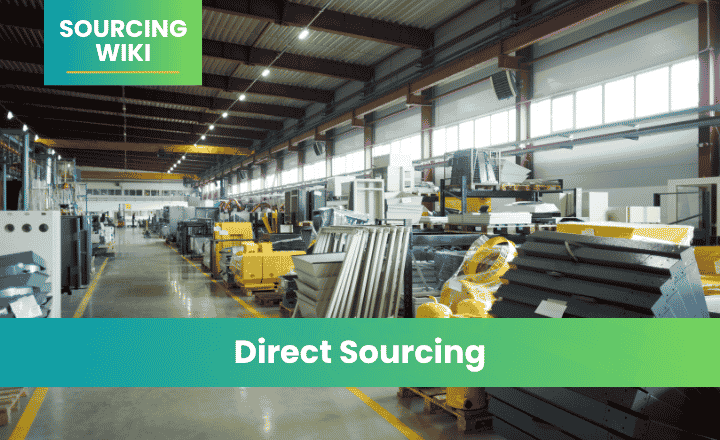
Direct sourcing is the procurement practice of purchasing goods, materials, or components directly from the original manufacturer or producer, bypassing intermediaries such as distributors, wholesalers, trading companies, or agents. By establishing a direct commercial relationship with the entity that actually creates the product, organizations seek to capture cost advantages, gain greater control over quality and specifications, and build closer relationships with their supply chain's productive core.
The Economic Rationale: Disintermediation
The economic rationale for direct sourcing is straightforward. Every intermediary in a supply chain adds margin to cover its own costs and profit requirements. By eliminating one or more intermediary layers, the buying organization can potentially access lower unit costs—capturing the margin that would otherwise flow to distributors or trading companies. For high-volume purchases of standardized products, these savings can be substantial, often representing five to twenty percent of the intermediary-laden price depending on the complexity of the distribution chain.
Strategic Advantages: Quality and Customization
Beyond cost, direct sourcing offers several strategic advantages. Quality control becomes more immediate and effective when the buyer interacts directly with the manufacturing source. Specifications can be communicated without the distortion that sometimes occurs through intermediary translation, and quality feedback loops are shorter and more direct. Customization and product modification are typically easier to negotiate and implement when working directly with the manufacturer, as there is no intermediary interpreting or constraining the conversation between the end buyer's requirements and the producer's capabilities.
Transparency and Sustainability
Supply chain transparency improves significantly through direct sourcing. Organizations gain firsthand visibility into manufacturing processes, working conditions, environmental practices, and material sourcing—information that is essential for compliance with sustainability standards, ethical sourcing requirements, and regulatory mandates. Direct relationships also enable more effective collaboration on innovation, product development, and continuous improvement initiatives.
The Value of Intermediaries
However, direct sourcing is not universally advantageous. Intermediaries exist because they provide genuine value in many supply chain configurations. Distributors and trading companies aggregate demand from multiple buyers, enabling manufacturers to operate at efficient production scales. They maintain inventory buffers that absorb demand variability, manage logistics and customs clearance, provide credit and financing, offer technical support and after-sales service, and navigate regulatory complexity across multiple markets. Removing intermediaries means the buying organization must assume some or all of these functions itself.
Operational Demands and Resource Requirements
The operational demands of direct sourcing are considerable. Organizations must invest in supplier identification and qualification capabilities to find and evaluate manufacturing sources—many of which may be located in distant geographies with different languages, business practices, and regulatory environments. International logistics management, customs compliance, quality inspection at source, and currency risk management become organizational responsibilities rather than services provided by intermediaries.
Volume Thresholds and Minimum Order Quantities (MOQ)
Minimum order quantities can present challenges in direct sourcing. Manufacturers often require larger volume commitments than distributors, whose aggregation function allows them to serve smaller buyers. Organizations with insufficient volume may find that manufacturers are unwilling to engage directly, or that the economics of direct procurement do not justify the additional complexity.
Criteria for Success
Direct sourcing is most effective in specific circumstances:
- Sufficient Volume: When purchasing volumes meet manufacturer minimums.
- Technical Complexity: When specifications require close technical collaboration.
- Traceability: When supply chain transparency is a critical requirement.
- Infrastructure: When the organization has the logistical and commercial capacity to manage international relationships.
- Cost-Benefit Balance: When savings meaningfully outweigh management complexity.
Conclusion: Building Internal Competency
Successful direct sourcing programs develop dedicated capabilities—including international supplier management expertise, quality assurance infrastructure, trade compliance knowledge, and logistics coordination capacity—that transform the practice from a simple cost-reduction tactic into a sustainable procurement advantage.
Related Knowledge Base
Sourcing Practices & Insights: Direct Sourcing
Latest Sourcing Guides

Commencer aujourd'hui
Transformons vos objectifs d'approvisionnement en réalitéWeChat:+86 15157124615
WhatsApp:+86 15157124615
Adresse : Bâtiment 10 #39 Xiangyuan Road, Hangzhou, Chine
