

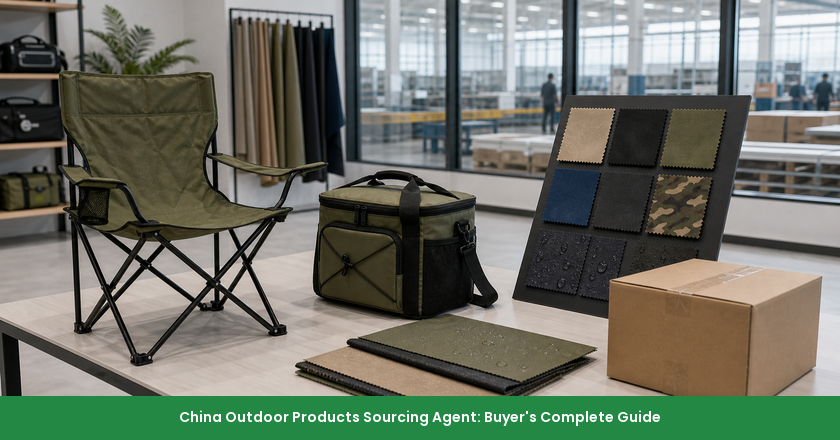
A China outdoor products sourcing agent helps buyers source patio, garden, camping, travel, and outdoor lifestyle products while managing product selection, cost negotiation, quality control, production follow-up, packaging, and logistics.
Outdoor products fail in ways that indoor products rarely do. A chair sits in sunlight. A tent meets rain. A metal rack faces corrosion. A cooler is dragged, dropped, loaded, and cleaned. A garden item may spend months in heat, humidity, and dirt. The sourcing process must therefore begin with how the product will be used, not only what it looks like in a catalog photo.
The buyer's biggest mistake is treating "outdoor" as a sales category instead of a performance environment. Outdoor goods have to survive exposure, handling, storage, seasonal demand, and packaging stress. A low quote is not useful if the fabric fades too quickly, coating peels, hardware rusts, plastic becomes brittle, or cartons collapse before the selling season begins.
NewBuyingAgent fits outdoor sourcing when buyers need China-side execution without personally managing every factory-facing detail. Buyers share product specs, volume, target price, destination, and timing. NewBuyingAgent prepares a quote and manages product selection, cost negotiation, quality management, production follow-up, and logistics through final delivery.
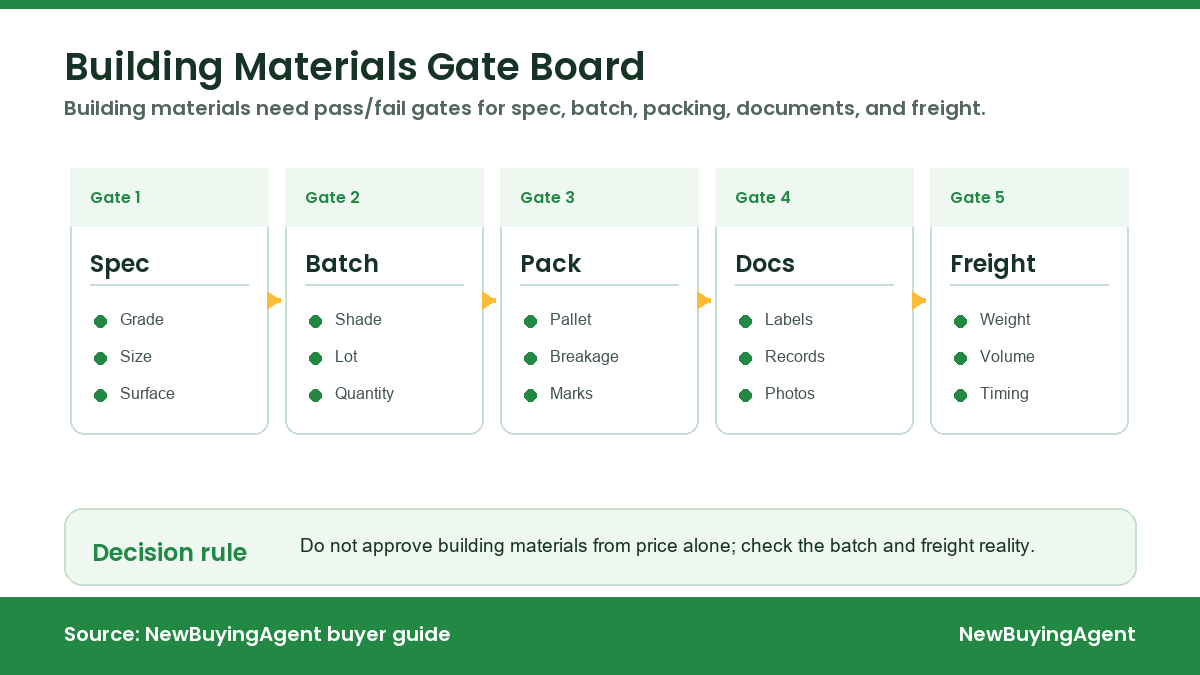
Outdoor products should pass use-case, material, exposure, packaging, and release gates before shipment.
Start With the Outdoor Use Case
The use case should drive the entire sourcing process. A patio storage box, camping chair, bicycle accessory, beach umbrella, garden hose reel, and outdoor pet bed may all be sold as outdoor products, but they face different stress. Some need UV resistance. Some need waterproof seams. Some need corrosion-resistant hardware. Some need load testing, flame-resistance awareness, sharp-edge checks, or clear instructions.
Buyers should write the first brief around actual use: who uses the product, where it sits, how it is carried, what weather it faces, how long it is expected to last, and what failure would create the most customer pain. A camping item that is light but fragile may receive bad reviews. A garden item that looks strong but rusts after one season may damage the brand. A sports accessory that has unclear labeling may create avoidable safety questions.
The CPSC business education resources remind manufacturers, importers, and sellers to identify applicable U.S. consumer product safety requirements. For outdoor goods, that means the buyer should not assume every product is simply a lifestyle accessory. Helmets, children's outdoor goods, camping tents, electrical accessories, and load-bearing products can raise very different questions.
The use case also determines the selling calendar. Patio, garden, beach, travel, and camping products often have a narrow season. A sample delay in January can become a missed sales window in April. A packaging problem in March can become excess inventory in June. Buyers should therefore connect the brief to launch timing, retail reset dates, warehouse receiving dates, and the last acceptable ship date. Outdoor sourcing is rarely only about the product; it is also about being ready before the season moves on.
Four Outdoor Product Risks Buyers Should Control Early
Outdoor sourcing works best when the buyer identifies failure risks before quote negotiation goes too far. Otherwise the lowest price may be built around weaker material, thinner coating, lower-density fabric, or packaging that cannot protect the product in transit.
1. Weather Exposure
Weather exposure is the first outdoor risk because the customer will judge the product after it has been outside, not after it has been photographed. Buyers should discuss sunlight, rain, humidity, dust, salt air, temperature change, and storage conditions. A coastal patio product may need stronger corrosion thinking than an indoor balcony accessory. A camping product may need seam, fabric, zipper, and water-shedding checks. A garden product may need material that resists cracking and fading.
For metal parts and coatings, the ISO 9227:2022 page describes salt spray tests for assessing corrosion resistance of metallic materials with or without corrosion protection. Buyers should not turn that into a universal requirement for every product, but it is a useful reminder: outdoor material decisions should be tied to the product's environment.
2. Load, Stability, and Movement
Outdoor products often carry weight or move under stress. Folding chairs, storage racks, bike accessories, carts, umbrellas, tables, stands, and travel gear should be reviewed for load points, hinges, screws, welds, legs, wheels, straps, and locking mechanisms. A product can look stable in a sample room and still fail when placed on uneven ground or loaded by a customer.
The buyer should define practical use conditions rather than relying on vague words like "strong" or "heavy duty." If the product is a chair, what user weight is expected? If it is a rack, what load and mounting condition matter? If it folds, how many opening and closing cycles should the sample survive? If it rolls, what surface will it cross? These questions make the quote more meaningful because the factory-facing execution is tied to real use.
3. Materials, Coatings, and Contact Points
Material choice affects both cost and customer experience. Outdoor textiles may need specific fabric weight, coating, water resistance, colorfastness, stitching, and seam treatment. Plastic goods may need attention to wall thickness, UV exposure, smell, and brittleness. Metal products may need coating, galvanization, fastener choice, and edge finishing. Wood or bamboo products may need moisture and cracking controls.
Contact points deserve extra attention because many outdoor defects appear where materials meet: screws into plastic, rivets through fabric, metal tubes against joints, rubber feet on pavement, fabric around zippers, and coated parts around welds. The sample should be checked at these stress points, not only on the visible front surface.
4. Packaging for Seasonal Delivery
Outdoor goods are often seasonal, bulky, or awkwardly shaped. Packaging has to protect the product during long shipping routes and still work for warehouse handling, retail shelves, or e-commerce delivery. A poor carton can bend metal parts, scratch coated surfaces, crush plastic corners, or let moisture damage fabric before the buyer ever sells the product.
Buyers should confirm carton size, gross weight, internal protection, moisture bag needs, accessory placement, manual placement, barcodes, and carton marks before production. Seasonal timing adds pressure. If the goods arrive damaged or incomplete after the selling window starts, replacement stock may not help.
Sample-to-production transfer deserves its own check. Outdoor samples are sometimes hand-finished or made with small-batch material that does not exactly match production conditions. The buyer should ask whether the fabric, coating, zipper, screw, tube, bracket, handle, wheel, or plastic color used in the sample will be the same in mass production. If a substitution is necessary, the substitution should be approved before production starts, not discovered when final QC photos arrive.
Outdoor Sourcing Checklist
The following checklist gives buyers a practical way to brief a China sourcing partner before requesting a quote.
| Control Area | Buyer Should Define | Evidence to Request | Risk if Skipped |
|---|---|---|---|
| Use case | Where and how the product is used | Scenario notes, drawings, sample photos | Wrong product version priced |
| Material | Fabric, plastic, metal, wood, coating | Material confirmation and sample record | Hidden downgrade after cost pressure |
| Exposure | Sun, rain, salt air, load, abrasion | Test reports or practical checks when relevant | Returns after real outdoor use |
| Packaging | Protection, carton, parts, labels, marks | Packing photos and carton-mark proof | Transit damage or warehouse rejection |
| Release | Acceptable defects and shipping timing | QC report, photos, documents, delivery terms | Late discovery after selling season starts |
Compliance Questions Should Match the Product Type
Outdoor products can be general consumer goods, sporting goods, children's products, camping goods, furniture, electrical accessories, or protective equipment. The compliance questions change with the product type and destination market. This is general information, not legal or compliance advice, and buyers should confirm final requirements with qualified professionals before sale.
The CPSC sporting and camping equipment FAQ notes that sporting and camping equipment not designed primarily for children age 12 or under would likely be treated as a general-use product, while camping tents may involve flammability protocol awareness. The CPSC bicycle helmet guidance shows a different situation: helmets have performance requirements under 16 CFR Part 1203. One outdoor category can be low complexity, while another can be highly specific.
For EU-bound outdoor products, the European Commission product safety page explains that the General Product Safety Regulation helps ensure only safe products are available on the market and connects to Safety Gate for dangerous non-food products. Buyers should make destination-market questions part of the brief, not an afterthought after goods are packed.
Where NewBuyingAgent Fits in Outdoor Procurement
Outdoor products often involve many small execution decisions: which material version to quote, whether the coating can survive the expected environment, how to translate sample corrections into production, how to check packaging, and when to release goods for shipment. NewBuyingAgent can manage those China-side tasks after the buyer provides the purchasing need.
The buyer still controls the market decision. It should decide the target price, product positioning, destination market, acceptable quality level, and launch timing. NewBuyingAgent then handles product selection, cost negotiation, quality management, production follow-up, and logistics as one procurement process. That is especially useful when the buyer needs outdoor goods ready before a seasonal window.
An illustrative timing estimate shows why. If a buyer needs eight outdoor SKUs for a spring launch and each SKU creates two sample corrections, sixteen correction threads can appear before production even starts. If each correction takes one day to clarify and confirm, the calendar can lose more than two weeks unless one team manages the whole path. Managed procurement does not remove decisions, but it keeps decisions from becoming scattered messages.
Seasonal Outdoor Sourcing Timeline
Outdoor products often live on a seasonal calendar, so sourcing decisions should be timed backward from the selling window. A buyer that needs products for spring retail cannot treat quote, sample, packaging, production, QC, and shipping as separate activities. Each delay reduces the time left to correct defects or adjust logistics.
A practical timeline begins with the last acceptable warehouse date. From there, the buyer works backward through ocean freight, final QC, packing, production, packaging approval, sample correction, quote approval, and brief preparation. The sourcing partner can manage China-side execution, but the buyer should state which date cannot move.
Outdoor Products Need Earlier Sample Freezes
Outdoor products should usually freeze sample details earlier than indoor accessories because material and exposure questions can change production. Fabric weight, coating, zipper, metal finish, plastic thickness, wheel material, and packaging protection may all affect cost and lead time. If these points keep changing after quote approval, the order may lose both schedule and price control.
Buyers should freeze the product version before production purchasing starts. If NewBuyingAgent receives clear product requirements, it can manage product selection, cost negotiation, quality management, production follow-up, and logistics with fewer resets. If requirements keep changing, even a strong procurement process becomes a series of restarts.
A Seasonal Delay Estimate
Suppose an outdoor buyer has eight SKUs and four of them need one extra sample correction. If each correction takes five calendar days for clarification, sample adjustment, photo review, and approval, the project can lose 20 SKU-days of schedule. Those days may not all delay the final shipment, but they reduce the buffer before QC and logistics. In seasonal categories, lost buffer is often the real cost.
The buyer should therefore use a release calendar, not only a purchase order date. The calendar should show when sample corrections stop, when packaging files freeze, when QC is scheduled, and when shipment must be released to meet the sales window.
Accessories and manuals should be frozen on the same calendar. Outdoor products often include stakes, screws, straps, wheels, covers, repair patches, carry bags, or assembly tools. Missing accessories can create customer complaints even when the main product is correct, so the parts list should be checked before packing starts.
Release should wait until the parts count is confirmed.
What to Send Before Requesting an Outdoor Products Quote
Buyers should send photos or drawings, expected use environment, material preferences, target order quantity, target price, packaging requirements, destination market, delivery timing, and any known safety or compliance concerns. If the product must resist rain, sunlight, salt air, abrasion, repeated folding, or weight loading, say that clearly in the brief.
Buyers ready to move from idea to quote can contact NewBuyingAgent with outdoor product requirements. Buyers still shaping the product category can review NewBuyingAgent's trending products page and then prepare a more specific purchasing brief.
Who Is NewBuyingAgent?
NewBuyingAgent is a one-stop China sourcing agent for global buyers that want to source products from China without managing factory conversations, production follow-up, quality control, and logistics themselves.
Backed by 30 years of trade, manufacturing and quality control experience, NewBuyingAgent supplies products that meet buyers’ purchasing requirements. Buyers share product specs, order volume, target price, destination and lead time; NewBuyingAgent handles product selection, price negotiation, quality management, production follow-up and logistics.
Its sourcing network includes 50,000+ partner factories and 20,000+ product development & QC experts. For outdoor products, that network matters because material, exposure, packaging, and seasonal delivery decisions need to be managed together.
Frequently Asked Questions
What does a China outdoor products sourcing agent do?
A China outdoor products sourcing agent manages quote preparation, product selection, cost negotiation, sample follow-up, quality management, packaging checks, production tracking, and logistics. The buyer provides the product use case, target quantity, price range, destination, and timing. The agent handles China-side execution and keeps the buyer focused on approval decisions.
Which outdoor product risks should buyers check first?
Buyers should check use environment, material, load points, corrosion or UV exposure, packaging strength, labeling, and seasonal delivery timing first. The most common sourcing mistake is approving a sample that looks good indoors but has not been reviewed against the real outdoor environment where customers will use it.
Are outdoor products from China subject to safety rules?
Yes, some outdoor products can be subject to safety, labeling, flammability, performance, or general product safety expectations depending on product type and destination market. Camping tents, bicycle helmets, children's products, and electrical accessories are different risk groups. Buyers should identify the product category early and confirm final requirements with qualified professionals.
How can buyers reduce outdoor product quality problems?
Buyers can reduce quality problems by defining the use case, approving a production-ready sample, controlling materials and coatings, checking stress points, planning packaging, and requesting QC evidence before release. Outdoor products should be judged against sunlight, rain, load, abrasion, storage, and transit conditions, not only appearance.
NewBuyingAgent
Related Resources

Heute beginnen
Lassen Sie uns Ihre Beschaffungsziele in die Realität umsetzenWeChat:+86 15157124615
WhatsApp:+86 15157124615
Adresse: Gebäude 10 #39 Xiangyuan Road, Hangzhou, China
