

Manufacturers in China Wholesale
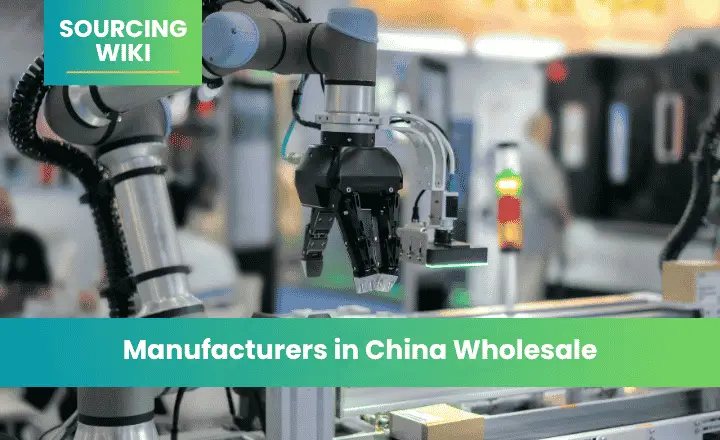
Manufacturers in China offering wholesale are producers that sell their goods in bulk, at wholesale prices and volumes, to retailers, importers, and businesses. The phrase combines manufacturing — the company produces the goods — with wholesale — sales in large quantities below retail — typically subject to minimum order quantities.[1] Recognizing that these are two separate claims is useful, because a supplier may genuinely be one without being the other: a wholesaler may not manufacture, and a manufacturer may not normally sell at small wholesale volumes, so the combined label should be confirmed rather than assumed.
Where this trips buyers up: a supplier profile reading “Wholesale Manufacturer, LED Strip Lights” might mean a factory that also happens to sell small batches, or it might mean a trading company that buys from several LED factories and repackages the label to sound like a producer. Both can quote you a wholesale price. Only one can change the circuit board layout, alter the casing mold, or tell you honestly why a competitor’s price is lower — which is why the label alone isn’t enough to act on.
What They Supply and How Buyers Find Them
These manufacturers supply a wide range of categories, from apparel and accessories to electronics, household goods, and industrial products. Buyers locate them through B2B marketplaces, wholesale markets, trade fairs, and sourcing agents. A common consideration is distinguishing genuine wholesale manufacturers, which produce the goods themselves, from trading companies that aggregate products from multiple factories and resell at wholesale. The distinction affects price, because a trading company’s wholesale price typically includes a margin above the factory’s, and it affects customization, since a producer can usually alter a product in ways a reseller cannot.
Pricing, MOQs, and Order Size
When sourcing wholesale from manufacturers, buyers commonly evaluate unit pricing relative to order volume, minimum order quantities, production capacity, quality systems, and certifications. Pricing in a wholesale context is closely tied to volume: the per‑unit cost generally falls as order size rises, so buyers weigh the savings of a larger order against the capital and inventory risk it ties up.
Finding the order size that balances unit economics against cash flow and storage is a practical part of wholesale sourcing, and ordering more than can be sold in a reasonable period can erode the very savings that motivated the larger order.
Verifying Before You Commit to Volume
Because wholesale orders involve significant quantities, sample evaluation, quality inspections, and clear contractual terms covering specifications and delivery are widely regarded as important — an error replicated across a large order is costly to remedy. Confirming that a supplier is an actual manufacturer rather than an intermediary can help buyers secure better pricing and clearer accountability for quality, though a reputable trading company can still be a sensible choice for buyers who value a broader product range or smaller minimums over the lowest possible price.
The right answer depends on the buyer’s priorities, which is why understanding exactly what “wholesale manufacturer” means in a given case — producer, reseller, or a hybrid — is the foundation on which a sound wholesale sourcing decision rests, and why buyers commonly verify the claim through licenses, audits, or a factory visit before committing to volume.[2]
How NewBuyingAgent Helps With Wholesale Sourcing
Verifying whether a “wholesale manufacturer” listing is a real factory or a relabeled trading company is hard to do reliably from overseas, which is where our We Supply Products To You service is built to help. We work across 50,000+ cooperated factories, so instead of taking a listing at face value, you get a single all‑in FOB quote backed by verified production capacity, with on‑time shipment guaranteed and after‑sales support if issues come up post‑delivery. If you’ve already identified a wholesale manufacturer yourself and mainly need factory‑side oversight and QC, our We Manage Your Factories service covers that instead, for a disclosed fee.
FAQ
How do I tell if a “wholesale manufacturer” is a real factory?
Ask directly whether they own the production line or subcontract it, request a factory audit or verified inspection video, and check whether the business license lists manufacturing or trading as the registered activity.[2] A supplier unwilling to answer these plainly is a warning sign.
Is it cheaper to buy from a manufacturer than a trading company at wholesale volume?
Usually, since a trading company’s wholesale price generally includes a margin on top of the factory’s price. The gap narrows at very large volumes, where trading companies sometimes negotiate factory pricing aggressive enough to offset their margin — so it’s still worth comparing quotes rather than assuming.
What MOQ should I expect from a Chinese wholesale manufacturer?
It varies widely by product complexity and factory size.
Should I always avoid trading companies for wholesale orders?
Not necessarily. A trading company can be the right fit if you need a broader product range, smaller minimums, or a single point of contact across multiple factories — the trade‑off is price transparency and customization ability, not reliability by default.
Sources & References
[1] U.S. International Trade Administration — Wholesale‑oriented manufacturing and bulk‑order sourcing guidance for importers https://www.trade.gov/importing-goods— Accessed 6 August 2026
[2] HKTDC (Hong Kong Trade Development Council) — Supplier due‑diligence: distinguishing manufacturers and intermediaries for global buyers https://hktdc.com/sourcing‑guide— Accessed 6 August 2026
Related Knowledge Base
Sourcing Practices & Insights: Manufacturers in China Wholesale
Latest Sourcing Guides
ابدأ اليوم
دعنا نحول أهداف التوريد الخاصة بك إلى واقعWeChat:+86 15157124615
WhatsApp:+86 15157124615
العنوان: مبنى 10 #39 طريق شيانغيوان، هانغتشو، الصين
