The right sourcing agent in China can recover their fee many times over in better pricing and avoided mistakes. The wrong one quietly pads your unit cost, takes a kickback from the factory, or steers you toward suppliers that pay them rather than serve you — all while looking exactly as professional as the good ones. The difference rarely shows on a website; it shows in how they’re paid and how they answer hard questions.
Understanding what a sourcing agent in China actually costs, what services that buys, and how the common scams work lets you hire one as an asset rather than a hidden liability. The protections are straightforward once you know what to look for. If you're evaluating agents, these are the cost and trust questions worth putting to NewBuyingAgent and any agent like it.
Key Takeaways
• Most legitimate agents charge a transparent commission of roughly 5 to 10% of order value.
• A good agent's services span discovery, verification, negotiation, quality control, and logistics — not just finding suppliers.
• The most common scams are hidden markups, supplier kickbacks, and fake or undisclosed factory relationships.
• A transparent fee model and willingness to show the factory's real quote are the clearest signs of an honest agent.
• Vet an agent like a factory — references, registration, a non-circumvention agreement, and a small trial order.
What a Sourcing Agent in China Costs
Cost is where buyers first try to compare agents, and where the honest ones are easiest to spot. The cleanest fee models can be stated in a sentence; the ones that need a paragraph of caveats deserve scrutiny. Knowing the standard structures lets you recognize the outliers.
Commission-based pricing
The most common model is a commission of roughly 5 to 10% of FOB value (Free On Board — the cost of goods loaded onto the vessel at the Chinese port, before freight and insurance). It scales with your order and, when based on factory cost, motivates the agent to get you a good price. This is the cleanest and most widely used structure.
Flat fees and retainers
Some agents charge a flat project fee or monthly retainer, which can suit large, steady programs. A retainer alone, fully disclosed, is fine. The risk appears when a retainer is stacked on top of a percentage without clear explanation, since you then pay twice for the same work.
What the fee should include
Clarify whether the quoted rate covers sourcing only, or also inspection, sampling, and logistics coordination. One agent's lower percentage may exclude services another's higher rate includes. Ask for an all-in figure for the full scope you need before comparing, or you'll pick the one that looks cheapest rather than is cheapest.
Expert Tip: When evaluating a sourcing agent's fee structure, watch for agents who charge a flat retainer plus a percentage of order value. This double-billing model is common but rarely disclosed upfront. A straightforward commission-only model, typically 5 to 10% of FOB value, gives you cleaner cost visibility and fewer surprises at invoice. Ask for the all-in number covering sourcing, inspection, and logistics before you commit, rather than discovering the unbundled extras after the first order has already locked you into the relationship.
What Services You Actually Get
“Sourcing agent” understates the role. A capable agent owns the chain from finding a factory to landing acceptable goods, and knowing the full scope tells you whether a fee is fair and whether you're buying what you actually need. The services are where the value lives.
Discovery and verification
An agent matches your product to capable factories and verifies them — business license, production scope, export records, and a floor visit. They filter out the trading companies and underqualified workshops that waste buyer time. The verification, more than the discovery, is where an agent earns early value.
Negotiation and quality control
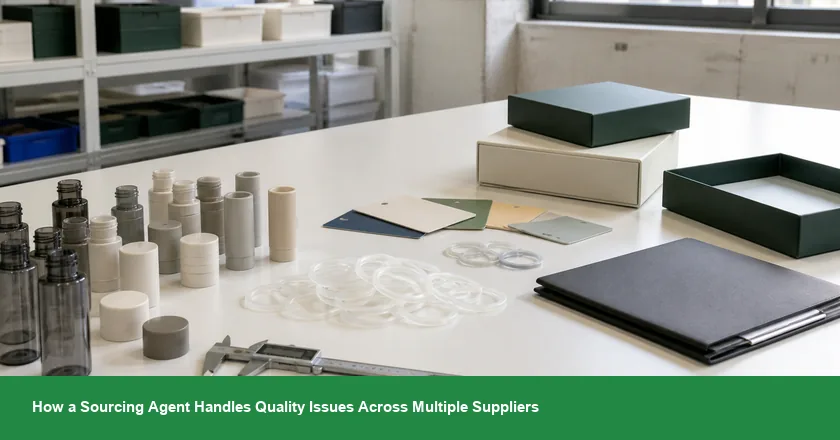
The agent negotiates price and terms in the local language and runs the quality control you can’t do remotely — sample management, a signed golden sample, and during-production and pre-shipment inspections against your spec. This on-the-ground oversight is the part software still can't replace.
Logistics and coordination
A full-service agent arranges freight, helps with customs documentation, and can manage goods door to door. This consolidates accountability under one party rather than a chain of handoffs. You can also hire narrower scope — QC-only or logistics-only — if you only need one gap filled. Covering this full span from vetting to delivery is the model NewBuyingAgent operates on.
Common Mistake to Avoid: Paying for full-service management when you only need one stage, or buying the cheapest narrow service when you can't actually cover the rest yourself. Buyers often default to the broadest package for reassurance and resent the cost, or pick QC-only when they can’t even verify a supplier exists. Map honestly which parts of sourcing you can handle — discovery, vetting, inspection, logistics — and buy exactly the scope that fills your real gap. Overbuying wastes margin; underbuying leaves you exposed at the step you were least equipped to manage alone.
The Common Scams and How They Work
Most agent scams aren't dramatic fraud — they're quiet misalignments where the agent profits at your expense while appearing to serve you. Knowing how each works is the first defense, since they rely on buyers not understanding the mechanics.
The hidden markup
Instead of a transparent commission, the agent secretly buys from the factory and resells to you at a markup, like a trading company while charging an agent's fee on top. You pay more than the factory charges and never see the gap. Refusing to show the factory's real quote is the tell.
The supplier kickback
The agent steers you toward factories that pay them a commission, rather than the factory that’s genuinely best for your product. Your “independent” agent is quietly working for the supplier. An agent who can’t show inspectable reasoning for why they recommend a factory may be following the kickback, not your interest.
The fake or hidden factory
Some agents present a polished factory you never independently verify, then subcontract your order elsewhere or front for production they don’t control. When quality fails, accountability has nowhere to land. Insisting on verifying the actual factory yourself, not just trusting the agent's word, closes this gap.
Expert Tip: Ask any agent to show you the factory’s actual quote and to explain, with inspectable evidence, why they recommend that specific factory. An honest agent on a transparent commission has no reason to hide the factory's real price — their fee sits on top of it openly — and can point to the business license, export records, and floor photos behind their recommendation. Evasion on either front is the clearest signal of a hidden markup or a kickback. The willingness to open the books is the single most reliable test of whether an agent is structurally on your side.
How to Vet a Sourcing Agent
Protecting yourself comes down to applying the same diligence to an agent that you’d apply to a factory. You’re handing this person leverage over your money and your suppliers, so the selection deserves real scrutiny rather than a quick referral and a handshake.
Verify legitimacy and references
Confirm the agent has a registered business and ask for references from buyers in your market and product category. Contact the references; don’t just collect them. An agent comfortable being verified signals confidence in its track record, while stalling or offering only vague testimonials is reason to keep looking.
Protect yourself with contracts
Have the agent sign a non-circumvention agreement protecting you from them — not going around you to your factory or sharing your designs. For proprietary products, confirm they help secure an NNN agreement (Non-disclosure, Non-use, Non-circumvention — a China-law contract stopping a factory from copying or circumventing you). Reputable agents sign without hesitation.
Test with a trial order
The ultimate vetting is a small trial order before committing your main program. How an agent handles a low-stakes first run — communication, sample fidelity, inspection results, on-time delivery — predicts how it will handle your scaled business far better than any promise. The trial is cheap insurance against a costly misalignment.
Common Mistake to Avoid: Hiring a sourcing agent on the strength of a polished website and confident promises without verifying a single claim. Every agent markets the same transparency, rigor, and buyer-first language; the words cost nothing to write. Buyers who sign based on marketing, skipping reference checks, a non-circumvention agreement, and a trial order, regularly discover the reality doesn't match the pitch only after committing real volume and money. Treat the agent exactly as you'd treat a factory — verify legitimacy, check references, sign protections, and test on a small order first.
Hiring the Right Agent in 2026
With the costs, services, and scams understood, hiring well comes down to matching a verified, transparent agent to your actual needs. The market has good and bad operators in equal measure, so a deliberate process is what separates an asset from a liability.
Match scope to your real gap
Decide what you genuinely can't do yourself — find factories, verify them, inspect quality, handle logistics — and hire the scope that fills it. Paying for full management you don’t need wastes margin; buying too narrow leaves you exposed. The right scope follows from an honest look at your own capacity.
Prioritize transparency over price
Between a slightly cheaper agent who dodges the money question and a transparent one who opens the books, choose transparency. A hidden markup or kickback costs far more than a clear commission. How an agent answers the fee and factory-quote questions matters more than the headline rate.
Use remote verification
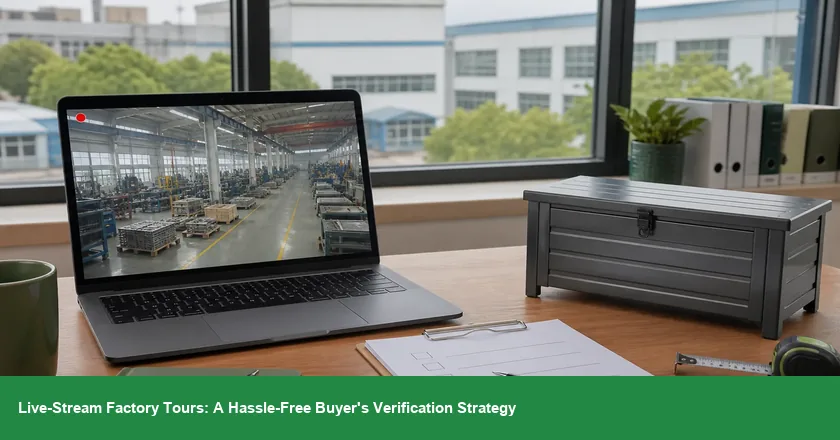
In 2026, you can verify an agent, check references, and observe a trial order remotely before fully committing. Video calls, shared records, and a documented trial let you confirm capability without travel. There's little excuse to sign on faith when remote verification is this accessible.
Expert Tip: Send the same set of pointed questions — exactly how you make money, will you show me the factory's quote, will you sign a non-circumvention agreement, what happens when an inspection fails — to every agent you’re considering, in writing, and lay the answers side by side. Identical questions expose differences a freeform sales call hides: one agent gives an all-in fee and opens the books, another answers in slogans and dodges the money question. The written format also creates a record you can hold them to later. The exercise takes an afternoon and routinely saves buyers from signing with a confident agent who couldn’t answer the questions that mattered.
Frequently Asked Questions
How much does a sourcing agent in China cost?
Most charge a commission of roughly 5 to 10% of order value, though some use flat fees or tiered pricing. The cleanest sign of a trustworthy agent is a fee you can state in one sentence. Watch for a retainer stacked on a percentage without clear disclosure, which means paying twice. Ask for an all-in figure covering sourcing, inspection, and logistics before comparing agents.
How do I know if a sourcing agent is taking a hidden markup?
Ask directly how they make money and whether they'll show you the factory's actual quote. An honest agent on a transparent commission has no reason to hide the factory price, since their fee sits on top of it openly. One that refuses to reveal the factory's cost, or buys and resells to you, is likely taking an undisclosed markup. Willingness to open the books is the clearest test.
What are the biggest sourcing agent scams to watch for?
The three most common are a hidden markup (secretly reselling at a margin while charging an agent fee), a supplier kickback (steering you to factories that pay them rather than the best one), and a fake or undisclosed factory (presenting production they don't control). All rely on you not verifying independently. A transparent fee, an inspectable recommendation, and verifying the actual factory yourself defend against all three.
How can I protect myself when hiring a sourcing agent?
Verify the agent's registered business and references, have them sign a non-circumvention agreement protecting you from them, confirm a transparent fee, and run a small trial order before committing your main program. Apply the same diligence you'd apply to a factory. These steps — verification, contracts, and a low-stakes test — expose a misaligned agent before you've handed over real volume and money.
Is a sourcing agent's fee worth it?
Often yes, when the agent is transparent and competent. Agents recover value through better-negotiated local pricing, prevented quality failures, and avoided mistakes that erase margins — a single prevented rejected container can offset the commission. The fee is better understood as insurance and leverage than pure cost. The risk isn't the fee itself but a misaligned agent whose hidden markup or kickback costs far more than a clear commission would.
Conclusion
Sourcing agents in China can play a valuable role in helping overseas buyers navigate factories, negotiations, and quality control—but the differences in service quality are significant.
Some agents act as true partners, offering transparent pricing, careful supplier selection, and consistent oversight throughout production. Others may add unnecessary markups, limit visibility into the supply chain, or fail to properly manage quality issues once an order is placed.
That’s why understanding how sourcing agents operate—and what warning signs to watch for—is essential before making a decision.
If you want to reduce risk and save time managing suppliers, working with a reliable sourcing partner like NewBuyingAgent can help you handle supplier communication, negotiations, quality control, and production follow-up more efficiently, so you can focus on growing your business.
NewBuyingAgent
Related Resources
ابدأ اليوم
دعنا نحول أهداف التوريد الخاصة بك إلى واقعWeChat:+86 15157124615
WhatsApp:+86 15157124615
العنوان: مبنى 10 #39 طريق شيانغيوان، هانغتشو، الصين