
Introduction
A buyer orders 2,000 rectangular tablecloths in a size that looked right on the sample table. The stock arrives, the listing goes live, and the returns start: too short on standard dining tables, wrinkled out of the bag, or shrunk after the first wash. None of these problems came from the factory doing something wrong. They came from a brief that never defined drop, fabric weight or shrinkage.
Tablecloths look like the simplest product in home textiles, and that is exactly why they get under-specified. In practice, size, shape and fabric decide almost every customer complaint, and labelling rules decide whether the goods can be sold at all. The sections below set out how experienced buyers specify a table cloth range before the first sample is cut.
Key Takeaways
· Tablecloth size is calculated from the table plus the drop on each side, not chosen from a supplier's standard list.
· Round, oval and rectangular cloths need separate size ladders, because one dimension rarely serves all three shapes.
· Polyester, cotton, linen and vinyl each suit a different channel, price point and care expectation.
· Shrinkage, colourfastness and hem quality should be written into the order and checked before shipment.
· Fibre content, origin and business identity labelling apply to tablecloths in the US and the EU, and EU textile EPR is coming.
Getting the Size Right: Table Plus Drop
Size is the single biggest cause of tablecloth returns, and it is the easiest to prevent.
How the drop works
The drop is the length of cloth hanging over the table edge. The finished size equals the table length plus two drops, and the table width plus two drops. Casual dining cloths typically use a short drop that clears the diners' laps, while formal and event settings use longer drops. Floor-length cloths for banquets and trade-show tables are sized to reach, or nearly reach, the floor from standard table height.
Writing the intended drop into the brief changes the conversation with the factory. Instead of asking for "a 60 x 84 inch tablecloth", you state the table it is designed for and the drop it should give. That makes it much easier to check samples and to write accurate listing copy.
State every size in both inches and centimetres, in the brief, on the label and in the listing. US customers measure in inches and most EU customers measure in centimetres. A cloth sold into both markets with only one unit invites rounding errors that turn into "wrong size" returns.
Building a size ladder
Most ranges need three to six sizes per shape to cover common household tables. A useful approach is to list the table sizes your customers actually own, then calculate each cloth from those. Keep the ladder short enough to manage stock and long enough that each size has a clear purpose. Duplicate sizes that differ by an inch or two usually confuse buyers rather than help them.
Expert Tip: Ask the factory to state finished size after hemming and after one wash, not cut size. Cut size includes hem allowance and tells you nothing about what the customer receives. When I review a tablecloth quote, the first question is whether the stated dimensions are cut, finished or post-wash, because a few centimetres of difference across a size ladder turns into a wave of "too small" reviews.
Shapes and What Each One Demands
Shape changes how the cloth is cut, sewn and folded, and each shape has its own failure points.
Rectangle, square and oblong
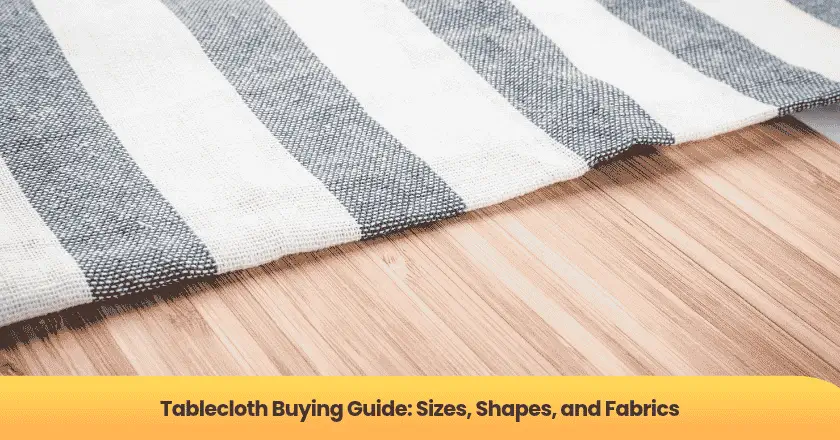
Rectangular and oblong cloths are the volume sellers for home dining. They are cut from roll fabric with straight hems, so they are efficient to produce. The quality question is corner finish. Mitred corners (corners folded at a 45-degree angle so the hem lies flat) look tidier and wear better than simply folded corners, and the difference is visible in product photos.
Round and oval
Round cloths are cut from a square of fabric, so they waste more material and cost more per unit area. The hem follows a curve, which is harder to sew evenly, and an uneven curved hem makes the drop look crooked on the table. Oval cloths need a specified table length and width, not just "oval", because oval tables vary more than round ones.
Fitted and elasticated covers
Fitted covers with elastic edges suit outdoor and folding tables. They need tighter dimensional tolerances than draped cloths, since a fitted cover that is slightly small will not go on at all. Specify the table dimensions the cover must fit, the elastic type and how far the skirt should reach. Ask for the cover to be tested on a real table before approval, and repeat the fit check on a few bulk units during inspection.
Common Mistake to Avoid: Approving a round tablecloth from photos of the flat sample. A round cloth that looks perfect laid flat can hang unevenly once it is on a table, because a wavy hem or an off-centre cut only shows when the cloth drapes. Ask for photos or video of the sample on a real round table of the target size before you approve bulk.
Fabrics: Matching Material to the Channel
Fabric decides price, handfeel, care and the type of customer the product attracts.
The main fabric families
Each common fabric family solves a different problem, and most ranges use more than one.
· Polyester is durable, wrinkle-resistant and holds colour well, which makes it the default for restaurants, events and value retail.
· Cotton feels natural and absorbs spills, but it creases and can shrink unless the fabric is pre-shrunk before cutting.
· Linen and linen blends give a premium look and texture, and they suit higher price points where creasing is accepted as part of the style.
· Vinyl and PVC-coated fabrics wipe clean, which suits outdoor and children's dining, but they raise chemical compliance questions that woven fabrics do not.
Weight, weave and finish
Within one fibre, fabric weight (often stated in GSM, grams per square metre) and weave change the result. A heavier fabric drapes better and looks more substantial, while a lighter one is cheaper and folds smaller for shipping. Finishes such as stain-repellent or wrinkle-resistant treatments add value, but they should be described accurately in listings and confirmed by the supplier in writing.
Colour and print
Plain cloths are usually piece-dyed, while patterned cloths are printed, yarn-dyed or woven as jacquard (a weave where the pattern is built into the fabric structure). Each route has different minimum runs and colour behaviour. For custom colours, ask for lab dips (small dyed fabric samples used to approve a shade before bulk dyeing) and approve them under the same light you use for product photos. Shade differences between dye lots are normal, so agree an acceptable tolerance in writing.
Expert Tip: Order fabric swatches in at least two weights before you order full samples. Swatches are cheap and fast, and putting two weights side by side shows the drape and opacity difference immediately. Buyers who skip this step often approve a sample in a weight chosen by the factory's stock availability rather than by the market they are selling into.
Labelling and Compliance in 2026
Tablecloths are textile products, and both the US and the EU treat them that way at the point of sale. Labels are cheap to get right at the artwork stage and expensive to fix once goods are packed.
US fibre and origin labels
The FTC's guidance under the Textile Fiber Products Identification Act lists tablecloths, napkins and doilies among covered products. Covered items need a label showing fibre content, country of origin, and the identity of the manufacturer or another responsible business. Where a tablecloth and napkins are sold together as a set, one label can cover both, as long as it identifies the fibre content of each component.
EU fibre names, chemicals and EPR
In the EU, Regulation (EU) No 1007/2011 requires textile products to be labelled or marked with their fibre composition when made available on the market. The label must be durable, easily legible, visible and accessible. Vinyl cloths add a chemical layer: REACH Annex XVII restricts four phthalates (DEHP, DBP, BBP and DIBP) to below 0.1% by weight of the plasticised material in most articles.
The 2026 change worth tracking is extended producer responsibility (EPR, a system where producers pay for collecting and recycling their products at end of life). Directive (EU) 2025/1892 brings table linen into scope, and member states must have textile EPR schemes in place by 17 April 2028. Importers selling into the EU should start recording volumes and fibre data now.
Common Mistake to Avoid: Leaving the care and content label to the factory's default template. Factories often reuse a generic sewn-in label that lists the wrong fibre blend or omits the origin. Approve the label artwork for each fibre composition separately, and check it during inspection, because a wrong fibre content claim is a labelling problem regardless of how good the cloth looks.
Quality Checks Before the Goods Ship
Most tablecloth defects are measurable, which means they can be caught before the balance payment.
What to measure
Ask the inspector to measure finished dimensions on a sample of units across every size, and to wash a few pieces to check shrinkage against the agreed limit. Colourfastness to washing and rubbing matters for dark and printed cloths, since dye transfer onto a light table surface is a common complaint. Hem straightness, stitch density and corner finish are visual checks that take minutes.
Packing and presentation
Folding method and packaging decide how the cloth looks when the customer opens it. A cloth folded tightly for a small carton arrives with hard creases. Agreeing the fold, insert card and bag in the order prevents a perfectly good product from photographing badly. For broader help choosing a production cluster, see this comparison of home and kitchen sourcing hubs in China.
Keep one approved sample of each size and colour sealed and signed as the reference for inspection. When a dispute arises about shade, hand feel or hem quality, a reference sample settles it faster than any photo or email thread.
Expert Tip: Set a written shrinkage tolerance per fabric, for example a maximum percentage after one domestic wash, and ask the factory to confirm it before bulk. Cotton and linen need this most. Pre-shrunk fabric costs a little more, but it is far cheaper than relisting a range under new sizes after customers report that the cloth no longer fits their table.
From Brief to Bulk: Sourcing Tablecloths with NewBuyingAgent
Tablecloths are a multi-size, multi-fabric category, and the work of keeping every size and label consistent falls on the buyer. NewBuyingAgent is your perfect partner for global sourcing from China, backed by 30 years of expertise in trade, manufacturing and quality control.
Direct buyers often face limited factory access, with less than 5% of China's factories within reach. Through its sourcing services, you can use 50,000+ cooperated partner factories with no language, region or time zone barriers, and its local reputation gets you full factory cooperation. Even with its margin included, NewBuyingAgent cuts costs by 5%-10% compared with direct sourcing.
Quality uncertainty is the other pain point. 20,000+ product development and QC experts ensure your products match market needs and stay high-quality. NewBuyingAgent handles all factory communication, which suits multi-category buyers, so you can focus on expanding local market sales. Browse trending products or start at the NewBuyingAgent homepage.
Frequently Asked Questions
How do I work out the right tablecloth size?
Measure the table, choose the drop you want on each side, and add two drops to both the length and the width. For a round table, add two drops to the diameter. State the finished size after hemming when you brief the factory. Then confirm it on a washed sample.
Which tablecloth fabric is best for restaurants?
Polyester is the usual choice for restaurants and events because it resists wrinkles, holds colour through frequent washing and costs less than natural fibres. Cotton and linen suit premium settings where the look matters more than easy care.
Do tablecloths need fibre content labels?
Yes, in both major markets. The FTC lists tablecloths among products covered by the Textile Act, which requires fibre content, origin and business identity. The EU requires fibre composition labelling under Regulation (EU) No 1007/2011.
Are vinyl tablecloths restricted in the EU?
They are not banned, but their plasticised material is subject to REACH limits on four phthalates. Ask the supplier for a test report from an accredited laboratory covering those substances before you place a bulk order.
Should I offer one fabric or several in a tablecloth range?
Most ranges start with one core fabric across the full size ladder, then add a second fabric once sell-through data shows which sizes move. Launching every fabric in every size at once multiplies stock units quickly. A narrow first order also makes quality problems easier to trace and fix.
Conclusion
A tablecloth range succeeds or fails on details that are easy to write down. Define each size by table and drop, treat round and fitted shapes as separate engineering problems, pick fabrics by channel, and put shrinkage, colourfastness and label artwork into the order. Checking those points before shipment protects both reviews and compliance. If managing sizes, fabrics and factories across a growing home textile range is stretching your team, a conversation with NewBuyingAgent about making China sourcing simpler and more profitable is a practical next step.
Sources
1. Threading Your Way Through the Labeling Requirements Under the Textile and Wool Acts – Federal Trade Commission (GovInfo) — https://www.govinfo.gov/content/pkg/GOVPUB-FT-PURL-LPS86207/pdf/GOVPUB-FT-PURL-LPS86207.pdf
2. Regulation (EU) No 1007/2011 on textile fibre names and labelling – EUR-Lex — https://eur-lex.europa.eu/eli/reg/2011/1007/oj
3. Regulation (EC) No 1907/2006 (REACH), Annex XVII entry 51 – EUR-Lex — https://eur-lex.europa.eu/eli/reg/2006/1907/oj
4. Directive (EU) 2025/1892 amending the Waste Framework Directive (textile EPR) – EUR-Lex — https://eur-lex.europa.eu/eli/dir/2025/1892/oj/eng5. New Buying Agent in China | NewBuyingAgent — https://www.newbuyingagent.com/
NewBuyingAgent
Похожие материалы

Начните сегодня
Давайте превратим ваши цели по закупкам в реальностьWeChat:+86 15157124615
WhatsApp:+86 15157124615
Адрес: Здание 10 #39 Xiangyuan Road, Ханчжоу, Китай
