
Supplier Selection Criteria
Concept Definition
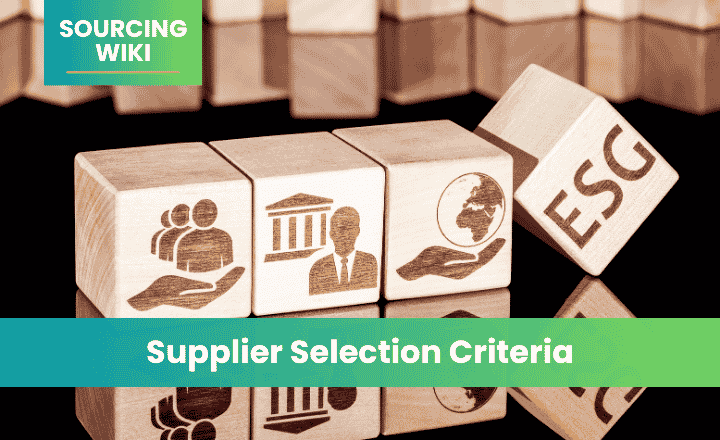
Supplier selection criteria are the defined standards, benchmarks, and parameters that organizations use to evaluate, compare, and choose among competing suppliers during sourcing decisions. They provide the objective framework through which subjective purchasing preferences are replaced by structured, transparent, and defensible decision-making—ensuring that supplier choices reflect organizational priorities rather than individual bias, habit, or convenience.
The development of appropriate supplier selection criteria is itself a strategic exercise. Criteria must be comprehensive enough to capture all dimensions of supplier value that matter to the organization, yet focused enough to enable practical evaluation without overwhelming the assessment process. They must be measurable—either quantitatively or through defined qualitative scales—to support objective comparison across suppliers. And they must be weighted to reflect the relative importance of each factor to the specific purchasing requirement, recognizing that the optimal weighting varies by category, market conditions, and organizational context.
Core Operational Criteria: Cost, Quality, and Delivery
Cost-related criteria form a foundational element of most supplier selection frameworks. These extend beyond unit price to encompass total cost of ownership (TCO)—incorporating transportation, customs duties, quality costs, inventory carrying costs, payment terms, warranty provisions, and lifecycle maintenance expenses. Cost analysis criteria may also assess the supplier's pricing transparency, willingness to share cost breakdowns, and capacity for supporting ongoing cost reduction through value engineering or process improvement initiatives.
Quality criteria evaluate the supplier's ability to deliver products or services that consistently meet specified requirements. Assessment dimensions include quality management system maturity and certification status, historical quality performance metrics such as defect rates and customer complaint levels, inspection and testing capabilities, corrective action process effectiveness, and continuous improvement culture. For critical or regulated products, quality criteria may include specific technical certifications, testing accreditations, and regulatory approvals.
Delivery and logistics criteria assess the supplier's reliability in meeting committed timelines, lead time competitiveness, geographic proximity or distribution network coverage, inventory management practices, and flexibility in accommodating demand variability. On-time delivery history, order fulfillment accuracy, and responsiveness to expediting requests provide quantifiable indicators of delivery capability.
Technical, Financial, and Risk-Related Criteria
Technical capability criteria examine the supplier's manufacturing processes, engineering expertise, technology infrastructure, research and development investment, and capacity for product customization or development support. These criteria are particularly important for complex, engineered products or situations where the supplier's technical contribution adds value beyond basic manufacturing.
Financial stability criteria assess the supplier's economic viability as a long-term business partner. Profitability, liquidity, leverage ratios, credit ratings, and revenue trends provide indicators of financial health. Financial assessment ensures that the selected supplier has the resources to sustain operations, invest in capability development, and weather economic fluctuations without compromising service quality.
Risk-related criteria evaluate supply continuity risks, geographic concentration, business continuity planning, cybersecurity posture, and insurance coverage. Compliance criteria verify adherence to applicable regulations, ethical standards, and industry-specific requirements. Sustainability criteria assess environmental management practices, carbon footprint, social responsibility, and alignment with the buying organization's sustainability commitments.
Strategic Fit and Consistent Application
Strategic alignment criteria evaluate the supplier's cultural compatibility, innovation orientation, willingness to invest in the relationship, collaborative problem-solving approach, and long-term strategic direction. These softer factors are difficult to quantify but profoundly influence the quality and productivity of the supplier relationship over time.
The application of supplier selection criteria requires a consistent, documented process. Criteria should be defined and weighted before supplier responses are received to prevent post-hoc rationalization. Evaluation should involve cross-functional participation to ensure that all relevant perspectives inform the decision. Scoring should be documented transparently to support governance requirements and enable meaningful debriefing of unsuccessful suppliers.
Related Knowledge Base
Sourcing Practices & Insights: Supplier Selection Criteria
Latest Sourcing Guides




Heute beginnen
Lassen Sie uns Ihre Beschaffungsziele in die Realität umsetzenWeChat:+86 15157124615
WhatsApp:+86 15157124615
Adresse: Gebäude 10 #39 Xiangyuan Road, Hangzhou, China