

Less than Container Load (LCL)
Concept Definition
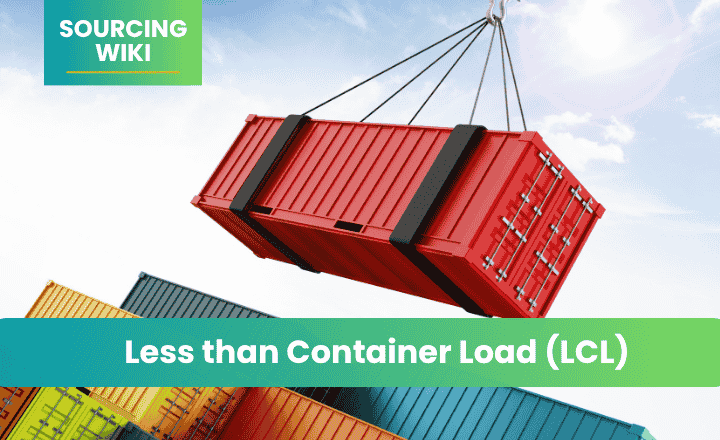
Less than Container Load (LCL) is an ocean freight shipping term used to describe a shipment that does not fill an entire 20-foot or 40-foot container. In an LCL shipment, multiple exporters share the space within a single container, and the cost is typically calculated based on the volume (Cubic Meters/CBM) of the goods.
At NewBuyingAgent, we understand that for startups and mid-sized enterprises, LCL is often the gateway to international trade; we provide specialized consolidation services that allow you to ship smaller test batches from China while benefiting from our rigorous "multi-supplier" coordination to ensure your goods are palletized and protected even in a shared environment.
How LCL Works: The Consolidation Process
Because the container is shared, the logistics process for LCL is more complex than FCL:
- Origin Consolidation: Small shipments from various suppliers are sent to a CFS (Container Freight Station).
- Stuffing: The freight forwarder "stuffs" (loads) the goods from different buyers into one container.
- Transit: The container travels across the ocean like any other FCL unit.
- Destination De-consolidation: Upon arrival at the destination port, the container is taken to another CFS where it is "stripped" (unloaded).
- Final Pickup: Individual buyers pick up their specific pallets or have them delivered via local truck.
LCL vs. FCL: A Quick Comparison
| Feature | LCL (Less than Container Load) | FCL (Full Container Load) |
|---|---|---|
| Volume | Typically 1 to 15 CBM. | Typically >15 CBM. |
| Cost Basis | Per CBM (Volume). | Flat rate per container. |
| Speed | Slower (adds 5–10 days for packing/unpacking). | Faster (Direct point-to-point). |
| Risk | Higher (more handling, higher risk of damage). | Lower (Sealed at factory). |
| Flexibility | High; great for inventory management. | Lower; requires large orders. |
Understanding LCL Costs
LCL pricing can be deceptive. While the "Ocean Freight" rate might seem low, there are several "Hidden" or fixed costs involved:
- CBM Rate: The cost per cubic meter.
- CFS Fees: Charges for the labor used to consolidate and de-consolidate the goods at the warehouse.
- Minimum Billable: Most forwarders have a 1 CBM minimum. If your shipment is only 0.5 CBM, you will still pay for 1.0 CBM.
- W/M (Weight or Measure): Freight is charged on whichever is greater: the actual volume or the weight-equivalent volume (usually 1,000kg = 1 CBM).
Essential Considerations & Warnings
- The "Pallet" Requirement: Because LCL goods are handled by forklifts multiple times at the CFS, they must be properly palletized and shrink-wrapped. Loose cartons are highly likely to be damaged or lost.
- Fragile Goods: If your products are extremely fragile (e.g., glassware or sensitive electronics), LCL may be risky due to the "co-loading" factor—you don't know if the heavy machinery of another shipper will be placed next to your fragile boxes.
- Documentation Accuracy: In an LCL container, if one shipper has a paperwork error, it can sometimes delay the entire container at customs, affecting all other buyers sharing that space.
- NewBuyingAgent Pro-Tip: If you are buying from 3 different factories in China, don't ship 3 separate LCL orders. Have NewBuyingAgent consolidate them into one "Buyer's Consolidation" FCL or a single LCL shipment to save significantly on destination port fees.
Related Knowledge Base
Sourcing Practices & Insights: Less than Container Load (LCL)
Latest Sourcing Guides



Heute beginnen
Lassen Sie uns Ihre Beschaffungsziele in die Realität umsetzenWeChat:+86 15157124615
WhatsApp:+86 15157124615
Adresse: Gebäude 10 #39 Xiangyuan Road, Hangzhou, China
